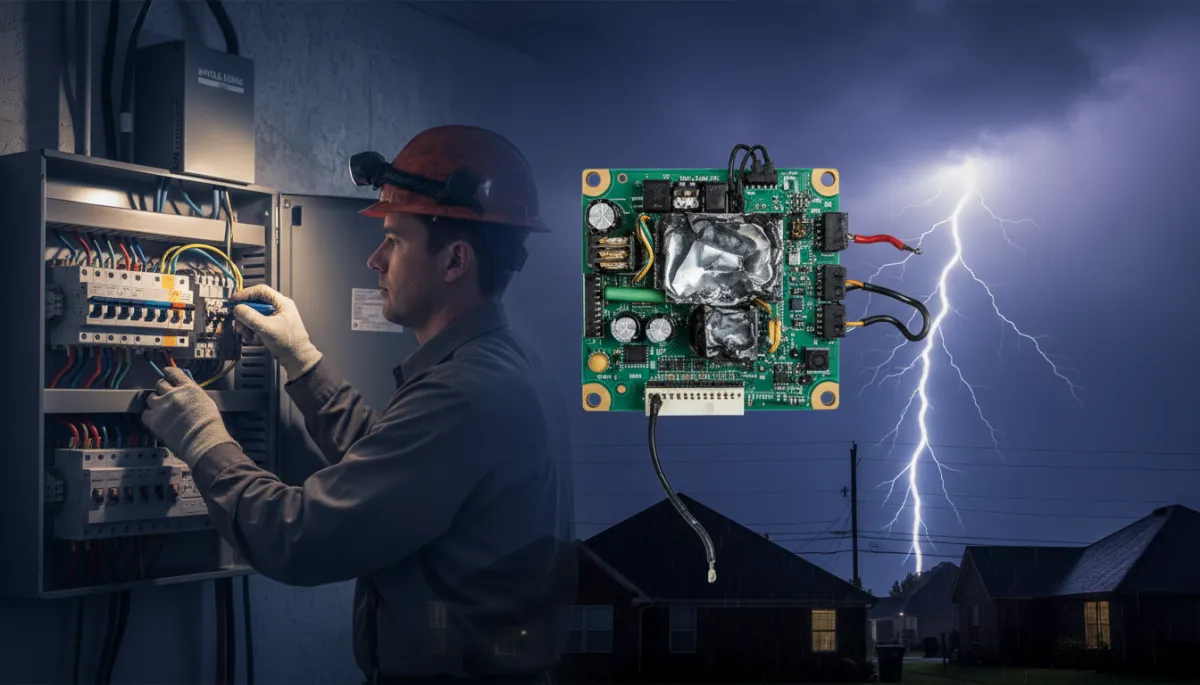
Do I Really Need a Whole-Home Surge Protector in Tupelo? A Local Electrician's Honest Answer
Home Electrical Safety, Surge Protection, Tupelo MS
Do I Really Need a Whole-Home Surge Protector in Tupelo? A Local Electrician's Honest Answer
I’m an electrician here in North Mississippi, and I’ve seen what our storms and power blips can do to a house. If you’re in Tupelo, Saltillo, Verona, Plantersville, Mooreville, or Mantachie and wondering if a whole-home surge protector is worth it, this is my straight‑up, neighbor‑to‑neighbor answer. As a veteran-owned company, S.I. Service Group treats every home like it belongs to family—and in storm‑prone North Mississippi, that means talking honestly about surge protection before lightning and grid issues do their worst.

North Mississippi Storm Season Is No Joke
If you’ve lived around Tupelo for more than one spring, you already know: North Mississippi storm season doesn’t play around. We get lightning that rattles the windows, power flickers that make every clock in the house start blinking 12:00, and the kind of storms that light up the whole sky from Saltillo to Verona in one flash.
In storm‑prone areas like Corinth and Amory, we see long squall lines that crawl across the region, hammering the grid for hours. Over toward Oxford and Fulton, you’ll get sudden pop‑up thunderstorms on an otherwise hot, clear afternoon. Out in Mantachie and the rural areas between towns, long overhead runs of power lines are just sitting ducks for falling limbs and lightning strikes. All of that adds up to one thing inside your home: surges.
I’ve been out in Plantersville after a single lightning strike where I replaced a fried TV, an HVAC control board, and a refrigerator control all in the same house. One bolt, three expensive repairs. I’ve seen folks in Mooreville lose their brand‑new washer and dryer because the power came back on hard after an outage. In Mantachie, I’ve walked into homes where every smart plug and Wi‑Fi camera in the place was toast after a storm rolled through.
So when people ask me, “Do I really need a whole-home surge protector in Tupelo, or is that just upsell stuff?” I don’t answer like a salesman. I answer like somebody who’s seen the damage, helped folks argue with their insurance, and watched them write checks for things that could’ve been protected a lot cheaper on the front end. As a local, veteran‑owned electrical and HVAC company, we take that responsibility seriously at S.I. Service Group.
What Is a Power Surge, Really? (Plain English Version)
Let’s skip the textbook talk. A power surge is basically a “spike” in the electricity coming into your home. Your house is supposed to get a nice, steady flow of power—around 120 volts on your standard outlets. A surge is when, for a split second, that flow jumps way higher than your equipment is built to handle. Think of it like your water pressure suddenly jumping so hard it blows a hole in your garden hose.
Inside most surge protectors are components called metal oxide varistors (MOVs). These act like pressure‑relief valves for voltage. Under normal conditions, they just sit there. When the voltage spikes above a safe level, they “turn on” and shunt that extra energy away to the grounding system. They sacrifice themselves over time to protect everything else.
Where do these surges come from? Around North Mississippi, I see a few main culprits:
- Lightning strikes – Not just a direct hit on your house. A strike anywhere along the power lines in your area can send a surge racing right into your panel in Tupelo or Saltillo in a heartbeat. That surge can be thousands of volts for a fraction of a second—plenty to punch through delicate electronics and insulation.
- Power coming back on after an outage – When the utility flips things back on, that first rush of power can hit hard, especially after big storms or winter ice events like we had in early 2026 across North Mississippi. That “inrush” can overshoot normal voltage, then settle back down—but the damage can already be done to boards and power supplies.
- Utility hiccups and switching – When the power company switches circuits around, or when there’s trouble on the grid, you can get little spikes and sags that beat up on your electronics over time. These transient surges may not be dramatic, but repeated hits shorten the lifespan of your appliances and HVAC equipment.
- Big equipment in your own house – Every time your AC or heat pump kicks on in Verona, it tugs on your home’s electrical system. Motors starting and stopping cause small internal surges and dips. Over years, those little internal surges add up on sensitive boards and chargers in your AC system, heat pump, and appliances.
Sometimes a surge is big and obvious: lights flash, something pops, and suddenly your TV is dead. Other times, it’s small but repeated. You don’t notice anything that day, but those little hits slowly weaken the electronics in your fridge, range, or smart thermostat until one day they just quit and you’re wondering why it failed “so early.”
Whole-Home Surge Protector vs. Power Strip: What’s the Difference?
This is where a lot of folks in Tupelo get confused, and it’s not your fault. The stores don’t help much with all the marketing on the box. So let me break it down the way I explain it at kitchen tables from Mooreville to Mantachie.
Power Strip Surge Protectors (the one under your TV)
Those surge-protector power strips you buy at Walmart or online do help, but they only protect whatever is plugged into that strip. They’re your second line of defense, not your main shield. They’re good for TVs, game systems, computers, and home offices. And they wear out over time—most people don’t realize that and keep using strips long after they’ve stopped offering much protection at all (see surge protector buying guides like Techlicious and others for details on lifespan).
Technically, most power strips are “point‑of‑use” surge protectors. They’re meant to catch smaller surges and clean up noisy power right at the equipment. They usually have a lower surge rating than a whole‑home unit and can’t absorb the kind of energy a big lightning‑related surge can deliver through the service lines. They’re great as part of a layered protection plan, but they’re not built to protect your entire house by themselves.
Whole-Home Surge Protector (the one at your breaker panel)
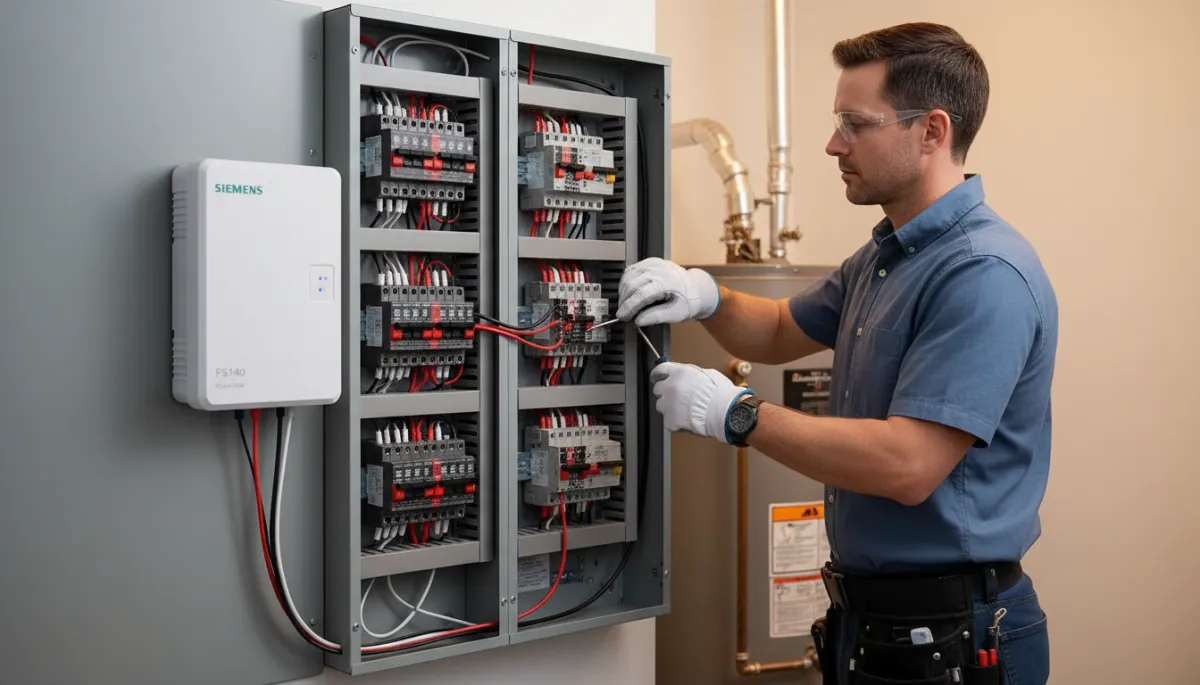
A whole-home surge protector is different. It’s a device that mounts at your main electrical panel—right where power comes into your house. Instead of protecting one TV or one computer, it helps protect everything in your home at once: your HVAC, appliances, lights, outlets, and all those little chargers and gadgets scattered around the house. That’s the heart of surge protection North Mississippi homeowners are asking me about more and more every year.
Think of a whole-home surge protector like a big bouncer at the front door of your house. When a surge tries to come in from the power lines, that device takes the hit and sends the extra energy safely away to ground, instead of letting it rush into all your circuits and electronics. Your power strips are like the smaller security guards inside, backing up the main guy at the door. In storm‑heavy towns like Tupelo, Amory, and Corinth, that “front door” protection makes a huge difference.
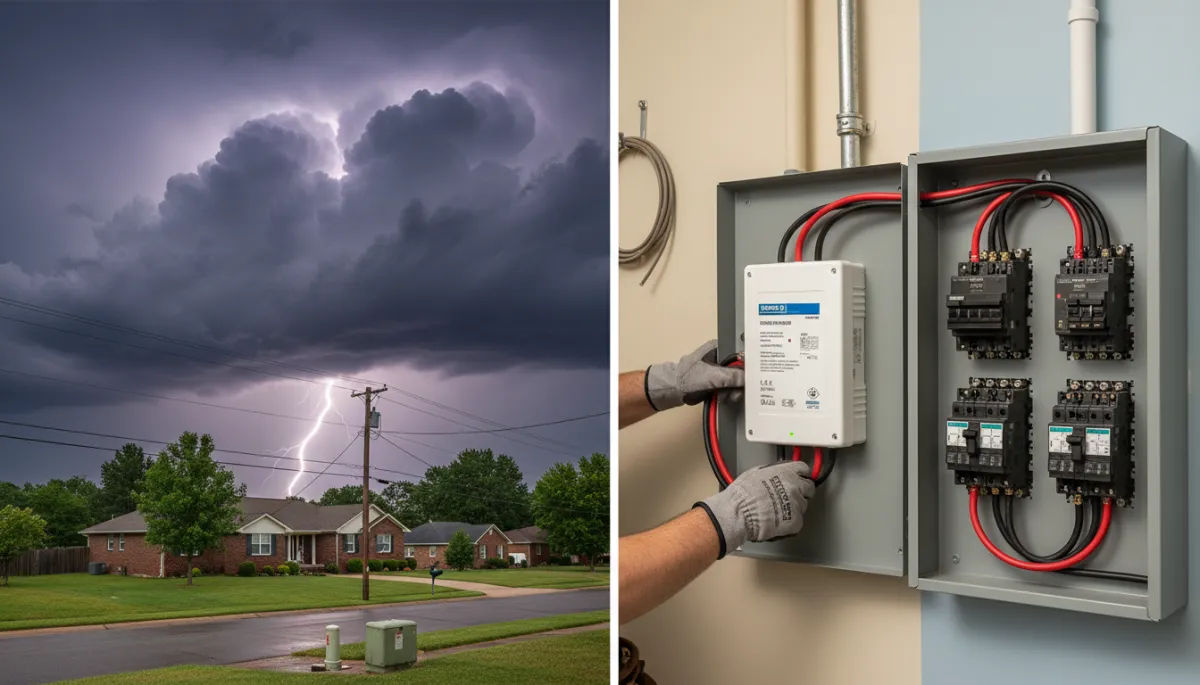
A whole-home surge protector sits at your panel, taking the big hit before it reaches your electronics.
What a Surge Really Does to Your HVAC and Appliances
From the outside, your air conditioner in Saltillo or your refrigerator in Oxford might look perfectly fine after a storm. Inside, it can be a different story. Modern equipment is full of control boards, relays, and low‑voltage electronics that are way more sensitive than the old‑school mechanical parts we grew up with.
- In your AC system, a surge can burn tiny pathways across the board, damage sensors, or weld contacts together. You might notice the unit short‑cycling, not responding to the thermostat, or not coming on at all after a storm.
- In your heat pump, surges can damage the defrost control, compressor contactor, or low‑voltage control wiring. That can leave you without heating or cooling right when you need it most.
- In your kitchen, surges can take out the logic boards in your fridge, range, microwave, and dishwasher. Sometimes the display goes blank. Other times, it’s weird behavior—error codes, random beeping, or cycles that won’t finish.
The frustrating part is that surge damage doesn’t always show up immediately. A board might be weakened and fail weeks or months later. That’s why, when we talk about electrical services and surge protection with homeowners around Tupelo and Fulton, we focus on prevention, not just cleaning up after the fact.
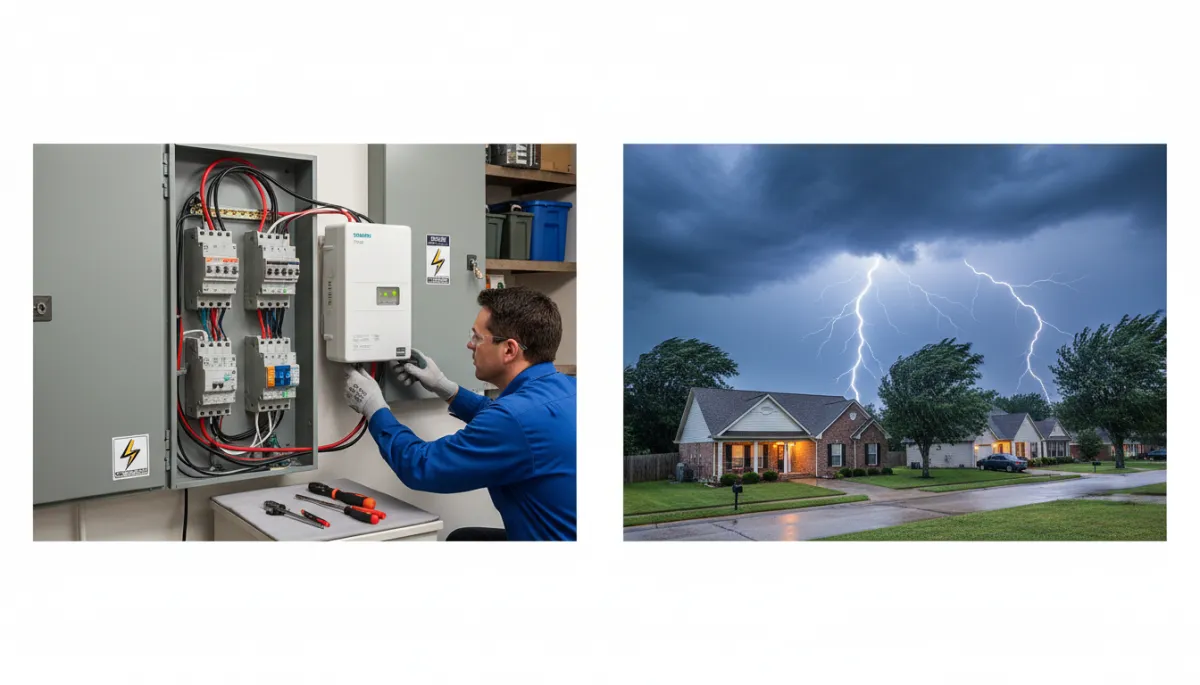
Layered surge protection keeps comfort systems and electronics running when storms roll through.
Real-Life Damage I See After Surges Around Tupelo
Let me give you some real examples from jobs I’ve done as an electrician in Tupelo MS and the surrounding towns. These aren’t “maybe” stories. These are actual calls we’ve run at S.I. Service Group when folks needed help after a surge hit their home.
- HVAC control boards – I’ve lost count of how many air conditioners and heat pumps I’ve seen knocked out by surges. The unit outside may look fine, but the little brain inside is cooked. A control board replacement can run hundreds of dollars, and that’s before you even talk about labor from your HVAC tech.
- Refrigerators and ranges – Modern “smart” fridges and stoves have delicate electronics in them. I’ve seen beautiful stainless units in Saltillo and Mooreville go dead after a lightning-heavy night. You don’t just lose the appliance—you lose all the food inside if it happens while you’re at work or out of town.
- TVs and sound systems – This is the classic one. After a storm, my phone lights up with “My TV won’t turn on” calls from Verona and Plantersville. Sometimes the TV is gone, sometimes the soundbar or streaming box took the hit. Either way, it’s money out of your pocket.
- Smart home devices – Wi‑Fi thermostats, smart doorbells, cameras, garage door openers—these are all low‑voltage electronics. They do not like surges. I’ve replaced whole bundles of smart gear in Mantachie after one nasty storm rolled through and bounced the power a few times.
- Routers and modems – After that big 2026 winter storm that beat up the grid across North Mississippi, I saw more dead modems and routers than I can count. When the power blinks on and off during restoration, those little boxes often take the punishment.
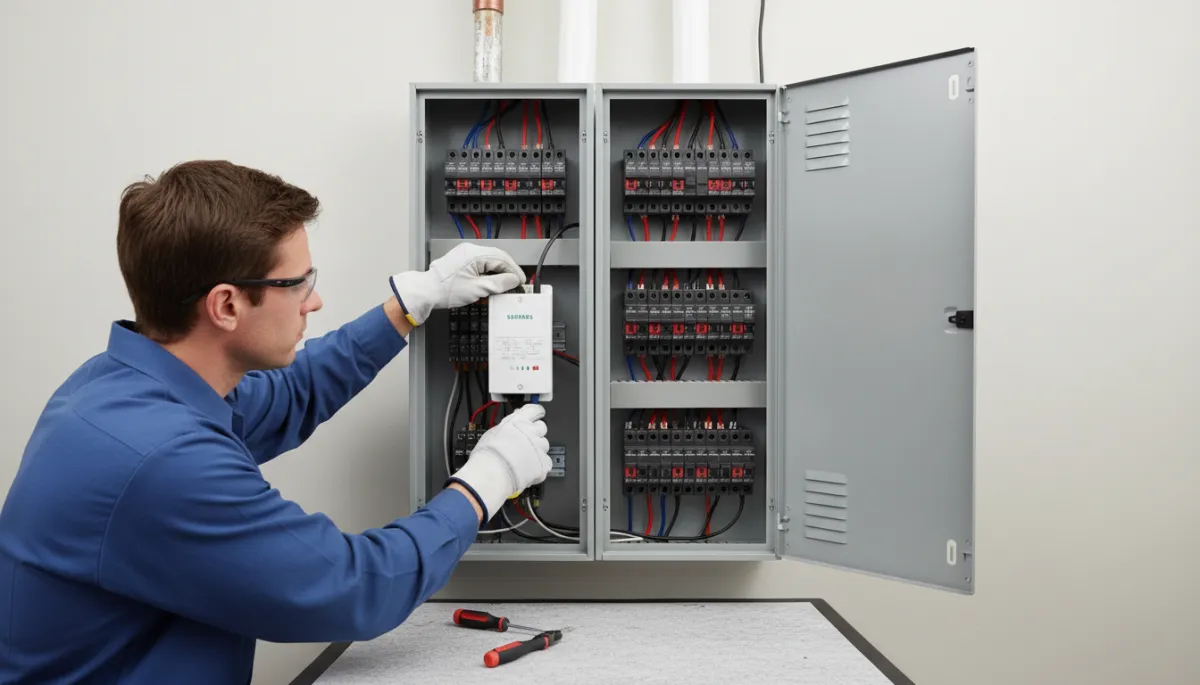
This is what a surge can do inside your appliances long before anything looks wrong from the outside.
When you add it all up—HVAC boards, appliances, TVs, networking gear, smart devices—it doesn’t take many failures to blow past the cost of a solid whole-home surge protector Tupelo MS homeowners can have installed once and forget about for years. That’s why I’m such a big believer in electrical surge protection Mississippi homes can rely on, especially in our part of the state.
Why Surge Protection Matters Even More in North Mississippi
You might be thinking, “Okay, storms are bad everywhere. What makes our area special?” Honestly, a few things stack up against us here in Tupelo and the surrounding towns, and they all point toward taking lightning protection Tupelo and surge protection seriously.
1. Intense Thunderstorms and Lightning
We sit in a part of the country that gets regular, strong thunderstorms—especially in spring and summer. Those big cells that roll across Lee, Itawamba, and Pontotoc counties bring frequent lightning, high winds, and quick power outages. Every lightning strike near the lines is a chance for a surge to ride right into your panel if you don’t have proper surge protection North Mississippi homes need at the main service.
2. Grid Stress and Utility Fluctuations
After the January–February 2026 ice storm, North Mississippi’s electrical infrastructure really showed its age. We had lines down, trees on wires, and thousands of people in the dark for days in some counties. Utilities did a huge amount of repair work, but events like that put a lot of stress on the system and can lead to more frequent switching, temporary fixes, and voltage fluctuations while everything gets sorted out.
Even now, most of the big problems are fixed, but we still see localized outages and blips. Every time the power drops and comes back, that’s another chance for a surge. A whole-home surge protector is like a seatbelt for your house during all that utility activity—it doesn’t stop the storm, but it helps protect what’s inside when the grid gets rough.
3. Older Neighborhoods and Mixed Wiring
In Tupelo, we’ve got a mix of older homes and newer builds. Some houses in town and in places like Verona or Plantersville still have older panels, mixed wiring, or grounding that was done to older standards. That doesn’t mean your house is unsafe, but it does mean surges may not be handled as cleanly as in a brand‑new subdivision with modern infrastructure. Adding a properly installed whole-home surge protector is one of the best upgrades you can make to level the playing field.
4. We Own More Sensitive Electronics Than Ever
Twenty or thirty years ago, a surge might knock out a TV or a VCR and that was about it. Today, almost every big appliance in your house—from your fridge to your oven to your washer—has a circuit board in it. Add in computers, tablets, game consoles, smart speakers, and security systems, and the “stuff worth protecting” list just keeps getting longer. That’s why electrical surge protection Mississippi homeowners are investing in now looks different than it did in the 90s. The stakes are higher.
Around Tupelo, lightning and grid hiccups are a fact of life, not a rare event.
How Much Does a Whole-Home Surge Protector Cost in Tupelo, and What Does Installation Look Like?
Let’s talk money, because that’s usually the make‑or‑break question. Based on current pricing and what we see locally, a good, mid‑range whole-home surge protector installation in Tupelo typically runs somewhere in the $300 to $700 range, all in. That lines up with national numbers for Type 2 surge protectors and local labor and permit costs here in North Mississippi.
Where That Cost Comes From
- The device itself: Most solid, name‑brand whole-house units we install fall around $100–$350, depending on how much surge current they’re rated to handle and any extra features.
- Labor: In the Tupelo area, residential electrical work usually runs in the ballpark of $60–$70 per hour. A straightforward surge protector installation typically takes 1–3 hours, so you’re looking at roughly $60–$210 in labor on a normal job.
- Permit/inspection (when required): Depending on the city or county, permits for this kind of work can run anywhere from about $75–$150. We handle that part for you when it’s needed so you’re not guessing what to pull.
Add that together, and a realistic total for surge protector installation Tupelo homeowners see on estimates is usually between $300 and $700, with a lot of jobs landing right around the middle. Compare that to the cost of one fried HVAC board plus a dead TV, and you can see why I call it “cheap insurance” for your electronics—even though it’s not literally an insurance policy.
What Installation Actually Looks Like (Step by Step)
- We look at your panel. First thing I do is pop the cover off your main panel and see what we’re working with—brand, space, grounding, and how your service is set up. This is true whether you’re in an older house in Verona or a newer build in Saltillo, or a ranch outside Amory or Corinth.
- We pick the right device. Different panels and situations call for different surge protectors. I’m not going to stick a bargain‑bin unit on a house full of high‑end electronics. We match the device to your home’s needs and budget so your whole-home surge protector Tupelo MS installation actually does its job when it counts.
- We shut off power and wire it in. We’ll shut down the main, verify everything is safe, and then mount the surge protector at or inside the panel. It’s wired into your system so it can “see” and clamp surges before they spread through the house. We keep the leads short and neat—that matters for performance and is part of doing the job right.
- We check grounding. Surge protectors work by sending extra energy safely to ground. If your grounding system isn’t up to par, we’ll talk about that and correct it. No point in having a good surge protector with a bad ground. This step is especially important in older homes around Fulton, Mantachie, and the outer parts of Tupelo where original grounding may not meet today’s standards.
- We power back up and test. Once everything is wired and tightened, we turn the power back on, check the indicator lights on the surge protector, and walk you through what to look for in the future (most have a simple “protected” light).
Most installs are wrapped up in a couple of hours. You’ll have a cleaner panel, better protection, and we’ll label things so you know exactly what’s what. No mess, no mystery, and no high‑pressure pitch for stuff you don’t need—just solid electrical surge protection Mississippi homes can count on when the sky lights up.
FAQ: Real Questions Homeowners Around Tupelo Ask Me About Surge Protection
1. If I Have Power Strip Surge Protectors, Do I Still Need a Whole-Home Unit?
Short answer: If you want to really protect your home, yes. Power strips are great as a second layer, especially for sensitive electronics. But they only guard what’s plugged into them, and many cheap ones don’t handle big surges very well. A whole-home surge protector at the panel is your first line of defense. Together, they give you much better coverage than either one alone.
2. Will a Whole-Home Surge Protector Save Me if Lightning Hits My House Directly?
No honest electrician Tupelo MS homeowner can trust will tell you there’s a 100% guarantee against a direct strike. Lightning is powerful and unpredictable. But a properly installed surge protector is designed to handle very large surges and dramatically reduce the damage from nearby strikes and utility surges. It’s about greatly improving your odds, not promising absolute perfection against Mother Nature.
3. How Long Do Whole-Home Surge Protectors Last?
Most quality units are built to last many years, but they do wear down as they take hits. The good news is, most of the better ones have indicator lights that tell you if they’re still protecting or if they’ve sacrificed themselves and need to be replaced. When we install one, we’ll show you exactly what to look for so you’re not guessing. A lot of folks in Tupelo have theirs checked whenever they get a panel inspection or other electrical work done.
4. Can I Install a Whole-Home Surge Protector Myself?
I strongly recommend you don’t. You’re tying into your main electrical service and working inside a panel that, if handled wrong, can seriously hurt or kill you. On top of that, DIY work can cause problems with permits, insurance, and resale. For what it costs to have a licensed electrician install it right, it’s just not worth the risk of doing it yourself. If you’re in Tupelo, Saltillo, Amory, Corinth, Oxford, Fulton, or Mantachie, our team at S.I. Service Group can handle it safely and up to code.
5. Will My Insurance Cover Damage From a Surge If I Don’t Have One?
Sometimes they will, sometimes they won’t, and sometimes they’ll cover part of it after a long back‑and‑forth. I’ve seen homeowners get help, and I’ve seen others told that certain electronics or gradual damage aren’t covered. Having surge protection doesn’t just help prevent the damage—it also shows you took reasonable steps to protect your home, which never hurts when you’re talking with an adjuster. But even if insurance pays, you’re still dealing with the hassle, the downtime, and the deductible. Most folks would rather skip that entire circus.
6. Is a Whole-Home Surge Protector Worth It for a Smaller House or Older Home?
In my opinion, yes—maybe even more so. A smaller home in Verona, Plantersville, or Mantachie still has a fridge, HVAC, TV, internet, and often a few smart devices. Those don’t care how big your house is; they care whether they get hit with a surge. And older homes sometimes have more vulnerable wiring and grounding, which makes good surge protection even more important. We can usually find a solution that fits both your panel and your budget.
7. Do I Still Need Surge Protection If I Have a Generator or Battery Backup?
Yes. Standby generators and battery systems help keep your lights on, but they don’t automatically protect you from surges. In fact, switching between utility power and generator power can create its own little bumps and dips. A properly installed whole-home surge protector works alongside your backup system to keep your equipment safer no matter where the power is coming from.
8. How Do I Know If My Existing Surge Protector Is Still Working?
Most panel‑mounted surge protectors have a status light—usually green for “protected” and off or red for “replace.” If that light is out or showing a fault, it’s time to call an electrician. If you’re not sure what you’re looking at, we’re happy to come out to your home in Tupelo or any of the nearby communities and check it during a routine electrical service visit.
So… Do You Really Need a Whole-Home Surge Protector in Tupelo?
Here’s my honest, neighbor‑to‑neighbor take after years of crawling around attics and standing in front of breaker panels from Tupelo to Saltillo and everywhere in between:
- If you’ve got modern appliances, HVAC, TVs, internet, and smart gear (which most of us do), there’s a lot of money tied up in electronics inside your walls and on your countertops.
- We live in a part of Mississippi where storms, lightning, and power fluctuations are just part of life. That’s not changing anytime soon.
- A quality whole-home surge protector, installed by a licensed electrician, typically costs less than replacing one or two major pieces of equipment that get taken out in a single bad surge.
So no, it’s not legally required. Your house will still turn on without one. But if you’re asking me whether it’s smart to protect your home from power surge Tupelo storms and grid issues can send your way, my answer is yes. It’s one of the best electrical upgrades you can make for the money, especially in North Mississippi’s climate and with our mix of older and newer infrastructure.
Ready to Talk About Surge Protection for Your Home?
If you’re in Tupelo, Saltillo, Verona, Plantersville, Mooreville, Mantachie, Amory, Corinth, Oxford, Fulton, or anywhere around North Mississippi and you’re thinking, “You know what, I’m tired of gambling with my electronics every storm season,” let’s take a look at your setup and see what makes sense for your home and budget.
SEO Title: Do I Really Need a Whole-Home Surge Protector in Tupelo, MS? | S.I. Service Group
Meta Description: Learn why whole-home surge protection is a smart upgrade for storm‑prone areas like Tupelo, Amory, Corinth, Oxford, and North Mississippi. A local, veteran‑owned electrician explains how surge protectors work, what they protect, typical costs, and when they’re worth it.
About the Author
Dan Southwick is the founder and owner of S.I. Service Group, a veteran-owned HVAC, electrical, and commercial refrigeration company serving Tupelo and North Mississippi. With over a decade of hands-on experience in residential and commercial service, Dan and his team are dedicated to honest, reliable repairs done right the first time. Licensed, bonded, and insured — proudly serving Tupelo, Amory, Corinth, Saltillo, Oxford, Fulton, Mantachie, and communities across North Mississippi.