7 Signs You Need an Electrician in Tupelo Before Your Breaker Panel Fails
Home Electrical, Breaker Panels, Electrical Safety Tupelo MS
7 Signs You Need an Electrician in Tupelo Before Your Breaker Panel Fails
Let me level with you: a Mississippi summer will expose every weak spot in your home’s electrical system. When it’s 98 degrees in Tupelo, the AC’s screaming, the dryer’s running, somebody’s cooking in the kitchen, and the kids have every TV and game system on — that old breaker panel of yours is either doing its job or it’s one bad connection away from a real problem. I’m talking about tripped breakers, fried equipment, or in the worst cases, an electrical fire. I’ve seen it more than once in Tupelo, Saltillo, and down through Verona and Amory, and it usually starts with a panel that’s been ignored for years.
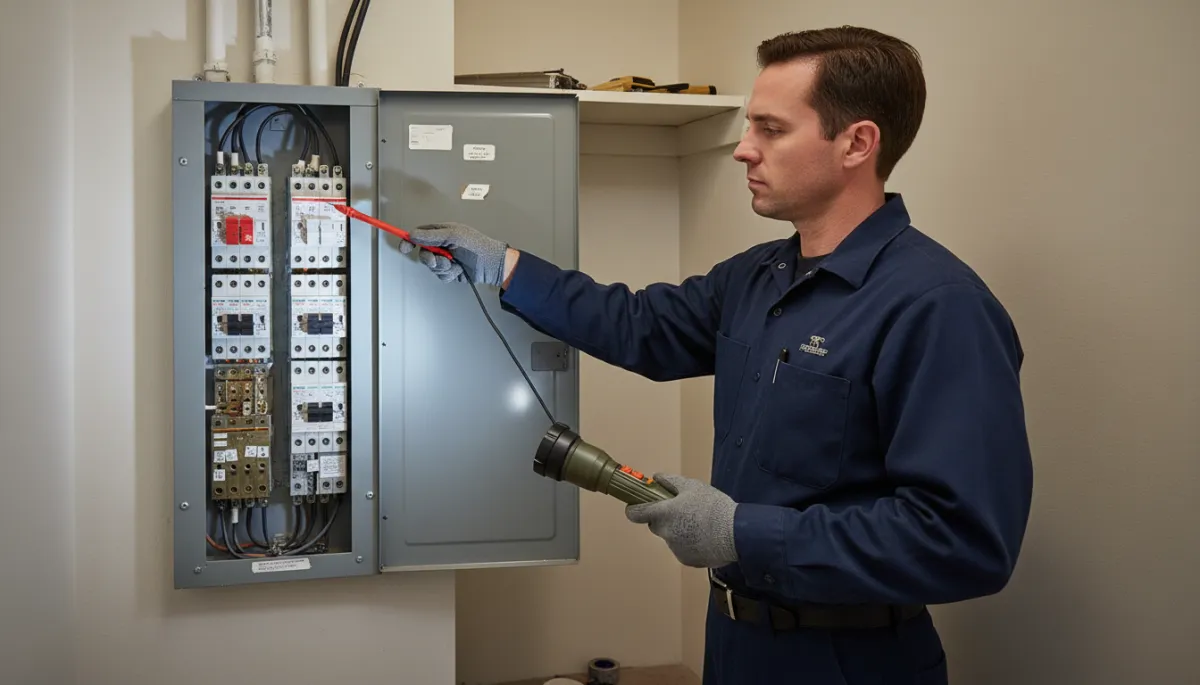
I’m with S.I. Service Group here in Tupelo, and between our HVAC calls and electrical repair jobs, I’m in and out of houses from Mooreville to Mantachie, over to Fulton, Amory, and even up toward Corinth and Oxford all week long. I can tell you this: most folks don’t think about their breaker panel until the lights go out — or they smell something they shouldn’t. By the time you’re smelling burnt plastic, that’s not “maybe I should get it checked.” That’s “you needed it checked last year.”
So let’s walk through seven real-world signs your breaker panel is trying to tell you it’s done its time. I’ll break down what each sign means, what usually causes it, why it’s extra risky in our North Mississippi heat and humidity, what a licensed electrician actually does to fix it, and what can happen if you shrug it off — before you’re calling me from the driveway at 10 p.m. because the house went dark and the panel’s buzzing like a hornet’s nest.
Sign #1: Breakers That Trip All the Time for “No Reason”
If you’re walking out to the panel every few days to reset the same breaker, that’s your first big red flag. I was at a house in Saltillo not long ago — nice little place, young family — and the homeowner said, “That living room breaker just doesn’t like my TV.” No, friend. The breaker doesn’t “have moods.” It’s doing its job and telling you something’s wrong, either with the circuit or the panel itself.
- What it means: Constant tripping usually means the breaker is overloaded, worn out, or your panel’s not sized for the way we live now — big TVs, multiple fridges, window units, chargers everywhere. In older homes around Tupelo, Amory, and Verona, I see panels built for a different era, now pushed way past what they were designed to handle. Sometimes the wire size doesn’t match the breaker size, or multiple rooms have been tied into one circuit over the years. The breaker’s job is to trip before the wire overheats — when it keeps tripping, it’s telling you that wire is right at its limit.
- Why it’s risky in our climate: In Mississippi summers, your AC and heat pump are pulling hard. Add in dryers, ovens, dehumidifiers, and space heaters in the shoulder seasons, and those circuits stay hot. Heat plus overloaded breakers equals more wear, loose connections, and higher fire risk. Around here, electrical safety in Tupelo MS isn’t just a buzzword — it’s what keeps your house standing when the panel’s under full load in July.
- What a licensed electrician does: When we come out to a home in Tupelo, Mantachie, or Fulton for nuisance tripping, we don’t just swap a breaker and leave. We’ll:
- Measure the actual load on that circuit with test equipment
- Check wire size versus breaker size to make sure they match code
- Inspect connections at the panel and at key outlets or devices for heat damage
- Look at the overall panel load to see if the whole system is maxed out
- What happens if you ignore it: Keep flipping that breaker back on, and you’re gambling that the wire will fail before the breaker does. Overheated wires can melt insulation inside your walls, cause arcing, and start a fire you can’t see until it’s too late. You can also slowly cook your electronics and HVAC equipment with repeated power interruptions.
Sign #2: Panel Feels Warm, Hot, or Has a Burning Smell
I walked into a home in Verona one afternoon and the homeowner said, “The panel’s been kind of warm, but it’s always been like that.” I opened the door, and the heat rolling out of that thing felt like opening an oven. That’s not “always been like that.” That’s “we’re lucky this house is still here.”
- What it means: A warm or hot breaker panel, or any kind of burning plastic or smoky smell, usually means loose connections, overloaded breakers, or damaged bus bars inside the panel. Electricity trying to push through a bad connection makes heat — and heat is what starts fires inside walls and panels. You might also see discoloration around certain breakers, melted insulation, or breakers that feel loose when you touch them.
- Why it’s risky in our climate: Our humidity in North Mississippi already makes everything corrode faster — screws, lugs, and bus bars can get pitted and loose. Add summer heat in Tupelo, attic heat on top of that (especially in garages and exterior closets in Amory, Corinth, and Oxford), and you’ve got a panel working in an oven. A hot panel in January is bad; a hot panel in August is an emergency.
- What a licensed electrician does: When we respond to a “hot panel” call in Tupelo or Saltillo, we:
- Use an infrared camera or temperature gun to spot hot spots on breakers and bus bars
- Tighten and torque-test connections to manufacturer specs
- Check for arcing marks, burnt insulation, or damaged breaker stabs
- Evaluate whether the panel itself is still safe to keep in service
- What to do right now: If you smell burning or the panel is hot to the touch, don’t ignore it. Turn off any non-essential breakers, especially for heavy loads like dryers and window units, and call for electrical repair in Tupelo immediately. This is not a “wait until next week” situation. You may be looking at a panel upgrade in Mississippi sooner than you planned, but that’s a whole lot cheaper than a house fire.
Discoloration and scorch marks around breakers are clear warnings your panel is overheating.
Sign #3: Lights Flicker or Dim When Big Appliances Kick On
You know that little “brownout” you see when the AC kicks on and the kitchen lights dip for a second? That’s not just “old house charm.” I was in a Mooreville home where every time the heat pump started, the dining room chandelier looked like a haunted house. That’s your electrical system saying, “I’m struggling here.”
- What it means: Flickering or dimming lights when a big appliance starts can point to a weak connection at the panel, an undersized service, or a panel that’s simply overloaded and outdated. The panel may not be distributing power evenly, or the main lugs might be loose or corroded. In some homes in Corinth and Oxford, we also see older aluminum wiring tied into newer panels without the right connectors, which can create voltage drops and hot spots.
- Why it’s risky in our climate: Air conditioners and heat pumps in Tupelo and Amory pull heavy current, especially when it’s brutally hot or cold. If your panel and service can’t handle that surge, the strain shows up as flickering lights. Over time, that strain builds heat at weak spots in the panel — again, heat plus old equipment equals fire risk and premature failure of everything from motors to electronics.
- What a licensed electrician does: On a flickering-lights call, we’ll:
- Check voltage at the panel with large loads turning on and off
- Inspect and torque the main lugs and neutral connections
- Verify your service size (100A, 150A, 200A) against your actual load
- Coordinate with the power company if we suspect an issue at the meter or transformer
- What happens if you ignore it: Persistent flickering and dimming can slowly damage motors in your AC, refrigerator, and well pump, and it can cook sensitive electronics. It’s also one of those “early whispers” that your panel or service is at the edge. If you keep adding more load — another freezer, a window unit, an EV charger — the next step is often a full outage or a failed main breaker.
Sign #4: Your Panel Is Old, Obsolete, or a Known Problem Brand
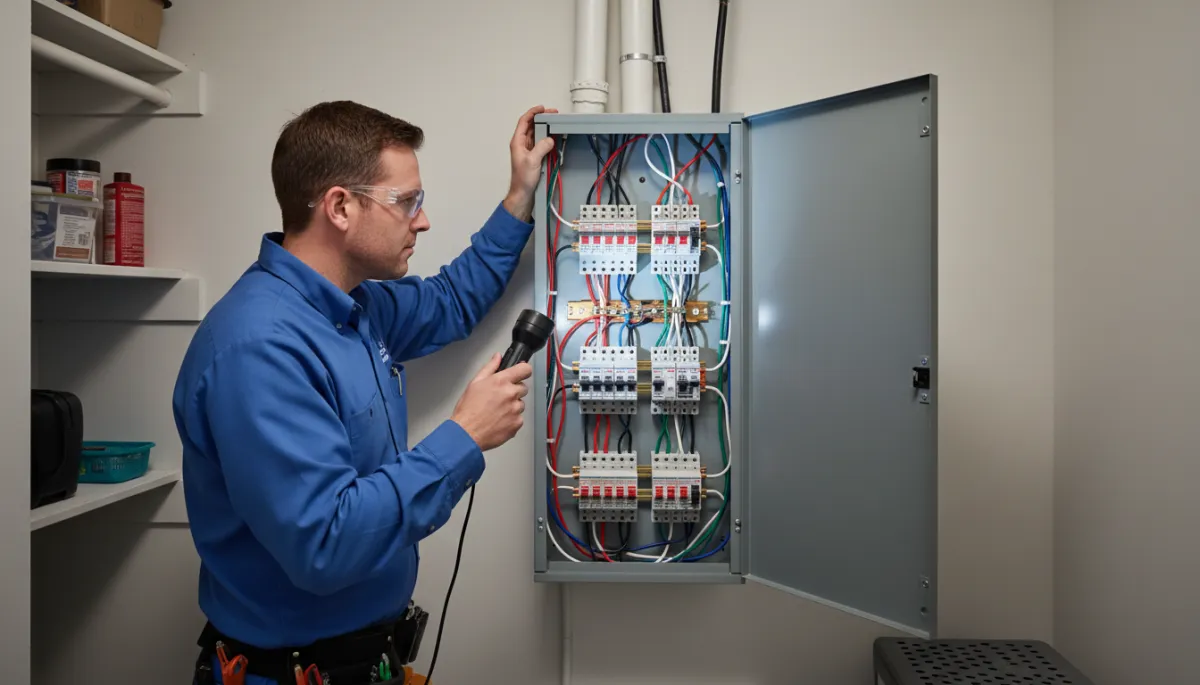
I’ve walked into homes in Saltillo where the panel looked like it hadn’t been touched since 1987 — faded labels, half the breakers unmarked, and brand names I haven’t seen in supply houses in years. Some older panels are just outdated; others are flat-out dangerous and have known issues with breakers not tripping when they should.
- What it means: If your home still has an old fuse box, a panel that’s rusting, or one of the problem brands we electricians side-eye the second we see them, you’re living on borrowed time. Even if it “hasn’t given you trouble,” the internal parts may be brittle, corroded, or simply not up to modern code or loads. Age alone is a sign you should be talking about breaker panel replacement in Tupelo, Oxford, or wherever you are in North Mississippi.
- Why it’s risky in our climate: Older panels weren’t built with today’s HVAC loads in mind. Pair that with decades of Mississippi humidity, maybe a little water intrusion in a garage or exterior wall, and you’ve got rust and corrosion you can’t always see from the front. In places like Fulton, Amory, and New Albany, I’ve opened panels that looked okay on the cover but were falling apart inside from moisture and age.
- What a licensed electrician does: When we’re called to evaluate an older panel in Tupelo, Corinth, or Mantachie, we’ll:
- Identify the panel brand and model and check for known safety bulletins or recalls
- Inspect breakers for signs of overheating, loose fit, or failure to trip under test
- Look at grounding and bonding to make sure they meet current code
- Assess whether it’s safe to keep using or if replacement is the right move
- What happens if you ignore it: With certain problem brands, the scary part is that the breaker may not trip when it should. That means a dead short or overload can run unchecked until the wire or device fails, often in flames. Insurance companies and home inspectors in areas like Oxford and Corinth are starting to flag these panels more often — and replacing them on your timetable is a lot less stressful than replacing them because a sale or claim forces the issue.
Sign #5: Rust, Corrosion, or Water Stains Around the Panel
One of the ugliest panels I’ve seen was in a garage between Tupelo and Plantersville. The homeowner said, “Yeah, the roof used to leak over there, but we fixed it.” The roof might’ve been fixed, but the panel had rust, water stains, and corrosion on half the breakers. Water and electricity are a bad mix — always have been, always will be.
- What it means: Rust, white or green corrosion, bubbling paint, or water stains around or inside the panel door tell us moisture has been where it shouldn’t be. That moisture attacks metal parts, loosens connections, and can even create conductive paths where they don’t belong. Once corrosion gets going inside a panel, it rarely gets better on its own. You may also see mineral trails from condensation in damp basements in Amory or Fulton.
- Why it’s risky in our climate: North Mississippi humidity is relentless, and garages, basements, and exterior walls don’t stay bone-dry. In Amory, Mantachie, and Mooreville, I see a lot of panels in damp spaces — laundry rooms, exterior utility closets, basements that sweat in the summer. That constant moisture speeds up corrosion and makes already-old panels fail faster and more dangerously.
- What a licensed electrician does: When we see rust or water damage, we:
- Determine where the moisture is coming from — roof leak, plumbing, condensation, or exterior penetration
- Open the panel and check the bus bars, breakers, and wiring for deep corrosion
- Test suspect breakers and connections for heat and resistance
- Recommend either targeted repairs or full panel replacement, depending on the damage
- What to do right now: Don’t scrape or “clean up” corrosion yourself. Take a clear picture of the panel (door open and closed) and call for electrical repair in Tupelo or your town. A pro can tell you if it’s surface-level or if the damage goes deeper. In many cases, a full breaker panel replacement in Tupelo or elsewhere is the safest long-term fix when water’s been involved.
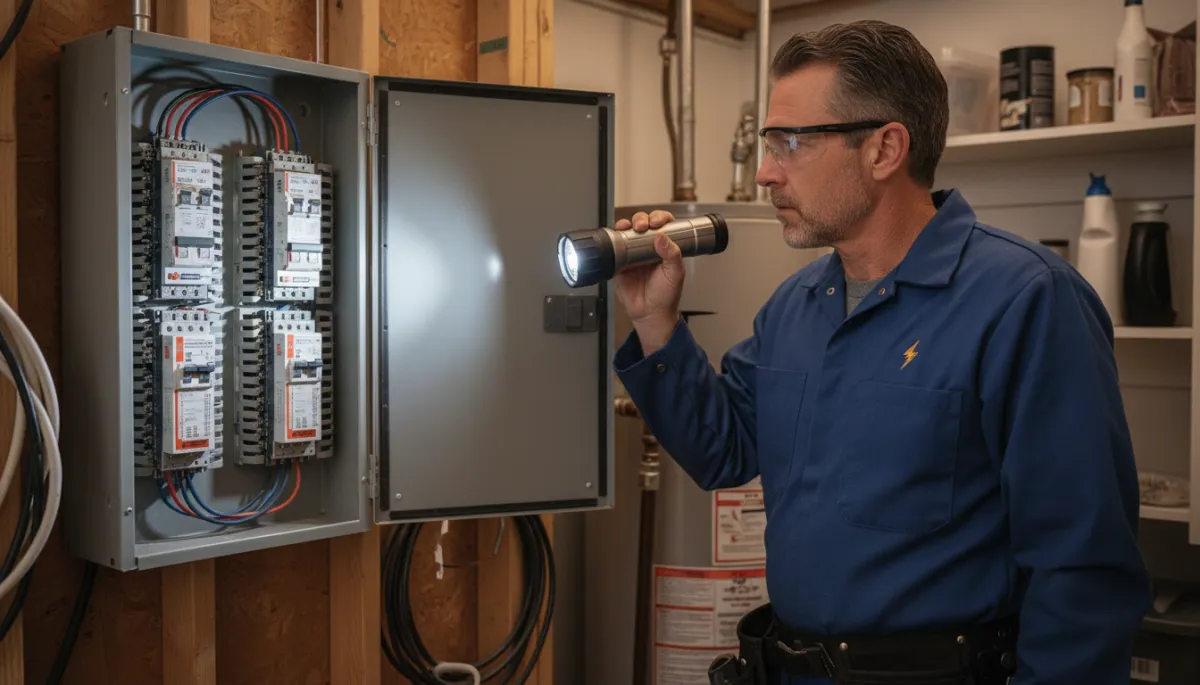
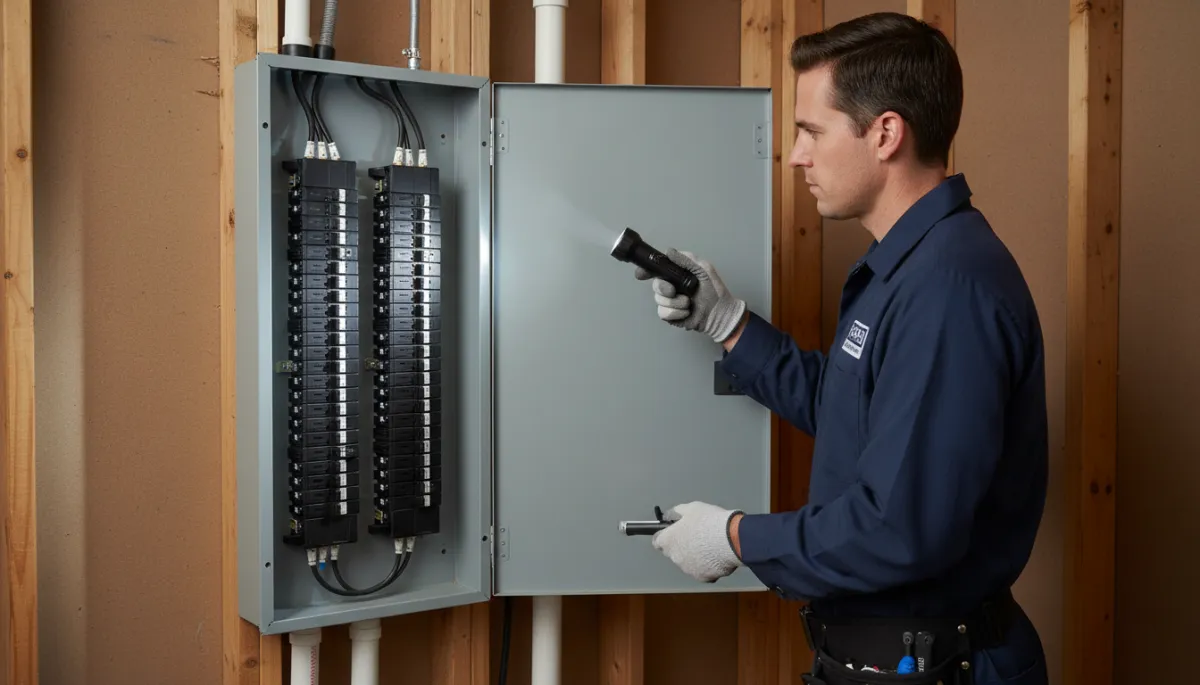
A thorough panel inspection catches hidden problems before they turn into expensive emergencies.
Sign #6: Not Enough Breakers, Double-Tapped Wires, or a Crowded Mess
I opened a panel in New Albany one day and just stared at it for a second. Wires doubled up under the same breaker, random cables coming in with no clamps, neutrals and grounds all jumbled together — it looked like a bowl of spaghetti. The homeowner said, “The last guy said it was fine.” Well, maybe fine for him, but not for code, and not for safety.
- What it means: When there aren’t enough breaker spaces, people get “creative” — double-tapping two wires under one breaker, using the wrong size breaker for the wire, or adding subpanels in sketchy ways. All of that puts stress on the panel and makes it harder for breakers to do their job correctly. A crowded, hacked-up panel is a sign the system has outgrown what was originally installed, which I see a lot in older homes around Tupelo, Oxford, and Amory that have had multiple additions or remodels.
- Why it’s risky in our climate: When every breaker space is jammed full and wires are stuffed in there tight, heat can’t dissipate well. In a Mississippi summer, that panel is already working in a hot environment. Add poor workmanship, and you’ve got a panel running hotter than it should, with a higher chance of loose wires and arcing — especially when your AC and appliances kick on all at once in Tupelo or Saltillo.
- What a licensed electrician does: When we see a crowded panel in Mantachie, Fulton, or Corinth, we:
- Identify every circuit and label it properly so you know what’s what
- Correct double-tapped breakers and mismatched wire sizes
- Evaluate whether a subpanel or full service upgrade is the right long-term solution
- Clean up wiring so it’s neat, code-compliant, and easier to service in the future
- What happens if you ignore it: Messy, overcrowded panels are where a lot of hidden problems hide — loose neutrals, undersized wires on big breakers, or bootlegged connections. That can lead to shocks, fires, and mystery issues like half the house losing power when one breaker trips. It also makes future repairs more expensive because every visit starts with an hour of detective work.
Sign #7: You’re Adding Big New Loads — EVs, Hot Tubs, Shops, or HVAC Upgrades
Lately I’ve been in more homes around Tupelo, Amory, Corinth, and Oxford where folks are adding electric vehicle chargers, big shop tools, or upgrading their HVAC systems. That’s great — I’m all for comfort and convenience — but your old 100-amp panel from 1975 wasn’t designed with an EV charger and a 3-ton heat pump in mind. It’s like asking a riding mower to pull a tractor’s workload.
- What it means: Any time you’re planning a big new electrical load — new HVAC system, tankless water heater, EV charger, detached shop, or a serious kitchen remodel — your panel and service need to be part of the conversation. If you just keep adding circuits to an already maxed-out system, something’s going to give, and it won’t be at a convenient time.
- Why it’s risky in our climate: Those big loads don’t just run on mild days. They run hardest when it’s brutally hot or cold — the exact times when the rest of your electrical system is under strain. In Tupelo, Saltillo, and Mantachie, I see a lot of folks adding window units or space heaters in extreme weather, which only piles more load on a panel that’s already near its limit.
- What a licensed electrician does: Before you sign off on that new equipment, we can:
- Perform a load calculation on your home to see what your panel and service can safely handle
- Design dedicated circuits for EV chargers, shop tools, or hot tubs so they don’t steal from critical loads
- Coordinate panel upgrades with HVAC upgrades so your comfort system and electrical system work together
- What happens if you ignore it: Best case, you end up with nuisance tripping and frustrated family members. Worst case, you overload your service, overheat your panel, and damage that expensive new HVAC system or EV charger you just paid for. Planning the electrical side up front saves you money and headaches down the road.
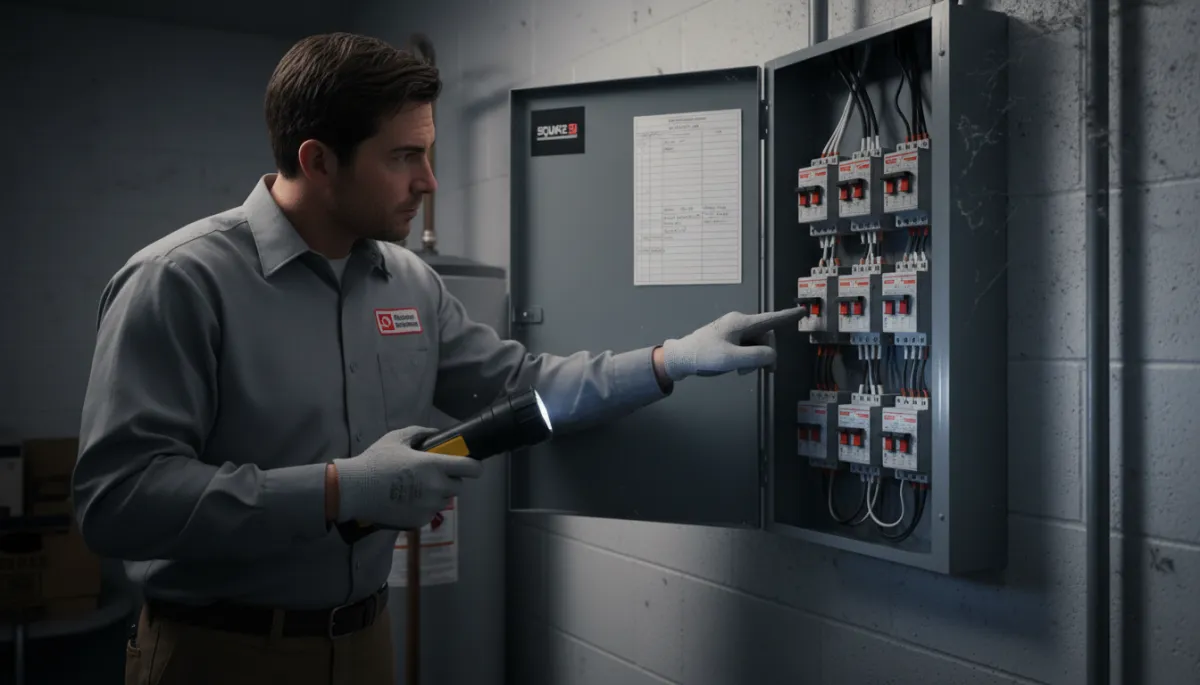
Proper PPE and correct installation are non‑negotiable when upgrading a home’s breaker panel.
Real Talk: Why Panels Fail Faster Around Here
Let me pull the curtain back a little. Between the HVAC work and electrical repair in Tupelo and the surrounding towns, I see the same pattern over and over. Our panels in North Mississippi live a hard life. They’re dealing with:
- Long, hot summers where the AC rarely gets a break
- High humidity that speeds up rust and corrosion, especially in garages and exterior closets
- Older homes in Tupelo, Verona, and Mooreville that were never designed for today’s electrical loads
- DIY “add-ons” over the years — somebody’s uncle added a circuit, then a handyman added another, and now the panel’s a patchwork quilt
That’s why electrical safety in Tupelo MS isn’t just about having smoke detectors and surge protectors. It starts at the heart of the system — the breaker panel. If that heart is weak, everything else is at risk, no matter how careful you are with extension cords and power strips. If you haven’t already, it’s worth reading our guide on protecting your whole home from surges here in North Mississippi: Whole Home Surge Protector in Tupelo MS. Pairing a healthy panel with proper surge protection is one of the best investments you can make in your home.
FAQ: What Homeowners Around Tupelo Ask Me About Breaker Panels
1. How long does a breaker panel usually last?
In perfect conditions, you might get 30–40 years out of a panel. Around Tupelo, Saltillo, Amory, and Corinth, with our heat and humidity, I start getting nervous once a panel is pushing past that 25–30 year mark — especially if it’s been heavily loaded for HVAC and modern appliances. Age alone doesn’t mean automatic replacement, but it does mean it’s time to have a licensed electrician take a hard look at it and talk about options for an electrical panel upgrade in North Mississippi.
2. Is it safe to reset a tripped breaker myself?
Resetting a breaker once, when you know you overloaded a circuit — like running a hair dryer, space heater, and vacuum on the same outlet — is usually fine. Flip it fully to OFF, then back ON. But if it trips again right away, or keeps tripping every few days with normal use, stop. That’s when you call for electrical repair in Tupelo or your town. Repeatedly resetting a breaker that’s trying to protect you is like ignoring the check engine light and just turning the radio up louder.
3. Can I replace a breaker or panel myself to save money?
I know we’ve got a lot of handy folks in Tupelo, Verona, Mantachie, and Mooreville, and I respect that. But swapping breakers and especially replacing a panel is not like changing a light fixture. Even with the main breaker off, there are parts inside that stay live and can kill you if you slip. Plus, the work has to be done to code, with the right breaker types, torque on connections, and proper grounding. This is where you want a licensed electrician in Tupelo MS, Amory, or Saltillo who does this every day, not a YouTube tutorial and a prayer.
4. How do I know if I need a full breaker panel replacement in Tupelo or just a repair?
That’s where an on-site inspection matters. If your panel is relatively modern, in good shape, and the issues are limited to a couple of weak breakers or a loose connection, a targeted electrical repair in Tupelo can solve it. But if the panel is old, corroded, undersized, or a known problem brand, and you’re having repeated issues, a full breaker panel replacement in Tupelo, Oxford, or anywhere in North Mississippi is often the safer and more cost-effective long-term move. I’d rather see you spend money once on doing it right than nickel-and-dime a dying panel for years.
5. Will upgrading my panel help with future projects?
Absolutely. A good panel upgrade in Mississippi isn’t just about fixing today’s problems; it’s about planning ahead. When we upgrade a panel in Tupelo, Saltillo, Amory, or Corinth, we look at what you’ve got now and what you might want down the road — shop out back, pool, hot tub, EV charger, bigger HVAC, even a standby generator. Building in that capacity now means you’re not starting from scratch every time you want to improve your home.
6. How often should my electrical panel be inspected?
For most homes around Tupelo, Oxford, and Fulton, I like to see panels checked every 5–7 years, or any time you’re doing major work — new HVAC, big remodel, or adding significant loads. If your home is older, or you’ve had flickering lights, tripping breakers, or any of the signs we talked about, don’t wait that long. A quick inspection from a trusted electrician in Tupelo MS can save you from some ugly surprises when the weather turns extreme.
7. Will a new panel or repair help protect my electronics and HVAC equipment?
Yes. A healthy, properly sized panel with tight connections means more stable voltage and fewer sudden drops or spikes — and that’s exactly what your TVs, computers, and HVAC systems in Tupelo and Amory need to live a long life. For even better protection, pair a panel upgrade with a whole-home surge protector. We cover why that matters in more detail here: Whole Home Surge Protector – Tupelo MS.
8. What other electrical safety issues should I watch for besides the panel?
Great question to be asking as a homeowner in North Mississippi. Your panel is the starting point, but things like overloaded outlets, extension cords used as permanent wiring, missing GFCI protection near water, and old two-prong outlets are all warning signs too. We put together a full guide on everyday electrical safety issues here: Electrical Woes and Home Safety Tips. It’s a good companion to what we’ve talked about in this article.
Don’t Wait for the “Big One” — Your Panel Is Talking to You
Here’s the thing I tell folks on porches in Tupelo, kitchens in Saltillo, and garages in Verona, Amory, and Mantachie: breaker panels almost never fail out of the blue. They whisper for a long time before they scream. Tripping breakers, flickering lights, warm covers, that faint burnt smell, rust in the corners, double-tapped wires — those are all your early warnings. Ignore them long enough, and one hot July afternoon you’ll be standing in the dark, wondering what that buzzing sound is and why it smells like something’s cooking in the hallway.
You don’t have to be an electrician to know when something feels off. If you’ve read through these seven signs and thought, “Yeah, that sounds like my house,” then your next step is simple: get a pro to lay eyes and hands on that panel. Whether you’re in Tupelo, Saltillo, Mooreville, Mantachie, Fulton, Amory, Corinth, Oxford, New Albany, or one of the smaller spots in between, S.I. Service Group is out here every day keeping homes cool and safe — HVAC and electrical under one roof, veteran-owned, so we take reliability and safety personally.
“If something about your electrical system makes you nervous, that’s your sign to call. I’d rather come out for a five-minute reassurance visit than for a five-alarm emergency.”
— Your local S.I. Service Group electrician in Tupelo
Ready to Get Your Panel Checked Out? Here’s Your Next Move.
If your gut’s telling you something isn’t right — or you’ve seen any of the signs we just walked through — don’t sit on it. The cost of having a licensed electrician look at your panel now is nothing compared to the cost of a major failure, a fried HVAC system, or worst of all, a fire that could’ve been prevented.
Let’s catch the problem while it’s still just an inconvenience and not an emergency. We’ll talk you through what we see, what’s urgent, what can wait, and whether a simple repair or a full electrical panel upgrade in North Mississippi makes the most sense for your home and budget.
Don’t wait for your breaker panel to fail on the hottest day of the year. Call S.I. Service Group at 662-523-5514 today, or reach out through our contact page, and let’s make sure the heart of your electrical system is ready for whatever a Mississippi summer throws at it. And if you want to see more of what we do — from panel upgrades to AC tune-ups — you can always learn more about our electrical services and air conditioning services across Tupelo, Amory, Corinth, Saltillo, Oxford, Fulton, and Mantachie.
About the Author
Dan Southwick is the founder and owner of S.I. Service Group, a veteran-owned HVAC, electrical, and commercial refrigeration company serving Tupelo and North Mississippi. With over a decade of hands-on experience in residential and commercial service, Dan and his team are dedicated to honest, reliable repairs done right the first time. Licensed, bonded, and insured — proudly serving Tupelo, Amory, Corinth, Saltillo, Oxford, Fulton, Mantachie, and communities across North Mississippi.