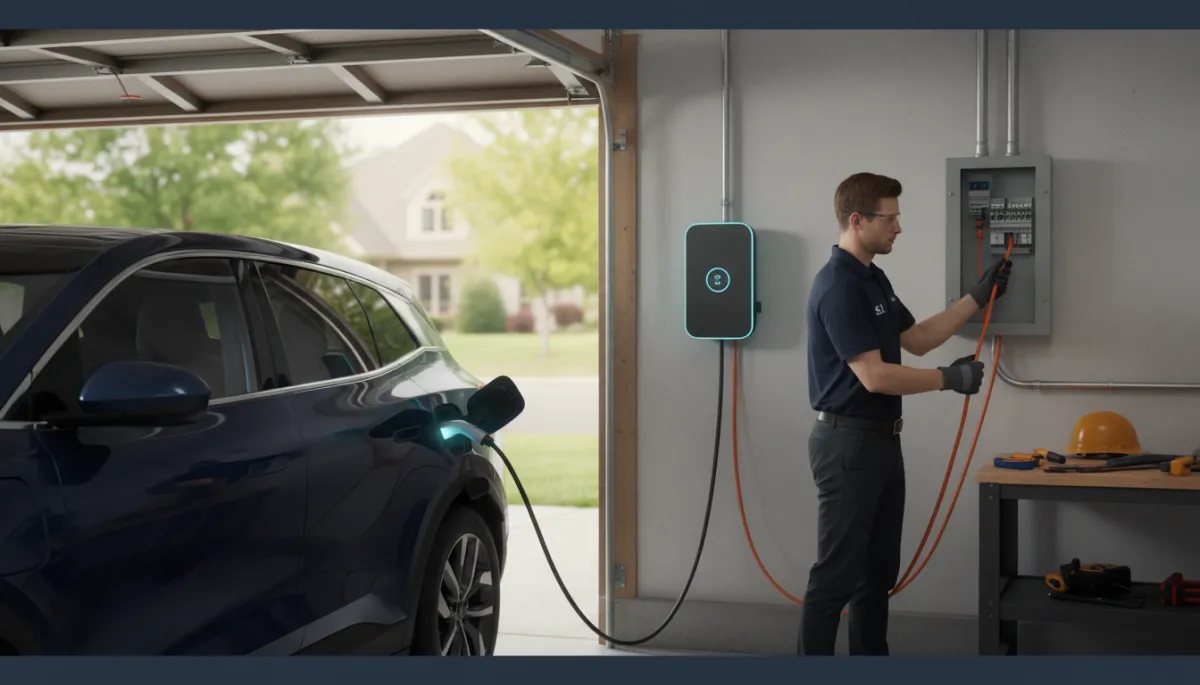
EV Charger Installation in North Mississippi
EV Charging, Electrical, HVAC, North Mississippi
EV Charger Installation in North Mississippi: What Homeowners Need to Know
Thinking about bringing an electric vehicle home to Tupelo, Amory, Corinth, Saltillo, Oxford, Fulton, or Mantachie? Before you plug in, your home’s electrical system needs to be ready—and in most North Mississippi homes, it is not ready out of the box. Working with a local, veteran-owned team like S.I. Service Group ensures your EV charging setup is designed and installed the right way from day one.
1. EV Ownership Is Growing in Mississippi—But Most Homes Aren’t Ready
Every year, more North Mississippi drivers trade gas pumps for charging cables. From commuters in Tupelo and Saltillo to university staff in Oxford, electric vehicles (EVs) are showing up in more driveways. Yet the majority of homes in our region were wired long before anyone imagined a 40-amp EV charger running for hours every night. As Mississippi EV adoption grows, more homeowners are realizing that safe, reliable charging starts with the right electrical design, not just buying a charger off the shelf.
An EV charger is not just another appliance. It is a high-demand, continuous electrical load that must be installed to the latest safety standards in the National Electrical Code (NEC). When it is done wrong, you risk nuisance breaker trips at best—and overheated wiring, fire hazards, or denied insurance claims at worst. That is why EV charger installation in Tupelo, MS and across North Mississippi belongs in the hands of a licensed electrician Tupelo MS who understands both residential electrical systems and the 2023 NEC requirements for EV charging equipment. Choosing a team like S.I. Service Group means your project is evaluated from a whole-home perspective, not just “where can we hang this charger.”
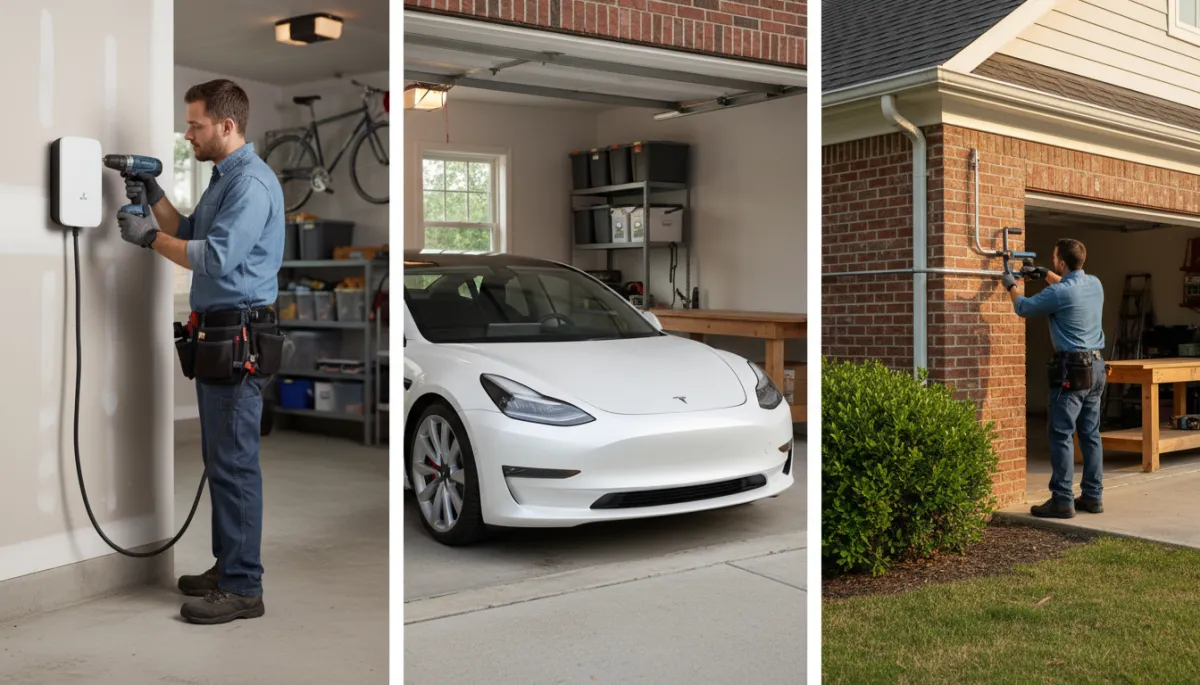
2. Level 1 vs Level 2 Chargers: Which Is Right for North Mississippi Homes?
Level 1 Charging (120V): Slow but Simple
Almost every EV comes with a basic Level 1 charger that plugs into a standard 120-volt outlet—the same kind you use for a lamp or phone charger. Level 1 typically adds about 2–5 miles of range per hour of charging. For some drivers in Amory or Mantachie who only drive a few miles a day, that can be enough if the vehicle sits plugged in overnight and during the day.
- Uses a standard 120V household receptacle
- Slowest charging option—often 20+ hours for a full charge from low battery
- Minimal equipment cost, but still needs a safe, dedicated circuit if used regularly
The problem? Many older outlets in garages or carports around Tupelo, Corinth, and Fulton are daisy-chained with lights, freezers, or power tools. Running a Level 1 charger on an already-loaded 15-amp circuit is a recipe for overheated conductors and tripped breakers. Even Level 1 charging should be evaluated by a professional if you plan to rely on it daily. A quick safety check by a licensed electrician Tupelo MS can confirm whether your existing outlet is truly up to the task.
Level 2 Charging (240V): The Practical Standard for Most Homeowners
For most North Mississippi homeowners, a Level 2 charger is the practical choice. Level 2 units use a 240-volt circuit—similar to an electric dryer or range—and typically add 10–60 miles of range per hour, depending on the vehicle and charger rating. The U.S. Department of Energy notes that Level 2 is the preferred option for home charging when you want to fully recharge overnight and have flexibility for longer trips.
- Requires a dedicated 240V circuit, usually 40–60 amps for residential use
- Typical overnight charging restores most or all of your battery, even from low state-of-charge
- Ideal for commuters in Tupelo, Oxford, and surrounding areas who drive 30–80 miles per day
When we talk with homeowners about EV charger installation Tupelo projects, Level 2 is almost always where we land. It strikes the right balance between cost, charging speed, and long-term flexibility—especially as families add a second EV or start planning for solar down the road.
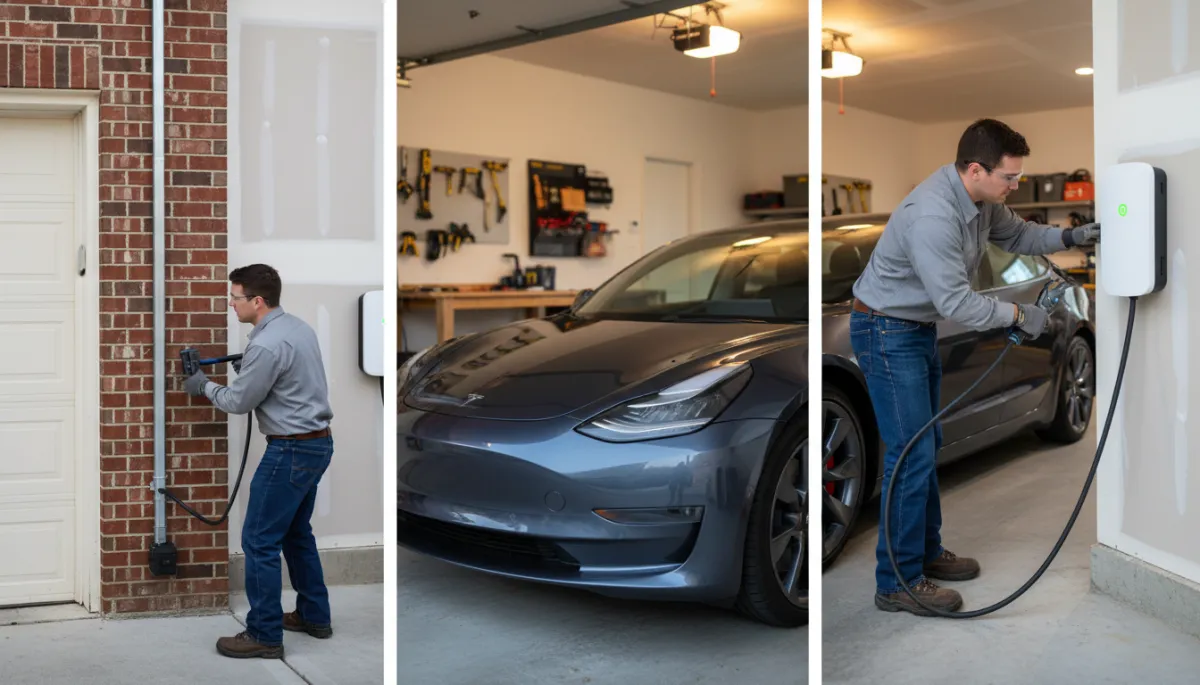
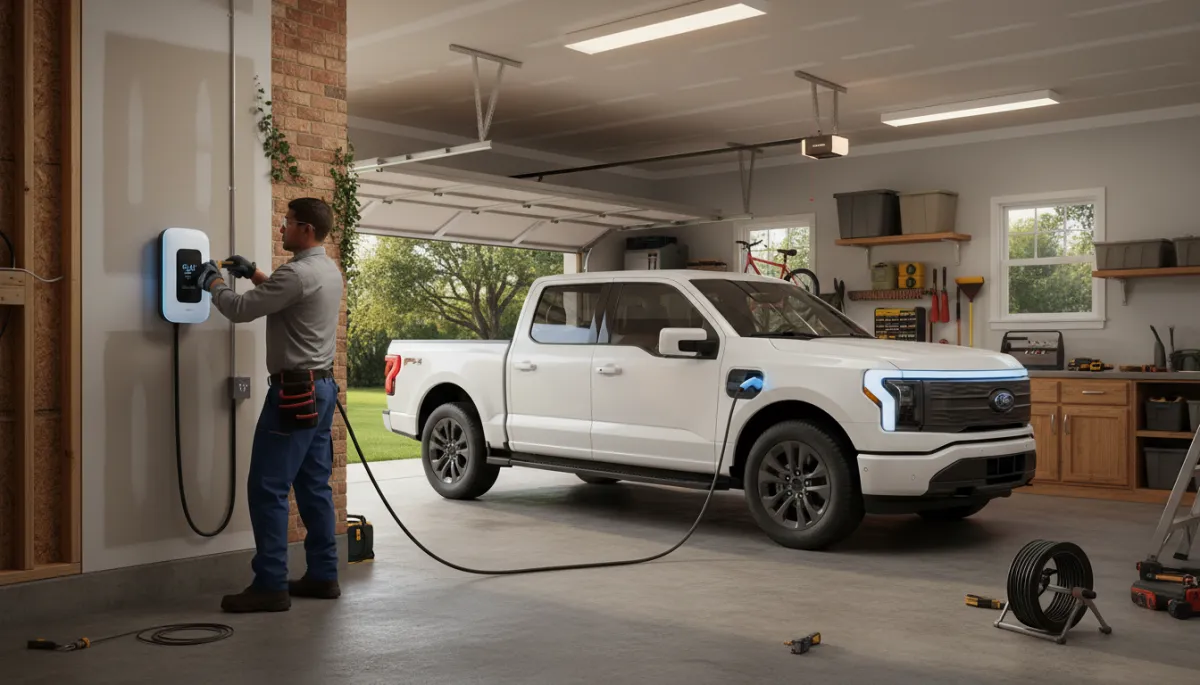
A dedicated 240V circuit is the backbone of safe, reliable Level 2 charging.
3. What the 2023 NEC Requires for EV Charging (Article 625)
The 2023 edition of the National Electrical Code, NFPA 70, devotes Article 625 to electric vehicle power transfer systems. While the NEC is not federal law, it becomes enforceable once adopted by the state or local Authority Having Jurisdiction (AHJ). In practice, inspectors in Mississippi expect installations to meet the current or most recently adopted NEC edition, so treating 2023 NEC as the design standard is the safest approach for EV charging station installation in Mississippi. If you want to dig deeper into how the latest code cycle affects your home, we break this down further in our related article on 2023 NEC code changes for Tupelo homeowners.
Dedicated Branch Circuit Requirements
Under NEC 625.40, any EV charging equipment over 120 volts or 16 amps must be supplied by a dedicated branch circuit. That means your EV charger cannot share a circuit with your garage lights, freezer, or receptacles. For a typical 32–40 amp Level 2 charger, this usually means a 40–50 amp, 240-volt circuit reserved exclusively for that equipment.
Continuous Load and Sizing at 125%
EV charging is considered a continuous load because it commonly operates for three hours or more at a time. NEC 625.41, referencing 210.20(A), requires that continuous loads be sized at 125% of the charger’s maximum current. Practically, that means:
- A 32A charger → 40A breaker and appropriately sized wire
- A 40A charger → 50A breaker (common for many home Level 2 chargers)
- A 48A charger → 60A breaker and heavier-gauge conductors
Load Calculations and Panel Capacity (NEC 220.57)
NEC 220.57 outlines how EV charging demand is factored into a dwelling’s load calculation. The code requires using at least 7,200 volt-amperes (VA) or the charger’s nameplate rating, whichever is larger, when calculating total service demand. This ensures your main service and panel can safely handle the additional EV load alongside HVAC equipment, water heaters, ranges, and other appliances common in North Mississippi homes. For older homes, we often pair this EV-specific calculation with a broader discussion about electrical panel upgrades in older Tupelo homes.
GFCI Protection and Grounding Requirements
NEC 625.54 requires ground-fault circuit interrupter (GFCI) protection for EV charging outlets, whether 120V or 240V. This may be provided by a GFCI breaker in the panel or by built-in personnel protection within the EVSE unit, depending on the listing and manufacturer’s instructions. Proper equipment grounding conductors and bonding—as required by NEC Article 250—are also mandatory, especially for outdoor installations in carports or driveways in Tupelo, Oxford, or Corinth where moisture is common.
Future-Ready Provisions and Energy Management (NEC 625.42)
The 2023 NEC recognizes that many homes will eventually have more than one EV. Section 625.42 allows multiple EV chargers to share capacity through an Energy Management System (EMS) or Power Control System (PCS), instead of requiring a separate full-size circuit for each charger. For a homeowner in Tupelo planning to add a second EV in a few years, designing with this in mind today can avoid costly rework later. This is especially important if you are also thinking about solar panels and battery storage in North Mississippi, where load management becomes even more valuable.
4. What a Licensed Electrician Actually Does During EV Charger Installation
Professional EV charger installation in Tupelo, MS is far more than “adding a plug.” A veteran-owned company like S.I. Service Group follows a disciplined, step-by-step process to ensure safety, code compliance, and long-term reliability for North Mississippi homeowners.
Step 1: Panel and Service Assessment
A licensed electrician begins by inspecting your main service panel, meter, and grounding system. They verify your service size (often 100A, 150A, or 200A), check for open breaker spaces, and evaluate existing loads—HVAC, electric range, water heater, dryer, and other significant appliances. This is where NEC 220 load calculations come into play to determine whether your system can support an additional 40–60 amp EV circuit safely.
Step 2: Designing a Dedicated 240V Circuit
Next, the electrician designs a dedicated branch circuit sized for your specific charger. For many Level 2 chargers, that means a 50-amp, 240-volt circuit using 8 AWG copper conductors, or a 60-amp circuit with 6 AWG copper for higher-output units. They determine the best route from your panel to the charger location, considering conduit type, physical protection, and NEC requirements for cable length and mounting height.
Step 3: Installing Conduit, Wiring, and Protection Devices
The electrician then installs conduit (often EMT, PVC, or flexible conduit depending on the environment) and pulls appropriately sized conductors. They terminate these conductors in a new breaker in the panel—often a GFCI breaker—bond enclosures as required, and label the circuit clearly as EV charging. Outdoors, they ensure the EVSE or receptacle is listed for wet locations and properly mounted between the required height range above grade or floor.
Step 4: NEMA 14-50 Receptacle or Hardwired EVSE
Many homeowners choose a NEMA 14-50 receptacle for flexibility—this 240V, 50A outlet can power many portable Level 2 chargers. Others prefer a hardwired EVSE unit permanently mounted on the wall. A licensed electrician will follow the manufacturer’s instructions, NEC 625, and local codes to ensure proper terminations, torque on lugs, and correct ground and neutral handling for your chosen setup.
Step 5: Testing, Commissioning, and Homeowner Orientation
Before the job is complete, your electrician will test the circuit, verify correct voltage and polarity, and confirm GFCI operation. They will power up the EVSE, connect your vehicle, and verify charging current. Finally, they will walk you through safe operation, recommended charging schedules, and basic troubleshooting so you can use your new Level 2 charger with confidence in Tupelo, Oxford, or anywhere else in North Mississippi.
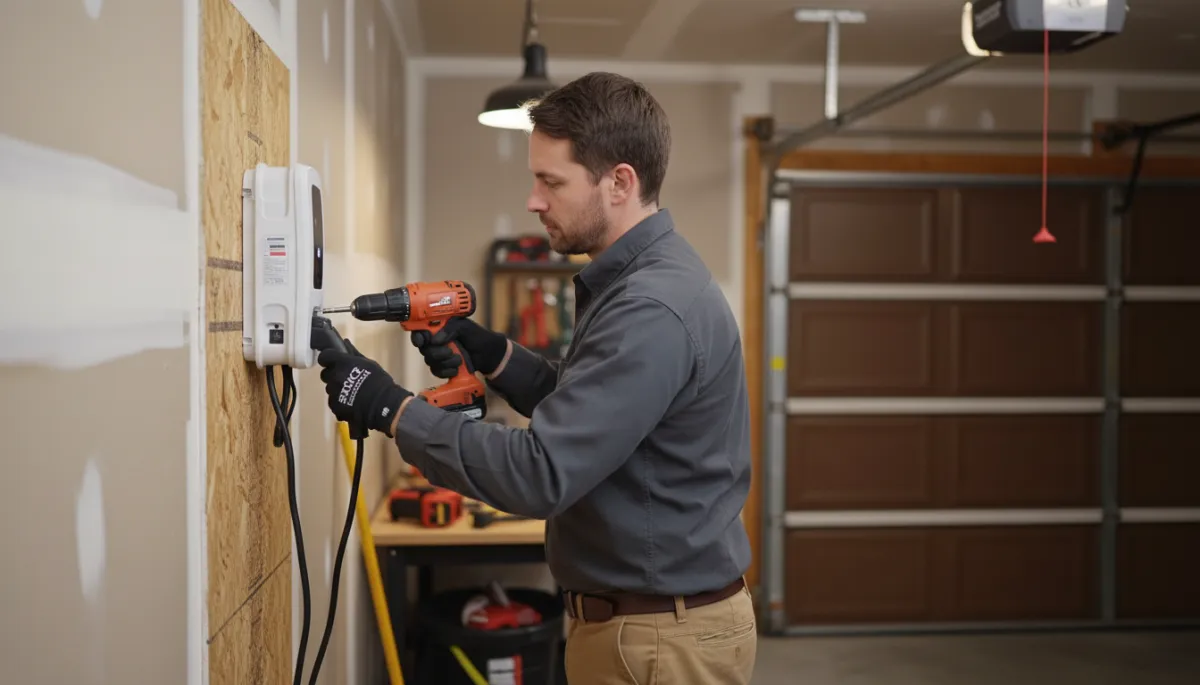
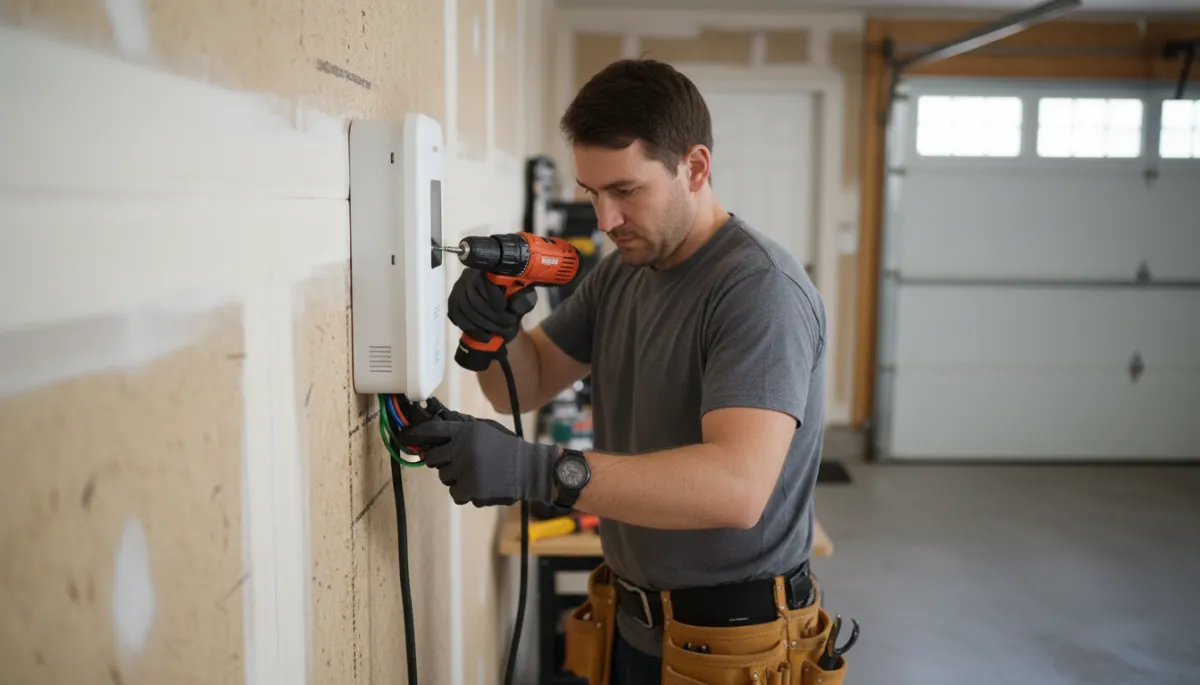
A properly mounted, listed Level 2 charger delivers fast, dependable home charging.
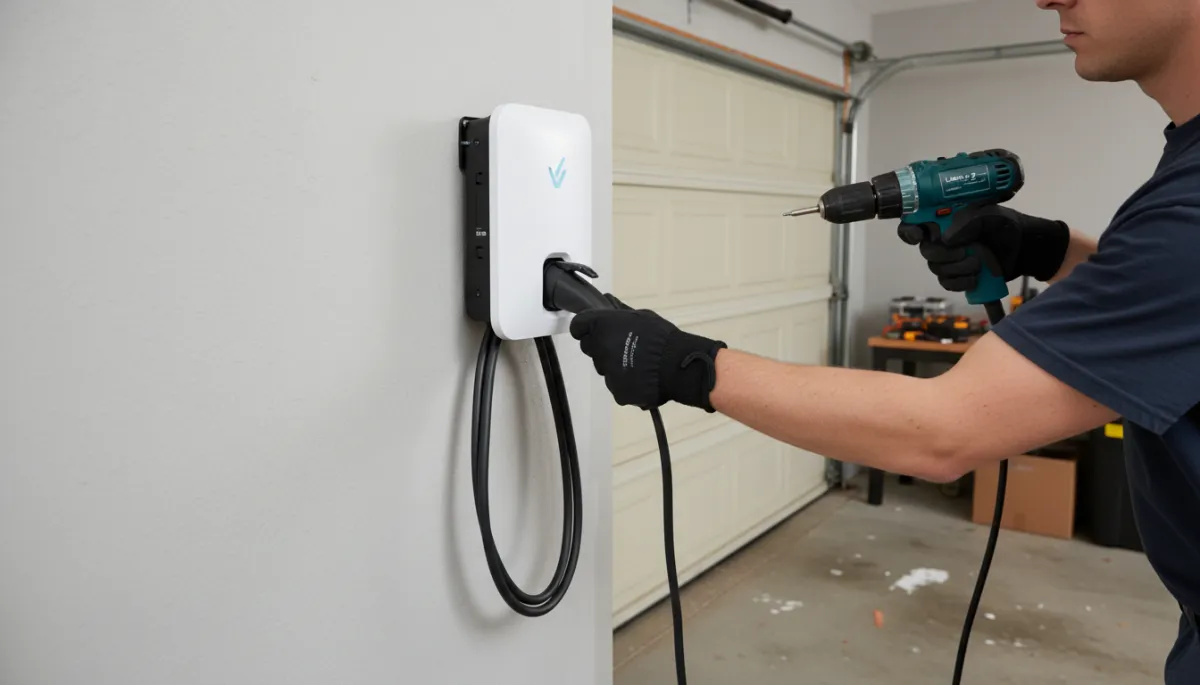
5. When a Panel Upgrade Is Required Before EV Charger Installation
Many homes built decades ago in Tupelo, Amory, Fulton, and Mantachie still have 100-amp service panels—or older fuse boxes—that were never designed to support central HVAC, electric water heaters, modern appliances, and EV charging on top of everything else. In these cases, adding a 40–60 amp continuous EV load can push your system beyond safe capacity.
A licensed electrician will run a formal load calculation to determine whether your existing service can handle the additional demand. If it cannot, you may need a panel upgrade—often to 200 amps—to support a Level 2 charger. This is particularly common in older Tupelo neighborhoods, a topic we cover in detail in our article “Does My Old Tupelo Home Need to Be Rewired?” and our focused guide on electrical panel upgrades for older Tupelo homes.
6. Permits and Inspections: Why Pulling a Permit Matters in Mississippi
In most Mississippi jurisdictions, EV charger installation is considered a significant electrical modification and requires a permit and inspection. A reputable electrician in Tupelo, MS will handle the permitting process on your behalf, coordinate with the local AHJ, and schedule required inspections. Skipping the permit may seem like a shortcut, but it can create serious problems later:
- Your homeowner’s insurance may deny claims related to unpermitted electrical work.
- Home inspectors may flag unpermitted EV circuits when you sell your home in Tupelo, Oxford, or Corinth, complicating or delaying the sale.
- You may be required to rip out and redo the work to meet current NEC standards.
Permits and inspections are not red tape; they are an independent safety check that protects you, your family, and your investment. As a veteran-owned company, S.I. Service Group treats compliance and documentation with the same seriousness we bring to every breaker panel safety evaluation.
7. Cost Breakdown: What to Expect for EV Charger Installation in the Tupelo Area
Actual costs depend on your home’s layout, panel capacity, and charger choice, but recent data for Mississippi and national averages provide a reliable range. For a typical residential Level 2 EV charger installation in Tupelo and surrounding communities, here is what you can expect:
Typical Price Ranges (Charger + Installation)
- Best-case, simple install: $800–$1,500 (modern 200A panel, short wire run in attached garage)
- Typical North Mississippi homeowner: $1,500–$3,500 (reflecting Mississippi’s higher-than-average installation costs)
- Complex installs: $3,500–$6,000+ (panel upgrade, long runs, detached garage, or trenching)
How Those Costs Break Down
- Charger hardware: $300–$700 for a quality Level 2 unit
- Labor, wiring, breakers, and conduit: $500–$2,000 depending on complexity and distance
- Permits and inspections: typically $75–$300 in many Mississippi jurisdictions
- Panel or service upgrade (if required): $1,500–$4,000+ depending on scope
Keep in mind there is a federal tax credit currently available that can cover 30% of the total charger and installation cost, up to $1,000 for residential installations, if your project is completed by June 30, 2026. That can significantly reduce your net out-of-pocket cost. For larger projects or panel upgrades, S.I. Service Group can also discuss payment options—visit our financing page for details.
8. Future-Proofing: Planning for Solar, a Second EV, or Higher Loads
EV ownership rarely moves backward. Many Tupelo and Oxford homeowners who install one Level 2 charger today will add a second EV—or solar panels feeding that charger—within a few years. Making smart decisions now can save you thousands of dollars and multiple rounds of electrical work later.
- Consider a 200A panel if you are close to capacity. If your existing service is marginal, upgrading now when adding an EV charger is often more economical than doing it piecemeal later.
- Ask about load management and EMS solutions. The 2023 NEC allows multiple chargers on a managed circuit. If you plan to have two EVs in your Tupelo or Corinth home, designing an energy-managed EV circuit now can avoid a second full-capacity run later.
- Think about solar integration. If you plan to add solar, your EV charger placement, conduit routing, and panel space should be planned with future solar interconnection in mind. A coordinated design avoids conflicts and rework. For more on this, see our guide to solar panels and battery storage in North Mississippi.
During your EV charger consultation, an experienced electrician Tupelo, MS homeowners trust should ask about your long-term plans—not just your immediate charging needs. At S.I. Service Group, that forward-looking approach is built into every code-compliant electrical upgrade we design.
9. Why EV Charger Installation Must Be Done by a Licensed Electrician
Online videos and big-box stores can make EV charger installation look like a simple DIY project. It is not. You are dealing with high-current, continuous loads, complex code requirements, and life-safety considerations. A licensed electrician brings:
- Formal training in NEC Article 625, load calculations, grounding, and GFCI protection
- Experience with local permitting offices in Tupelo, Oxford, Corinth, and surrounding municipalities
- The ability to identify hidden hazards in older wiring or panels before they become a problem
- Documentation that protects you with manufacturers, inspectors, and insurers
As a veteran-owned electrical and HVAC company, S.I. Service Group applies a mission-ready mindset to every EV charging project. Our team treats your home like a critical system: designed to spec, executed with discipline, and verified before it is turned over to you and your family.
10. EV Charger Installation FAQ for North Mississippi Homeowners
1. Do I really need a Level 2 charger, or is Level 1 enough?
If you drive only a few miles a day and can leave your EV plugged in for long periods, Level 1 may be adequate. However, most homeowners in Tupelo, Amory, and Oxford find Level 1 too slow for daily commuting and weekend trips. A Level 2 charger typically restores a full charge overnight and provides far more flexibility, which is why it is the standard recommendation for home use in North Mississippi. When we evaluate your home for EV charger installation Tupelo projects, we look at your driving habits and panel capacity to recommend the right level for you.
2. Will a Level 2 charger raise my electric bill significantly?
Charging an EV does add to your electric usage, but for most drivers it is still cheaper per mile than gasoline. Your total cost depends on your driving habits, local electric rates, and vehicle efficiency. A licensed electrician can help you understand your charger’s power draw in kilowatts so you can estimate monthly usage and consider off-peak charging if your utility offers time-of-use rates. Many North Mississippi homeowners are pleasantly surprised when they compare their new electric bill to what they used to spend at the pump.
3. How long does professional EV charger installation take?
Most straightforward Level 2 installations in an attached garage can be completed in a single day once the permit is approved. More complex projects—such as panel upgrades, long conduit runs, or detached garages—may take two or more days, plus inspection time. S.I. Service Group will provide a clear schedule during your estimate so you know exactly what to expect and when you can start charging at home.
4. Can I use an existing dryer or range circuit for my EV charger?
In most cases, no. The 2023 NEC requires a dedicated branch circuit for EV charging equipment over 120V or 16A. Sharing a circuit with a dryer, range, or other appliance violates code and can overload wiring. A licensed electrician will design a new, dedicated circuit sized specifically for your charger and vehicle requirements so you are not choosing between drying clothes and charging your car.
5. Do I need a panel upgrade to install an EV charger?
Not always. Many homes in Tupelo, Saltillo, and Corinth with 200A service and available breaker space can support a Level 2 charger without a full panel upgrade. However, older homes with 100A service or heavily loaded panels often do require upgrades. A professional load calculation is the only reliable way to know for sure, which is why an on-site assessment is essential before quoting your project. If we find that your panel is undersized, we will walk you through options and may recommend an upgrade based on the same principles outlined in our panel upgrade guide for older Tupelo homes.
6. What is a Level 2 EV charger and do I need one at home?
A Level 2 EV charger uses a 240-volt circuit—similar to an electric range or dryer—to deliver faster charging than a standard 120V outlet. Most residential Level 2 units in North Mississippi are rated between 30 and 50 amps and can add 20–40 miles of range per hour for many vehicles. If you commute regularly, take weekend trips, or share an EV between family members, a Level 2 charger at home in Tupelo or Oxford is highly recommended so you are not waiting all day for your battery to refill.
7. Do I need a permit to install an EV charger in Mississippi?
In most Mississippi cities and counties, yes—adding a new 240V circuit or EVSE is considered major electrical work and requires a permit and inspection. Even when a permit is not strictly required, following NEC 2023 standards is still the expectation from manufacturers and insurers. As part of any EV charger installation Tupelo project, our team pulls the necessary permits, coordinates with the local inspector, and provides documentation for your records.
8. How much does EV charger installation cost in Tupelo?
For most North Mississippi homeowners, a complete Level 2 installation—including charger hardware, wiring, breaker, and permit—falls between $1,500 and $3,500. Simple installs with a modern 200A panel and short wire runs can be under $1,500, while projects that require panel upgrades, long conduit runs, or detached garages can reach $3,500–$6,000+. During your on-site estimate, we provide a line-item breakdown so you know exactly where every dollar is going.
9. Will my electrical panel support an EV charger, or do I need an upgrade?
The only honest answer is: it depends on your existing loads and service size. Many newer homes in Tupelo with 200A service and some open breaker space can support a 40A or 50A EV circuit with no issues. Older homes with 60A or 100A service, or panels that are already packed with double-tapped breakers, often need upgrades before safely adding a continuous EV load. As part of our assessment, we perform NEC-compliant load calculations and explain whether your panel can handle the charger you want—or if an upgrade is the safer route.
10. How long does it take to charge a car with a home charger?
With a Level 1 charger on a standard 120V outlet, you can generally expect 2–5 miles of range per hour of charging. That means a full charge from a low battery can easily take more than 24 hours. With a properly sized Level 2 charger on a 240V circuit, most drivers in North Mississippi see 20–40 miles of range per hour, which is enough to refill the battery overnight even after a long commute. The exact time depends on your vehicle’s battery size and the amperage of the charger we install.
Ready for Safe, Reliable EV Charging at Home? Call S.I. Service Group Today.
If you are considering EV charger installation Tupelo MS or anywhere in North Mississippi—including Amory, Corinth, Saltillo, Oxford, Fulton, and Mantachie—do it the right way the first time. Trust a veteran-owned team that understands both the 2023 NEC and the realities of local homes, weather, and utility infrastructure.
Call S.I. Service Group today at 662-523-5514 or visit our contact page to schedule EV charger installation. We will design and install a code-compliant Level 2 charger that fits your home, your budget, and your future plans—so you can plug in with confidence every night. If you prefer to talk through options first, call us today and we will walk you through the process step by step.
About the Author