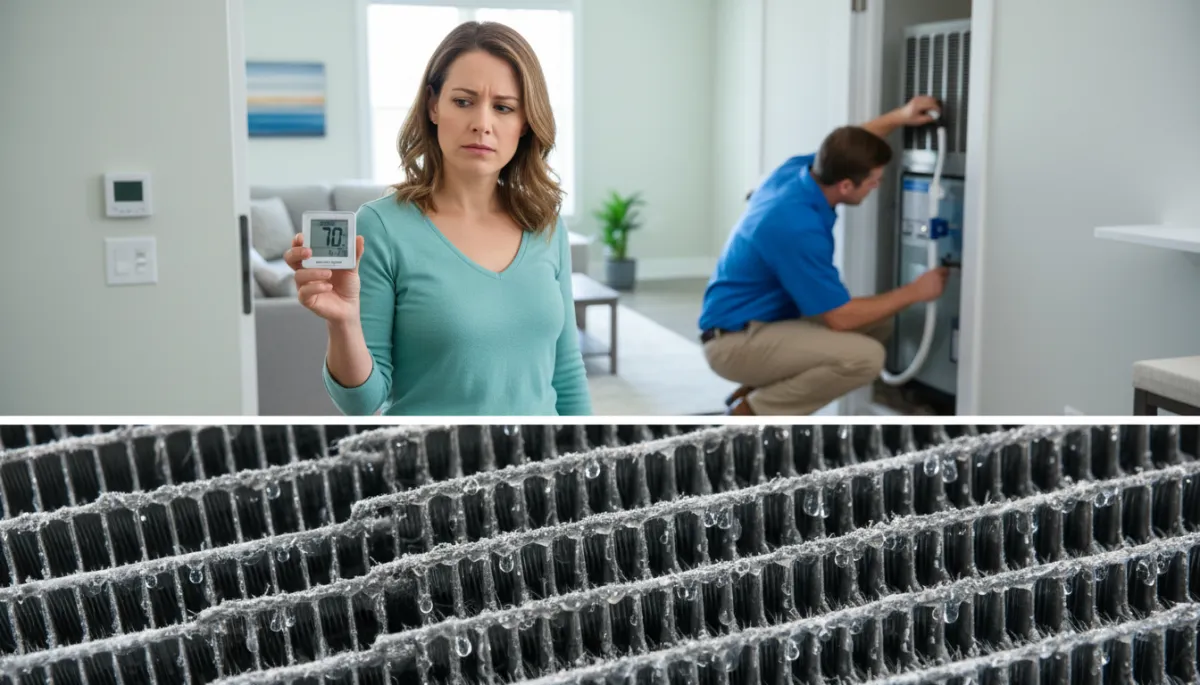
Why Does My House Feel Humid Even With the AC Running? A Tupelo Technician Explains
HVAC, Indoor Air Quality, Humidity, Tupelo MS
Why Does My House Feel Humid Even With the AC Running? A Tupelo Technician Explains
I’m going to be straight with you: Mississippi summer humidity is its own beast. I’ve walked into houses in Tupelo where the thermostat says 72, the air conditioner’s humming along, and it still feels like you’re standing in a wet towel. The AC is running, power bill’s climbing, but the air is heavy, sticky, and just plain uncomfortable. So why doesn’t it feel right?

I’m one of the techs with S.I. Service Group here in Tupelo, and I spend my summers crawling through attics in Saltillo, checking crawlspaces in Verona, and answering the same question over and over: “Why is my house so muggy with the AC on?” If you’re dealing with high indoor humidity in Tupelo or anywhere in North Mississippi, this is for you. Let me walk you through what’s actually going on, in plain English, the way I’d explain it standing in your kitchen.
Why North Mississippi Humidity Is a Different Kind of Brutal
Before we get deep into your air conditioner, it helps to understand the weather we’re fighting against. North Mississippi isn’t just “a little humid.” We sit in a pocket where Gulf moisture, summer heat, and long daylight hours all team up to make the air feel heavy from May through October.
On a typical July afternoon in Tupelo or Amory, outdoor humidity can sit at 70–80% with temperatures in the 90s. In places like Corinth and Oxford, you’ll see the same thing: you step outside and your glasses fog over, your shirt sticks to you, and the air feels thick. All that moisture doesn’t magically stop at your front door – it’s constantly trying to work its way into your home through cracks, doors, windows, and even your ductwork.
That’s why homeowners in Tupelo, Amory, Corinth, Saltillo, Oxford, Fulton, and Mantachie so often call us saying, “It’s cool, but it still feels damp in here.” Around here, you can’t just think about temperature – you have to think about moisture load too.
First Things First: How Your AC Is Supposed to Remove Humidity
Your air conditioner doesn’t just cool the air; it’s also your main dehumidifier in the summer. Think about a cold glass of sweet tea on your porch in Mooreville. You set it down, and pretty soon, water starts running down the outside of the glass. That’s moisture from the air hitting something cold and turning into water droplets. Your indoor coil – the part of the AC that’s inside your house – works the same way.
Warm, humid air from your house gets pulled across that cold coil. As the air passes over it, two things happen:
- The air cools down (that’s the part you feel on your skin).
- Moisture in the air turns into water on the coil and drips into a drain line (that’s the part that lowers humidity).
When everything is sized right and working right, your AC will keep your house at a comfortable temperature and keep the indoor humidity in a good range – usually around 45–55%. That’s the sweet spot where your house doesn’t feel sticky, your skin doesn’t feel clammy, and you don’t have that “muggy house with AC on” feeling that so many folks complain about in indoor humidity Tupelo MS calls we run every week in the summer.
So Why Does the House Still Feel Humid With the AC Running?
Around Tupelo, Saltillo, Verona, Mooreville, Plantersville, Mantachie, Fulton, Amory, Corinth, Oxford, and New Albany, I see the same handful of issues causing HVAC humidity problems over and over. Let’s walk through the big ones, why they’re so common in North Mississippi, and what you can actually do about them.
1. Oversized AC: Cools Fast, Dehumidifies Poorly
This is probably the number one reason I see for a muggy house with AC on. An “oversized” system just means the AC is too big for the house. Sounds like a good thing, right? Bigger, stronger, cools faster? Not when it comes to humidity.
Here’s the problem: A big unit blasts a lot of cold air in a short amount of time. Your thermostat hits the set temperature fast, so the system shuts off. But the coil needs time to get good and cold and pull moisture out of the air. If it’s only running in short bursts, it never really gets into that deep dehumidifying mode. You end up with cool air that’s still moist – that cold, clammy feeling I hear about all the time in AC not dehumidifying North Mississippi calls.
On top of that, oversized systems tend to short cycle more (we’ll get to that in a minute), which is hard on parts and can actually shorten the life of your equipment. In places like newer subdivisions around Tupelo, Saltillo, and Oxford, I’ve seen plenty of 3- or 4-ton systems crammed into homes that really only needed 2–2.5 tons if they’d been sized correctly.
What to do: If I walk into a home in Amory, Fulton, or Corinth and suspect an oversized system, I’ll usually:
- Check run times – is the system short cycling (just a few minutes on, then off)?
- Measure humidity with a meter – often it’s 60% or higher inside, even when it’s cool.
- Look at the home’s insulation, window area, and duct design instead of just square footage – that’s how we do a proper load calculation.
- Talk about options: sometimes we can adjust fan speed, add a dedicated dehumidifier, tweak thermostat settings, or, when it’s time to replace, make sure the new unit is properly sized for real dehumidification in Tupelo MS conditions, not just temperature.
2. Dirty Evaporator Coils: Your “Sweet Tea Glass” Is Caked in Gunk
Remember that cold glass analogy? Now imagine if that glass was covered in dust, grease, and pollen. Water wouldn’t collect and run off the way it’s supposed to. Same thing happens when your indoor coil is dirty. I see this a lot in homes near fields in Mantachie or older homes in Plantersville with leaky return ducts pulling in attic dust and insulation fibers.
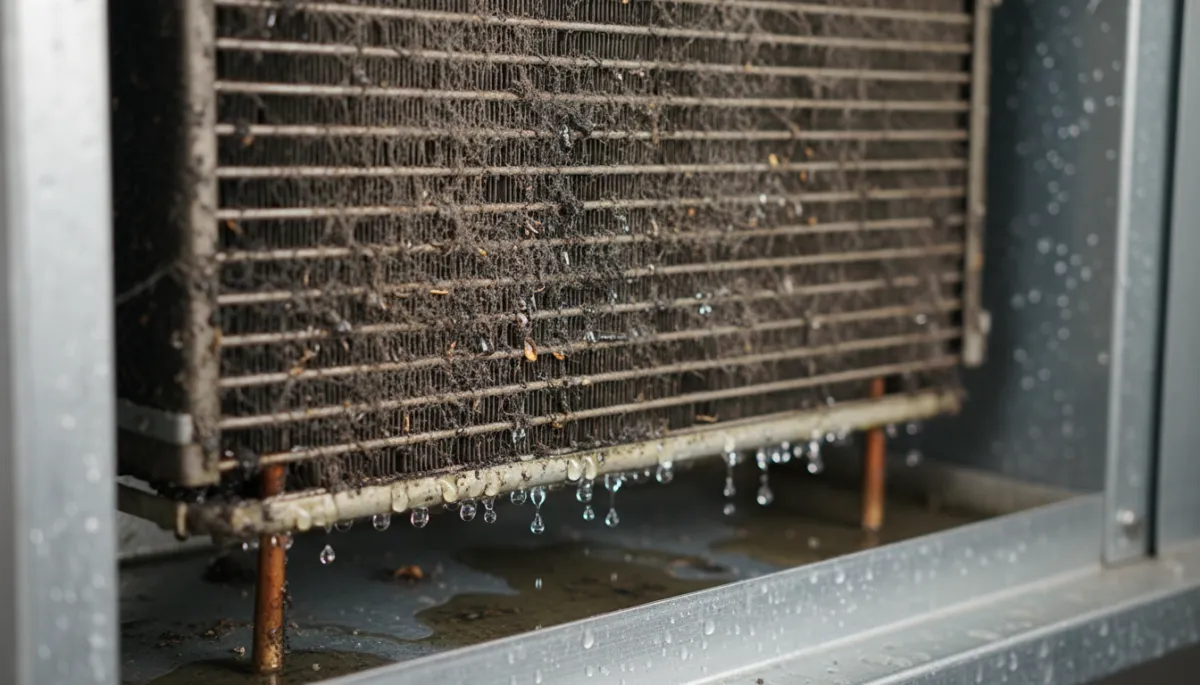
A dirty coil can’t grab heat and moisture efficiently, leaving rooms cool but clammy.
A dirty coil can’t move heat or moisture like it should. Air struggles to pass through, the coil doesn’t get as cold, and less moisture condenses on it. That’s a big reason for air conditioning humidity Mississippi complaints, especially in homes that haven’t had regular maintenance in a while.
Technically speaking, dirt on the coil acts like an insulating blanket. It raises the coil temperature and increases the system’s latent load (the work it has to do to remove moisture). That means your AC has to run longer to do the same job, and even then, it may never quite get your humidity where it should be.
What to do: When I’m on a call in New Albany, Saltillo, or Oxford and I see a dirty coil, the fix usually looks like this:
- Safely clean the evaporator coil with the right cleaner (not just spraying water and hoping for the best).
- Check your air filter type and change schedule – sometimes we upgrade to a better filter that still allows good airflow.
- Look for leaky returns pulling attic or crawlspace air into the system, which is a double whammy: dirtier coils and higher humidity.
- Recommend a regular maintenance plan so coils, drains, and filters are checked before peak season.
3. Refrigerant Issues: Not Enough “Cold” to Pull Out Moisture
Your AC uses refrigerant to move heat from inside to outside. If the refrigerant charge is off – usually from a small leak – the coil inside may not get cold enough. When that happens, it still cools the air some, but it doesn’t condense moisture like it should. I see this a lot in older systems in Verona, Fulton, and Corinth that have never had a thorough check-up beyond “it still blows cold-ish air.”
When refrigerant is low, the evaporator coil temperature rises. In our climate, you want that coil cold enough to drop air below its dew point so water comes out of the air and onto the coil. If the coil is too warm, you might get a little cooling, but very little true dehumidification.
You might notice:
- Long run times, but the house never quite feels right.
- Higher power bills and still dealing with high indoor humidity Tupelo type symptoms – sticky skin, musty smells, maybe even foggy windows in the morning.
- Ice buildup on the refrigerant lines or coil in more severe cases.
What to do: This is not a DIY fix. When I’m called out on an HVAC humidity problems Tupelo job and suspect refrigerant issues, I’ll:
- Check pressures and temperatures to see if the charge looks off for the conditions that day.
- Look for signs of leaks – oil spots, corroded connections, or damaged coils.
- Repair leaks where possible, then properly evacuate and recharge the system to manufacturer specs – not just “top it off and go.”
- Talk with you about the age of the system. On older units in Tupelo, Amory, or Oxford, it sometimes makes more sense to plan a replacement than to keep feeding refrigerant into a leaky system.
4. Duct Leaks: You’re Air-Conditioning the Attic or Crawlspace
I can’t tell you how many times I’ve been under a house in Mooreville or over a garage in Saltillo and found big gaps in ductwork just dumping cold air into the crawlspace or attic. Or the return side is sucking hot, humid attic air into the system. That’s a recipe for AC not dehumidifying North Mississippi issues, even if the equipment itself is fine.
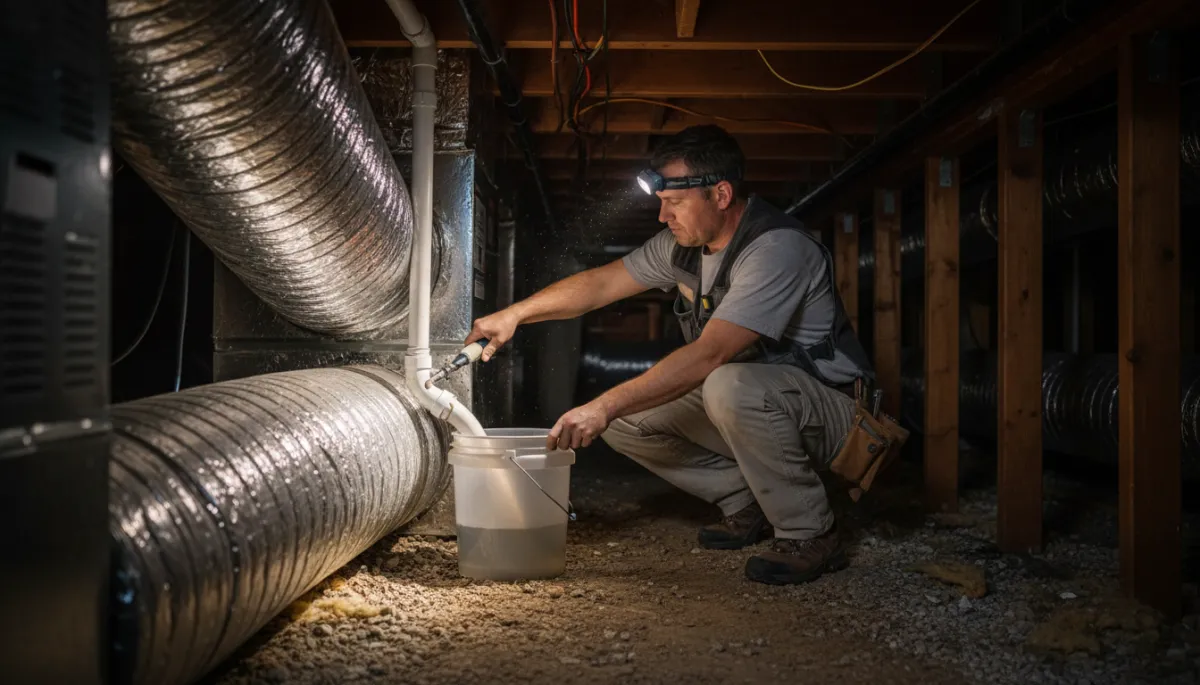
Scene of an HVAC technician in a dim crawlspace inspecting and clearing a condensate drain line...
Leaky ducts do two bad things for humidity:
- They waste cooled, dehumidified air into unconditioned spaces.
- They pull in hot, humid air from attics or crawlspaces, making the system work harder and raising indoor moisture.
In older homes in Tupelo, Amory, or Mantachie, I’ve seen returns that were basically open to the crawlspace. Every time the system kicked on, it was dragging in damp air from under the house. Not only does that crush your humidity control, it can also bring in musty odors and even mold spores.
What to do: On a duct-related indoor humidity Tupelo MS call, I’ll usually:
- Visually inspect the ductwork in the attic or crawlspace for gaps, disconnected sections, or crushed flex duct.
- Seal leaks with proper mastic or tape rated for ducts (not just regular hardware-store tape).
- Check return ducts for unsealed joints that could be pulling in attic or crawlspace air.
- Recommend duct repairs or redesign if the layout is really hurting airflow and humidity control.
5. Short Cycling: System Turns On and Off Too Often
Short cycling means your system kicks on, runs for a few minutes, then shuts off, then repeats over and over. Sometimes this is because the system is oversized, like we talked about earlier. Other times it’s a control issue, thermostat location, or even a failing part. Either way, short run times are bad news for humidity control in our kind of climate.
The coil needs time to get cold and stay cold so it can really start wringing moisture out of the air. If it’s only running five or six minutes at a time, you get temperature control but not good air conditioning humidity Mississippi control. I’ve seen this a lot in newer homes around Tupelo and Oxford where the system is powerful and the house is fairly tight, but the thermostat is in a hallway that cools faster than the rest of the home.
What to do: When I suspect short cycling on a HVAC humidity problems Tupelo call, I’ll:
- Time the cycles and see how long the system actually runs each time it starts up. Ideally, you want longer, steady cycles during peak heat.
- Check the thermostat location – sometimes just moving it or shielding it from a supply vent helps.
- Look at fan speed and settings; slowing the fan down a bit can help the coil stay colder and pull out more moisture.
- Inspect for electrical or control issues that might be causing the system to shut off early.
6. Clogged Drain Line: Water Has Nowhere to Go
Remember all that water that’s supposed to drip off the coil and out the drain line? In North Mississippi, that line can move gallons of water a day in peak summer. If the drain line clogs with algae, slime, or debris, water can back up in the pan, sometimes even back up onto the coil area. When that happens, you can get poor dehumidification, musty smells, and in bad cases, water damage.

A simple humidity gauge can confirm what you’re feeling when the air stays muggy.
I’ve cleared drain lines in crawlspaces in Amory and Fulton where the homeowner had no idea anything was wrong – they just knew the house felt damp and smelled a little “off.” Once that line was cleared and the system could dump water again, indoor humidity dropped noticeably within a day or two.
What to do: On a drain-line-related indoor humidity Tupelo MS service call, I’ll:
- Locate the drain line and clear it with proper tools and, if needed, cleaning solution to break up algae and slime.
- Check the drain pan for standing water or rust – signs it’s been clogged for a while.
- Make sure the drain line is properly sloped so water doesn’t sit and stagnate.
- Recommend adding regular drain line treatment as part of seasonal maintenance so it doesn’t just clog again next summer.
7. Air Infiltration: Outdoor Humidity Sneaking Inside
Sometimes the AC is doing its job, but the house itself is letting in so much outdoor humidity that the system can’t keep up. I see this a lot in older homes in Verona, Plantersville, and New Albany – gaps around doors, loose windows, unsealed attic hatches, and big holes around plumbing or wiring that go straight to the outside or the attic. Every time the wind blows or the dryer runs, more hot, wet air gets pulled in.
You might notice certain rooms – like a back bedroom or a bonus room over the garage – always feel more humid than the rest of the house. That’s often a sign of air leaks and poor insulation in that area, not just an AC problem. It’s a big piece of the air conditioning humidity Mississippi puzzle that folks don’t always think about.
What to do: When I’m walking a house in Tupelo, Oxford, or Mantachie looking for air infiltration, I’ll:
- Check around doors and windows for visible gaps or daylight coming through.
- Look at attic access doors, recessed lights, and plumbing penetrations for unsealed openings to the attic or crawlspace.
- Ask about how you use kitchen and bathroom exhaust fans – overusing them can actually pull more humid air into the house if the shell is leaky.
- Recommend basic air sealing and, in some cases, adding a dedicated dehumidifier if the house just naturally pulls in a lot of moisture.

Do You Need a Separate Dehumidifier in North Mississippi?
In a perfect world, a properly sized and tuned AC or heat pump will handle both cooling and humidity in most North Mississippi homes. But our climate isn’t average, and not every house is built the same. In some situations – older, leaky houses in New Albany or Corinth, big glassy sunrooms in Oxford, or homes with oversized units – a whole-home dehumidifier makes a world of difference.
A whole-home dehumidifier ties into your duct system and works alongside your AC. It can:
- Pull extra moisture out of the air even when the AC isn’t running much (like at night or on mild, humid days).
- Let you keep the thermostat a couple degrees higher while still feeling comfortable – saving energy.
- Help protect wood floors, furniture, and trim from swelling and warping.
For some of the trickier HVAC humidity problems Tupelo homes we see – especially older homes with a lot of air leakage – a dehumidifier is the missing piece that finally makes the house feel dry and comfortable all summer.
Real Questions I Get About Indoor Humidity in North Mississippi (FAQ)
1. What should my indoor humidity be in the summer?
I tell homeowners in Tupelo, Saltillo, and Amory to aim for about 45–55% relative humidity. Below 40% starts to feel too dry for most people. Above 60% is where you start getting that sticky, heavy feeling and you’re more likely to see mold and mildew issues. If you’ve got a little digital humidity gauge (they’re cheap online), that’s an easy way to check if what you’re feeling lines up with what’s really going on.
2. Why does my house feel more humid at night even though it’s cooler outside?
This is a big one in indoor humidity Tupelo MS calls. At night, the temperature drops, so your AC doesn’t run as much. But the humidity outside is still high, sometimes higher than during the day. Since your system isn’t running long cycles, it’s not pulling out as much moisture. That’s when bedrooms can feel sticky and uncomfortable, even though the thermostat says 70–72. If your system is oversized or short cycling, this problem is even worse at night.
3. Can ceiling fans fix my humidity problem?
Fans help you feel cooler by moving air across your skin, but they don’t actually remove moisture from the air. I’ve been in plenty of homes in Verona, Mooreville, and Mantachie where every fan is going full blast and it still feels like a swamp. Fans are great for comfort, but if your AC isn’t doing proper dehumidification in Tupelo MS, you’ve got to fix the system or the house, not just add more fans.
4. Do I need a separate dehumidifier if I already have central AC?
Sometimes, yes. In a perfect world, a properly sized and tuned AC system will handle both cooling and humidity in most North Mississippi homes. But in some situations – older, leaky houses in New Albany and Corinth, big glassy sunrooms, or homes with oversized units – a whole-home dehumidifier makes a world of difference. It takes some of the load off the AC and keeps humidity steady, even when the system isn’t running as much. That’s often my go-to solution on tougher HVAC humidity problems Tupelo jobs where we’ve already addressed the basics.
5. Is high indoor humidity really that big of a deal, or just uncomfortable?
It’s both a comfort issue and a home-health issue. When humidity stays high, you can get:
- Musty smells, especially in closets and back bedrooms.
- Mold and mildew growth on walls, ceilings, or around vents.
- Swelling wood floors and doors that stick when you try to open them.
- Dust mites and other allergens that thrive in damp environments.
I’ve seen all of that in homes around Amory, Mantachie, and Oxford where humidity was ignored for a few seasons. So yes, it’s about comfort, but it’s also about protecting your home and your health.
6. My AC runs constantly, but it’s still humid. Is that normal?
Not really. In the worst of July and August, your system will run a lot, but if it’s running non-stop and you still feel sticky, something’s off. It could be low refrigerant, dirty coils, duct leaks, or air infiltration like we talked about. That’s a classic AC not dehumidifying North Mississippi situation and worth having a tech come out and actually measure temperatures, humidity, and static pressures instead of guessing.
7. Are there thermostat settings that can help with humidity?
Yes. Some modern thermostats – especially when paired with variable-speed systems – have a dehumidification mode or settings that slow the fan down to pull more moisture out of the air. In homes around Tupelo and Saltillo, I’ve seen big improvements just from adjusting fan speed and disabling “fan on” settings that keep the blower running constantly (which can re-evaporate water off the coil and send it back into your home).
8. How do I know if my system is close to failing versus just needing maintenance?
If you’re seeing new symptoms – like strange noises, frequent breaker trips, warm air, or sudden spikes in your bill – along with humidity problems, it could be a sign the system is on its last legs. If the unit is 10–15+ years old and you’re in Tupelo, Amory, or Oxford, it’s worth having us take a closer look.
We’ve got a full post on this called “Warning Signs of AC Failure in Tupelo, MS” that walks through the red flags we see before a unit gives up in the middle of a heat wave.
Pulling It All Together: Getting Rid of That Muggy Feeling for Good
If your house in Tupelo, Saltillo, Verona, Mooreville, Plantersville, Mantachie, Fulton, Amory, Corinth, Oxford, or New Albany feels humid even with the AC running, you’re not imagining things. Around here, air conditioning humidity Mississippi problems are just as common as straight-up cooling problems – and sometimes more frustrating, because the thermostat looks fine but your body says otherwise.
The good news is, there’s always a reason. It might be:
- An oversized unit that cools fast but doesn’t run long enough to dehumidify.
- Dirty coils or low refrigerant robbing your system of its ability to pull out moisture.
- Duct leaks or air leaks pulling hot, wet outside air into your home and your ductwork.
- A clogged drain line or controls that make the system short cycle.
- A house that just has a higher moisture load and needs help from a whole-home dehumidifier.
When I come out on a HVAC humidity problems Tupelo call, I’m not just glancing at the thermostat and saying “looks good.” I’m checking:
- Actual indoor humidity with a meter, not just guessing based on feel.
- Temperatures across the coil and in different rooms to see how the system is really performing.
- Ductwork, drain lines, and the coil to make sure the HVAC side is doing everything it can.
- Signs of air leaks or house issues that are fighting against your AC.
Sometimes the fix is simple – clear a drain line, clean a coil, or seal a few duct leaks. Other times, we talk about adding a whole-home dehumidifier or planning for a properly sized replacement system down the road. Either way, you don’t have to just live with that sticky, uncomfortable feeling all summer. A good HVAC system in North Mississippi should handle both temperature and humidity, even with our brutal summers.
Ready to Fix That Muggy House With the AC On?
If your home anywhere around Tupelo, Amory, Corinth, Saltillo, Oxford, Fulton, or Mantachie feels damp, sticky, or musty even with the AC running, let us take a real look at it. This is what we do all day, every day in North Mississippi – not just making air colder, but solving the indoor humidity Tupelo MS problems that make your house feel uncomfortable and drive you crazy in July and August.
S.I. Service Group is a veteran-owned HVAC company in Tupelo, and we take a lot of pride in doing the job the right way – from proper sizing and diagnostics to honest recommendations. Whether you’ve got a traditional AC or a heat pump system, we can help you get your home feeling dry, comfortable, and under control again.
Give S.I. Service Group a call at 662-523-5514 or reach out through our contact page. We’ll come out, check your system, look at your ducts and drains, and help you figure out exactly why your AC isn’t dehumidifying the way it should. You don’t have to guess, and you don’t have to just accept a muggy house as “that’s just Mississippi.” We live here too, and we know how to make your home feel dry, cool, and comfortable – even when it feels like a sauna outside.
If you’re curious about upgrading or replacing your system for better humidity control, take a look at our air conditioning services and then check out our repair-or-replace guide for homeowners in Tupelo and the surrounding North Mississippi communities.
About the Author