Why Is My AC Running But Not Cooling the House? A North Mississippi Contractor Breaks It Down
It's 9 AM and you're already sweating inside your own house. The AC kicked on two hours ago. You can hear it running — the outdoor unit is humming, the air handler is blowing — but the temperature hasn't budged. You walk past a vent and the air feels... off. Not cold. Just barely cool.
I've pulled up to houses in Saltillo in the middle of July where the homeowner tells me the unit ran all night and the house never got below 81 degrees. That's one of the most frustrating calls we get at S.I. Service Group, because the system is clearly working — you just can't figure out why it isn't actually cooling.
Here's the truth: "running but not cooling" is not one problem. It's a symptom that points to a dozen different root causes, and the fix depends entirely on which one you're dealing with. Some you can handle yourself in five minutes. Most require a licensed HVAC tech. Let me walk you through all of it — from the cheap stuff to the serious repairs — so you know exactly what you're up against before you make that call.
First — What "Running But Not Cooling" Actually Means
Your air conditioner doesn't make cold air. What it does is move heat. The refrigerant in your system absorbs heat from the air inside your home, carries it outside, dumps it there, and comes back to do it all over again. When the system is "running" but not cooling, something in that heat-transfer chain has broken down.
The blower might be moving air. The compressor might be running. But heat isn't being transferred efficiently — or at all. That's why so many different problems produce the exact same symptom. You're not looking for one magic fix. You're looking for where in that chain something failed.
The Most Common Culprits
1. Clogged Air Filter
I'll start here because it's embarrassing how often this is the whole problem. A filter that's been in place for six months in a home around Tupelo or Verona — with the dust, pollen, pet hair, and summer humidity — can get so loaded that airflow across the evaporator coil drops to almost nothing. No airflow means no heat transfer. No heat transfer means no cooling, even with the system running all day long.
Pull your filter right now. If you can't see light through it, replace it. In summer, we recommend checking 1-inch filters every 30 days in homes with pets or anyone with allergies. It's a $5 fix that can save you a $150 service call.
2. Dirty Evaporator Coil
Even with a clean filter, dust and debris build up on the evaporator coil over time — especially on older systems or homes that haven't had a professional tune-up in years. When the coil surface gets coated, it can't absorb heat from the passing air effectively. The system runs, the air moves, but your house stays hot.
Cleaning an evaporator coil is a professional job. The coil sits inside the air handler and using the wrong cleaner or technique can damage the aluminum fins or introduce moisture issues. If your system is two or more years old without a coil cleaning, this could easily be your problem.
3. Dirty or Blocked Condenser Unit Outside
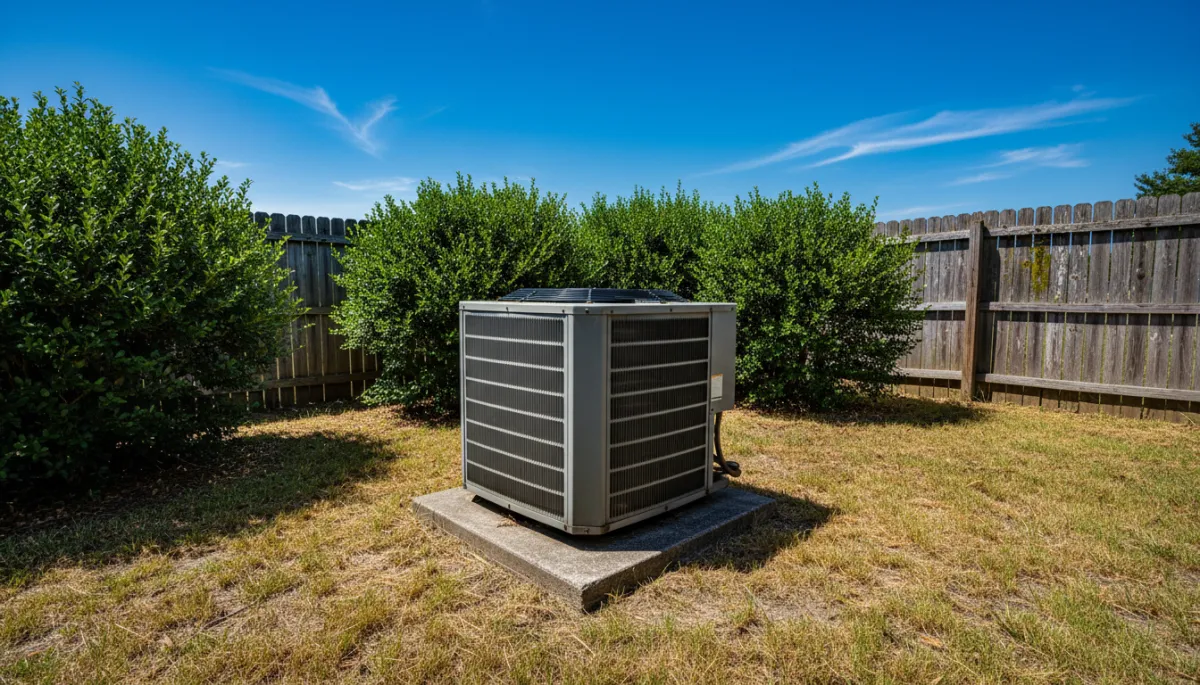
Walk out and look at your outdoor unit. Is grass growing up through the fins? Is it crowded by shrubs on three sides? Is the aluminum coil coated with cottonwood fluff, seed pods, or years of brown grime?
The condenser's job is to dump the heat your system pulled out of your house into the outside air. If the coil can't breathe — if airflow is restricted or the fins are packed — it can't do that job. The refrigerant comes back into your home still warm, and nothing gets cool. We see this constantly in Mooreville, Plantersville, and rural areas around Fulton and Amory — units buried in vegetation for years without a service call.
You can rinse the condenser coil gently from inside out with a garden hose — but never a pressure washer, which will bend the fins and make things worse. Also clear at least two feet of space on all sides of the unit.
4. Low Refrigerant / Refrigerant Leak
This is one of the most common reasons we roll a truck in the middle of July. Your system doesn't "use up" refrigerant the way a car burns gas — it circulates in a sealed loop. If it's low on refrigerant, there's a leak somewhere in that loop. And that leak isn't going to fix itself.
Signs your system might be running low:
- Air from your vents feels cool-ish but never actually cold
- Ice forming on the copper refrigerant line going into your air handler
- System runs constantly but the house temperature slowly climbs through the day
- A faint hissing or bubbling sound near the refrigerant lines
- Higher-than-normal electricity bills without any change in how you use the system
Just topping off refrigerant without finding and fixing the leak is a temporary Band-Aid. The right fix is locating the leak, repairing it, pulling a vacuum on the system to remove moisture, and then charging it to the manufacturer's spec. That requires EPA Section 608 certification and proper equipment — not a DIY job.

5. Frozen Evaporator Coil
This one confuses people every time. How does your coil freeze when it's 97 degrees outside? Easily. If airflow is restricted — dirty filter, clogged coil, closed-off vents — or refrigerant is low, the coil temperature can drop below 32°F and ice starts building up on it. Once it's encased in ice, no air moves through at all. What was "barely cooling" becomes "barely blowing."
If you suspect a frozen coil, switch the system to "fan only" mode and let it thaw for a few hours before turning cooling back on. That'll temporarily restore some function — but without fixing whatever caused the freeze, it'll just ice back up again.
6. Failing Run Capacitor
This is probably the single most common outdoor unit repair we do during summer. The run capacitor is a small cylindrical component that gives the compressor and condenser fan motor the kick they need to start and keep running strong. When it starts to fail, the motor might still turn — but it's running weak. The compressor isn't pumping refrigerant at full capacity, the condenser fan isn't moving enough air, and everything appears to run without actually working.
A capacitor replacement is usually a quick, inexpensive fix — the part is cheap and a tech can swap it in under 30 minutes. But if a weak capacitor has been stressing the compressor for months, that compressor motor may be next to fail. When we get to a job in Mantachie or New Albany and find a bulging or oil-leaking capacitor, the first question is always: how long has it been running this way?
7. Compressor Problems
The compressor is the engine of your AC system. It circulates the refrigerant through the loop and drives the entire heat-transfer process. When a compressor starts failing — from age, a neglected capacitor, refrigerant contamination, or just years of hard North Mississippi summers — cooling output drops significantly or stops altogether.
Compressor problems are serious. A full replacement on a residential system runs $1,500–$2,500 or more depending on the unit size and refrigerant type. At that price point, we always have an honest conversation about whether repair or replacement makes more financial sense based on the system's age and overall condition. Our HVAC repair services always include a full system evaluation so you're never making a guess.
8. Duct Leaks or Disconnected Ductwork
I've crawled under houses in Fulton and Saltillo where the ductwork was half-disconnected — dumping conditioned air straight into the crawl space while the living room baked at 85 degrees. Duct problems don't necessarily mean your AC unit is broken. They mean the cold air your system produces never reaches where it's supposed to go.
Warning signs: certain rooms are noticeably hotter than others, your system runs much longer than it used to, or your electricity bill keeps climbing without a clear reason. A duct inspection and sealing job on a home with 20-year-old flex duct can make an immediate, dramatic difference in comfort.
9. Thermostat or Electrical Control Issue
Sometimes the system appears to be "running" because the air handler fan is on — but the compressor never actually kicks on. A miscalibrated thermostat, a bad thermostat wire, a tripped outdoor breaker, or a faulty control board can all cause this. Simple test: while the system is in cooling mode, go outside and listen. Is the compressor actually running? You should hear a distinct motor hum and the condenser fan spinning. Fan spinning but compressor silent? That points to a separate electrical or mechanical issue at the compressor itself.
What To Check Before You Call
Before you schedule a service call, run through this quick checklist. It takes five minutes and can sometimes save you a trip charge:
- Air filter: Pull it out. If it's gray and packed, replace it immediately.
- Thermostat: Confirm it's set to COOL (not FAN ONLY) and the set temp is below the current room temp. Check the batteries too.
- Circuit breaker: Check your panel for a tripped breaker labeled AC, condenser, or air handler. A tripped outdoor breaker leaves the air handler blowing while the compressor does nothing.
- Vents: Make sure all supply and return vents are fully open and not blocked by furniture, rugs, or curtains.
- Outdoor unit: Is the condenser fan spinning? Is there at least two feet of clearance around all sides? Is there ice on the refrigerant lines?
- Air handler: Carefully open the panel and check the evaporator coil. If it's encased in ice, turn the system fully off and let it thaw for 2–4 hours.
If you've worked through all of that and it's still not cooling, it's time to call a licensed tech. The real problems — refrigerant leaks, coil buildup, capacitor failure, compressor issues — require professional equipment and proper diagnosis to fix safely and correctly.
Frequently Asked Questions
Why is my AC running all day but not cooling?
When your AC runs continuously without ever reaching your set temperature, it almost always means the system can't move heat fast enough to keep up with the demand. That could be low refrigerant, a dirty or iced-over coil, a failing capacitor, duct leaks — or in some cases, a system that was never properly sized for your home. Running nonstop without reaching setpoint is a clear red flag that something in the system is underperforming.
Can a dirty filter cause my AC to not cool?
Absolutely — and more often than most people realize. A severely clogged filter restricts the airflow across the evaporator coil so much that the system can't absorb heat from the air in your home. The blower runs, the compressor runs, but cooling efficiency drops dramatically. In summer here in Northeast Mississippi, check your 1-inch filter every single month without fail.
How do I know if my AC is low on refrigerant?
Key signs: air from your vents that's never truly cold (just mildly cool), ice forming on the copper refrigerant line near your air handler, a system that runs all day without bringing the house down to setpoint, or electricity bills creeping up without explanation. A licensed tech will connect a manifold gauge set to the system's service ports to check operating pressures and confirm whether the refrigerant charge is low — and find where it's leaking.
Why does my AC blow cold for a while then start blowing warm air?
This is a classic sign of a freezing evaporator coil. The system starts out cooling normally, but restricted airflow or low refrigerant causes the coil to drop below freezing. Ice forms, airflow gets blocked, and what was blowing cold air is now blowing warm or barely moving at all. It can also be a struggling compressor — working fine when cool, losing efficiency as it warms up under load. Either situation needs a professional diagnosis.
Is it worth repairing an AC that's not cooling, or should I replace it?
It depends on the repair cost relative to the system's age and condition. A common guideline: if the repair costs more than half the price of a new system and the unit is already 10–15 years old, replacement often makes more financial sense — especially since modern systems are dramatically more efficient. But a capacitor replacement or coil cleaning on a 6-year-old system? Repair all day long. We'll always give you a straight, honest assessment before recommending anything. No pressure, no upsells.
How fast can you get to my house if my AC isn't cooling?
Summer is our busiest season, but we work hard to get to Tupelo and surrounding communities as quickly as possible — especially when heat is dangerous. Call or text us at 662-523-5514 and we'll get you on the schedule with an honest ETA. We cover all of Northeast Mississippi: Saltillo, Verona, Plantersville, Mooreville, Mantachie, Fulton, Amory, New Albany, and everywhere in between.
The Bottom Line
An AC that's running but not cooling is working hard without doing its job — and that extra strain accelerates wear on every component in the system. The longer it limps along without a diagnosis, the more likely you're looking at a bigger, more expensive repair down the road.
Don't let it fight through the rest of July and August hoping it figures itself out. Whether it's a quick capacitor swap or a full refrigerant leak repair, we'll tell you exactly what's going on and what it'll cost before we start any work. No surprises, no runaround — just straight talk from a licensed contractor who's been in the field out here for years.
S.I. Service Group serves Tupelo, Saltillo, Verona, Plantersville, Mooreville, Mantachie, Fulton, Amory, New Albany, and all of Northeast Mississippi for HVAC repair, electrical work, commercial refrigeration, and appliance repair. Call or text us at 662-523-5514 or schedule your service call online. We'll get out there, figure out what's wrong, and get your house cool again.
S.I. Service Group — Licensed, Bonded & Insured. Serving Tupelo and Northeast Mississippi.