Why Is My Furnace Blowing Cold Air? What a Tupelo HVAC Tech Checks First on a Cold Mississippi Morning
HVAC, Furnace Repair, North Mississippi HVAC
Why Is My Furnace Blowing Cold Air? What a Tupelo HVAC Tech Checks First on a Cold Mississippi Morning
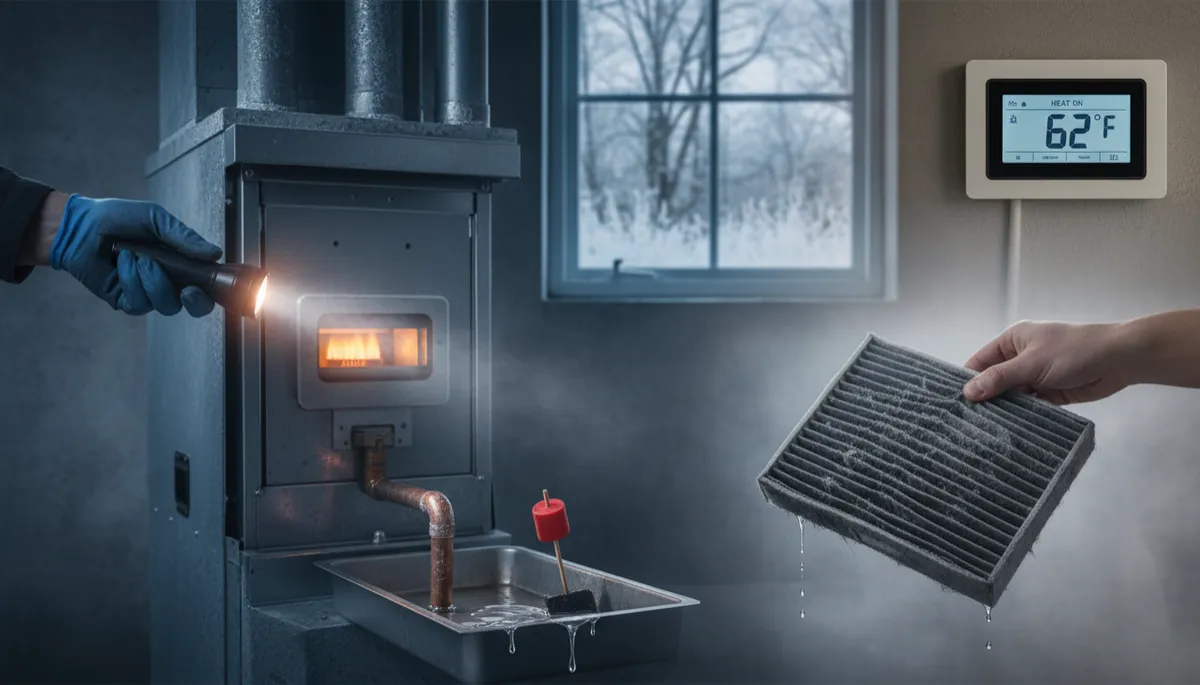
I’m Dan, owner and lead tech at S.I. Service Group here in Tupelo, and when the first hard cold snaps hit North Mississippi around Thanksgiving, my phone lights up with the same panicked question: “Why is my furnace blowing cold air?” Let me walk you through what I check first on those frosty November mornings, and what you can safely look at yourself before you call me out.
First Things First: The 5‑Minute Homeowner Checks I’d Do in Your Shoes
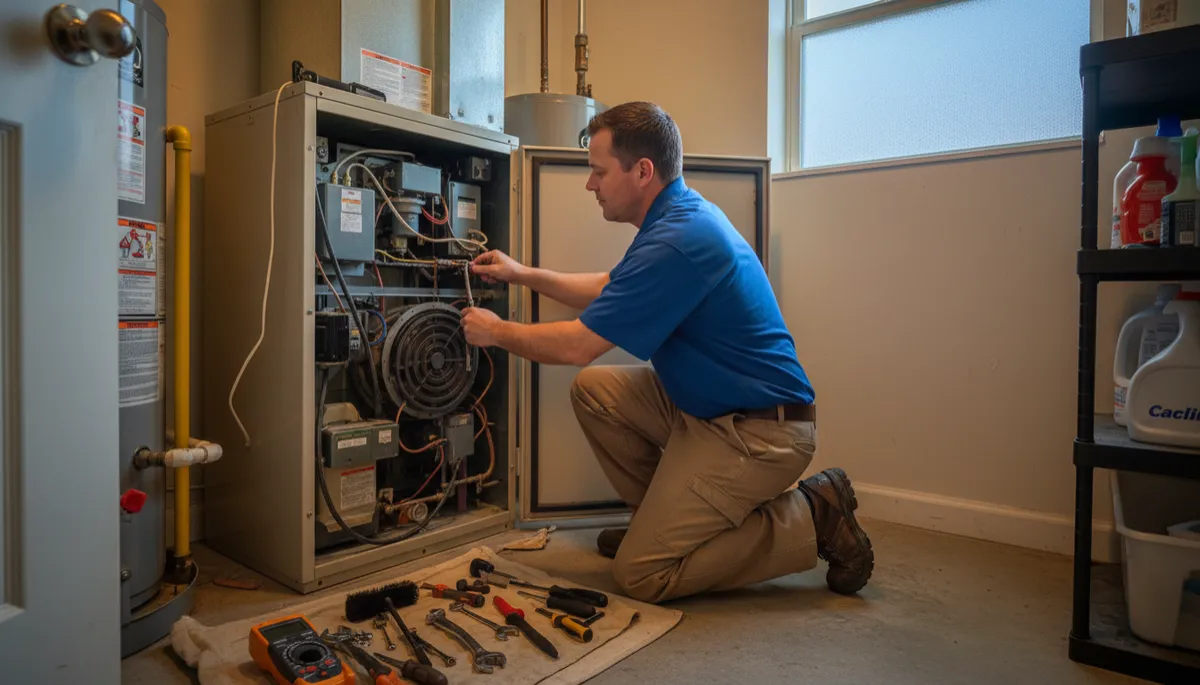
Before I ever start tearing into a furnace, I do the same thing I’d tell you to do: check the simple stuff. A lot of late‑November calls around Tupelo, Saltillo, and Verona end up being something you could have fixed in five minutes. Here’s my quick checklist to run through before you call for furnace repair.
1. Thermostat set to AUTO, not ON
One cold Thanksgiving week morning in Saltillo, a furnace was “blowing cold air nonstop.” The fan setting on the thermostat was set to ON instead of AUTO. ON means the blower runs constantly, even when the burners are off, so it feels like the furnace is just pushing room‑temperature air. Switch it to AUTO so the fan only runs when there’s heat being made.
2. Thermostat batteries and settings
In Fulton, a homeowner swore the “furnace was dead.” The thermostat batteries were so weak the display was acting crazy — sometimes calling for heat, sometimes not. Pop the cover and replace the batteries if it uses them. Make sure it’s set to HEAT, not COOL or OFF, and that the temperature is set above the current room temperature.
3. Check your air filter (yes, really)
In a rental house in Plantersville, I pulled out a filter that looked like it had been there since Ole Miss’s last coaching change. The furnace was overheating, shutting down, and then just blowing cold air. A clogged filter can cause all kinds of problems, including your furnace not heating properly. Slide the filter out and hold it up to the light. If you can’t see light through it, replace it.
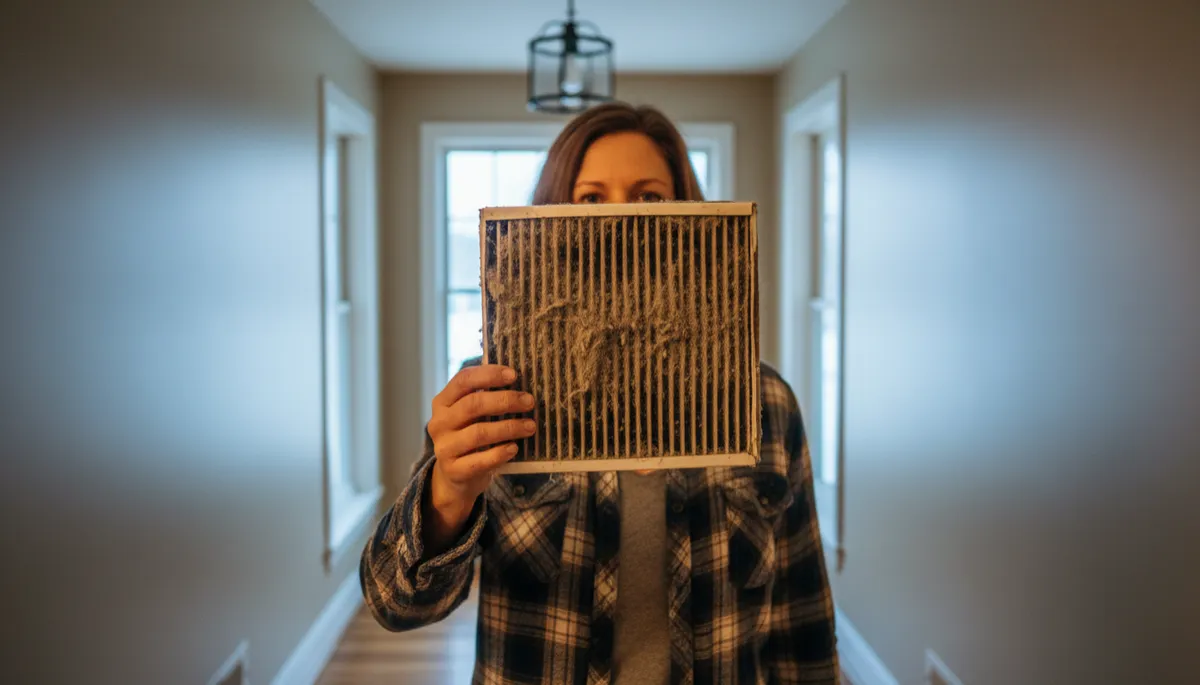
A clogged filter is one of the most common reasons a furnace blows cold air.
4. Breaker, furnace switch, gas, and blower door
Head to your electrical panel and look for the breaker labeled furnace or HVAC. If it’s tripped, reset it once. Near the furnace, make sure the “light switch” (the furnace service switch) is ON — I’ve seen kids in Mooreville flip that off. With gas furnaces, confirm the gas valve is in line with the pipe (ON), and that the blower compartment door is snug. In Mantachie, a door not seated right kept a furnace from running until I snapped it back in place.
If you’ve done all that and your furnace is still blowing cold air, that’s when it’s time for me or one of my techs to dig deeper with a proper HVAC repair diagnosis.
Cold Air at Startup vs. Constantly: Two Very Different Problems
Constant cold air means the heat side isn’t doing its job
If you’re getting nothing but cold air, or it goes warm for a bit then blows cold while the thermostat still calls for heat, that’s a sign the burners aren’t staying on or the system is shutting itself down for safety. That’s when we start looking at components like the flame sensor, ignitor, gas valve, limit switch, and condensate safety on high‑efficiency units.
Flame Sensor, Ignitor, Gas Valve: The “No Flame, No Heat” Trio
One chilly morning in Verona, I got a call: “The furnace tries to start, then just blows cold air.” I watched the startup sequence:
- Thermostat calls for heat
- Draft inducer fan comes on (little motor that clears exhaust)
- Ignitor glows orange or sparks
- Gas valve opens, burners light
- Flame sensor proves flame, blower turns on
When something in that chain fails, the control board shuts off the gas and you’re back to cold air.
Dirty flame sensor: the North Mississippi classic
In Mooreville last year, I had several calls where the furnace would light, run for 10–20 seconds, then shut off and blow cool air. Each time, the flame sensor was coated in a thin layer of white or gray buildup. That little metal rod tells the furnace, “Yes, we’ve got a flame.” If it can’t “see” the flame, the board shuts off the gas for safety.
Failed ignitor: no light, no heat
On another Verona call, the homeowner said they heard the furnace “trying” but never felt heat. The inducer came on, but the hot surface ignitor never glowed. The control board tried a few times, then gave up and just ran the blower. Result: nothing but cold air. Ignitors are fragile; one bump or a little age and they crack. Replacing them is a common furnace repair Tupelo MS job we handle every fall.
Overheating & Limit Switch Trips: When a Clogged Filter Shuts You Down
Remember that Plantersville rental with the fossilized filter? Airflow was so choked off that the furnace’s limit switch — a safety that measures temperature inside the furnace — kept tripping. When that happens, the control board shuts the burners off so the furnace doesn’t overheat, but the blower might keep running. To the homeowner, it felt like the system was just blowing cold air randomly.
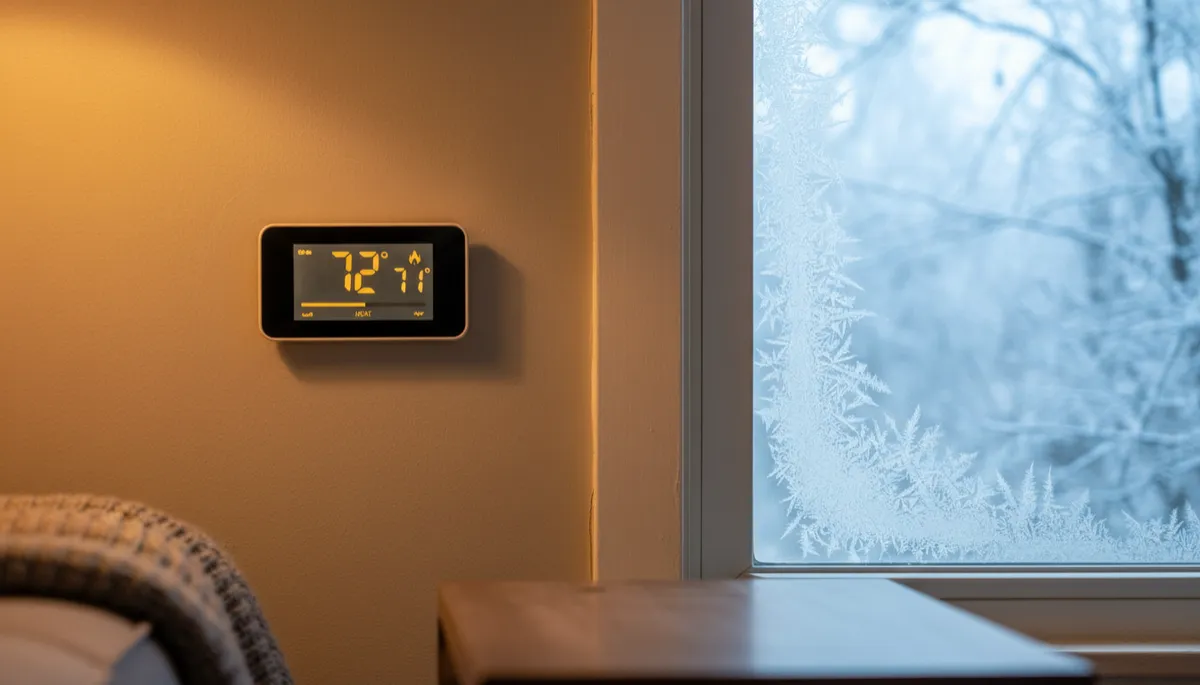
Close-up of a digital thermostat on a living room wall in a Tupelo home, set to HEAT with...
High‑Efficiency Furnaces: Condensate Drains and Float Switch Lockouts
A lot of newer high‑efficiency furnaces around Tupelo, Amory, and New Albany produce condensation as they run. That water has to drain out through a small plastic tube. When that drain clogs, water backs up into a safety pan with a float switch. When the float lifts, it tells the furnace, “Shut down, we’ve got a water problem.”
I had a call in New Albany last Thanksgiving week where the furnace would try to start, then quit, and the blower would just push room‑temperature air. The condensate line was full of slime, the float switch was tripped, and the furnace was locked out. We cleared the line, reset the switch, and the heat came right back.
Is It Even a Gas Furnace? Heat Pump Defrost and Emergency Heat Confusion
In Amory, I went to a “furnace blowing cold air” call that turned out not to be a furnace at all — it was a heat pump. Heat pumps work differently than gas furnaces, and they can act a little strange in cold, damp North Mississippi weather, especially when they go into defrost or when backup heat strips fail.
Heat pump in defrost mode
On cold, wet mornings, your outdoor heat pump unit can ice up. To clear that ice, it goes into defrost mode, which temporarily runs like an air conditioner to warm the outdoor coil. When that happens, the indoor unit can blow cooler air for a few minutes. Usually, backup electric heat strips kick on so you don’t notice much drop, but if those strips fail, you’ll feel it.
Emergency heat and how to tell what you have
Look at your thermostat. If you see settings like HEAT / COOL / EM HEAT, you likely have a heat pump. EM HEAT (emergency heat) runs the electric heat strips only — no heat pump. If your heat pump is struggling or in defrost, the system may kick over to those strips, which use a lot of power but should still give you warm air.
If you’re not sure whether you’ve got a heat pump or gas furnace, or your heat pump defrost seems to be leaving you cold, that’s a good time to schedule a heat pump repair visit so we can sort it out before the next hard freeze.
What NOT to Do When Your Furnace Is Blowing Cold Air
I love a handy homeowner, but there are a few lines you don’t want to cross with gas and high‑voltage equipment. Here’s what I tell folks from Tupelo to Mantachie never to do when their furnace is acting up.
- Never bypass safety switches. Jumping out a limit, pressure, or float switch might “make it run,” but it can also create a fire, flood, or carbon monoxide hazard. Those safeties are there because something is wrong.
- Don’t pry open the burner compartment and start poking. You’re right next to gas, flame, and high‑voltage ignitors. One wrong move can crack an ignitor, damage wiring, or worse.
- If you smell gas, get out and call. Don’t try to relight anything, don’t flip switches, just get everyone out of the house and call for help from a safe spot.
- Don’t keep resetting the breaker over and over. If it keeps tripping, something’s wrong. Repeatedly resetting can overheat wiring and cause bigger problems.
What a Service Call Looks Like (and When Replacement Makes Sense)
What it usually costs to fix a furnace blowing cold air
Around North Mississippi, many “blowing cold air” issues fall into the minor to moderate repair category. Cleaning a flame sensor or clearing a condensate drain is usually on the lower end. Replacing an ignitor, limit switch, or similar part is mid‑range. Major components like a control board or gas valve cost more but are often still cheaper than replacing the whole system. If I think a repair is throwing good money after bad, I’ll tell you straight.
When replacement makes more sense than repair
I start talking replacement instead of repair when the furnace is 15–20+ years old and has had multiple repairs lately, the heat exchanger is cracked (that’s a safety issue — no patching that), or the repair cost is a big chunk of what a new, more efficient system would run. If we can get another safe, reliable few years out of your existing system with a reasonable repair, I’m all for that — especially right before the holidays when budgets are tight.
Simple Maintenance to Prevent Cold‑Air Surprises
Most of the “no heat” and “furnace blowing cold air” calls I run in Tupelo, Plantersville, and Mooreville could have been prevented with basic HVAC maintenance. Here’s a quick homeowner checklist for late fall to keep things running smoothly.
- Change your filter every 1–3 months during heating season, depending on pets and dust.
- Keep returns and supply vents clear — no furniture, curtains, or rugs blocking airflow.
- Visually check the area around the furnace — no storage piled against it, no water leaks nearby.
- Listen for new noises when the furnace starts up — rattles, squeals, or bangs are early warning signs.
- Schedule a professional tune‑up before or during the first cold snaps so we can clean flame sensors, check safeties, and catch issues early.
Frequently Asked Questions
Why is my furnace blowing cold air but the thermostat says it’s heating?
If the thermostat says HEAT and you feel cold air, first check that the fan is set to AUTO, not ON. If that’s right, you may have a problem with the flame sensor, ignitor, gas valve, or a safety like the limit switch shutting the burners off. The blower keeps running, but there’s no heat being made. That’s when it’s time for a proper Tupelo HVAC diagnosis from a trained tech.
Is it normal for my furnace to blow cold air sometimes?
A short burst of cool or room‑temperature air at the very beginning or end of a heating cycle is normal. The ducts and furnace are cold at first, so it takes a minute to warm everything up. But if the air stays cold, or it goes warm then suddenly cool while the thermostat still calls for heat, that usually points to a furnace not heating properly due to a safety trip or ignition problem.
Can a dirty filter really make my furnace blow cold air?
Absolutely. A dirty filter restricts airflow and can make the furnace overheat. When that happens, the limit switch shuts the burners off to protect the system, but the blower may keep running. That gives you a blast of cool air even though the furnace “sounds” like it’s working. I see this all the time in North Mississippi HVAC systems, especially in rentals and busy households where filters get forgotten.
How do I know if I have a heat pump or a gas furnace?
Look at your thermostat and outdoor unit. If the thermostat has an EM HEAT or AUX HEAT setting, you likely have a heat pump. Outside, if the unit looks like a regular air conditioner and runs in the winter, that’s a heat pump. A gas furnace is usually inside (attic, closet, basement) with a metal or PVC vent pipe going out. If you’re unsure, we can identify it during a quick service visit.
Wrapping It Up: Don’t Let a Cold Furnace Ruin Your Holiday Week
When that first hard cold snap hits North Mississippi around Thanksgiving, the last thing you want is a house full of family and a furnace blowing cold air. In my years running calls from Tupelo to Amory, the pattern is the same: a few simple checks you can do yourself, and then a handful of common issues — flame sensor, ignitor, clogged filter, limit switch, condensate drain, or heat pump defrost — that we handle every day.
Need Help Fast? Call S.I. Service Group in Tupelo
If your furnace is blowing cold air right now, don’t wait and hope it fixes itself. Call me and my crew at 662-523-5514. S.I. Service Group is your local Tupelo HVAC, electrical, commercial refrigeration, and appliance repair team — licensed, bonded, and insured to work on the systems that keep your home comfortable and safe.
Whether you’re in Tupelo, Saltillo, Verona, Plantersville, Mooreville, Mantachie, Fulton, Amory, or New Albany, we’re out on the roads every cold November morning getting heat back on for families just like yours. One call, and we’ll treat your home like it was our own — get in, find the problem, fix it right, and leave you with a furnace that blows warm, steady air all season long.