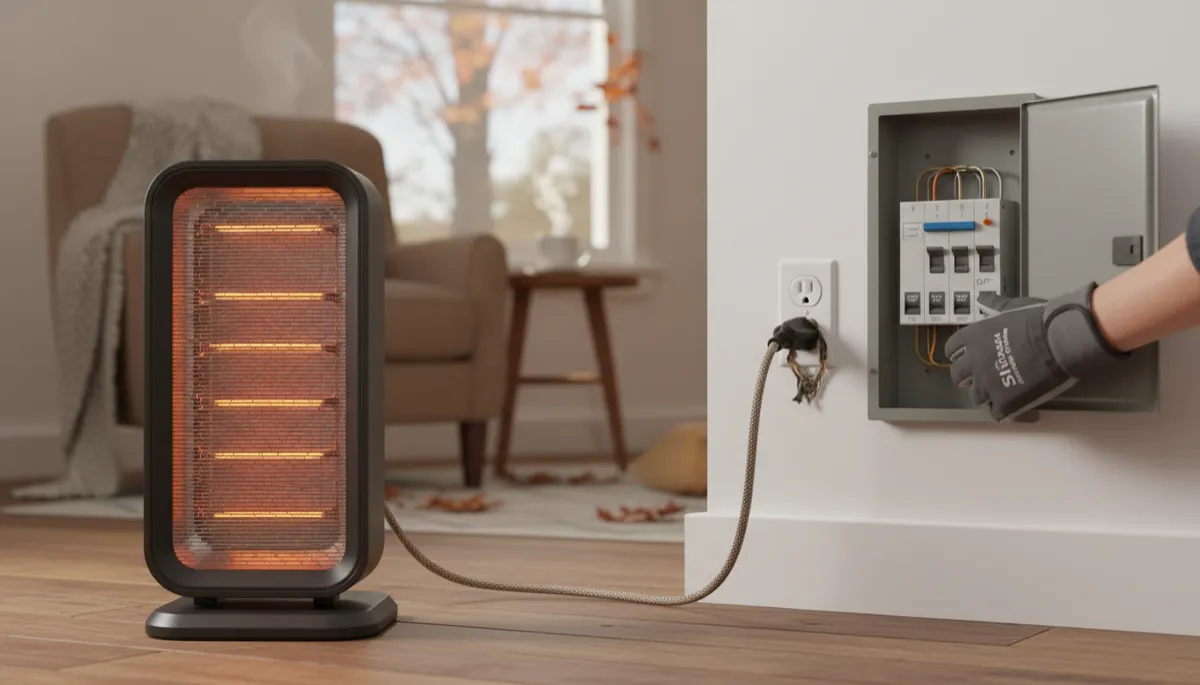
Why Does My Breaker Keep Tripping When I Run a Space Heater? A Tupelo Electrician Explains
Electrical, HVAC, Space Heater Safety, Tupelo Electrician
Why Does My Breaker Keep Tripping When I Run a Space Heater? A Tupelo Electrician Explains
First cold snap hits North Mississippi, and I know what’s coming. The phones at S.I. Service Group in Tupelo start ringing with folks from Saltillo, Verona, and all over asking the same thing: “Dan, why does my breaker keep tripping every time I plug in this space heater?”
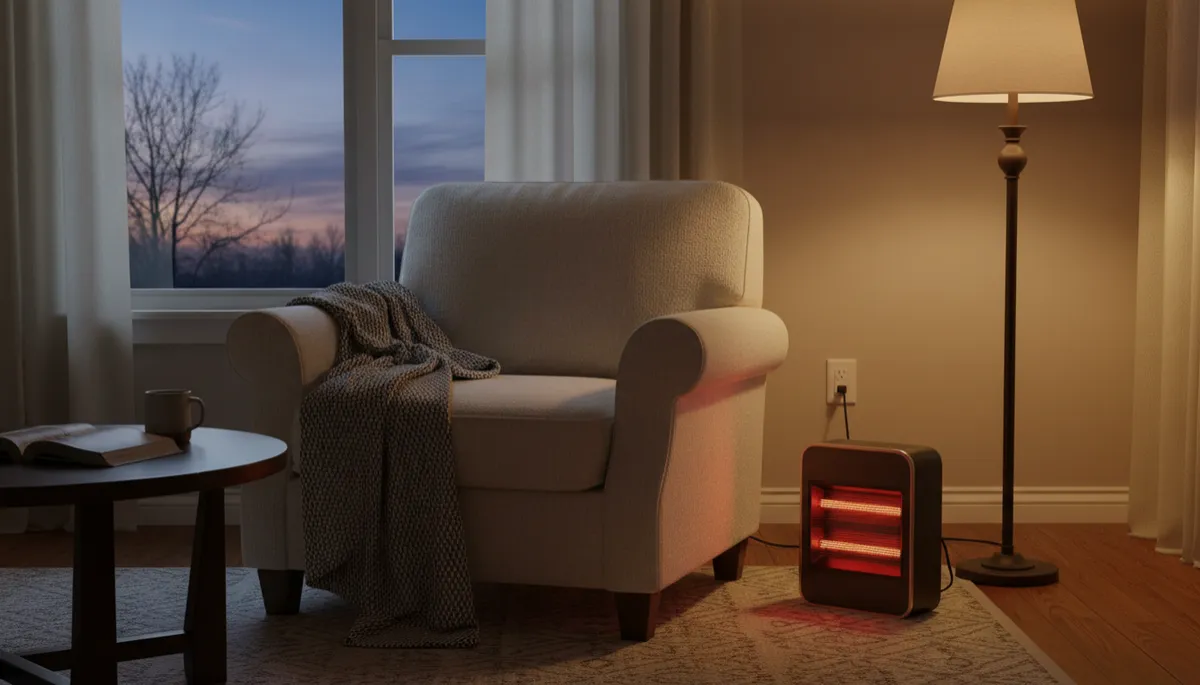
A couple of years back, I got a call from a homeowner in Saltillo. Back bedroom was cold, so they pulled an old 1500-watt space heater out of the closet, plugged it in, and within five minutes the lights went out. They reset the breaker, tried again, and this time they noticed the outlet plate was warm and starting to discolor. That’s not just annoying. That’s a fire risk.
Watts, Amps, and Why a 1500-Watt Heater Is a Big Load
Power is measured in watts. Your space heater probably says something like 1500 watts on the label. Your home wiring and breakers are sized in amps. Around here, most of your bedroom and living room outlets are on either a 15-amp or a 20-amp circuit at 120 volts. There’s a simple relationship:
Watts = Volts × Amps

So on a 120-volt circuit:
Amps = Watts ÷ Volts

Example:
1500-watt heater ÷ 120 volts ≈ 12.5 amps
That 1500-watt heater by itself is pulling about 12.5 amps. On a 15-amp breaker, that’s already most of the capacity. And by code, we’re not supposed to load a circuit more than about 80 percent continuously. On a 15-amp breaker, that safe continuous load is about 12 amps.
15-Amp vs 20-Amp Circuits (and All the Other Stuff on Them)
In many Tupelo and Verona homes, bedrooms are on 15-amp circuits with 14-gauge wire. Newer construction and kitchens often have 20-amp circuits with 12-gauge wire. That extra 5 amps doesn’t sound like much, but it makes a big difference with a heavy load like a heater.
| Circuit Size | Max Amps | 80% Safe Continuous Load | Typical Use |
|---|---|---|---|
| 15-amp circuit | 15 amps | ~12 amps | Bedrooms, living rooms in older homes |
| 20-amp circuit | 20 amps | ~16 amps | Kitchens, dining rooms, some newer bedroom circuits |
And remember: that outlet you’re using for the heater is almost never on its own. It’s usually tied into a whole string of outlets and lights, so you’re not just running a heater. You’re also running:
- TV and cable box or streaming box
- Lamps in the room and maybe the hallway
- Phone, tablet, or laptop chargers
- Maybe a game console or even another heater on the same circuit
I went to a house in Verona where the kids’ bedrooms on both sides of the hall shared one 15-amp circuit. Mom had a heater in each room, plus a TV and game system. When both heaters kicked on, that breaker didn’t stand a chance. It was doing exactly what it’s supposed to do: protect the wiring from overheating.
Extension Cords, Power Strips, and Turning a Nuisance into a Fire Hazard
I know it’s tempting: the outlet you want to use is across the room, so you grab that orange extension cord from the shed and plug the heater into it. Or you’ve got a cheap power strip from the discount store and you stack the heater, phone chargers, and a lamp on it. I see this all the time in apartments in Tupelo and older homes in New Albany and Amory.
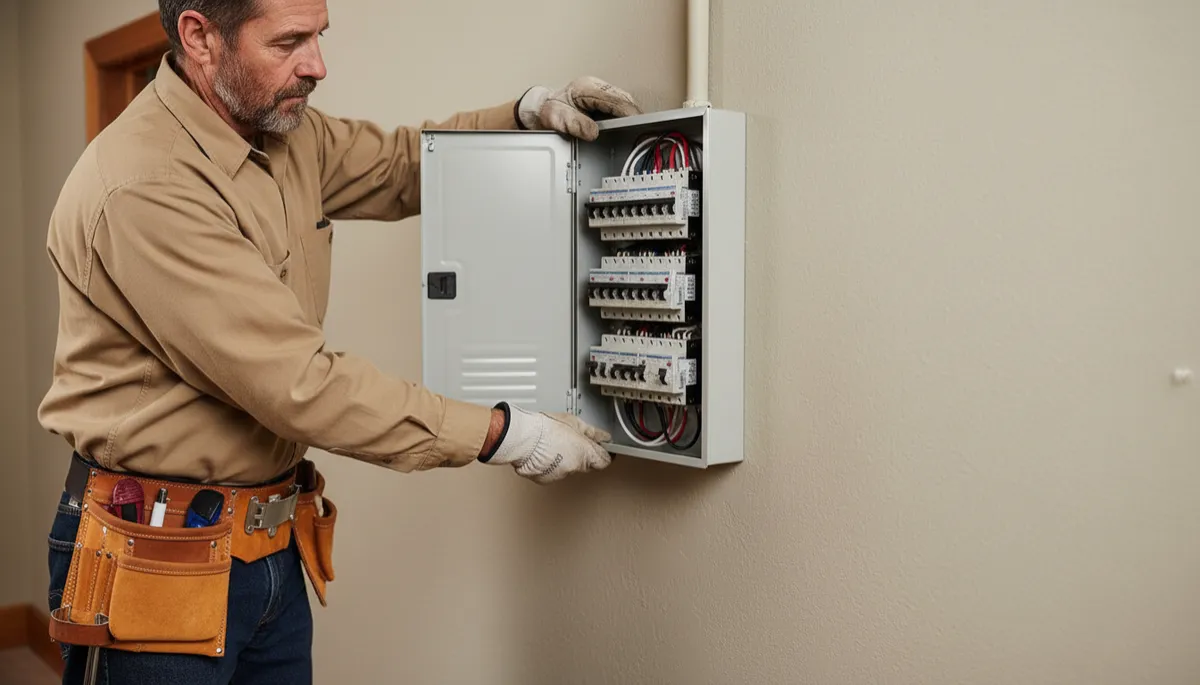
A quick breaker panel inspection can reveal overloaded or weak circuits before winter hits.
Warm, Scorched Outlets and Older Wiring: When It’s More Than Just a Trip
If you ever touch the outlet where your heater’s plugged in and it feels warm, soft, or smells burnt, that’s your sign to stop right there and unplug it. The breaker might not have tripped yet, but the outlet and wiring are telling on themselves.
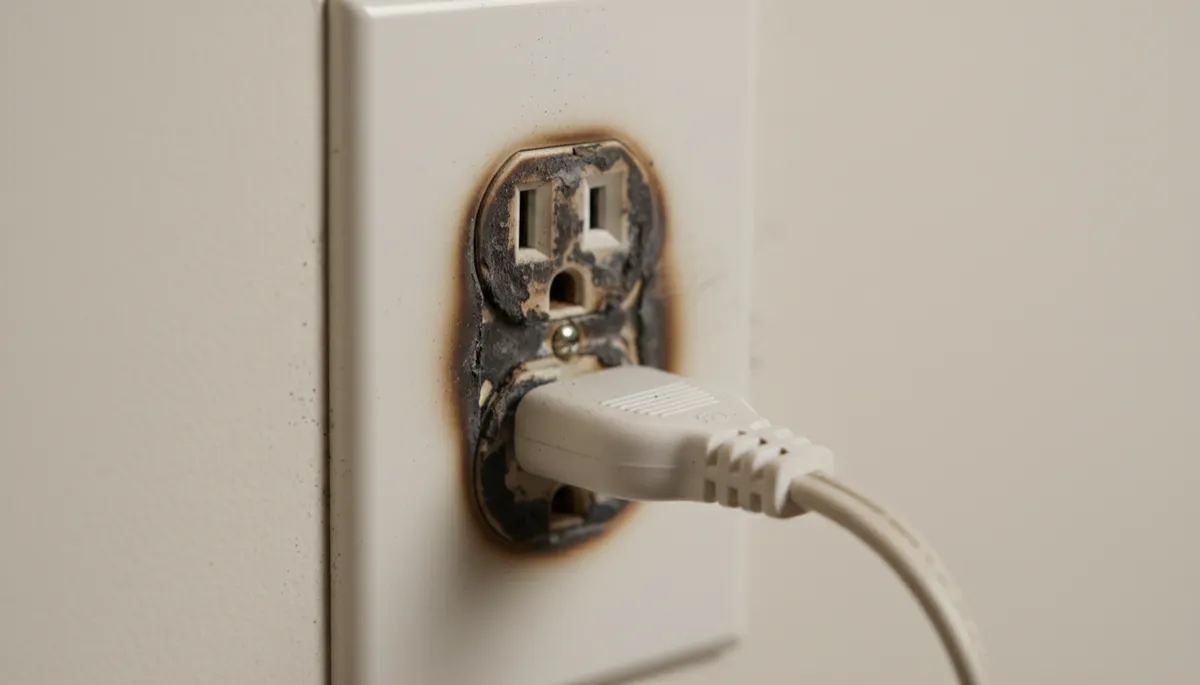
Discolored or warm outlets mean the wiring is overheating and needs immediate attention.
A lot of older homes around Tupelo, Saltillo, and Plantersville still have outlets wired with what we call backstab connections. Instead of the wire being wrapped around a screw, it’s just poked into a spring-loaded hole in the back of the outlet. Over time, with heating and cooling and a little movement, those connections can get loose. Loose connections create resistance; resistance creates heat. Add a 1500-watt heater on top, and now you’ve got a recipe for a melted outlet or worse.
I was in a house near Fulton where the homeowner said, “The outlet feels a little warm, but it’s been doing that for years.” We pulled the outlet out and the back of it was black and brittle. The insulation on the wire was cooked. That’s the kind of thing that turns into an electrical fire if you ignore it. That’s a job for a professional electrical repair in Tupelo, not a DIY swap-out.
GFCI/AFCI Trips, Weak Breakers, and Panel Problems
Not all breaker trips are just about overload. In newer homes and remodels in places like New Albany and Amory, you’ll see GFCI (ground-fault) and AFCI (arc-fault) breakers or outlets. These are safety devices that look for different kinds of problems:
- GFCI trips when it detects current leaking somewhere it shouldn’t, like through water or a person.
- AFCI trips when it detects arcing, like a loose or damaged connection sparking.
Sometimes I go to a house in Tupelo or Mantachie where the homeowner says, “Dan, this heater worked fine last year on this outlet. Now the breaker pops every time.” In those cases, we don’t just blame the heater. We look at the breaker itself and the panel. Breakers are mechanical devices. They wear out. They can get weak, sticky, or corroded, especially in older panels or if there’s been moisture or rust issues.
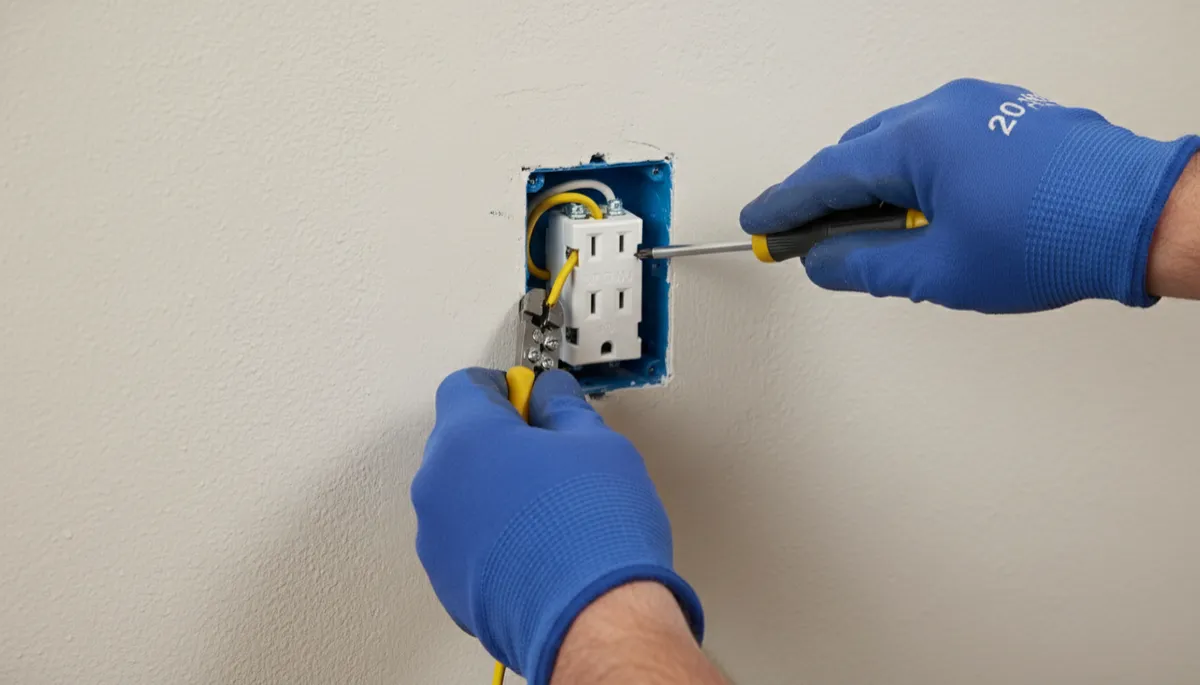
A dedicated 20-amp circuit gives heavy loads like heaters a safer home.
Safe Space Heater Habits for North Mississippi Homes
- Plug directly into a wall outlet. No cheap power strips, no daisy-chained extension cords behind the couch.
- One heater per circuit. If you’ve got two bedrooms on one breaker, you don’t get a heater in each room on high. That’s how you get a dark house and a hot panel.
- Keep three feet of clearance. No curtains, bedding, or furniture right up against the heater. I’ve seen melted comforters in Plantersville that were one nap away from catching fire.
- Don’t run it while you’re sleeping or gone. If you’re going to run it overnight, at least use the low setting and make sure your smoke detectors are working.
- Check the cord and plug regularly. If the plug is hot, discolored, or the cord is brittle or cracked, retire that heater.
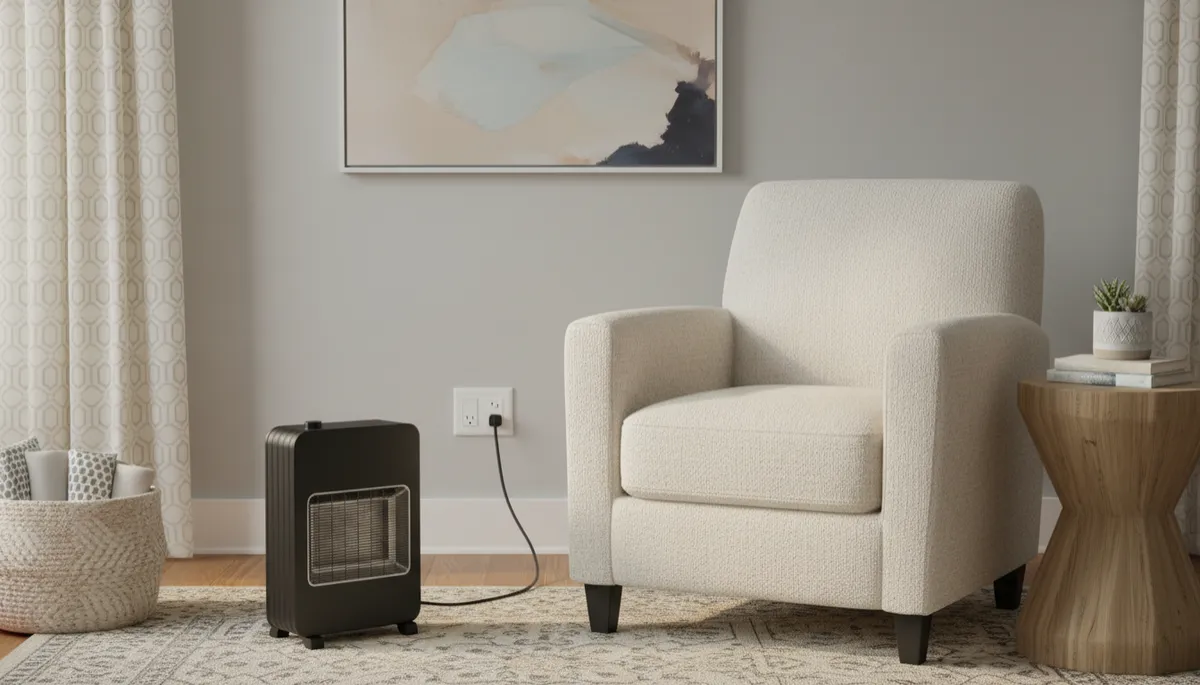
Proper placement and a good outlet are just as important as the heater itself.
When You Need a Dedicated Circuit for That Space Heater
You might need a dedicated circuit if:
- The breaker trips every time you run the heater, even by itself on that circuit.
- You’ve already got TVs, computers, or other heavy loads on that same line.
- This room is always cold, and you know you’ll be running a heater there a lot every winter.
In those cases, we can run a new line, install a proper 20-amp receptacle, and label it for heater use. It’s not a huge project, but it needs to be done by someone who knows the code and the load calculations. That’s exactly the kind of work we do under our electrical services in Tupelo at S.I. Service Group.
When to Call an Electrician (and When It’s Actually an HVAC Problem)
We do both electrical and HVAC, so I see this from both sides. A tune-up or repair on your furnace or heat pump can often solve the “cold back bedroom” problem without you having to run a heater all day. If your unit hasn’t been serviced in a couple of years, or certain rooms never seem to warm up, it’s time to look at HVAC repair and maintenance instead of just adding more electrical load.
You should call an electrician right away if:
- Outlets or plugs are warm, discolored, or melting.
- You smell a burning or plastic odor when the heater runs.
- The breaker trips immediately or repeatedly, even with just the heater on that circuit.
- Lights flicker, dim, or buzz when the heater cycles on.
Space Heater & Breaker FAQ (What Homeowners Around Tupelo Ask Us)
1. Why does my space heater keep tripping the breaker after a few minutes?
Most of the time, it’s because the heater is drawing about 12.5 amps on a 15-amp circuit that’s already running other stuff—lights, TV, chargers, maybe another room on the same line. Once the total load gets too high or runs too long, the breaker trips to protect the wiring, especially in older North Mississippi homes with 15-amp bedroom circuits and lots of added electronics.
2. Is it safe to keep resetting a breaker that trips with my heater?
Not over and over. A breaker is a safety device, not a suggestion. If it trips once because you accidentally overloaded the circuit and you move the heater to a different circuit, that’s one thing. But if the breaker keeps tripping every time the heater runs, something’s wrong—either the circuit is overloaded, the connections are bad, or the breaker itself is weak. That’s the time to call an electrician in Tupelo and let us track down the root cause.
3. Can I run two space heaters on different outlets in the same room?
Maybe—but probably not on the same circuit. Two 1500-watt heaters together pull about 25 amps. If both outlets are on one 15-amp or even 20-amp circuit, that’s way too much. The only way to know is to see which outlets go dead when you flip that breaker off. In a lot of Tupelo and Saltillo homes, a whole room or even two rooms share one circuit, so two heaters on high in that space is asking for trouble.
4. Why does my GFCI outlet trip when I plug in a space heater?
GFCIs trip when they sense current leaking somewhere it shouldn’t go. That could be a damaged heater cord, moisture in the outlet, or an internal issue with the heater. Sometimes the inrush current when the heater first turns on can bother a sensitive GFCI, but if it keeps happening, it’s not something to ignore. Try another outlet on a different GFCI; if it still trips, the heater may be bad. If it only trips that one GFCI, we need to inspect that circuit and outlet.
5. Is it okay to use a heavy-duty extension cord with my heater?
“Okay” isn’t the same as “ideal.” The safest thing is always to plug the heater directly into a wall outlet. If you absolutely have to use an extension cord, it needs to be a short, heavy-gauge cord rated for at least 15 amps, fully uncoiled, and in good condition. No skinny cords, no coiled-up cords under rugs, and no bargain-bin power strips. If you’re in a situation where you always need an extension to reach where you want heat, that’s a sign you should talk to us about adding an outlet or a dedicated circuit.
Conclusion: Don’t Ignore What Your Breaker Is Trying to Tell You
When that first North Mississippi cold snap hits and you drag the space heater out of the closet, your electrical system suddenly gets put to the test. A space heater tripping the breaker isn’t just an inconvenience—it’s a message. It’s telling you that circuit is at or beyond what it can safely handle, or that there’s a wiring or equipment problem that needs attention.
Sometimes the fix is simple: move the heater to a different circuit, turn off some other loads, or retire an old, sketchy heater. Other times, it’s a sign you need an outlet repaired, a backstab connection corrected, or a dedicated 20-amp circuit run to that cold room. And if you’re finding yourself relying on multiple heaters just to stay comfortable from Tupelo to New Albany, it’s probably time to let our HVAC side take a look at your central system and ductwork instead of pushing your wiring to the edge all winter.
Call S.I. Service Group Before the Next Cold Snap
If your space heater is giving your breakers a workout, or you’ve noticed warm outlets, flickering lights, or that “hot plastic” smell anywhere in your home, don’t wait. Let a local Tupelo electrician who actually works these houses every day take a look and get you ready for winter the right way.
S.I. Service Group is based right here in Tupelo, and we serve homeowners in Saltillo, Verona, Plantersville, Mooreville, Mantachie, Fulton, Amory, New Albany, and the surrounding North Mississippi communities. Whether you need electrical repair, a dedicated circuit for a heater, or an HVAC tune-up so you can put that space heater away, we’re ready to help.
Call us today at 662-523-5514 and we’ll get you on the schedule before the next cold front rolls through.
— S.I. Service Group