Do You Need a Whole-Home Generator in North Mississippi? A Tupelo Electrician’s Honest Answer
I got a call last January from a family out in Mooreville. It was a Thursday night — ice storm had knocked out power to most of their road, and they’d been sitting in the dark for going on 72 hours. They had a portable generator they’d bought at the hardware store a few years back, but it was barely keeping the refrigerator going. The house was down to 48 degrees. They had a newborn.
That call stuck with me. A whole-home standby generator would have kicked on automatically within seconds of that outage. The heat would’ve never gone off. The lights would’ve stayed on. Mom and baby would’ve been fine. Instead, they were huddled under blankets running an undersized portable machine outside their back door — close enough to the house to make me nervous about carbon monoxide.
Since then, I’ve had more conversations about backup power than almost anything else I do. If you’re asking yourself whether a whole-home generator makes sense for your situation, I want to give you a straight answer — not a sales pitch. Let’s talk through it like neighbors.
Why North Mississippi Power Outages Are No Joke
I’ve been running electrical calls across Tupelo, Saltillo, Verona, Plantersville, and the surrounding communities for years. Northeast Mississippi doesn’t get the hurricane headlines the coast does, but we get our share of punishment — ice storms in January, severe thunderstorms in spring and fall, the occasional tornado that takes out lines for days. And if you live on a rural road outside of Fulton, Amory, or out toward Mantachie, you already know that when the power goes out, it goes out for a while. The crew isn’t coming to your road first.
Here’s what I see repeatedly: folks who made it through summer just fine with a portable generator, then got caught totally unprepared when a winter storm hit. Summer outages are miserable. Winter outages are dangerous — especially for older folks, families with young kids, and anyone on medical equipment.
So the question isn’t really “do I need a generator?” The question is what kind, and how much protection do you actually want.
Portable vs. Standby: The Honest Comparison
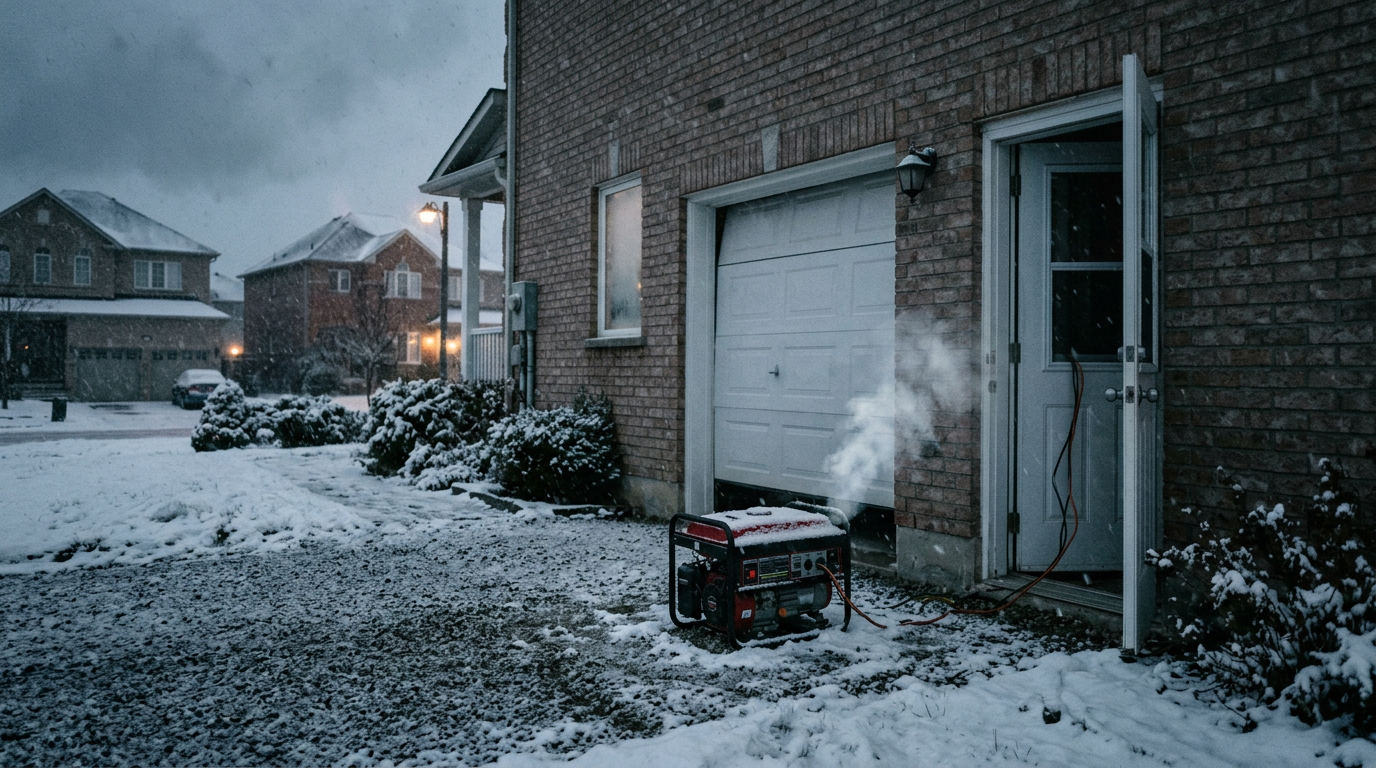
Portable generators have their place. If you’re on a tight budget and just need something to run a few circuits, a quality 7,500–10,000 watt portable can get the job done — if used safely. But there are real tradeoffs.
Portable generator cons you need to know:
- You have to go outside in the storm to start it — at 2 AM, in the ice
- They run on gasoline, which runs out — and when an ice storm hits, gas stations run out too
- Without a proper transfer switch, you risk backfeeding the grid, which can electrocute a lineman
- They require manual startup — no automation
- Carbon monoxide risk if placed too close to windows, doors, or the garage
- They’re loud running all night
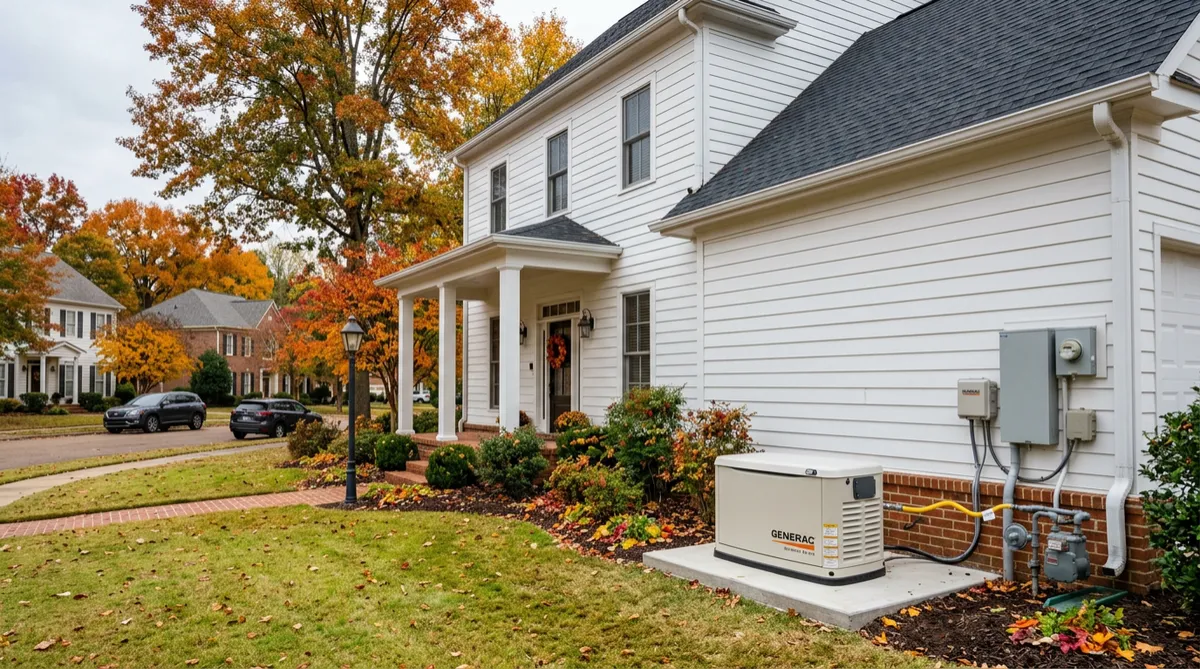
A standby generator sits outside your home, permanently connected to your electrical system and fueled by natural gas or propane. It monitors your power 24/7, and when the grid drops, it starts automatically — typically within 10 to 30 seconds. You don’t touch it. You don’t have to be home. It just runs.
I’ve installed these for families out in New Albany, Verona, and all the way toward Plantersville — and the feedback after their first power outage is always the same: “I didn’t even know the power went out.”
Standby generator pros:
- Fully automatic — no manual start required
- Runs on natural gas or propane — no fuel storage headaches
- Can power your entire home or select circuits, depending on size
- Quieter than portable units
- Can run for days or weeks if needed
- Increases home resale value
- Peace of mind for elderly parents, families with medical equipment, home businesses
Is it worth the cost? A basic 11kW propane standby unit for a smaller home might run $6,000–$7,500 installed. A 22kW natural gas unit for a larger home will run $10,000–$14,000 or more. Every customer I’ve put a standby generator in has told me they wish they’d done it sooner.
The Transfer Switch: This Is Not Optional
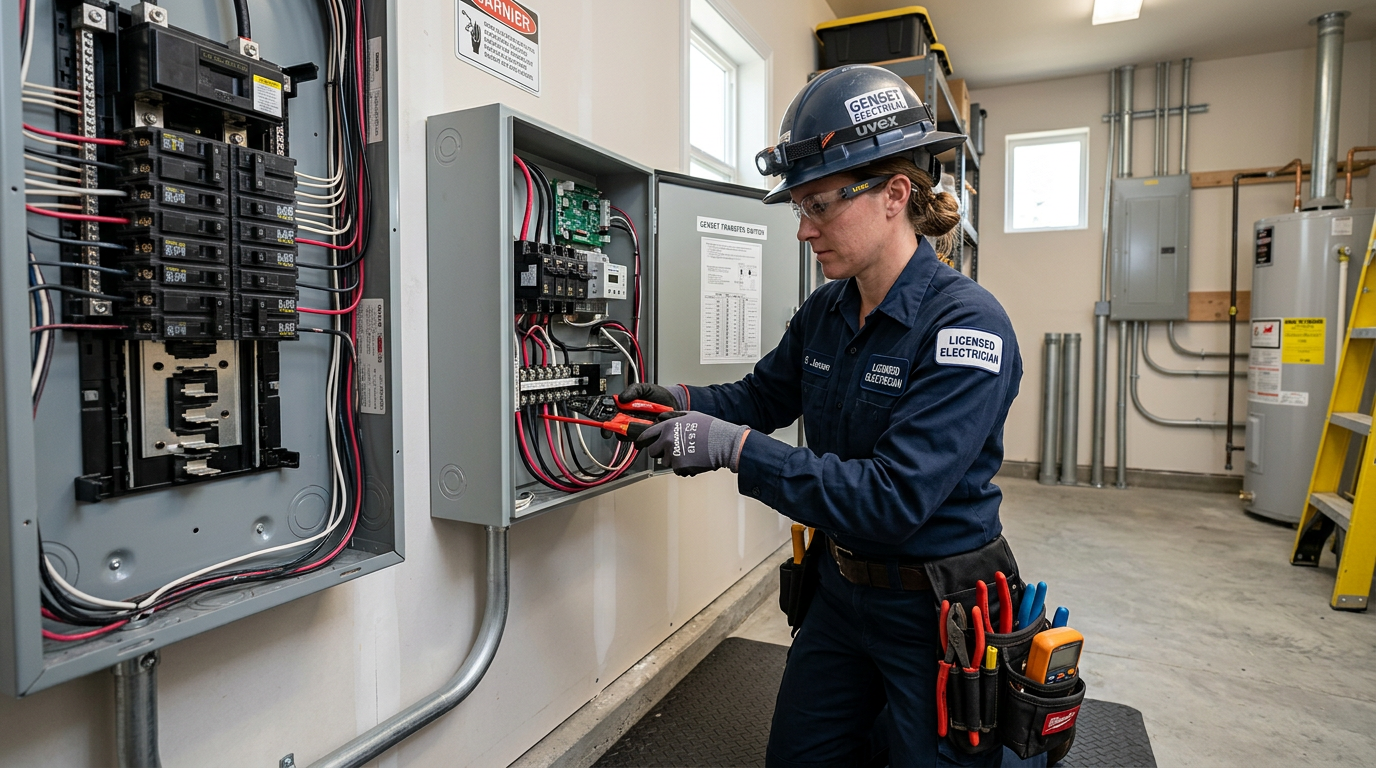
Whether you go portable or standby, you need a proper transfer switch — or at minimum an interlock kit on your panel. Here’s why this matters to me personally.
When your power goes out, utility crews head out to work on the lines. Those workers expect the lines to be dead. If your generator is feeding power back into the grid — which happens when you connect to your home without a transfer switch — those lines are energized. A lineman can be electrocuted working on what he thinks is a dead line. This is called backfeeding, and it kills people every year.
A transfer switch physically disconnects your home from the utility grid before connecting the generator. It’s required by the National Electrical Code, and I won’t install a generator without one. Period. For portable setups, I can add a manual transfer switch or interlock kit to your existing panel — usually in half a day. I do these for folks in Saltillo, Mooreville, and all across Lee County. Call me before you run another extension cord through a cracked window.
How to Size a Generator for Your Home
Sizing is where a lot of people get it wrong. They buy a generator that “sounds big enough” without actually calculating their load.
If you just need lights, the fridge, a few outlets, and your HVAC — a 12,000–16,000 watt unit will usually cover a 1,500–2,500 sq ft home. If you want everything running — central air, electric stove, water heater, all appliances — you’re looking at 20,000–22,000 watts or more. The trickiest part is your HVAC: heat pumps have high startup surge amperage, sometimes 3x their running load. If your generator can’t handle the surge, it’ll trip every time the compressor kicks on.
When I come out for a consultation, I pull your utility bills, walk through your major appliances, check your panel, and calculate both your running load and startup surge. I give you an honest recommendation — not just the biggest unit that makes me the most money, but the right unit for your home and budget.
The Brands I Trust — and Why
Generac — The most widely installed standby brand in the country, and for good reason. Solid build quality, excellent parts availability, and good dealer support even in smaller markets like ours. I’ve had great results with their 18kW and 22kW units for residential work in Northeast Mississippi.
Kohler — Premium brand, quieter operation, outstanding build quality. Built to near-commercial specs. A few customers out in Amory and Fulton have had Kohler units running 10-plus years with minimal issues. If budget isn’t the primary concern, Kohler is my personal favorite for reliability.
Briggs & Stratton — Solid mid-range option. Well-built, competitively priced, good for homeowners who want quality backup power without the premium price tag. I’m not tied to any one brand — I recommend based on your home’s needs, your budget, and what I can actually get parts for here in North Mississippi.
Generator Maintenance: Don’t Skip This
A standby generator is an engine. It needs maintenance just like your vehicle.
- Weekly self-test: Most standby units run an automatic self-test (usually Sunday morning, 5–10 minutes). Listen for anything unusual.
- Annual service: Oil and filter change, spark plugs, air filter, battery check, and a full load test. Required to keep your warranty valid. I do this for customers all across Northeast Mississippi — typically $150–$250 depending on the unit.
- Propane/natural gas check: Make sure your propane tank isn’t running low before storm season. I’ve seen brand-new installs fail because the homeowner ran the tank dry.
- Transfer switch test: We simulate a power outage to verify the switch transitions cleanly and the unit picks up the load.
If you’ve got a generator sitting out back that hasn’t been serviced in two or three years — call me before the first cold snap hits. I’d rather find a problem now than get your call at midnight in January.
Frequently Asked Questions
How much does a whole-home generator cost in Mississippi?
Installed cost typically runs $6,000–$14,000 for most residential homes, depending on generator size, fuel source (natural gas vs. propane), and the complexity of the electrical installation. I always give a firm written quote before any work starts — no surprises.
What size generator do I need for a 2,000 square foot home?
For a 2,000 sq ft home with central HVAC, a 16kW–20kW generator will typically cover everything comfortably. If you have electric heat strips (common in this area), lean toward the higher end of that range. Square footage alone isn’t the only factor — your appliance list, HVAC type, and panel configuration all play a role. I calculate this precisely during an on-site consultation.
Can I install a transfer switch myself?
No. I know you’ll find YouTube videos on this, but a transfer switch installation involves work inside your main electrical panel and connection to your utility service. In Mississippi, this requires a licensed electrician. Doing it wrong can kill a utility worker or you. This one is worth paying for professional installation — usually $500–$1,200 for a manual transfer switch or interlock kit, labor included.
How long can a standby generator run continuously?
On natural gas, essentially indefinitely as long as the utility continues supplying gas — which typically stays on even when the electrical grid is down. On propane, you’re limited by your tank size. A 500-gallon propane tank running a 22kW generator at 50% load will typically last 5–8 days. For extended outages, I recommend a 500-gallon minimum tank for whole-home coverage.
Will a standby generator work during an ice storm?
Yes — this is exactly what they’re designed for. Standby generators are housed in weatherproof enclosures rated for rain, snow, and ice, and they’re designed to start in any weather condition. A properly installed standby generator actually performs best during a winter storm — exactly when you need it most.
The Bottom Line
I can’t answer whether it’s worth it for your specific situation — but I can tell you what I’ve seen. Families sitting in cold, dark houses for three and four days during Northeast Mississippi winters. Sump pumps that failed without backup power, flooding finished basements. Eight hundred dollars worth of food spoiled in a freezer. People running portable generators in their garages — which is how carbon monoxide kills.
A whole-home generator isn’t cheap. But compared to a flooded basement, a hospital bill, or three miserable days without heat — a lot of people end up wishing they’d done it before the storm came.
If you’re anywhere in the Tupelo area or across Lee, Prentiss, Itawamba, or Union County — I’m glad to come out, walk through your home, and give you a straight, no-pressure quote. Whether you end up with a whole-home Generac or just a safe interlock kit for the portable you already own, I want you to be ready before January hits.
Call or text Dan at 662-523-5514 to schedule your generator consultation. We serve Tupelo, Saltillo, Verona, Plantersville, Mooreville, Mantachie, Fulton, Amory, New Albany, and all surrounding communities. Learn more on our electrical services page.
— Dan Southwick, Owner & Licensed Electrician, S.I. Service Group | Mississippi License #20095