What Does Emergency Heat Mean on My Thermostat? When to Use It and When It Costs You, Explained by a Tupelo HVAC Tech
HVAC, Heat Pump, Thermostat, Winter Heating, Tupelo HVAC
What Does Emergency Heat Mean on My Thermostat? When to Use It and When It Costs You, Explained by a Tupelo HVAC Tech
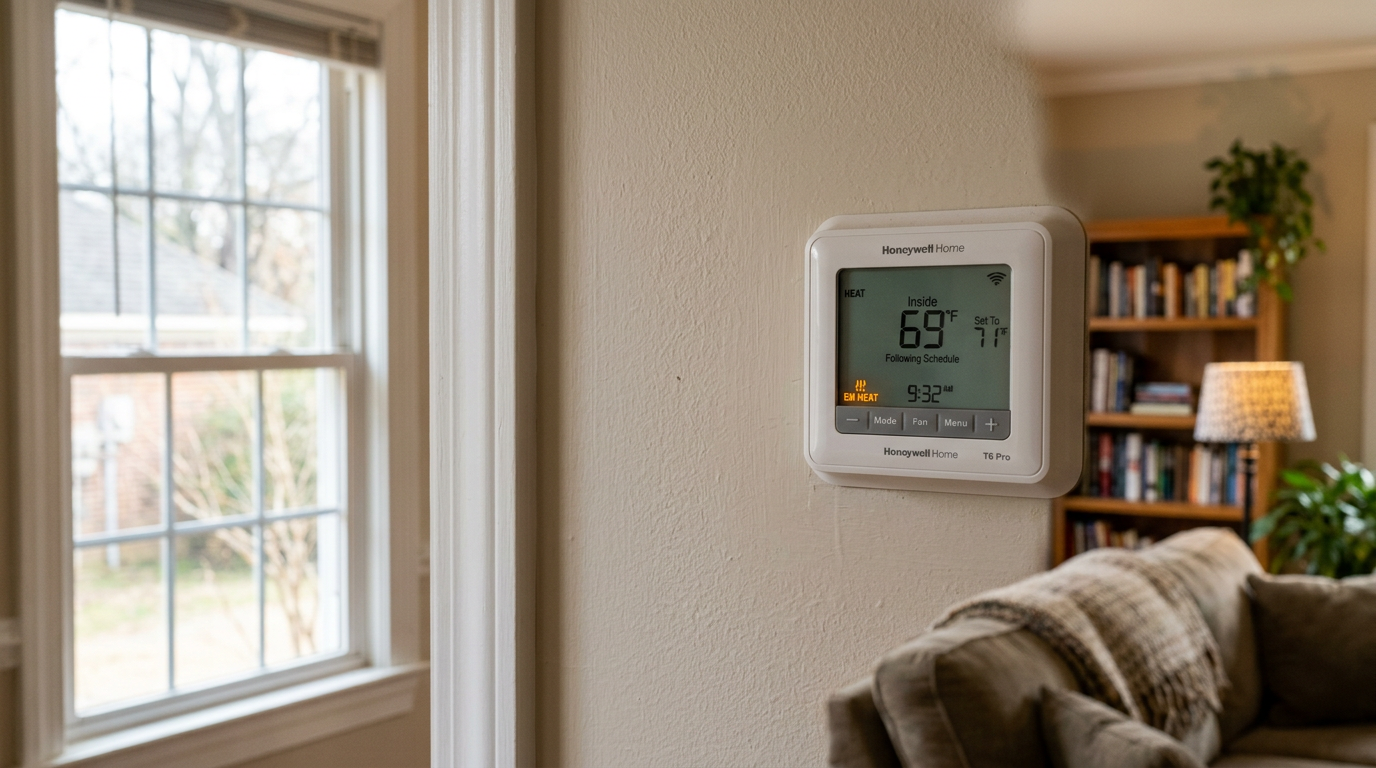
Every November the same thing happens. The first real cold snap rolls through North Mississippi, the thermometer drops into the twenties overnight, and my phone lights up with some version of the same question: "Dan, my thermostat says EM HEAT. Is that bad? Did I break something?" I'm Dan, owner and lead technician at S.I. Service Group, and I have answered that call from Tupelo to Amory more times than I can count.
Here's the short version. Emergency Heat is a switch on your thermostat that is meant for exactly what it says: an emergency. It is not an "extra warm" setting, and it is not a winter mode. Used right, it keeps your family warm when your heat pump has a problem. Used wrong, it runs your electric bill up month after month. In this article I'll explain what it really does, when to use it, when to leave it alone, and what to check before you pick up the phone.
What Does Emergency Heat Actually Do on a Heat Pump?
To understand Emergency Heat, you have to understand what a heat pump does the rest of the time. A heat pump doesn't burn anything to make heat. In winter it pulls heat out of the outdoor air and moves it inside. Even at thirty degrees there's heat in that air, and the outdoor unit grabs it with refrigerant and a compressor. That's efficient, which is why heat pumps are so popular around Tupelo, Saltillo, and Verona.
When you flip your thermostat to Emergency Heat, you are telling the system to shut the outdoor unit out of the picture completely. The compressor and outdoor fan stop. Instead, your indoor air handler heats the house with electric heat strips, which work a lot like the big coils inside a toaster or a space heater. They glow, the blower pushes air across them, and warm air comes out of your vents.
That works reliably. The catch is that a heat pump moves heat, while strips make heat from raw electricity, which is one of the most expensive ways to heat a home. In my experience it often costs two to three times as much to heat the same house on strips as it does with the heat pump running normally. That's fine for a day or two while a part is on order. It is not fine for a whole winter.
What Is the Difference Between Emergency Heat and Aux Heat?
This is the part that confuses almost everybody, and it's where I see the most expensive mistakes. EM HEAT and AUX HEAT sound alike, but they are two different things.
- Normal heat pump mode: The outdoor unit does the work. Warm air from the vents is gentle, not hot, usually somewhere around 90 to 100 degrees at the register. That's normal and it's efficient.
- AUX heat (auxiliary heat): The system is still running the heat pump, but it calls on the electric strips to help. This happens automatically. You don't choose it. It kicks in when the house is falling behind the thermostat setting, when you raise the temperature several degrees at once, when it's very cold outside, or during a defrost cycle so you don't get a blast of cool air.
- EM HEAT (emergency heat): You choose it by hand. The heat pump is locked out and only the electric strips run. Nothing about it is automatic, and it will stay that way until somebody moves the switch back.
Seeing "AUX" for a little while on a cold morning is not an emergency. Seeing "EM HEAT" lit up when nothing is wrong is a problem for your wallet.
When Should I Switch My Thermostat to Emergency Heat?
I tell people to use it in a short list of situations, and only until a technician can look at the system:
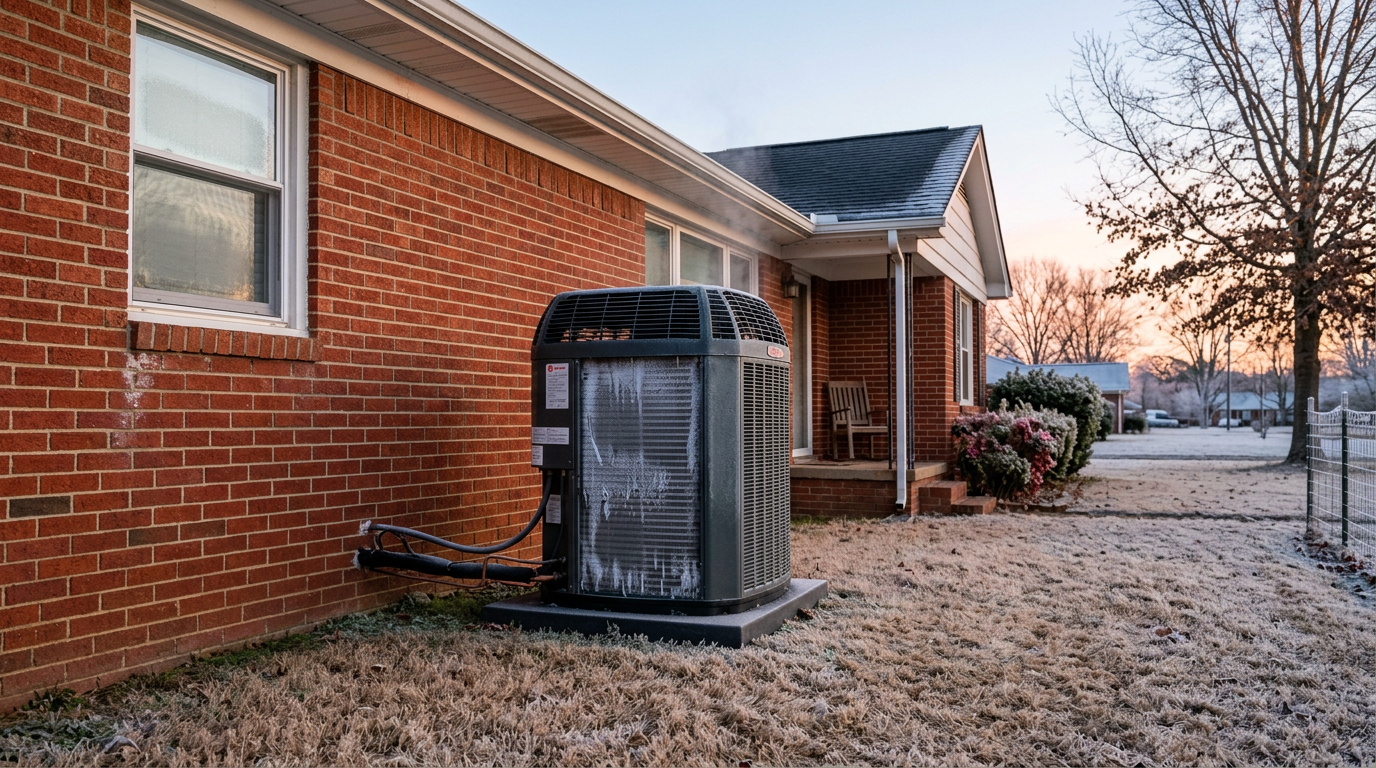
- The outdoor unit is covered in a solid block of ice and isn't clearing itself. Running a heavily iced heat pump can damage the fan, the coil, and the compressor.
- The outdoor unit isn't running, the indoor fan is blowing, and the house is getting cold.
- The air from your vents is cold or barely lukewarm in heat mode, and a clean filter didn't fix it.
I got one of those calls on a 22-degree morning in Amory a couple of winters back. A young couple with a new baby woke up to a house at 58 degrees and an outdoor unit that looked like a block of ice. They switched to Emergency Heat and called us, and the house was climbing back toward 68 by the time I pulled in. A failed defrost sensor was the culprit. We fixed it that afternoon and the thermostat went right back to normal heat. That's how emergency heat is supposed to be used: as a bridge, not a destination.
If you aren't sure whether you're looking at normal frost or a real problem, just call us and we'll talk you through it on the phone. An honest second opinion beats guessing and ending up with a bigger repair.
Why Does Leaving Emergency Heat On Cost So Much?
Because the strips are thirsty. A typical electric heat strip package in a home around here might be five, ten, or even twenty kilowatts. A ten-kilowatt set of strips pulls roughly forty amps at 240 volts, all day long, whenever it's running. That's a big load on your wiring and your bill.

I'll never forget a customer out in Saltillo who called me in February because her power bill had nearly tripled. She couldn't figure it out. I walked in, looked at the thermostat, and there it was: EM HEAT, glowing orange. Her teenage son had pushed the switch during the December cold snap "to make it warmer" and nobody ever flipped it back. The heat pump outside had been sitting there perfectly healthy for two months while the strips did all the work. I switched it back and her next bill came down to normal. Nothing was broken. It was a switch.
That's the most common emergency heat story I know. If you see "EM HEAT" and you did not turn it on because of a real problem, switch the thermostat back to normal Heat mode and keep an eye on it.
How Do I Know If My Aux Heat Is Running Too Much?
A little aux heat on a freezing night is normal. A lot of aux heat on a mild day is not. Here are the signs I look for when somebody tells me their bill is too high or their house won't get comfortable:
- The thermostat shows AUX or HEAT ON in a different color for hours at a time, even when it's 40 degrees or warmer outside.
- The air from the vents feels hot and dry in short bursts, then cool, in a repeating pattern. That can mean the strips are cycling because the heat pump isn't keeping up.
- The electric bill jumped in a month that wasn't dramatically colder than the one before.
- The outdoor unit is quiet or not running when the thermostat says it's calling for heat.
When aux heat runs more than it should, something is usually off with the heat pump itself: low refrigerant, a failing sensor, a dirty coil, or a thermostat staged wrong. I've seen all of them from Mooreville to New Albany.
What Can I Check Myself Before I Call?
There are a few safe things any homeowner can do, and none of them require tools:
- Look at the thermostat. Make sure it says Heat, not Emergency Heat, and that the schedule or set point isn't wildly higher than the house temperature. Jumping the setting up eight or ten degrees at once will bring on the strips on purpose.
- Change the air filter. A clogged filter chokes airflow and makes every part of the system work harder. This is the number one thing I find on service calls.
- Check the outdoor unit. Make sure leaves, pine needles, and debris aren't piled against it, and that nothing is stacked on top. A bit of light frost is normal. A solid sheet of ice is not.
- Check your breaker. Reset a tripped one once. If it trips again, stop and call.
Please don't pour hot water on the unit or chip at ice with a screwdriver. A routine HVAC maintenance visit in the fall catches most of these problems before the cold shows up.
What Does a Technician Check When Aux or Emergency Heat Is Running Too Much?
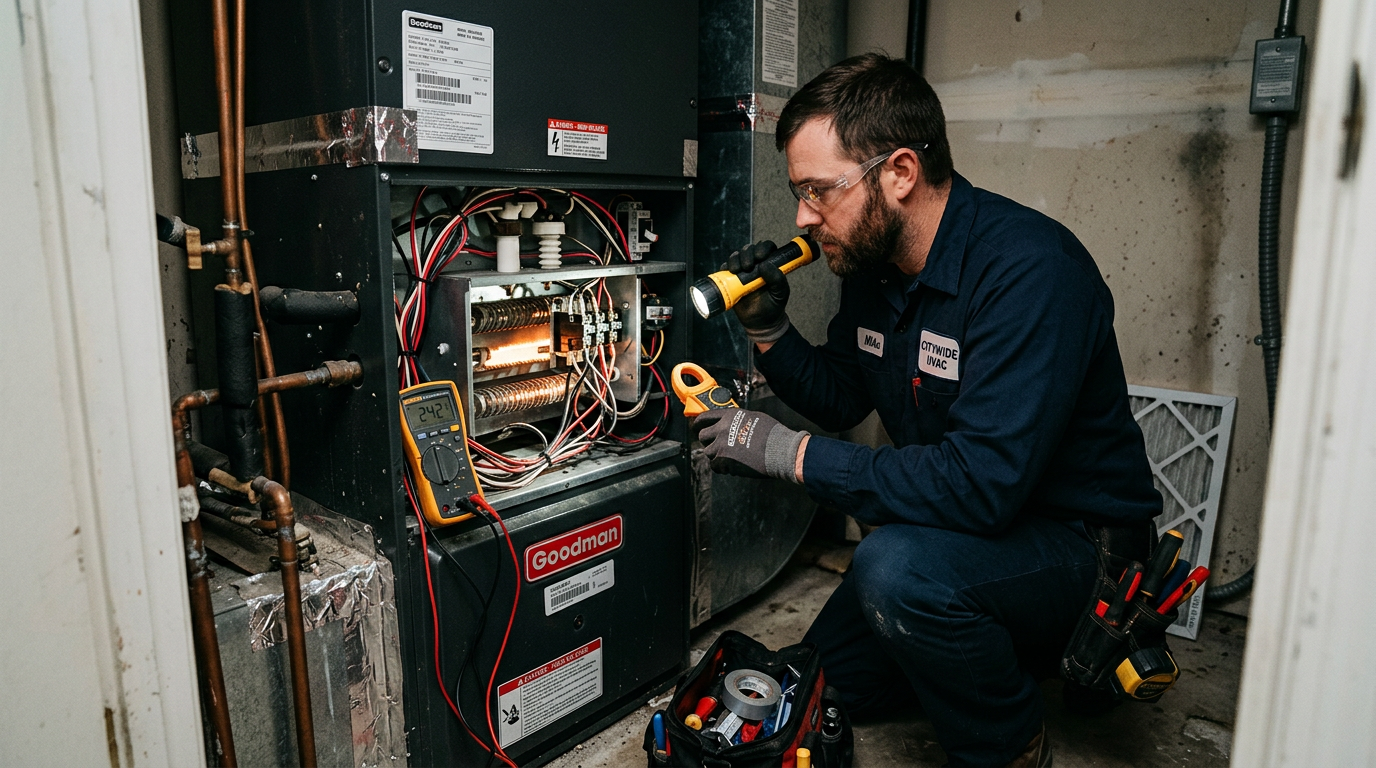
When I get to the house, I'm working through a short list, and I always start with the simple stuff first:
- Thermostat settings and wiring. Is it set up right for a heat pump, with a sensible auxiliary lockout?
- Outdoor temperature and defrost sensors. A stuck one can make a healthy heat pump act frozen.
- The outdoor unit itself. Coil condition, fan motor, capacitor, contactor, and the reversing valve.
- Refrigerant charge. A low charge makes the heat pump weak, and the strips jump in to cover for it.
- The heat strips, sequencers, and relays. Each element should pull the right amps, and nothing should be stuck on.
One call in Mantachie stands out. A homeowner swore his heat strips were bad because the house always ran on aux. The strips were fine. A stuck outdoor sensor was telling the control board it was freezing when it was 48 degrees. A small part and about an hour of my time, and his bill dropped right back. That's why I never replace big parts first. I find the real cause and show it to the customer. If you want that kind of honest diagnosis, our heat pump repair team does it every week, and our HVAC repair technicians cover the rest of the system.
Is It Normal to Smell Something When the Heat Strips First Come On?
Yes, for a short time. The first time the strips run each season, a little dust that settled on the elements burns off. You may notice a faint dusty or "hot toaster" smell for a few minutes. That's normal and it should fade quickly.
It is not normal if the smell is strong, lasts more than a few minutes, smells like burning plastic or hot wire, or comes with smoke, popping, or a breaker that trips. Shut the system off at the thermostat and call us. Heat strips are big electrical loads, and a loose connection or an overloaded circuit can turn dangerous. Because we're dual-licensed, I can look at the air handler and the circuit feeding it in one visit, and our electrical services team handles any panel or wiring problem I find. Running a gas furnace instead? Our furnace repair technicians handle that, and the same rule applies: if it smells wrong, shut it down and call.
What Does It Cost to Fix a Heat Pump That Keeps Running on Aux Heat?
It depends entirely on the cause, and I won't guess over the phone. A thermostat setting or a dirty coil is on the low end. A bad sensor, capacitor, or contactor costs more. A refrigerant leak, a failing reversing valve, or a bad compressor is the top of the range, and that's where we sit down together and talk through repair versus replace. I'll show you what I found and give you the number in writing before any work starts.
Frequently Asked Questions
What does EM HEAT mean on my thermostat?
EM HEAT means Emergency Heat. It turns off your heat pump's outdoor unit and runs only the electric heat strips inside your air handler. It's meant for short-term use when the heat pump has a problem, like ice or a failure.
Is emergency heat the same as aux heat?
No. Aux heat is automatic. The heat pump keeps running and the strips jump in to help when it's very cold or the house is falling behind. Emergency heat is manual. You select it, and the heat pump is locked out until you switch it back.
Should I use emergency heat when it gets really cold in Mississippi?
Generally no. A properly working heat pump handles our typical North Mississippi winters, including nights in the twenties, with a little help from aux heat when it needs it. Switch to Emergency Heat only when something is wrong with the outdoor unit and you're waiting on service.
Does emergency heat use more electricity?
Yes, a lot more. Electric strips make heat directly from electricity instead of moving heat the way a heat pump does. In many homes it costs two to three times as much to heat on strips, which is why leaving it on by mistake can ruin a power bill.
How long can I safely run emergency heat?
A day or a few days while you arrange service is fine, as long as the strips, wiring, and breaker are healthy. It isn't a long-term plan because of the cost and the electrical load.
Do you service heat pumps outside Tupelo?
Yes. We serve Tupelo, Saltillo, Verona, Plantersville, Mooreville, Mantachie, Fulton, Amory, New Albany, and the surrounding North Mississippi area.
Conclusion
Emergency Heat is a useful tool when it's used the right way, and an expensive habit when it's not. If your outdoor unit is iced over, dead, or making awful noises, switch to EM HEAT, keep the house warm, and call someone you trust. If you see EM HEAT on the thermostat and you didn't choose it for a reason, flip it back to Heat and watch your bill instead of your thermostat. And if aux heat seems to run all the time, don't wait for January to find out why. I would much rather spend an hour on a sensor in November than meet you in February over a power bill and a burned-out strip.
Need Help With Your Heat Pump or Thermostat? Call S.I. Service Group
If your thermostat says EM HEAT, your aux heat won't quit, or your house just isn't getting warm, give us a call at 662-523-5514. Whether you're in Tupelo, Saltillo, Verona, Plantersville, Mooreville, Mantachie, Fulton, Amory, or New Albany, we'll send a licensed, bonded, and insured technician to figure out what's really going on. You'll get an honest answer and a straight price. Call 662-523-5514 today and let's get your house warm and your bill back to normal.