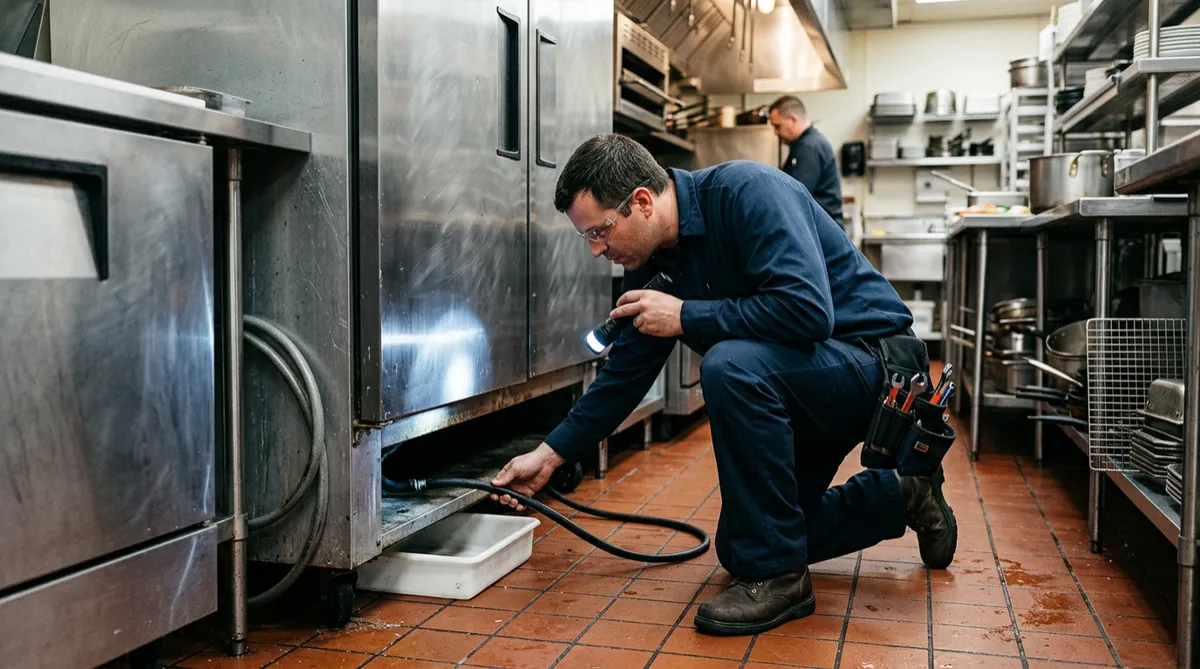
Walk-In Cooler Short Cycling in Tupelo, MS: What Frequent Starts Mean
A walk-in cooler that starts, runs briefly, shuts off, then starts again is not just making an annoying noise. Frequent starts can leave temperatures uneven and put extra wear on parts that are expensive to replace. If you run a restaurant, store, school, or other food operation in Tupelo, it is worth paying attention before the cooler stops holding temperature altogether.
North Mississippi's long warm season and high humidity make a cooler work hard. A busy door, warm deliveries, blocked airflow, or a control issue can all change how often the system runs. The pattern matters: note how long it runs, how long it rests, whether the room is cooling, and whether the behavior began after a storm or power interruption. Those observations are more useful than guessing at a part.
What short cycling looks like in a walk-in cooler
Every refrigeration system cycles as it maintains its set temperature. Short cycling means the system repeatedly starts and stops after unusually short runs, rather than completing a steady cooling cycle. The important detail is not one start or stop you happen to notice. It is a repeating pattern, especially when the cooler is not reaching its normal operating temperature or the temperature is drifting.
Listen for the compressor or outdoor condensing unit starting and stopping more often than usual. Keep a written record of the cooler temperature and the time you check it, using your normal monitoring procedure. If the reading is rising or the product is at risk, follow your food-safety plan for protecting inventory; do not wait for a repair visit before taking the steps your operation requires.
A display that looks normal for a moment does not prove the cooler is stable. The system may be cycling against a control reading while the interior is still warming, or the door may have been open long enough for the temperature to swing. A trend over several checks helps separate a one-time interruption from an ongoing fault.
Simple operating conditions to check first
Before calling, look at the parts of the situation that staff can safely observe. Make sure the door closes fully and is not being held open by a cart, delivery, or damaged latch. Check whether boxes or stored items block the interior airflow path. Do not stack product directly in front of the evaporator fans; cold air has to circulate around the load.
- Confirm that the setpoint has not been changed accidentally, and record what it is before adjusting anything.
- Note whether the cooler has had unusually heavy door traffic or a large warm delivery.
- Look from a safe distance to see whether the condenser air openings are blocked by stored items, leaves, or debris.
- Check for an obvious error message, unusual frost, water, or a change in fan sound without removing covers.
- Ask staff whether the short runs happen all day or only during a particular shift or delivery period.
Keep hands and tools away from fans, wiring, refrigerant lines, and electrical compartments. Do not hose down a condenser, chip ice, or adjust controls you cannot identify. A quick visual check is useful; opening equipment or forcing it to run can turn a small issue into a larger repair.
Why North Mississippi conditions can make the symptom worse
When the outside air is hot and damp, heat has to leave the refrigeration system while moisture builds up around doors and surfaces. A condenser that cannot move air freely has a harder time shedding heat. During a Tupelo summer, that can show up as longer recovery after a rush, more frequent starts, or a unit that struggles in the hottest part of the day. That does not mean the weather is the only cause; it is one reason a marginal problem can become obvious quickly.
Storm season adds another variable. A brief outage or electrical interruption can reset a control, interrupt a cycle, or expose a weak component. If the pattern began right after a thunderstorm or power blink, write down the timing and any display message. Do not repeatedly unplug or reset the equipment to see if it clears. If the symptom returns, that history can help a refrigeration technician diagnose the fault.
Door traffic is another common load. A cooler at a restaurant in Tupelo or a grocery operation in Amory can see frequent openings during a busy service period. Warm, humid air comes in each time. Make sure the door is not propped open, and review whether deliveries can be staged without leaving the opening exposed for long stretches. Those habits can reduce avoidable heat load, but they will not repair a failing control or refrigeration component.
What a technician will need to diagnose
Several different faults can look like short cycling from the outside. A control sensor may be reading inaccurately. The condenser may be dirty or poorly ventilated. A fan, electrical connection, pressure control, or refrigeration component may be causing the system to stop early. Each requires a different test, and replacing a part based only on the sound of the unit is a gamble.
A technician will want to know how often the unit starts, how long it runs, the temperature trend, and whether the fans and compressor appear to operate. They may check the controls, airflow, electrical operation, and refrigeration system using appropriate equipment. If the cause is not obvious, a careful diagnosis is less costly than buying parts that do not address the problem.
When you call, share the make and model if it is easy to read without moving the unit, describe the timing, and mention any recent outage or service visit. Tell the technician if product temperatures are changing. That is important operational information, not just a repair detail.
Do not wait for the cooler to quit
Frequent starts can wear components and leave the cooler with less reserve when the next hot afternoon or busy delivery arrives. If product temperature begins to rise, the immediate cost may be spoiled inventory, lost menu items, or having to move stock on short notice. If the compressor or another major component fails after running under strain, the repair can be more involved than catching the original issue early. No one can promise a specific repair cost without inspecting the equipment, but a prompt diagnosis can limit how much is left to chance.
S.I. Service Group repairs commercial refrigeration equipment in Tupelo and North Mississippi, including communities such as Fulton, Pontotoc, New Albany, Booneville, Oxford, and Amory. If your walk-in cooler is starting and stopping unusually, call 662-523-5514. We can check the equipment, explain what is causing the cycle, and help you decide what needs attention before a short run turns into a warm cooler.