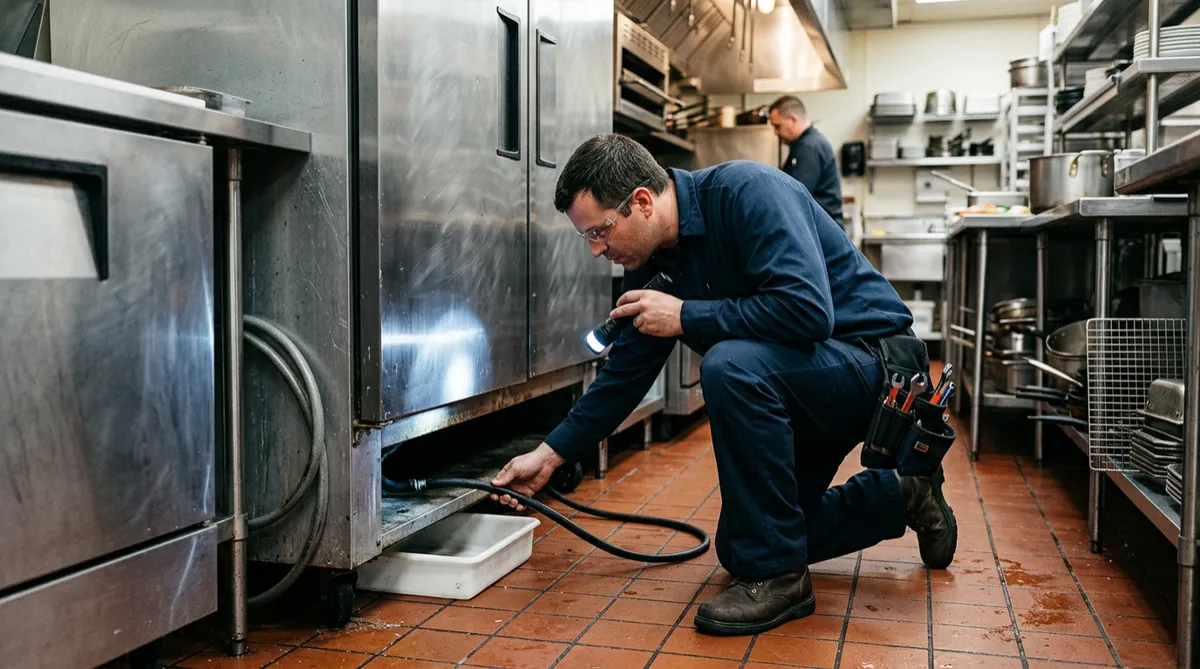
Walk-In Cooler Ice Buildup in Tupelo, MS: What to Check
Ice inside a walk-in cooler can look like a housekeeping problem at first. A thin layer near an opening may be related to warm, moist air entering the room; a growing patch on an evaporator, floor, or wall can point to a drainage, airflow, door, or refrigeration issue that needs attention. For a restaurant or food business in Tupelo, the useful first step is to note where the ice forms and whether the cooler is holding its normal temperature—not to chip away at it.
Walk-in designs differ, so use the equipment manual and your normal food-safety procedures. Keep staff and stored product safe while you observe the condition. If the temperature is rising, protect food according to your procedures and arrange service rather than waiting for the ice to melt on its own.
Where is the ice forming?
Look from a safe position without removing covers. Is the ice at the doorway, on the floor near the entrance, around a drain, on the ceiling, or visibly concentrated near an air outlet? Note whether it appeared gradually or after a cleaning, delivery, or period of heavy door use. A photo and the time of day can help a technician understand the pattern.
Record the temperature shown by the unit or by your routine thermometer checks. If the room is warmer than expected, record that too. Avoid repeatedly changing the setpoint: colder settings do not correct a blocked drain, poor door seal, or airflow restriction, and may complicate the diagnosis.
Common causes of walk-in cooler ice buildup
Moist air entering through the doorway. Frequent openings during a busy service period can bring warm, humid air into a cold space. A door left open, a damaged gasket, or a closure that does not meet evenly can make the problem worse. Check that boxes and carts are not obstructing the door. Look for obvious gasket damage and visible gaps, but leave hinge adjustment and door repairs to a qualified technician.
Blocked airflow. Stock placed directly in front of air outlets or returns can interfere with circulation. Keep product arranged in a way that leaves the openings clear, following the manufacturer's guidance. Do not reach into an operating fan area or remove a guard to inspect it. If ice returns despite clear openings, the cause may be more than storage arrangement.
Drainage trouble. Defrost water needs a clear route away from the evaporator area. A blocked or restricted drain can allow water to collect and freeze again. Staff may note visible standing water or ice near an accessible floor drain, but should not push a wire or tool into a drain line, pour chemicals into it, or remove panels unless the manual specifically describes a safe routine maintenance step.
Defrost or control problems. If ice keeps accumulating on the evaporator or returns soon after a normal defrost, the defrost system, sensor, or controls may need diagnosis. These components can involve electrical parts and hot surfaces. Do not bypass a control, force a defrost, or open an equipment compartment to investigate.
Door hardware or room conditions. A door that does not close fully, a damaged sweep, or a room exposed to unusual moisture can contribute to recurring frost or ice. Check for visible obstruction and make sure the door is being closed between trips. A technician can assess whether hardware, sealing, or operating conditions are contributing.
Safe checks staff can make
- Keep the floor clear and dry where possible; mark slick areas and prevent slips.
- Confirm the door closes and is not blocked by product, carts, or packaging.
- Keep stored items away from visible air outlets and returns.
- Record temperatures, the location of ice, and when it returns after cleanup.
- Follow the equipment manual for routine cleaning and do not remove service covers.
Never chip ice with a knife, screwdriver, or other sharp tool. It can damage the liner, tubing, wiring, or drain components. Do not use a torch, heat gun, or improvised heater. Keep water away from electrical equipment, and do not climb on shelving or equipment to reach overhead ice.
When to arrange commercial refrigeration service
Call for diagnosis when ice is spreading, returns repeatedly, forms around an evaporator or drain, or accompanies temperature swings, unusual noise, water on the floor, or a door that will not seal. If you notice a burning odor, damaged wiring, or water near electrical components, keep people clear and seek qualified help promptly.
For restaurants, groceries, schools, and other food operations in Tupelo and nearby North Mississippi communities, useful details for the service call include the walk-in's make and model if readily visible, the temperature reading, the ice location, and when the issue started. Do not move heavy equipment or remove a cover to find a model label.
What affects repair and downtime
A visible obstruction or door-use issue may be simple to correct, but recurring ice can involve drainage, controls, defrost operation, airflow, or a sealing problem. The time and parts depend on the equipment and what inspection finds. Without the model and diagnosis, no reliable repair duration or cost can be promised. Ask the technician to explain the findings and estimate before work proceeds.
Keeping a short record of temperature and ice patterns can help avoid repeated guesswork. Continue to protect food and follow your site's procedures while service is arranged. Do not treat melting the ice as a repair if the same area freezes again.
Get help with a walk-in cooler in Tupelo
If a walk-in cooler at your Tupelo-area business is icing up repeatedly, describe where the ice forms, how quickly it returns, and whether the temperature has changed. S.I. Service Group can help discuss the next step for commercial refrigeration service in Tupelo and North Mississippi. Call 662-523-5514 to explain what your team is seeing.