One North Mississippi Storm Took Out a Medical Office’s Cubicle Power System — Here’s What We Found
Electrical, Commercial Storm Damage, North Mississippi
One North Mississippi Storm Took Out a Medical Office's Cubicle Power System — Here’s What We Found
When a fast-moving North Mississippi thunderstorm rolled across Tupelo, a local medical office expected the usual — some rain, maybe a brief flicker of the lights. Instead, they walked in the next morning to find multiple cubicle bays dead, computers dark, and only partial power in parts of their office. Their cubicle system vendor sent a tech, took one look, and said, “You need a licensed electrician.” That’s when S.I. Service Group got the call, and our commercial electrician in Tupelo, MS, Dan Southwick, headed to the site to find out what the surge had done.
Staff had already tried the basics. Breakers looked on, a few computers would boot up, but others had no power at all. Some cubicle rows worked, others were completely dead. When you see that kind of “patchy” outage in a modern office, especially after a storm, it’s a strong hint you’re dealing with lightning surge electrical damage somewhere between the panel and the furniture power system — not just a tripped breaker or a bad outlet.
The vendor’s technician traced the issue to the cubicle power track system and asked us to diagnose the building wiring feeding it. That’s where this job turned from “no power at the cubicles” into a textbook case of what a power surge in a commercial building can do to a junction box that’s already a little tired and corroded.
What Is a Cubicle Power Track System?
Most modern offices don’t run extension cords everywhere to power computers, printers, and monitors. Instead, they use a cubicle power track system — a modular wiring system built into the cubicle panels and furniture. Power is fed from a junction box in the wall or floor into a special connector. From there, the track carries electricity down the row of cubicles, with receptacles mounted in the panels where staff plug in equipment. It keeps things neat, code-compliant, and flexible when offices move people around. But when a surge hits that feed, the whole line of workstations can go down in one shot.
What Happened: The Storm and the Surge
On this day, a severe thunderstorm came through Tupelo with strong wind, heavy rain, and plenty of lightning in the area. The building did not take a direct lightning strike to the panel, but it didn’t have to. A nearby strike can send a high-voltage spike down the utility lines and into a building’s electrical system. That’s exactly the kind of power surge a commercial building in Mississippi sees several times a year during storm season.
A surge like this moves fast — we’re talking microseconds — and it looks for weak points: long runs of wire, loose connections, corroded terminals, and overloaded splices. The main breaker and branch breakers are designed to protect against overloads and short circuits, but they’re not perfect surge absorbers. By the time lightning surge electrical damage shows up on a branch circuit, the breaker may have already seen its share of stress and only trips after the wiring downstream has taken the hit. That’s what we saw here: the breaker for the cubicle circuit did trip, but not before the junction box feeding the cubicle power track system was cooked from the inside out.
Inside the Junction Box: The Damage
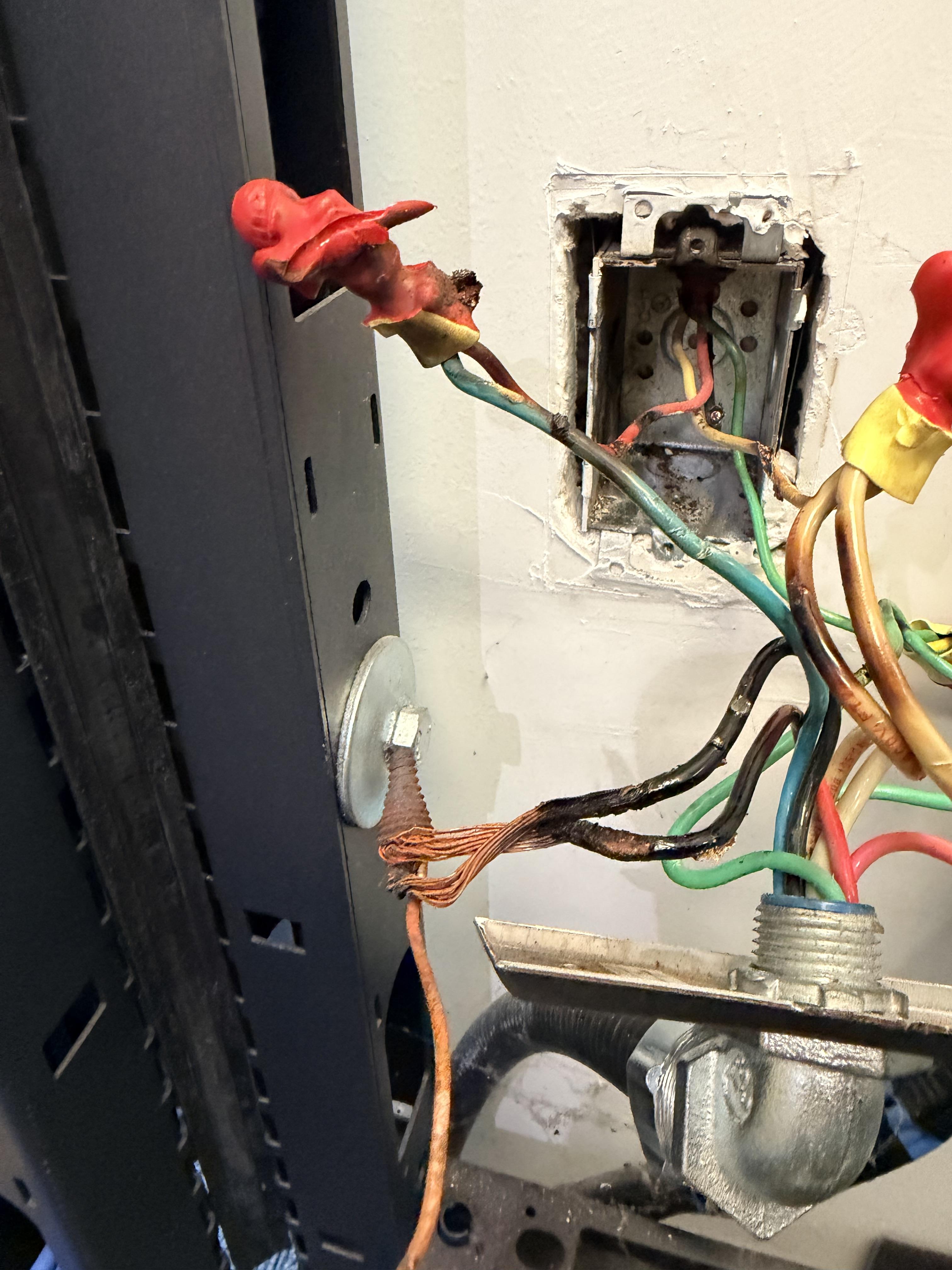
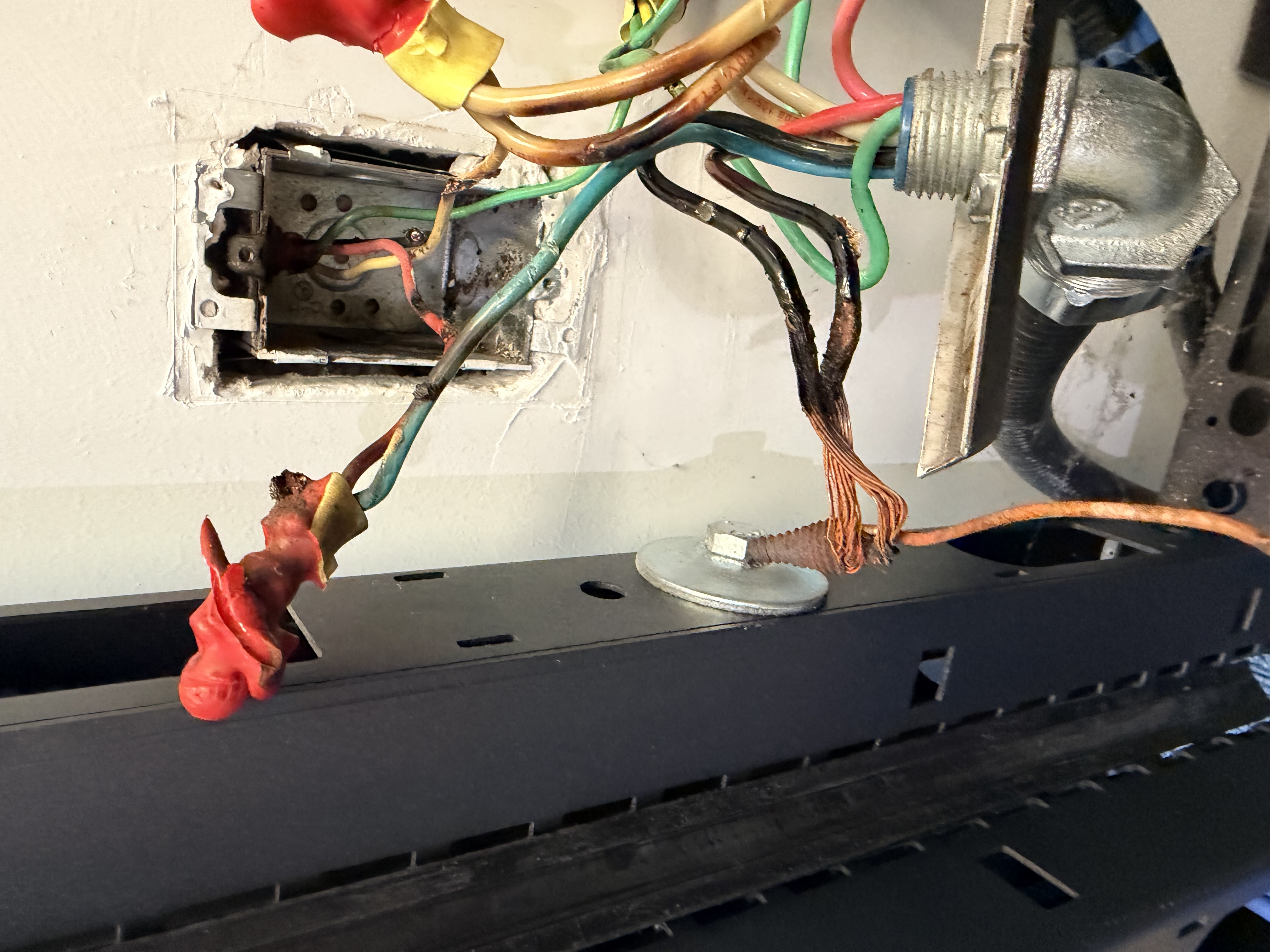
Once on site, Dan traced the cubicle feed back to its source: a junction box feeding the cubicle power track circuit. As soon as the cover came off, the damage told the story. This wasn’t just a loose wire or an old splice — it was clear evidence of a surge event hitting a weak connection and turning it into a hot spot.
The first thing that jumped out was the red conductor. The insulation had visible burn marks from sustained heat, not just a quick spark. That means the connection carried more current than it could handle for long enough to cook the plastic. You don’t get that from normal office loads like computers and printers. You get it when a surge slams into a compromised joint and the resistance turns that energy into heat in a hurry.
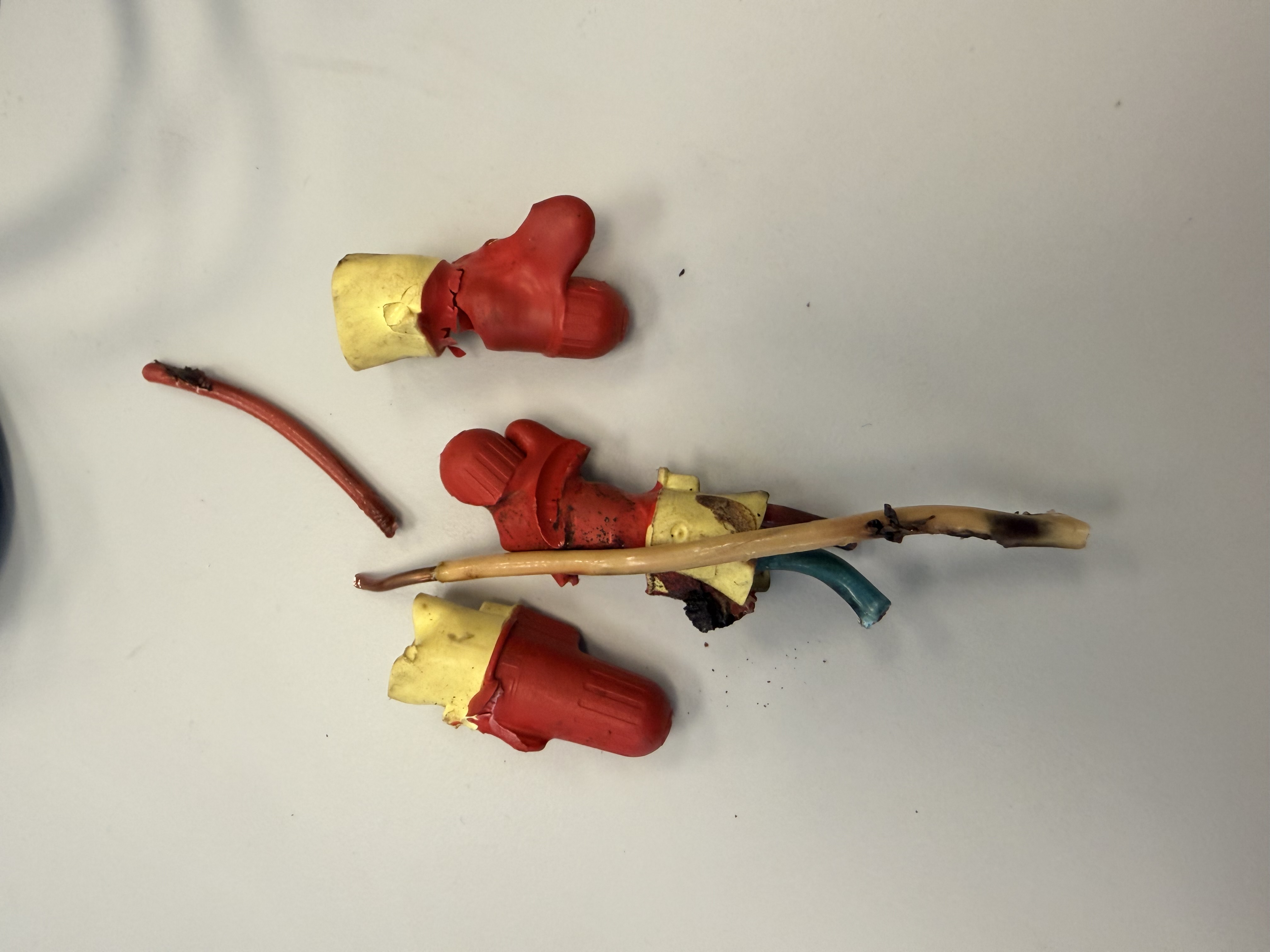
Then there were the wire nuts. Several had melted, some even fused together. When Dan removed them from the box, one conductor had separated completely at the break point, with bare copper exposed at the end. That’s classic evidence of an overloaded connection: the joint heats up, the plastic shell softens and deforms, the copper expands and contracts, and finally the wire fails right at the stress point. In this case, the surge didn’t just stress the connection — it finished it off and left a dead-open joint feeding the cubicle track.
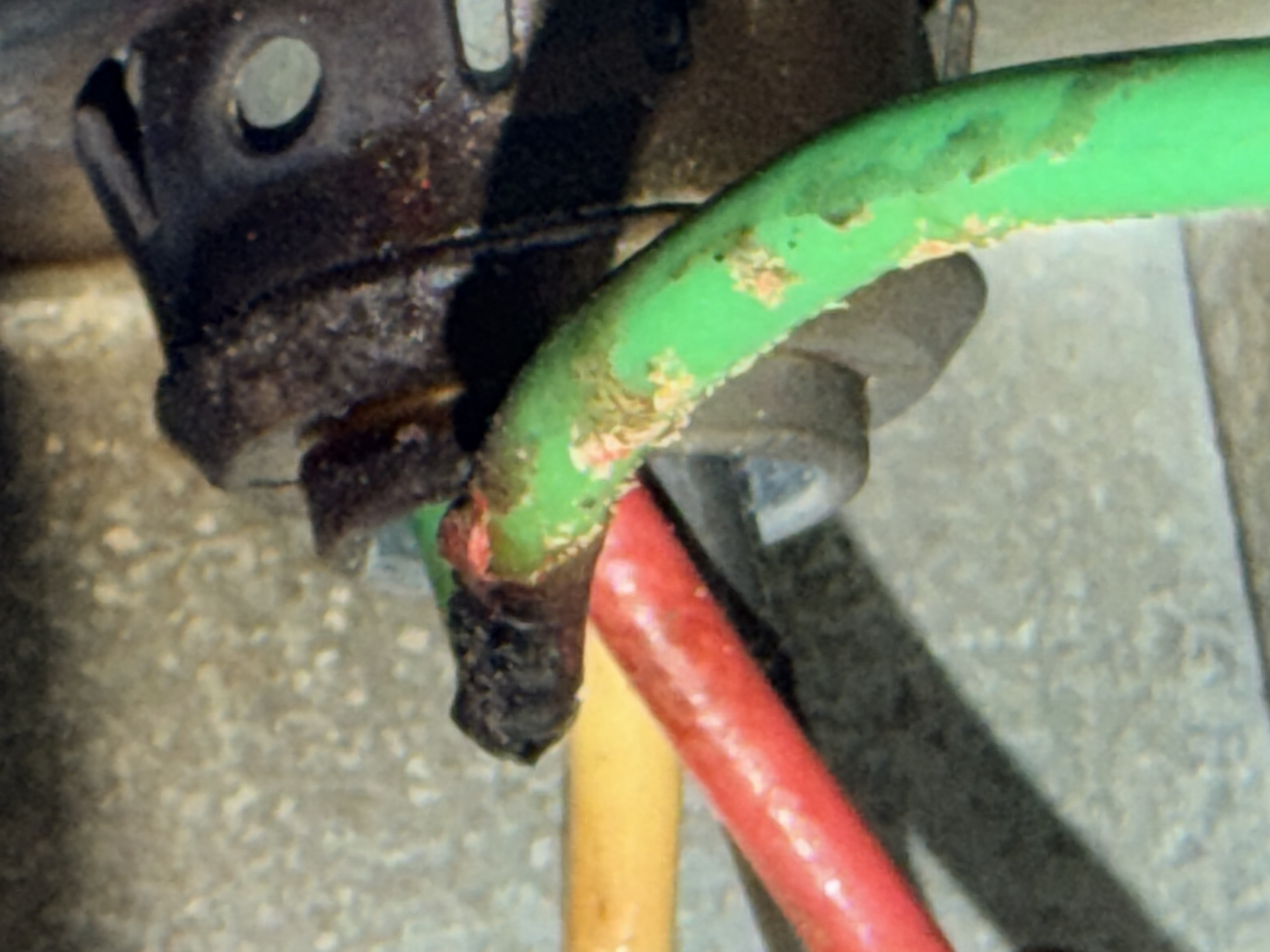
The worst part, though, was the corrosion at the terminal connections. The green, red, and yellow conductors all showed significant corrosion where they landed. The green equipment ground had severely chipped insulation with exposed, oxidized copper. The terminal lug itself was rusty and pitted. That didn’t happen overnight. This was pre-existing deterioration that had been building for years — moisture, age, and maybe a bit of cleaning chemical exposure in a medical office environment. All of that corrosion raises resistance at the joint, which makes it an even better target when a surge shows up looking for a weak link.
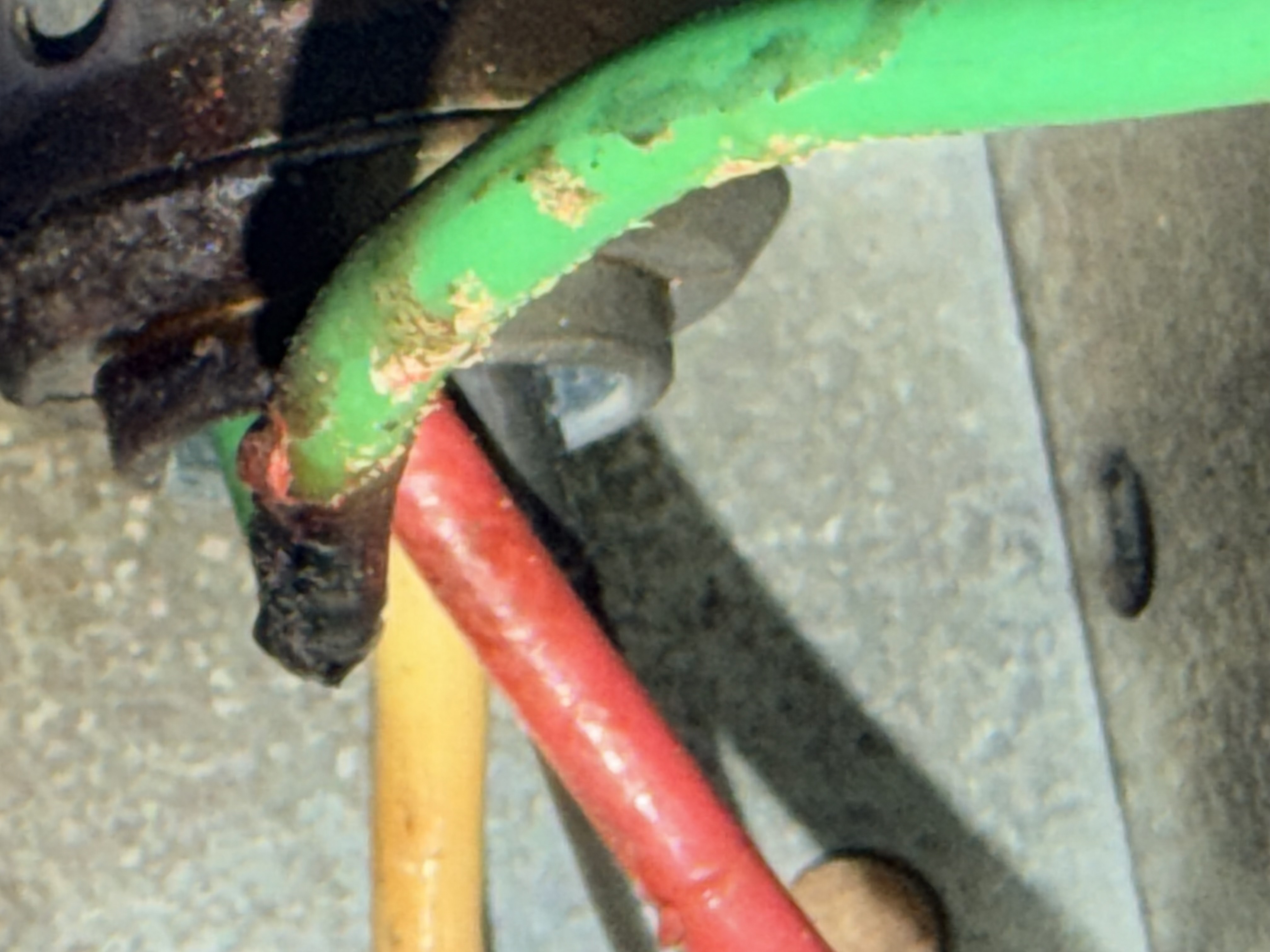
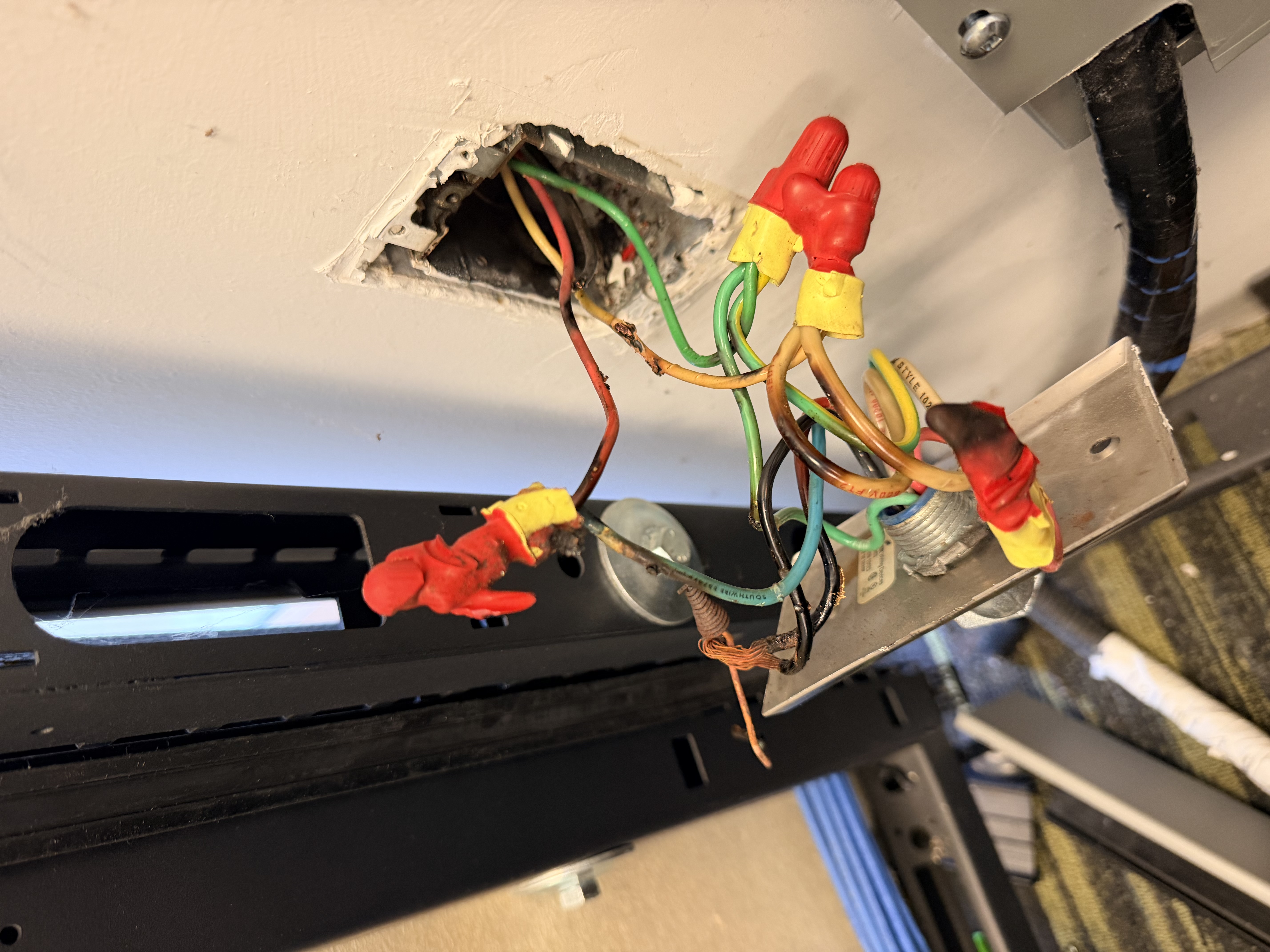
On top of that, several conductors showed heavy heat damage — melted and warped insulation, darkened copper, and marks consistent with electrical arcing. Arcing is what happens when electricity jumps through air between conductors or from a conductor to metal parts. It leaves behind charred, glassy spots and can be a serious fire risk if it continues. In this case, the breaker did eventually trip, which likely prevented a worse outcome. But it left the cubicle power track system out of service and the office scrambling to work around dead workstations.
Tracing It Back to the Panel
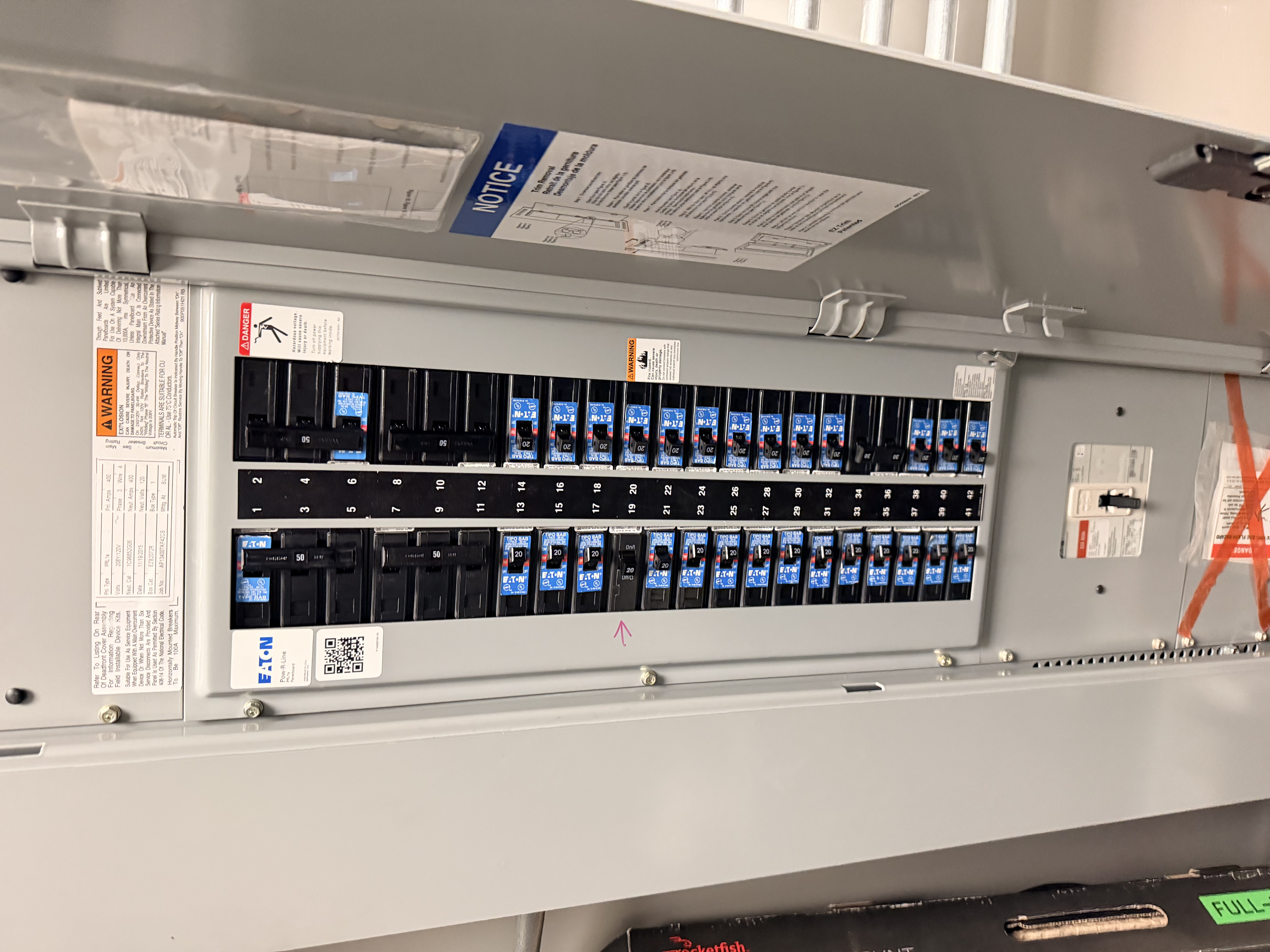
Anytime we see that level of damage in a junction box, we don’t stop there. We follow the circuit all the way back to the source to make sure the rest of the system is sound. In this building, the cubicle feed was served from an Eaton Pow-R-Line commercial panel — a 400-amp, 3-phase, 208Y/120V service. The panel itself was in good shape: clean, organized, and properly labeled. That’s what we like to see in a medical office or any other critical facility.
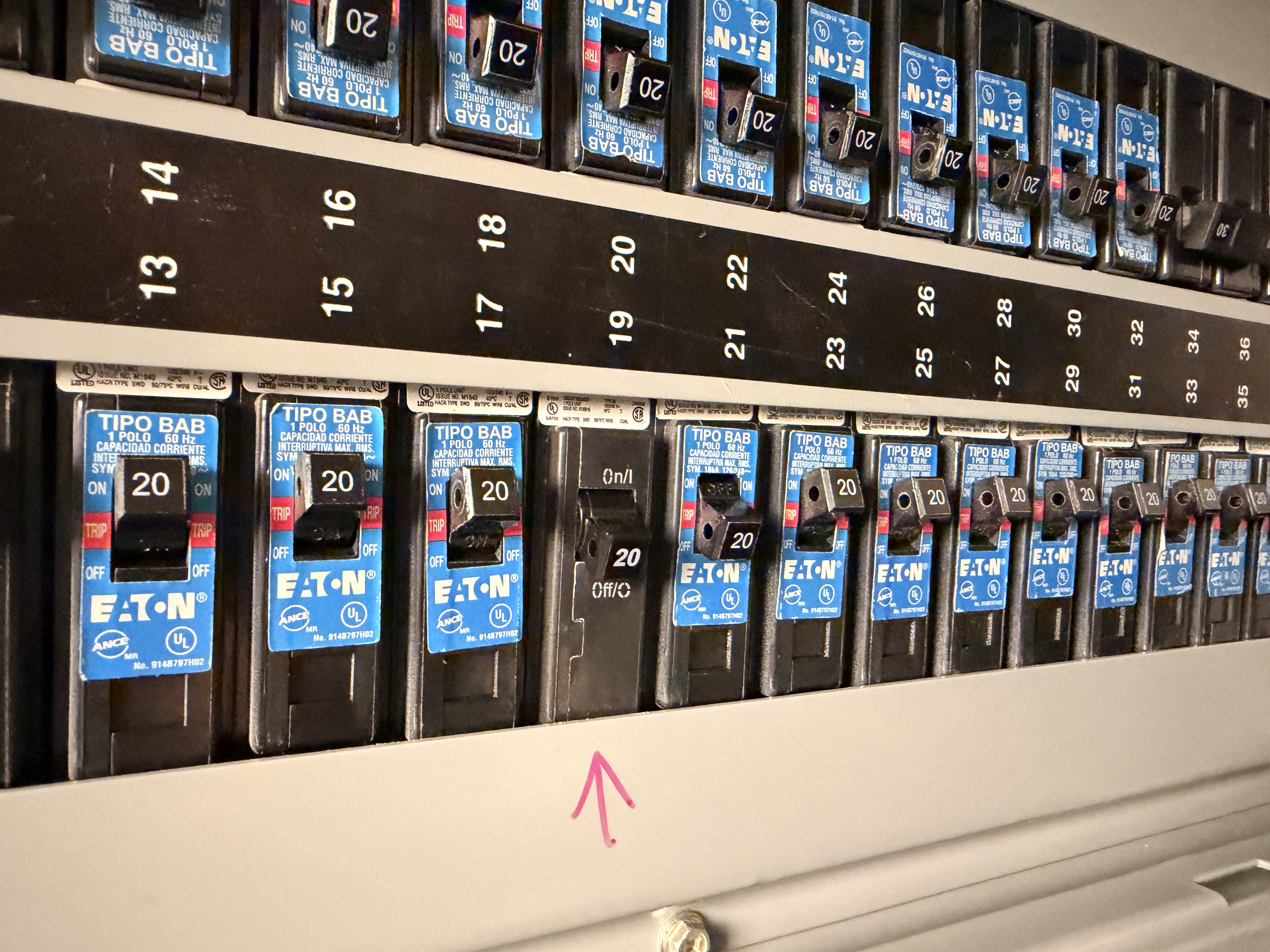
We identified the affected circuit as Breaker #13, which was clearly marked for the cubicle area. The breaker had tripped during the event, which is exactly what it’s supposed to do when there’s an overload or fault downstream. The important detail is that by the time it tripped, the wiring in the junction box had already taken enough surge energy to melt insulation and wire nuts. That’s a good reminder that even a quality Eaton commercial panel can’t fully protect older, corroded connections out in the field when a severe surge rolls through.
Why Surge Damage Looks Like This
Surges don’t usually burn up straight runs of wire in the walls. Copper conductors have low resistance and can pass a quick spike without much visible damage. The trouble spots are connections — wire nuts, terminal lugs, and splices. Anywhere the wire is twisted, clamped, or landed on a screw, you have more resistance. Add in age, corrosion, or a less-than-perfect splice, and that resistance goes up even more. When a surge hits, those points act like little heaters. They get hot fast, plastic melts, and if the energy is high enough, you see arcing and charring like we found in this junction box.
That’s why a lot of storm damage electrical repair work ends up focused on terminations and junction boxes instead of replacing every inch of wire in a building. The surge finds the weak spots. Our job as a commercial electrician in Tupelo, MS is to find those weak spots, clean them up, and make sure they’re not waiting to fail the next time a storm rolls through.
The Fix: Restoring the Cubicle Power System Safely
Once we had a clear picture of the damage, the repair plan was straightforward but had to be done right. For a medical office, “good enough” isn’t good enough. They rely on those workstations for scheduling, charting, billing, and patient communication, and they need a reliable cubicle power track system repair that won’t leave them down again on the next rainy day.
Pull new wire from the panel to the junction box. We removed the damaged conductors and installed new wiring from the Eaton panel all the way to the affected junction box. This eliminates any hidden heat damage that might not be obvious at first glance but could shorten the life of the circuit.
Install a new connector for the cubicle power track system. The interface between the building wiring and the furniture system is critical. We replaced the connector so the cubicle track vendor’s equipment was landing on a clean, solid, code-compliant connection point.
Re-terminate all connections cleanly. Every splice and termination in the junction box was redone with fresh wire nuts and properly prepared conductors — stripped to the correct length, twisted and landed according to manufacturer instructions, with no corrosion left in the box. This is where attention to detail pays off for long-term reliability.
Test circuit continuity and function before restoring power. Before we ever flipped Breaker #13 back on, we tested continuity and checked for proper connections. Once energized, we verified voltage at the junction box, at the cubicle track connector, and at multiple outlets along the cubicle run to be sure the system was fully restored.
The result: full power restored to the affected cubicle bays, no more partial power issues, and a safer, more robust circuit feeding the office furniture system. For the client, it meant staff could get back to work without dragging extension cords across the floor or relocating teams to other parts of the building.
What Commercial Property Owners Should Know About Surge Risk
North Mississippi gets its share of storms, and every season we see new calls for lightning surge electrical damage in offices, clinics, and professional spaces. You can’t stop storms, but you can harden your building so a single surge doesn’t take out half your workstations. Here are a few practical takeaways from this job for property owners and facility managers:
1. Install Whole-Building Surge Protection
A quality surge protection device (SPD) at the service entrance and main distribution panels is your first line of defense. These devices are designed to clamp down high-voltage spikes before they travel deep into your branch circuits and sensitive equipment. Industry groups like NEMA and NFPA emphasize properly installed SPDs as a best practice for commercial facilities, especially where critical electronics are involved. For a medical office or similar space, that’s not a luxury — it’s cheap insurance compared to downtime and equipment replacement.
2. Inspect and Maintain Connections Periodically
Corrosion and loose terminations don’t show up overnight. They build slowly, especially in older buildings, damp areas, or spaces that have seen multiple remodels. Having a commercial electrician Tupelo MS trusts do periodic inspections of key junction boxes, panel terminations, and major splices can catch those weak points before a storm finds them for you. It’s a straightforward way to lower your risk of fire and outages during severe weather.
3. Know Your Panel and Critical Circuits
In this case, the Eaton Pow-R-Line panel was clearly labeled, which made troubleshooting faster and safer. Take the time to label your critical circuits — cubicle feeds, IT rooms, medical equipment, refrigeration, and so on. Keep a simple panel schedule and update it when you remodel. When a power surge in a commercial building knocks something out, being able to quickly identify and isolate the affected circuit saves time and money during the repair.
4. Have a Go-To Commercial Electrical Partner
When your office loses power to a bank of cubicles or a key area, you don’t want to start Googling from scratch. Having a relationship with a trusted commercial electrician in Tupelo who understands your building, your panels, and your business needs means faster response and better decisions when something goes wrong.
Need Storm Damage Electrical Repair in North Mississippi?
S.I. Service Group is a veteran-owned HVAC, electrical, and commercial refrigeration contractor based right here in Tupelo. We handle jobs like this one every storm season — from cubicle power track system repair and panel troubleshooting to whole-building surge protection and ongoing electrical services for offices, medical facilities, and professional spaces across North Mississippi.
If you’ve had a recent storm, are seeing unexplained breaker trips, or have dead outlets or cubicle runs after bad weather, don’t ignore it. What we found in this medical office — melted wire nuts, corroded terminals, and arcing in a junction box — is exactly the kind of hidden problem that can turn into a bigger outage or even a fire risk if it’s left alone. A quick inspection now is a lot cheaper than an emergency call later when half your staff can’t work.
For storm damage electrical repair, cubicle power track system repair, or surge protection upgrades in Tupelo and across North Mississippi, call S.I. Service Group at 662-523-5514 or contact us online. We’ll treat your building like it’s our own, explain what we find in plain language, and make sure your electrical system is ready for the next storm that rolls through.
SEO Title Tag: One North Mississippi Storm Took Out a Medical Office’s Cubicle Power — What a Tupelo Commercial Electrician Found
Meta Description: A lightning surge knocked out a Tupelo medical office’s cubicle power track system. See what S.I. Service Group’s commercial electrician found inside the junction box, how the Eaton commercial panel held up, and what North Mississippi property owners can do to prevent similar electrical damage.
URL Slug: shop-talk-north-mississippi-storm-cubicle-power-surge-damage-tupelo-ms