Why Does My Breaker Keep Tripping When I Plug In a Space Heater? A Tupelo Electrician Explains
Home Electrical, Safety, Space Heaters, Breaker Problems
Why Does My Breaker Keep Tripping When I Plug In a Space Heater? A Tupelo Electrician Explains
If your breaker keeps tripping every time you plug in a space heater, you’re not alone. I’m going to walk you through what’s really going on, what’s safe, and when it’s time to call in a pro.
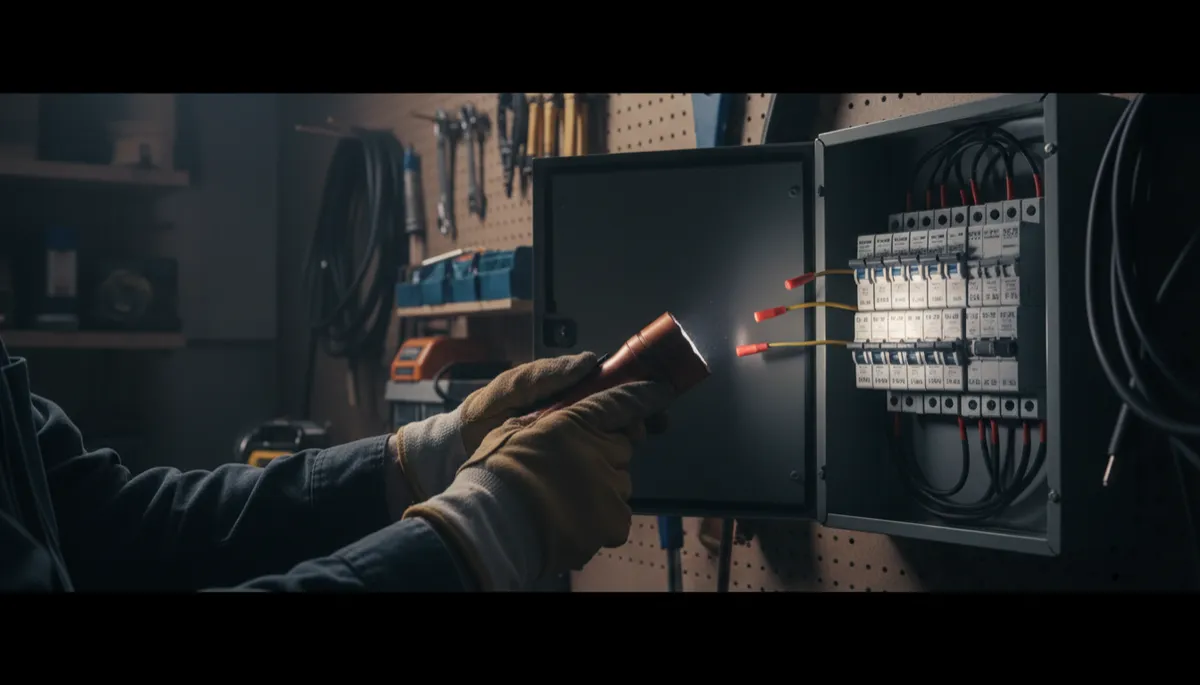
Let me start with a call I got last fall from a homeowner over in Saltillo. It was one of those first chilly mornings where you can see your breath in the car but it’s not quite time to turn the central heat on full blast. She’d picked up a little space heater from the big-box store, plugged it into the bedroom outlet, and click—house went half dark. Reset the breaker, tried again. Click. By the time she called me, she’d reset that breaker five or six times and was worried she was about to burn the place down.
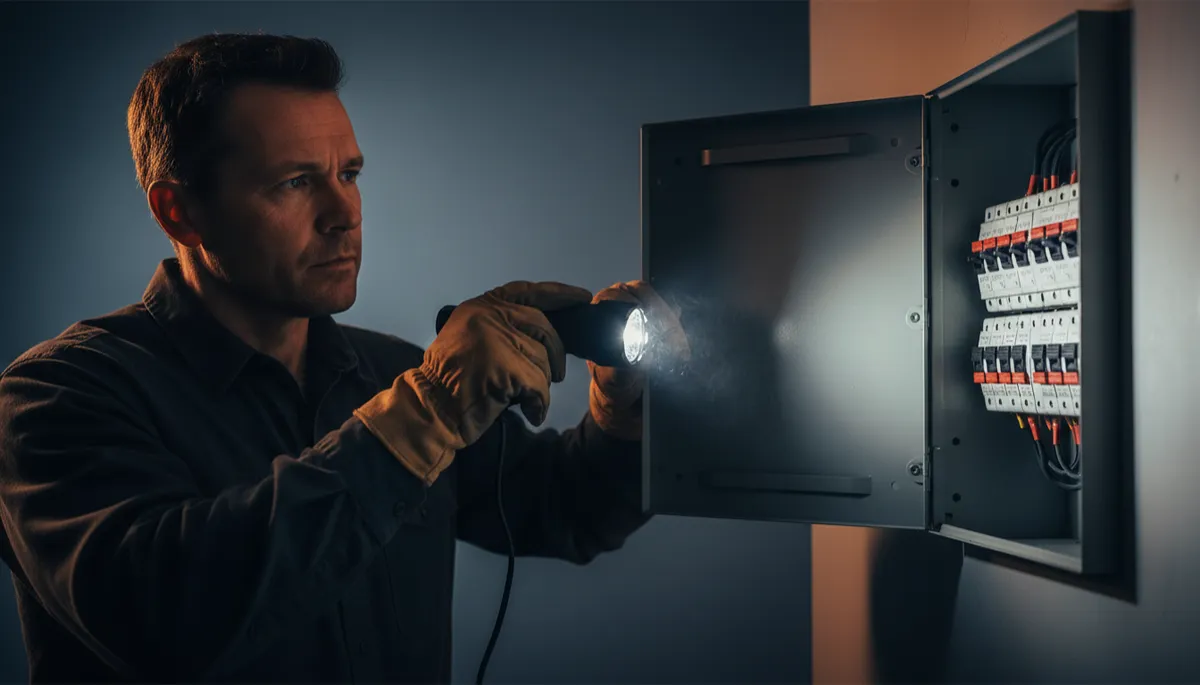
I’ve seen that same story play out in Tupelo, Verona, Plantersville, Mooreville, Mantachie, Fulton, Amory, New Albany—you name a town in North Mississippi, I’ve probably been in somebody’s hallway with a flashlight looking at a tripped breaker space heater situation. Space heaters are handy, but they’re also the number one reason I get “my breaker keeps tripping space heater” calls once the temperatures drop.
Why Space Heaters Are the #1 Breaker-Tripping Appliance
Space heaters are small, but electrically they’re beasts. Most of the plug-in heaters you buy at the store are rated around 1500 watts. On a standard 120-volt circuit, that’s roughly 12.5 amps of current. Now, a lot of bedroom and living room outlets in North Mississippi homes are on 15-amp circuits. That means your heater alone is using up about 80–85% of what that circuit is designed to handle—before you turn on a lamp, TV, phone charger, or anything else.
💡 Field reality: If a circuit breaker trips space heater the moment you also flip on a lamp or TV, that’s a classic overloaded circuit problem, not a mystery.
Space heaters pull steady, high amperage for long periods. Your microwave might spike high but only for a couple minutes. A hair dryer is strong, but you use it for ten minutes and you’re done. A space heater? Folks plug those in and leave them running for hours. That long, heavy draw is exactly what exposes weak spots in your wiring, overloaded outlets, and tired old breakers in a hurry. That’s why every fall I start getting “space heater trips breaker Tupelo MS” calls like clockwork.
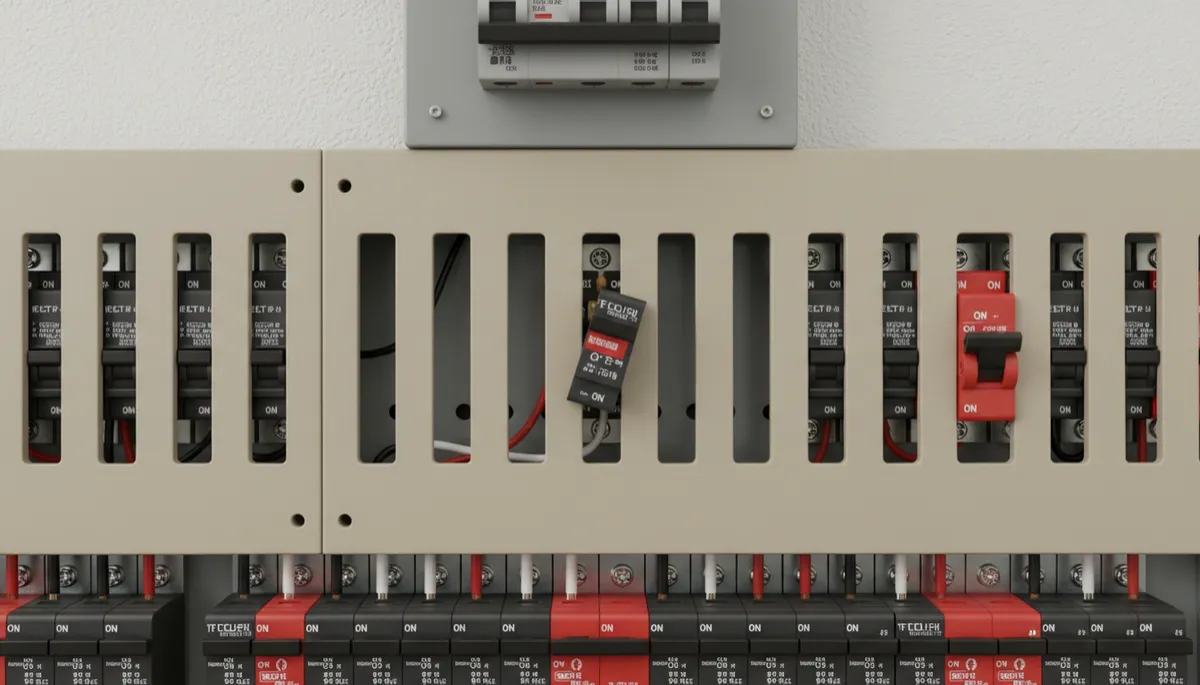
A tripped breaker is your panel’s way of saying “something’s not right—slow down.”
Overloaded Circuit vs. Weak or Failing Breaker: What’s the Difference?
When a breaker trips, homeowners usually ask me, “Is the breaker bad, or do I just have too much on it?” Good question. There are two main possibilities:
- Overloaded circuit – The circuit is being asked to carry more current than it’s safely rated for.
- Weak/failing breaker – The breaker itself is worn out, damaged, or has loose connections and is tripping easier than it should.
Signs of an Overloaded Circuit (Most Common with Space Heaters)
- Breaker trips only when the heater is on—especially when combined with other devices on that circuit.
- Lights dim or flicker when the heater kicks on.
- Warm outlets or warm cords on that circuit—big red flag.
In these cases, the breaker is doing its job. An overloaded circuit space heater situation is exactly what the breaker is designed to protect you from. It’s sensing too much current and shutting things down before wires overheat and start a fire in your walls.
Signs of a Weak or Failing Breaker
- Breaker trips even with light loads, or randomly, not just with the heater.
- Breaker feels hot to the touch or has a burnt smell around it.
- Handle is loose, wobbly, or doesn’t “click” firmly into ON or OFF.
I was at a house in Verona where the homeowner swore the heater was “killing the breaker.” Turned out the breaker had heat damage from years of loose connections. I replaced the breaker and tightened up the bus connections, and suddenly the circuit could handle normal loads again. In that case, yes, a weak breaker was part of the story—but we still had to talk about how much he was plugging in on that one bedroom circuit.
📌 Key takeaway: If your circuit breaker trips space heater only when you’re running the heater plus other stuff, it’s usually overload. If it trips randomly or with light use, you might have a failing breaker or a deeper wiring issue that needs a professional electrical services inspection.
What It Really Means When a Breaker Trips Repeatedly
A breaker that trips once in a blue moon? Annoying, but not necessarily a crisis. A breaker that trips every single time you plug in a heater or run a certain combination of appliances? That’s your electrical system waving a big yellow caution flag at you. Repeated tripping is a warning, not just an inconvenience.
- It can mean the circuit is undersized for how you’re using that room now.
- It can point to loose connections, aging wiring, or damaged outlets.
- It can expose a panel that’s past its prime and struggling to keep up.
In Plantersville, I walked into a home where the breaker had been tripping for weeks. The homeowner kept resetting it because “it always came back on.” When I pulled the panel cover, I found heat discoloration and insulation starting to cook on one of the branch circuits. That’s the kind of thing that turns into a house fire if you ignore it. The breaker was actually the hero in that story—it kept doing its job until someone listened.
How Old Wiring and Undersized Circuits Make It Worse in North Mississippi Homes
North Mississippi has a lot of older homes—50s ranches in Tupelo, farmhouses outside Mantachie, older bungalows in Amory. Those houses were wired in a time when nobody had 60-inch TVs, gaming consoles, three phone chargers per person, and a 1500-watt space heater running all evening. The electrical systems were often designed around a couple lamps and maybe a radio or small window unit.
Here’s what I run into a lot when I’m doing electrical repair North Mississippi work:
- Long runs of older 14-gauge wire on 15-amp breakers feeding multiple rooms and outlets.
- Multiple bedrooms and a hallway sharing one small circuit.
- Old receptacles that are loose, brittle, or backstabbed (wires poked into the back instead of screwed down).
When you plug a heavy-draw heater into that kind of system, every weak link shows up. Voltage drops, wires get warmer than they should, and the breaker sees that and trips. In a New Albany home I worked on, just plugging in a heater in the living room would sometimes trip the breaker feeding both kids’ bedrooms and the hallway lights. That’s a sign the house wiring and breaker layout were never designed for today’s loads.
💡 Pro tip: If your home is older and every time you add one more thing (like a space heater) something trips, it’s time to talk about adding circuits or upgrading your panel—not just buying a “smaller” heater.
When a Panel Upgrade Is the Real Answer (Not Just a New Breaker)
Sometimes the issue isn’t just one weak breaker or one overloaded room. Sometimes the whole electrical system is stretched to the max. That’s when we start talking about a panel upgrade Tupelo MS homeowners can rely on long term.
Signs Your Panel Is Maxed Out
- Your panel is full of tandem (skinny) breakers stacked in spots that were never meant for them.
- You still have a 60-amp or 100-amp main service on a house that’s packed with modern appliances and HVAC.
- Frequent nuisance trips on different circuits, not just the heater circuit.
- Panel is old, rusty, buzzing, or warm to the touch.
I’ve opened panels in Mooreville and Fulton that were installed when the house was built in the 70s and never touched. Then the homeowners added a big heat pump, two refrigerators, a hot tub, and several plug-in heaters over the years. That’s a recipe for a panel that’s technically “working” but living on borrowed time. In those cases, the safest move is a full panel upgrade service so we can add more properly sized circuits and give your home the electrical backbone it needs.
A new panel doesn’t just stop your tripped breaker space heater issues—it gives you room to add dedicated heater circuits, kitchen circuits, EV chargers, and more without constantly worrying about overloads.
Safe Space Heater Practices: How to Use Them Without Constant Trips
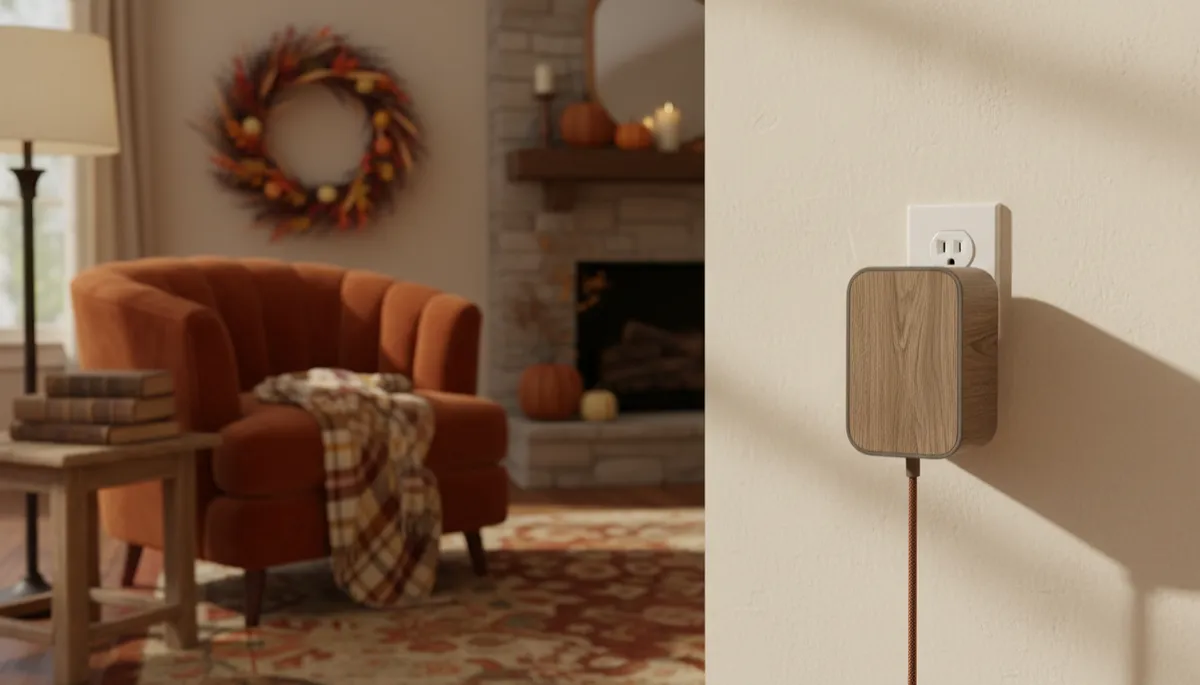
Space heater plugged directly into a wall outlet in a cozy living room with fall decor,...
I’m not anti–space heater. They’re useful tools, especially for drafty rooms or older homes. But you’ve got to respect what they’re pulling from your electrical system. Here’s how I tell homeowners in Tupelo and around North Mississippi to use them safely:
1. Use a Dedicated Circuit When Possible
The best setup is a dedicated 20-amp circuit with 12-gauge wire feeding the outlet you plan to use for the heater. That way the heater has all the capacity of that circuit to itself, and you’re not sharing it with TVs, game systems, or other outlets. If you’re constantly fighting trips in one room, we can run a new dedicated heater circuit as part of our electrical services.
2. Plug Directly Into the Wall (No Extension Cords or Power Strips)
This is a big one. Never run a space heater through an extension cord or power strip. Those cords and strips are often not rated to carry 12.5 amps for hours. They overheat, melt, and start fires. Plug the heater directly into a properly grounded, three-prong wall outlet that’s in good condition.
3. GFCI Protection in Certain Locations
If you’re using a heater in a bathroom, laundry room, or anywhere near water, that outlet should be GFCI-protected. A GFCI won’t stop overload trips, but it will protect you from shock if there’s a ground fault—like a heater getting splashed or knocked over near a tub. If you’re not sure if your outlet is GFCI or properly protected, that’s a good time to call an electrician Tupelo MS homeowners can trust to check it out.
4. Don’t Share the Circuit With Other Big Loads
If your heater is on the same circuit as a vacuum, hair dryer, or window AC unit, expect trips. Try to figure out which outlets are on which breaker (we can help map that out), and reserve one outlet on a lightly loaded circuit for the heater during the colder months.
What NOT to Do: Stop Just Flipping the Breaker Back On
Let me be blunt here: don’t keep resetting a breaker over and over without fixing the cause. Every time that breaker trips, it’s because something is wrong—too much load, a fault, or a failing device. Forcing it back on repeatedly is like driving around with the check engine light flashing and taping over it with a sticky note.
- You can overheat wiring in the walls if you keep pushing a circuit past its limits.
- You can damage the breaker so it becomes less reliable over time.
- You can ignore early warning signs of a problem that could have been fixed cheaply before it turned serious.
⚠️ Warning: If the breaker trips immediately when you reset it—even with the heater unplugged—leave it OFF and call a pro. That can indicate a short, damaged wiring, or a serious panel issue.
Space Heater & Breaker FAQ for North Mississippi Homeowners
1. Can I put a space heater on an extension cord?
I strongly recommend no. Most extension cords that folks grab out of the closet are 16-gauge or 18-gauge wire, meant for lamps or phone chargers—not a 1500-watt heater. That much current through a small cord for hours can overheat the insulation, melt the plug, and start a fire. If you absolutely must use one for a short time, it needs to be a heavy-duty, 12-gauge cord rated for 15 or 20 amps, fully uncoiled, and not running under rugs or furniture. But honestly, the safest move is always to plug the heater directly into a wall outlet on a properly sized circuit.
2. Why does my breaker trip only when I run the heater AND something else?
That’s classic overload. Your heater alone might be pulling 12.5 amps on a 15-amp circuit. Add a vacuum cleaner, hair dryer, or even a TV and a couple lamps, and you’ve pushed that circuit past its safe limit. The breaker sees more current than it’s rated for and trips. That’s exactly what it’s supposed to do. If every time you vacuum while the heater’s running the breaker trips, that’s your sign that the circuit is at capacity and you either need to move loads around or have an electrician add another circuit to that area of the house.
3. Is it safe to reset a breaker yourself?
Yes—once or twice, as long as you do it properly and pay attention to what caused it. First, turn off or unplug the space heater and anything else that was running on that circuit. Then go to the panel, push the breaker all the way to OFF, then back to ON. If it holds and doesn’t trip again when you plug things back in (one at a time), you’re probably okay for the moment. But if that same breaker keeps tripping space heater every day, that’s when you call in an electrician to see what’s going on behind the scenes.
4. How do I know if my panel is too old?
Age is one clue, but not the only one. If your panel is original to a house built in the 60s, 70s, or early 80s and has never been updated, it’s worth having it checked. Other red flags: rust, corrosion, breakers that feel loose or wobbly, labels you can’t read, lots of double-tapped breakers (two wires under one screw), or a panel brand that’s known for safety issues. If you’re unsure, I can take a look and tell you honestly whether a panel upgrade service makes sense or if a little maintenance will buy you more time.
5. What size circuit does a space heater need?
Most portable space heaters are made to plug into a standard 15-amp receptacle, but they’re right up near the top of what that circuit can handle. For regular use, I like to see them on a 20-amp circuit with 12-gauge wire, especially if you’re going to run it a lot in the same spot. That gives you some breathing room and reduces nuisance trips. If you’re not sure what size circuit you have, that’s something I can check quickly during a service call anywhere in the Tupelo area or across North Mississippi.
6. My heater works fine in one room but trips the breaker in another. Why?
Different rooms are often on different circuits, and not all circuits are created equal. One room might be on a lightly loaded 20-amp circuit with newer wiring, while another is on a crowded 15-amp circuit that also feeds half the house. I’ve seen heaters run all day in a living room in Amory with no problem, but the same heater would trip the bedroom breaker in seconds because that bedroom circuit was already carrying lamps, a TV, and a window unit. That’s why part of my job is figuring out which circuits are doing what and rebalancing things when needed.
So What Should You Do Next?
If you’re in Tupelo or anywhere across North Mississippi and your space heater trips breaker every time you plug it in, here’s how I’d handle it if we were sitting at your kitchen table going over it together:
- Stop forcing the breaker. If it trips, don’t just flip it back on five times in a row and hope for the best.
- Unplug the heater and other big loads on that circuit and see if the breaker will reset and hold with lighter use.
- Try a different outlet in a different room that’s likely on another circuit, but plug the heater directly into the wall—no extension cords or power strips.
- Pay attention to patterns. Does the breaker trip only with the heater? Only when you add the vacuum or hair dryer? Randomly? Those clues help a lot.
Here’s where I draw the line between DIY and “call a pro”:
- You can safely: Reset a breaker once or twice, unplug a heater, move it to another outlet, and reduce how much is running on one circuit.
- You should call a pro when: The breaker trips repeatedly, feels hot, smells burnt, won’t reset, or trips even with the heater unplugged; your panel looks old or overcrowded; or you’re ready to add a dedicated heater circuit or talk about a full panel upgrade.
That’s exactly the kind of work we do every day at S.I. Service Group—troubleshooting, electrical repair North Mississippi homeowners can trust, and long-term solutions like dedicated circuits and panel upgrade Tupelo MS projects that get your home ready for the way you actually live today.
Need a No-BS Electrician in Tupelo or North Mississippi?
If your breaker keeps tripping when you plug in a space heater, don’t ignore it and don’t just keep flipping that breaker back on. Let a licensed, local electrician take a look and tell you what’s really going on—whether it’s a simple overload issue, a weak breaker, old wiring, or a panel that’s past its prime. We can repair what’s there, add safer dedicated circuits, or upgrade your panel so you’re not fighting your electrical system every time the weather turns cold.
If you’re in Tupelo, Saltillo, Verona, Plantersville, Mooreville, Mantachie, Fulton, Amory, New Albany, or anywhere in North Mississippi and your space heater is giving your breakers a workout, give S.I. Service Group a call at 662-523-5514. We’ll come out, diagnose the problem, and give you straight answers and options—no scare tactics, no fluff. Just solid, local electrical services to keep your home warm and safe this heating season.