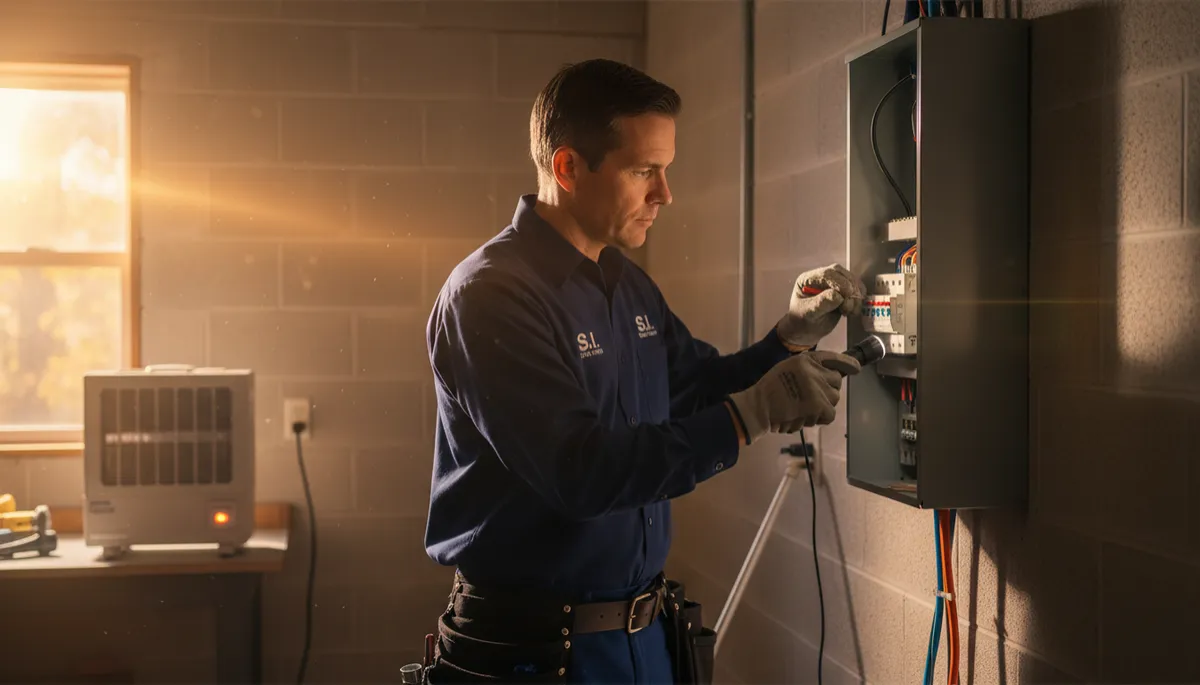
Space Heater Tripping Breaker? Solutions Inside
Electrical, Home Safety, Space Heaters
Space Heater Tripping Your Breaker? A North Mississippi Electrician Explains What's Really Going On
If a space heater keeps taking out half your house every time the temperatures dip, you are not alone. As a local North Mississippi electrician, I see this every October, and there is a clear reason it happens — and clear steps to fix it safely.
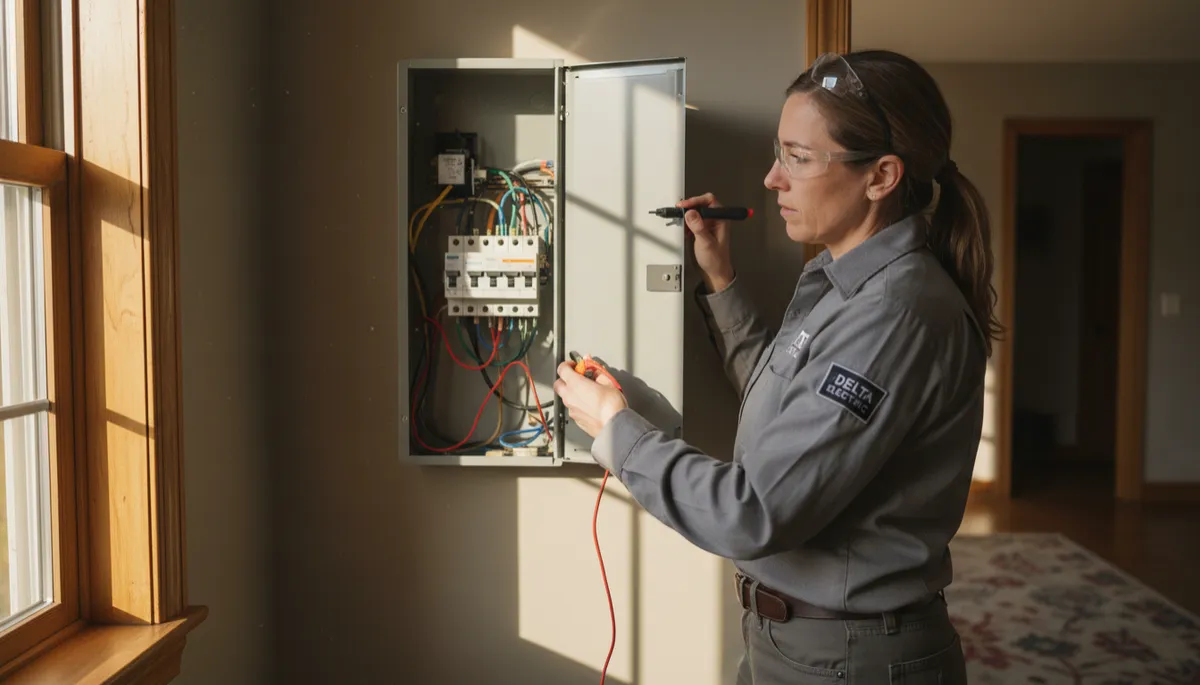
Intro: A Cold Morning, a Space Heater, and a Dark Living Room
Every year, right about the time the first cool front rolls through in early October, my phone at S.I. Service Group starts ringing with the same problem. A homeowner in Mooreville, Saltillo, or Tupelo digs a space heater out of the closet, plugs it in, and within five minutes, half the lights go out. The breaker trips, the house is quiet, and it suddenly feels a lot colder than it did ten minutes earlier.
I have pulled into plenty of driveways in Saltillo and Mantachie on those chilly mornings. The story is almost always the same. “We just plugged in one little heater, and now the breaker keeps tripping. Is this dangerous?” If you are searching for “space heater tripping breaker North Mississippi,” you are in the right place. Let me walk you through what is really going on, in plain language, the same way I explain it at kitchen tables in Verona, Plantersville, and New Albany every week in the fall and winter.
Think of this as a ride-along with a licensed electrician, not a textbook. I am going to talk about amps, watts, and circuits, but I will keep it grounded in real homes right here in North Mississippi, where older wiring, added-on rooms, and lots of plug-in heaters all come together once the temperatures drop.
Why Space Heaters Trip Breakers (the Real Reason)
Let us start with the basics. A typical portable space heater in the U.S. is rated around 1,500 watts. That number matters. On a standard 120-volt household circuit, a 1,500-watt heater pulls about 12.5 amps of current. The math is simple:
Watts ÷ Volts = Amps

1,500 watts ÷ 120 volts ≈ 12.5 amps
Now, most older homes around Tupelo, Fulton, and Amory still have a lot of 15-amp circuits. Newer homes, or updated rooms like kitchens and some living areas, may have 20-amp circuits. That difference is important.
15-Amp vs. 20-Amp Circuits in Plain English
A 15-amp circuit is like a smaller water pipe; it can only carry so much “flow” before it is overloaded. Technically, a 15-amp circuit can handle up to 15 amps, but for continuous use, electricians follow the 80% rule. That means we try not to run more than about 12 amps on that circuit for long periods. Your 1,500-watt heater is already at about 12.5 amps by itself. You see the problem.
A 20-amp circuit gives you a little more room. At 80%, that is about 16 amps of safe continuous load. A 1,500-watt heater using 12.5 amps is still heavy, but there is some breathing room for a lamp or a TV, as long as the total stays under that limit. This is why, when we talk about a dedicated circuit space heater Mississippi homeowners often hear us recommend a 20-amp line run just for that heater in a frequently used room.
Shared Circuits: What Else Is On That Breaker?
When I walk into a home in Verona or Plantersville to check a breaker tripping space heater, I am not just looking at the heater. I am asking, “What else is on this circuit?” In many older homes, one 15-amp breaker might be feeding:
- The living room outlets,
- A couple of hallway lights,
- Maybe a bedroom outlet or two that got tied in during an old remodel.
Add up a TV, a couple of lamps, a phone charger, and that 1,500-watt heater, and you are well past what that 15-amp breaker can comfortably handle. The breaker is not being “picky” — it is doing its job by shutting off before the wiring overheats.
Extension Cords and Power Strips: Why They Make It Worse
I know it is tempting to grab a long orange extension cord and run the heater from “a different plug.” I see this all the time in homes from Mantachie to New Albany. The problem is, most household extension cords and power strips are not built to handle a high, continuous load like a space heater. The wire inside is often thinner, the connections looser, and the plastic housings not designed for that kind of heat.
Safety agencies and the U.S. Consumer Product Safety Commission are very clear about this: space heaters should be plugged directly into a wall outlet, not into extension cords or power strips. Those cords can overheat and start a fire before the breaker ever trips. If you feel a cord, plug, or power strip getting warm or hot, unplug the heater immediately and do not keep using it that way.
Heater Wattage and the 1500-Watt “Sweet Spot”
Most portable heaters sold today top out around 1,500 watts because that is about as much as you can safely run on a standard household circuit. If you look at the label on your heater, you may see multiple settings, like 750W and 1500W. On the lower setting, you are closer to 6–7 amps, which is easier on a 15-amp circuit. On high, you are right at that 12.5-amp mark we talked about earlier. If your space heater keeps tripping the breaker, especially in an older home in Tupelo or Amory, it is often because that 1,500-watt draw is stacked on top of several other loads on the same line.

A typical 1,500-watt space heater can nearly max out an older 15-amp circuit by itself.
The Difference Between a Tripped Breaker and a Failing One
Not every tripped breaker means something is broken. In fact, most of the time, a tripped breaker is a good sign. It means the safety device protecting your wiring is doing exactly what it was designed to do. The key is knowing when it is just doing its job, and when the breaker itself may be failing and needs to be replaced by a professional electrician in Tupelo, MS, or anywhere in North Mississippi.
Signs the Breaker Is Just Doing Its Job
- The breaker trips only when the space heater (and maybe a few other items) are running on that circuit.
- You can reset the breaker, unplug a few things, and it holds fine afterward.
- The breaker toggle feels firm, not loose or spongy, when you switch it off and back on.
In these cases, the breaker is reacting to an overloaded circuit. The real fix is to reduce the load or install a dedicated circuit for the heater, not to blame the breaker for doing its job.
Signs of a Failing or Unsafe Breaker
Sometimes, though, the problem really is the breaker. Here are red flags I look for when I am inspecting panels across Mooreville, Fulton, and surrounding areas:
- Trips with very little load: The breaker trips even when only a lamp or two is plugged in, or when the space heater is off. That can indicate an internal problem or a wiring issue that needs immediate attention.
- Feels warm or hot to the touch: A breaker should not feel hot. Warmth can mean loose connections or internal damage. This is not something to ignore.
- Won't reset or trips immediately: If the breaker will not stay on even with everything unplugged from that circuit, it is time for a professional evaluation and likely replacement.
- Visible burn marks or melting: If you see any discoloration, charring, or melted plastic on the breaker, in the panel, or around the connected wiring, stop using that circuit and call an electrician right away.
A breaker that is wearing out or damaged can fail to trip when it should, which removes your main line of defense against overheated wiring and electrical fires. That is why part of our electrical panel inspection service is checking breakers for proper operation, tight connections, and any signs of heat damage.
What NOT to Do When Your Space Heater Trips the Breaker
When the living room goes dark on a cold morning in Amory or Saltillo, it is easy to get frustrated and start trying “workarounds.” Some of those quick fixes can create bigger, more dangerous problems. Here is what I tell homeowners not to do when they call me about a space heater tripping breaker North Mississippi wide.
1. Do Not Daisy-Chain Extension Cords or Power Strips
Plugging a heater into one extension cord, then into a power strip, then into another cord is asking for trouble. Every connection is a potential weak point that can overheat. I have seen melted strips and scorched carpet in homes from Verona to New Albany from exactly this setup. Always plug the heater directly into a properly grounded wall outlet, with nothing in between.
2. Do Not Run Two Heaters on One Circuit
Two 1,500-watt heaters on the same 15-amp circuit is more than that wiring and breaker are designed to handle. Even on a 20-amp circuit, you are pushing it. If you need that much supplemental heat, it is time to look at your main heating system, zoning, or adding dedicated circuits — not stacking multiple plug-in heaters on one line.
3. Do Not Use a Space Heater on a Shared Kitchen Circuit
Kitchen circuits are already working hard. Microwaves, coffee makers, toasters, and air fryers all pull significant power. Plugging a heater into a kitchen outlet — especially while other appliances are running — is a quick way to overload the circuit. I see this often in smaller homes and apartments in Tupelo and Fulton, where the kitchen counter outlet is the most convenient plug. Resist the temptation. The risk of overload and fire is not worth the convenience.
4. Do Not Ignore a Breaker That Trips Repeatedly
If you have to walk to the panel in the garage or hallway three times a day to reset the same breaker, something is wrong. Either the circuit is overloaded, the wiring has an issue, the outlet is damaged, or the breaker itself is failing. Simply flipping it back on over and over is not a solution — it is a warning sign. At that point, you need a professional set of eyes on the system, not just a stronger thumb on the breaker switch.
When It Is Time to Call an Electrician
Not every space heater issue requires a service call. Sometimes, simply moving the heater to a different circuit, lowering the wattage setting, or unplugging other devices solves the problem. But there are clear situations where bringing in a licensed electrician Tupelo MS homeowners trust is the safest and smartest move.
Dedicated 20-Amp Circuit for a Space Heater
If you rely on a space heater in the same room every fall and winter — maybe a bonus room in Mantachie, a sunroom in Mooreville, or a finished basement in New Albany — it often makes sense to install a dedicated 20-amp circuit just for that heater. That means the heater has its own breaker, its own wiring, and no other outlets or lights sharing that load. It is cleaner, safer, and far more reliable than trying to juggle loads on an old 15-amp circuit.
At S.I. Service Group, we handle this kind of circuit installation regularly. We size the wire correctly, use properly rated breakers, and make sure the new circuit meets current code standards, so you are not pushing old wiring beyond what it was ever meant to do.
Electrical Panel Evaluation and Breaker Replacement
If your home is older — and many homes around Tupelo, Amory, and Plantersville are — your panel may be overdue for a checkup. Rust, loose connections, undersized service, or outdated breakers can all cause nuisance trips or, worse, fail to trip when they should. During an electrical panel inspection, we look at:
- Overall panel condition and capacity,
- Breaker brands and ratings,
- Signs of heat, arcing, or corrosion on bus bars and breaker connections,
- Whether your existing circuits are overloaded or improperly shared.
If we find a failing breaker, we replace it with a properly matched, listed breaker designed for your panel. That way, when your space heater does push the limit, the breaker will trip the way it is supposed to, protecting your home and family.
Whole-Home Electrical Safety and Heater Use
Sometimes, a space heater issue is the symptom, not the root problem. If we find multiple overloaded circuits, outdated wiring, or signs of past overheating, we will talk with you about options to bring the system up to a safer standard. That might include adding new circuits, upgrading the service, or replacing old equipment as part of our broader residential electrical services.
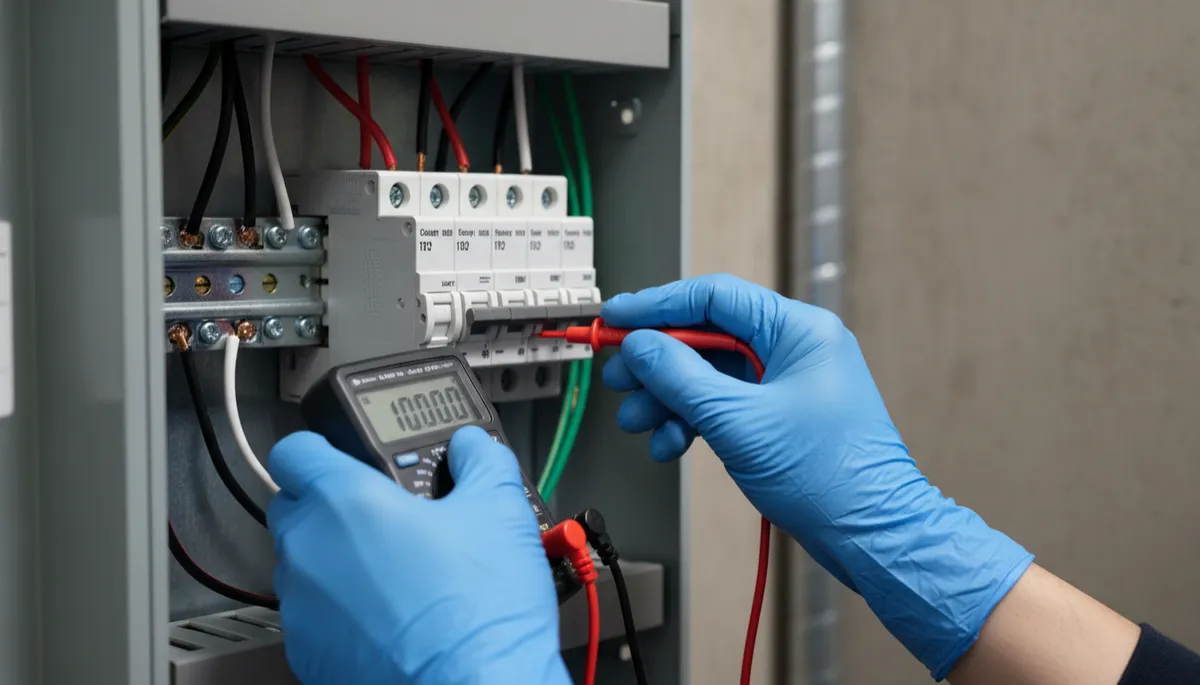
Professional testing confirms whether a breaker is overloaded, failing, or part of a larger panel issue.
FAQ: Real Questions from North Mississippi Homeowners
“Why does my space heater keep tripping the breaker?”
In most homes across North Mississippi, a 1,500-watt heater is pulling about 12.5 amps on a circuit that may only be rated for 15 amps — and that circuit is often already running lights, TVs, and other devices. When the total load goes over what the breaker is designed to handle, it trips to prevent overheating. It is usually not that the heater is “bad,” but that the circuit is overloaded or not dedicated to that kind of heavy, continuous load.
“Can I run a space heater on a 15-amp circuit?”
Yes, but you need to be careful. On a 15-amp circuit, a 1,500-watt heater is basically the only thing that should be running, especially for long periods. That means no other big loads on that circuit: ideally just the heater, maybe a small lamp, and that is it. If you are not sure what else is on that breaker, or you keep having issues, it may be time to consider a dedicated circuit space heater Mississippi homeowners can rely on without constantly worrying about trips and overloads.
“Is it safe to reset a breaker that keeps tripping?”
It is safe to reset a breaker once or twice after you have unplugged some things and reduced the load. What is not safe is resetting the same breaker over and over without changing anything. Frequent trips are your system telling you it is overloaded or there is a problem. If a breaker keeps tripping, especially with a heater involved, it is time to have a professional electrician in Tupelo, Saltillo, or anywhere in North Mississippi inspect the circuit and the panel.
“How much does it cost to add a dedicated circuit for a space heater in Mississippi?”
Costs vary depending on how far the panel is from the room, how finished the walls are, and the condition of your existing electrical system. In many North Mississippi homes, adding a dedicated 20-amp circuit is a straightforward job, but every house is different. The best way to get an accurate number is to schedule an on-site estimate. We will look at your panel, the route for the new wiring, and any code updates that might apply, then give you clear pricing before any work starts.
“What size breaker do I need for a 1500-watt space heater?”
A 1,500-watt heater at 120 volts draws about 12.5 amps. That means it can technically run on a 15-amp circuit, but as we talked about earlier, that is right at the edge. For regular, long-term use — especially in a primary living space — we typically recommend a dedicated 20-amp circuit with the correct wire size. That gives the heater room to operate safely without constantly pushing the breaker to its limit.
Conclusion: This Is Fixable — and It Should Be Safe
When I step into a living room in Tupelo or Mooreville on a cold October morning and see a space heater sitting in front of the couch, I do not tell homeowners they can never use it again. Space heaters have their place. Used correctly, on the right circuit, with the right wiring behind them, they can take the edge off a chilly room without putting your home at risk.
What I do tell people is this: a breaker tripping is a message. Sometimes the message is, “You are asking this one circuit to do too much.” Sometimes it is, “This breaker or wiring needs attention.” Either way, it is worth listening. Ignoring repeated trips, stacking extension cords, or running multiple heaters on one line turns a small annoyance into a real safety concern.
As a North Mississippi electrician, my goal is simple — keep your family warm, keep your home safe, and give you clear information so you can make good decisions. Whether that means adjusting how you use your current heater, adding a dedicated circuit, or upgrading an older panel, there is almost always a straightforward, code-compliant solution that fits your home and your budget.
Ready for a Second Set of Eyes? Call S.I. Service Group
If your space heater keeps tripping the breaker, or you just want to be sure your electrical system is ready for the cooler months, we are here to help. Give us a call at 662-523-5514. We serve homeowners across Tupelo, Saltillo, Verona, Plantersville, Mooreville, Mantachie, Fulton, Amory, New Albany, and all of Northeast Mississippi with dependable, professional electrical service.
We will walk your home the same way we would our own, explain what we see in plain language, and give you options — from simple adjustments to full residential electrical services — so you can plug in that heater with confidence when the next cold front rolls through.