Essential Restaurant Electrical Safety Tips
Restaurant Safety, Commercial Electrical, North Mississippi
Restaurant Electrical Safety: What Every Commercial Kitchen Owner in North Mississippi Needs to Know
In a busy commercial kitchen, one electrical mistake can shut down service, damage expensive equipment, or even start a fire. If you own or manage a restaurant or food service operation in North Mississippi, understanding restaurant electrical safety is not optional—it is a core part of protecting your staff, guests, and bottom line.
Why Commercial Kitchen Electrical Demands Are Different
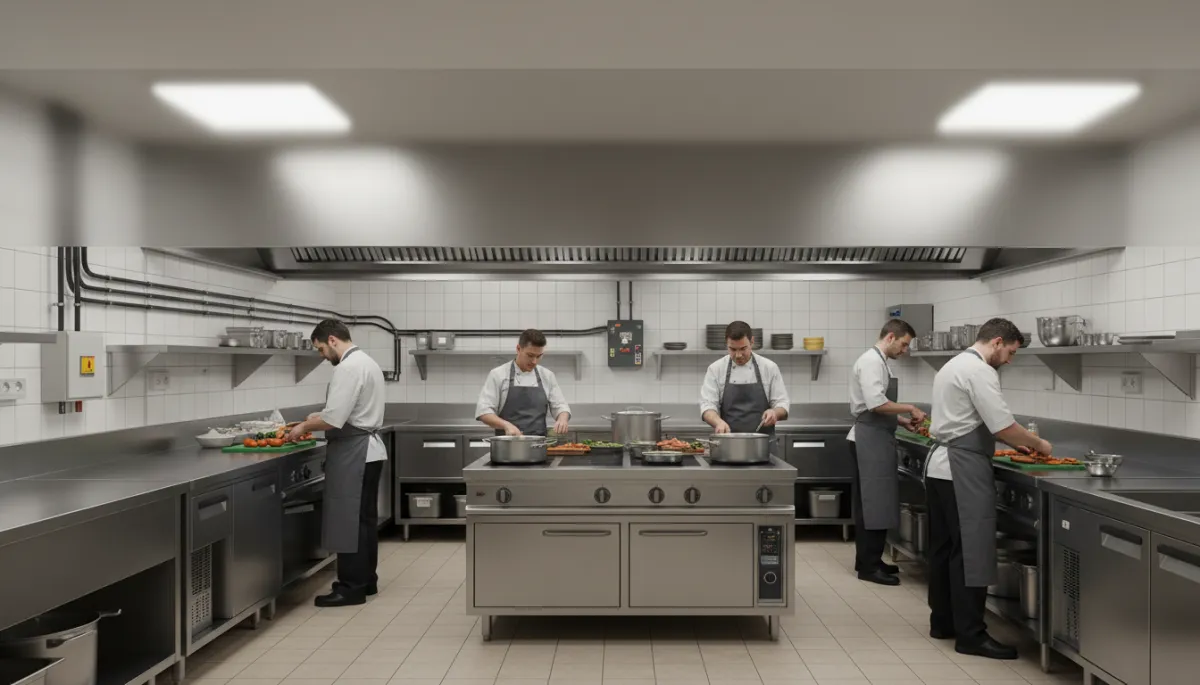
A commercial kitchen is one of the most demanding electrical environments in any building. Multiple high-heat appliances, refrigeration, lighting, exhaust systems, POS stations, and HVAC often run at the same time. Treating this like a residential setup is a fast track to tripped breakers, fried components, and serious safety hazards. A qualified commercial kitchen electrician designs and maintains systems specifically for this heavy, continuous load.
Panel Sizing: The Backbone of Restaurant Electrical Safety
Your main service and distribution panels must be sized for both current load and realistic future growth. Undersized panels are a hidden liability: everything may “work” on a slow Tuesday lunch, then fail during a packed Friday dinner rush. Proper load calculations account for:
- Connected load of each major appliance (ovens, fryers, dish machines, refrigeration, HVAC)
- Diversity factors—what realistically runs together during peak service
- Future additions like extra fryers, warming cabinets, or upgraded hood systems
An experienced licensed electrician Tupelo MS will evaluate whether your existing panel has enough capacity or if you are already operating on borrowed time.
Dedicated Circuits for Each Major Appliance
In a commercial kitchen, “just tie it into that nearby circuit” is not acceptable. Major hot-side and refrigeration equipment—fryers, rotisseries, combi ovens, convection ovens, walk-in coolers, ice machines—should be on dedicated circuits sized for their specific load. This:
- Reduces nuisance tripping during peak demand
- Protects sensitive controls and electronics from voltage drops
- Helps isolate faults so one failure does not darken half your line
If your panel schedule shows multiple heavy appliances sharing breakers, you are overdue for a professional review.
GFCI Protection and Proper Grounding Near Water
Water and electricity are a deadly combination. Code requires GFCI protection for outlets in wet and damp locations—prep sinks, dish areas, bar stations, mop sinks, and near floor drains. In older restaurants, it is common to find standard receptacles where GFCI devices should be installed, or GFCIs that were never tested after installation.
Proper grounding is equally critical. Loose, missing, or improperly bonded grounds can turn metal equipment into a shock hazard. A qualified commercial kitchen electrician will verify that panels, conduits, and equipment are correctly bonded and that your grounding system meets current standards—not just what was acceptable 20 years ago.
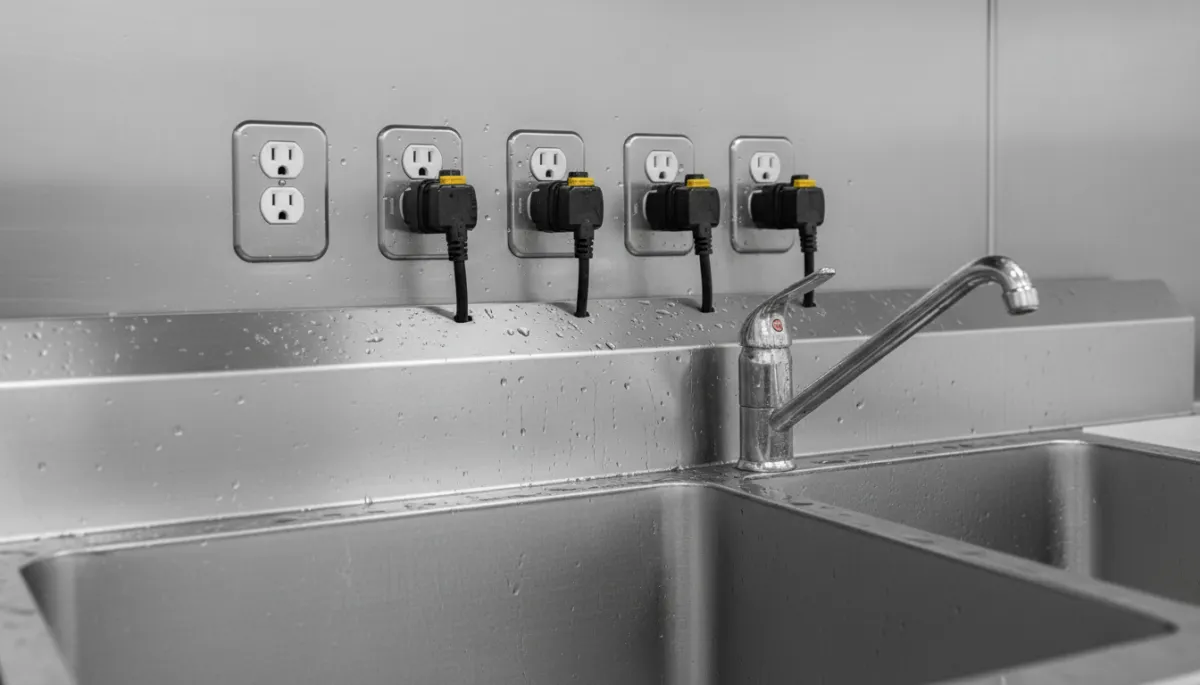
Correct GFCI protection near sinks drastically reduces shock risk for kitchen staff.
Common Electrical Violations Inspectors Find in Restaurants
Local code officials and fire marshals see the same violations again and again in commercial kitchens across North Mississippi. Many of them start as “temporary fixes” that become permanent risks:
- Extension cords powering permanent equipment instead of hard-wired connections
- Overfilled junction boxes and panels with missing covers or open knockouts
- Non-GFCI outlets within splash zones and near mop sinks or dish machines
- Improperly supported conduit and flexible cord draped over hot equipment or walkways
- Breaker labeling that is incomplete, illegible, or flat-out wrong
These issues may seem minor when the kitchen is quiet, but during an emergency they can slow response time, confuse staff, and increase the chance of serious damage or injury.
How Overloaded Panels Lead to Equipment Failure and Fire Risk
Overloaded panels and circuits are one of the most dangerous and least visible threats in any commercial kitchen. When circuits are pushed beyond their rating, conductors heat up, insulation breaks down, and connections loosen over time. The result can be:
- Premature failure of expensive hot-side equipment and controls
- Nuisance tripping that stops service mid-rush and ruins product
- Arcing and potential electrical fires inside walls, above ceilings, or in panels
If breakers feel hot to the touch, lights dim when equipment cycles on, or you constantly reset tripped breakers, you need a commercial kitchen electrical repair North Mississippi specialist to investigate immediately—not the next time you remodel.
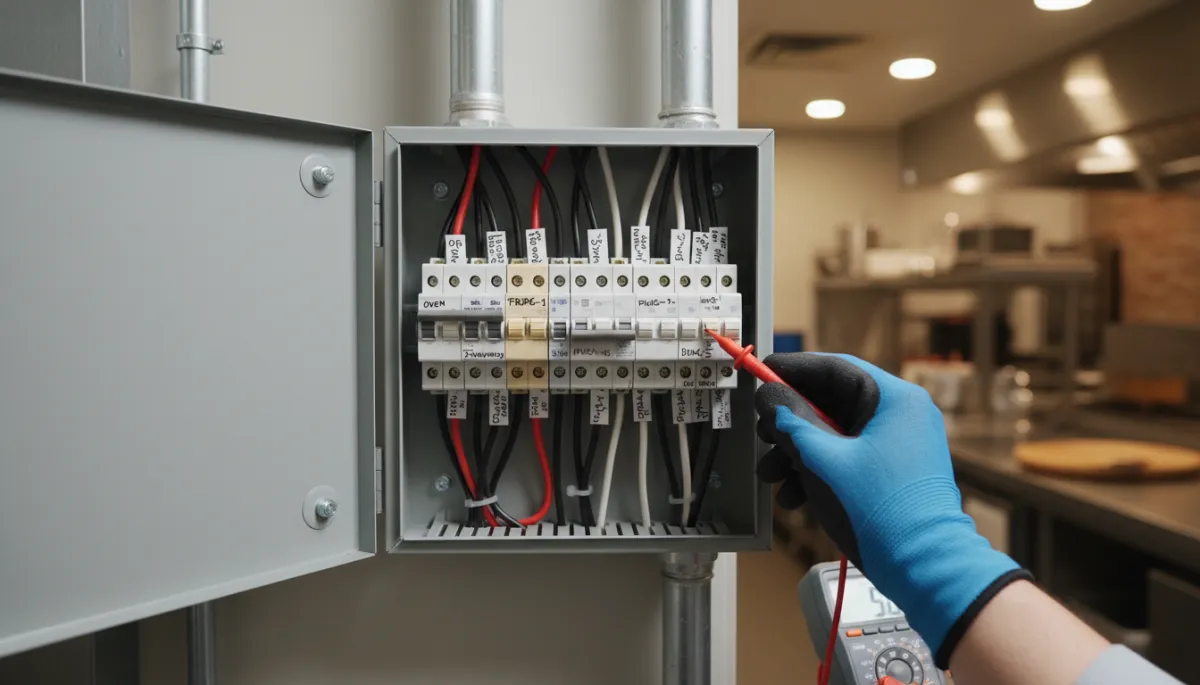
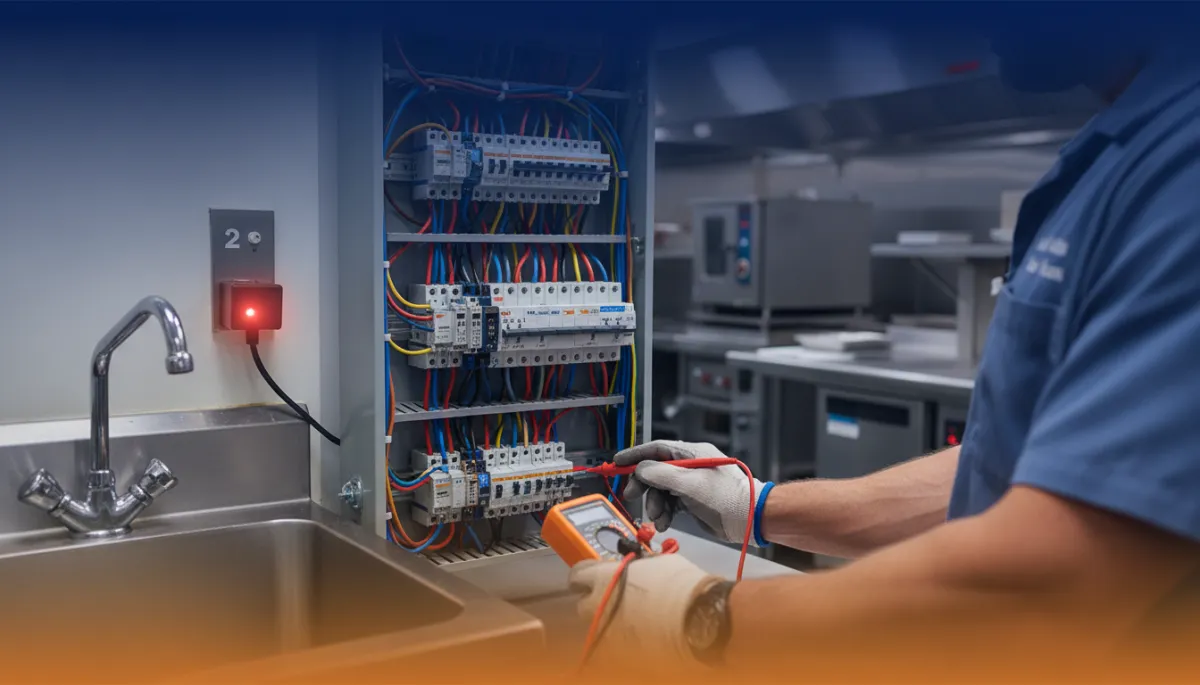
Regular panel inspections catch overload and loose connections before they cause fires.
What a Licensed Electrician Checks During a Commercial Kitchen Walkthrough
A thorough electrical walkthrough is more than a quick glance at your panel. A licensed electrician Tupelo MS familiar with restaurant environments will systematically review:
- Service and panel capacity versus actual connected and peak loads
- Condition and labeling of all panels, disconnects, and breakers
- Presence and proper operation of GFCI protection in all required areas
- Grounding and bonding of equipment, hoods, and stainless workstations
- Cord and plug connections, looking for heat damage, frayed cords, or improper adapters
- Clear access to panels and disconnects (no storage blocking critical equipment)
The goal is not just to “pass inspection” but to ensure your electrical system can safely support day-to-day operations, emergencies, and future growth.
Emergency Shutoff Locations and Proper Labeling
During a grease fire, equipment malfunction, or electrical short, seconds matter. Your staff must know exactly what to shut off and where. That means:
- Clearly labeled main disconnects for cooking lines, hood systems, and make-up air units
- Breakers and panels labeled in plain language (“Left Fryer,” “Walk-In Cooler”) not just circuit numbers
- Emergency shutoff switches accessible, unobstructed, and included in staff training
Poor labeling slows emergency response and increases damage. A professional familiar with restaurant electrical safety will help you map, label, and test these systems so your team can act confidently under pressure.
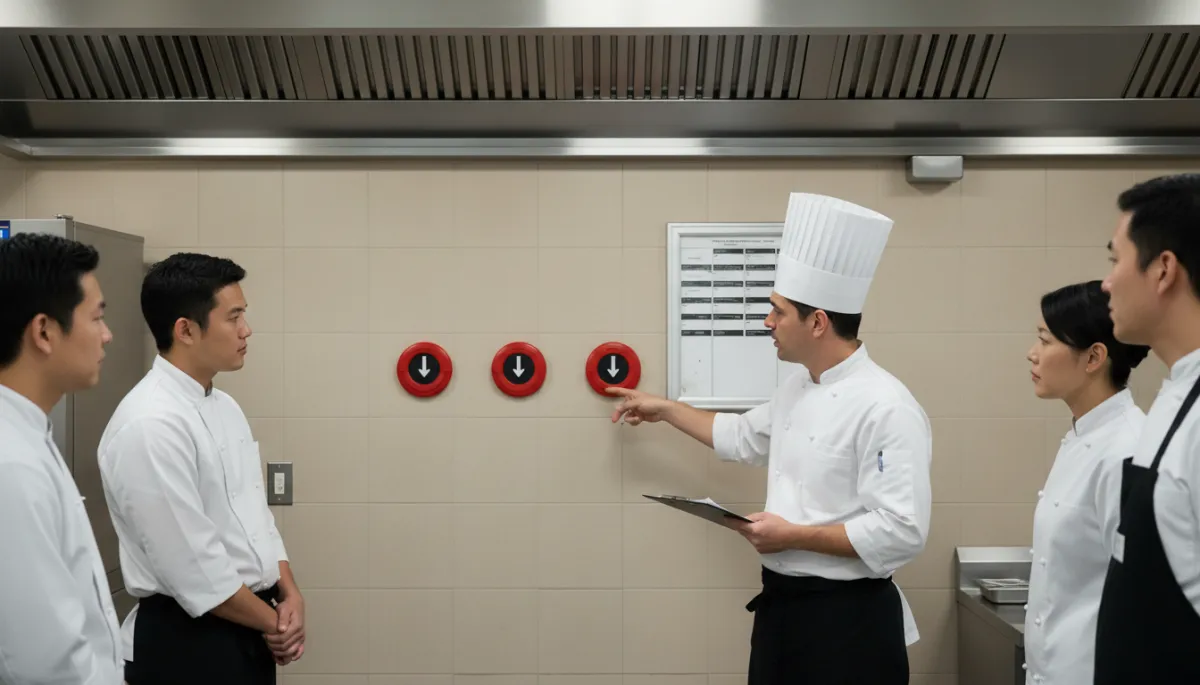
Clear labels and drills ensure staff can kill power quickly in an emergency.
Why Dan Southwick and S.I. Service Group Understand Your Kitchen Better
Not all electricians understand what happens inside a fryer or a commercial oven when power is unstable. Dan Southwick brings a rare combination of experience to North Mississippi restaurants. Before focusing on electrical work, he specifically repaired hot-side commercial kitchen equipment for Walmart and Sam’s Club —including fryers, rotisseries, commercial ovens, and convection systems.
That means he has seen, firsthand, how poor wiring, voltage drops, and overloaded circuits destroy controls, heating elements, and safety sensors from the inside out. When Dan evaluates your kitchen, he is not just looking at wire size and breaker ratings; he is thinking about how your equipment will perform day after day under real-world conditions.
With MS License #20095, Dan is authorized for commercial electrical projects up to $50,000—ideal for panel upgrades, circuit additions, and targeted commercial kitchen electrical repair North Mississippi projects that keep your operation safe and reliable.
Take Action Before the Next Inspection—or the Next Emergency
If you are unsure whether your restaurant’s electrical system could pass a tough inspection today—or withstand a packed Saturday night without failing—you cannot afford to wait. Issues that seem like small annoyances now often turn into major downtime, ruined product, or fire damage later.
For a focused, practical assessment of your restaurant electrical safety, contact S.I. Service Group in Tupelo, MS. Dan Southwick and his team understand both the electrical code and the realities of commercial kitchen operations across North Mississippi.
Call (662) 523-5514 today to schedule a walkthrough or discuss upgrades with a proven commercial kitchen electrician who knows how to keep your equipment running safely and your doors open.
Frequently Asked Questions About Restaurant Electrical Safety
How often should my restaurant’s electrical system be inspected?
At minimum, have a licensed electrician perform a full walkthrough every one to three years, depending on the age of your building and the intensity of your operation. High-volume kitchens, older facilities, or locations that have added equipment without panel upgrades should be checked more frequently.
What are warning signs that my panel is overloaded?
Frequent breaker trips, warm or buzzing panels, lights dimming when equipment cycles on, or equipment controls failing prematurely are all red flags. If you notice any of these symptoms, call a licensed electrician Tupelo MS immediately for evaluation.
Can my maintenance staff handle electrical issues in the kitchen?
Basic tasks like resetting breakers or testing GFCI outlets can be part of internal procedures, but any wiring changes, new circuits, panel work, or persistent issues belong in the hands of a licensed commercial kitchen electrician. Cutting corners here exposes you to serious safety, liability, and insurance problems.