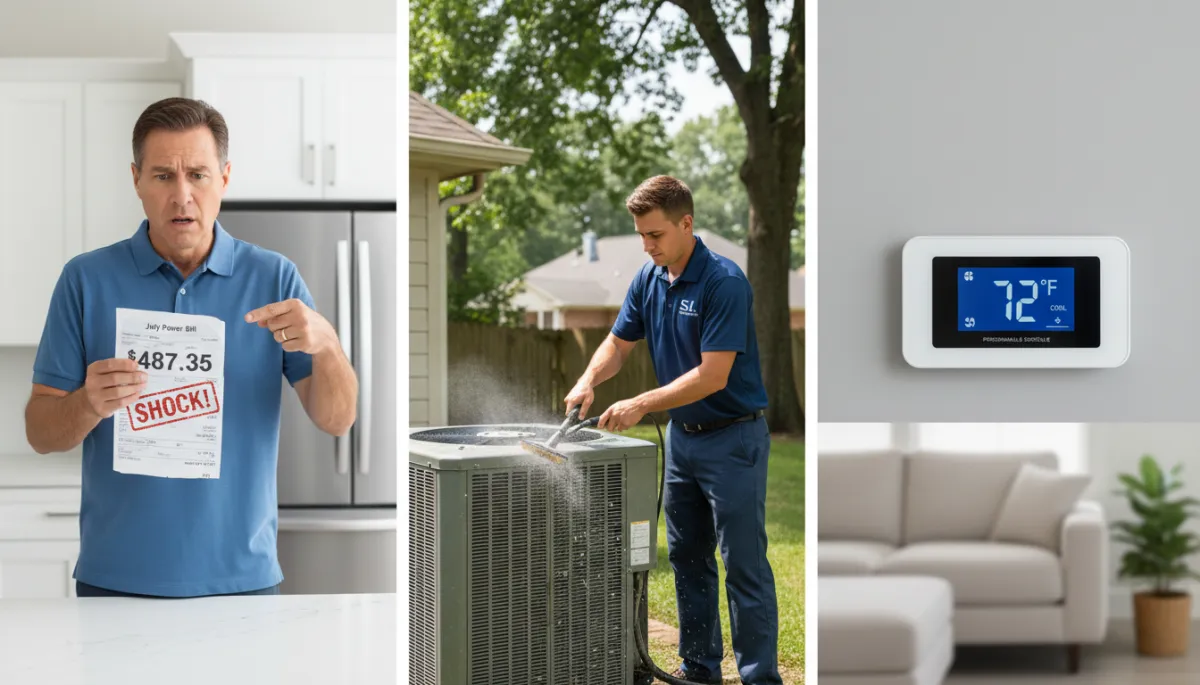
Reduce High Summer Electric Bills in Mississippi
HVAC, High Electric Bills, Tupelo MS, North Mississippi
Why Your Summer Electric Bill Is So High in North Mississippi (And What to Do About It)
Your July power bill just hit your inbox, and the number doesn’t look real. If you live in Tupelo, Amory, Corinth, Saltillo, Oxford, Fulton, Mantachie, or anywhere in North Mississippi, you’re not imagining things—summer electric bills here can feel brutal. Let’s break down what’s really going on with your HVAC system, why that high electric bill summer Mississippi homeowners hate keeps showing up, and the practical steps you can take this week to bring it back under control.

The Real Reason Summer Power Bills Spike in North Mississippi
I work on air conditioners and heat pumps all over Tupelo and the surrounding towns, and I can tell you this: in our climate, your HVAC is almost always the main reason your summer bill jumps. When you see “HVAC causing high electric bill Tupelo” or “why electric bill high summer North Mississippi” in your search history, you’re on the right track—your cooling system is where the real money is going, not the lights or the TV.
How Much of Your Power Bill Is Actually HVAC?
In a North Mississippi summer, your air conditioner or heat pump usually accounts for 70–80% of your total electric usage. That means if your July bill is $300, it’s not crazy to assume $210–$240 of that is just to keep the house cool enough to live in.
Mississippi’s residential electric rates are hovering around 13.5–15¢ per kWh, with some reports going as high as about 16.8¢ depending on the source and month. That’s still a bit below the national average, but it doesn’t feel “cheap” when your system is running nearly nonstop from late May through September. Rising rates over the last couple of years mean every inefficient part of your HVAC system now shows up as real money on your bill.
The Top HVAC Causes of High Electric Bills in Summer
1. Dirty Air Filter: Your System Is Suffocating
A dirty filter is the number one HVAC causing high electric bill Tupelo homeowners run into. When the filter is clogged, your blower has to work harder to pull air through. That means:
- Longer run times to cool the same space
- Higher amp draw on the blower motor
- Risk of the coil freezing up, making efficiency even worse
2. Low Refrigerant: Your System Is Running Marathons, Not Sprints
Low refrigerant doesn’t just mean “not as cold.” It means your system has to run much longer cycles to pull the same amount of heat out of your home. That’s like driving your truck with low transmission fluid—everything is working harder than it should, and it’s not cheap.
In our climate, where it can sit in the mid-90s with heavy humidity for days, a low-charge system might literally run all day and still not catch up. Every extra hour is more kWh on that bill.
3. Dirty Condenser Coils: Heat Has Nowhere to Go
Those outdoor coils on your AC or heat pump are supposed to dump heat into the outside air. When they’re packed with dirt, cottonwood, grass, or lint, the system can’t release heat efficiently. The compressor runs hotter, pressures go up, and efficiency drops fast—especially on those 95°F Tupelo afternoons with no breeze.
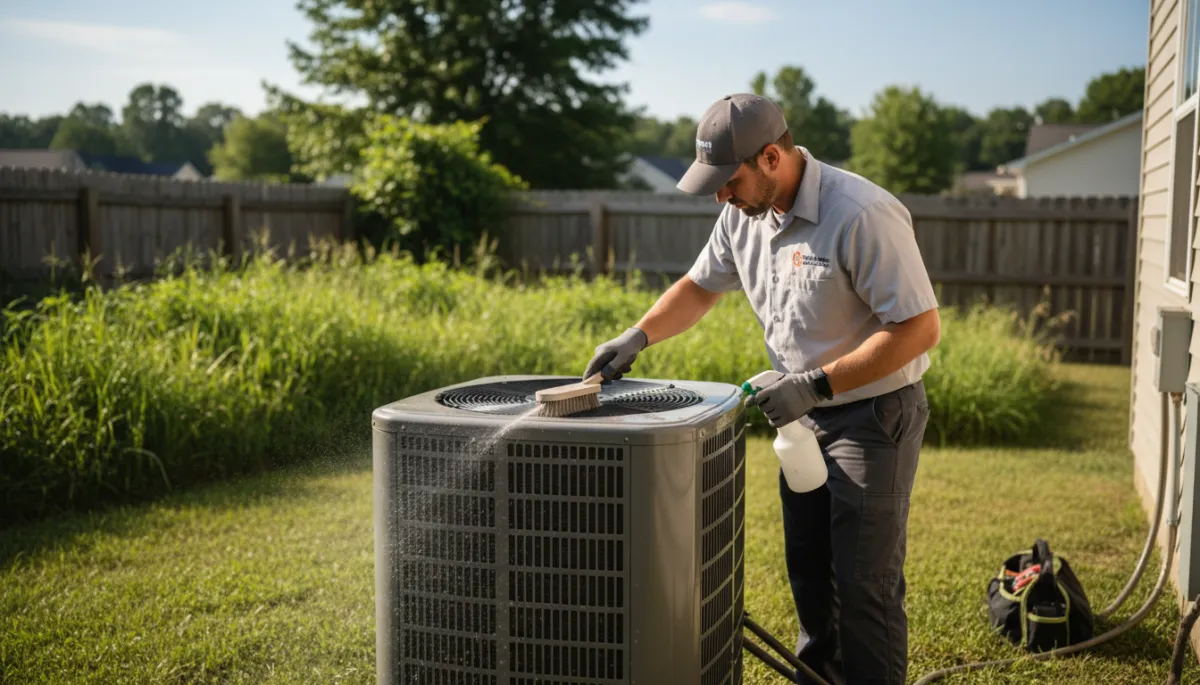
Clean condenser coils help your AC cool faster and use less electricity.
4. Aging, Inefficient System: SEER Rating Matters More Than You Think
If your system is 12–15 years old or more, there’s a good chance it’s a 10–13 SEER unit. Today, we’re routinely installing 15–18 SEER systems in North Mississippi homes, and even higher in some cases. That SEER number is basically “miles per gallon” for your AC:
- 10 SEER = old, thirsty truck
- 16 SEER = newer, efficient SUV
The higher the SEER, the less electricity it takes to give you the same cooling. Over a long Mississippi cooling season, that difference adds up to real money every single month.
5. System Too Small: It Never Gets a Break
I see this a lot in additions, renovations, and older homes around Tupelo and Oxford. Someone added square footage, enclosed a garage, or finished an attic, but the AC size never changed. On mild days it’s “fine.” On real North Mississippi summer days, the system runs constantly and still can’t hit the setpoint. That “always running” symptom is a huge contributor to high electric bill summer Mississippi complaints.
6. Duct Leaks: Cooling Your Attic Instead of Your Living Room
Duct leakage is extremely common in older North Mississippi homes. I’ve seen systems in Amory and Corinth lose 20–30% of their cooled air into a 130°F attic. That’s like running your AC for the attic first and your house second. Every leak is money leaving your ducts before it ever gets to a vent.
7. Thermostat Set Too Low or Poor Programming
I’m not here to tell you to sweat, but every degree matters. Setting the thermostat down at 68°F in a Mississippi July is asking your system to fight physics all day long. Poor programming—like letting the house get blazing hot, then trying to “catch up” fast—also wastes energy and stresses equipment.
8. Poor Insulation: Your Home Is Working Against the AC
If your attic in Saltillo or Fulton looks like a patchy snowstorm instead of a nice, deep blanket of insulation, your cool air is escaping and the attic heat is pushing right back down. That means longer run times and higher bills, even if the HVAC itself is in great shape.
9. Running AC 24/7 vs. Using a Programmable Schedule
Some folks set the thermostat and never touch it. Others yo-yo it up and down all day. The sweet spot is a steady, reasonable setpoint plus a smart or programmable thermostat that eases off when you’re asleep or away, without letting the house turn into an oven.
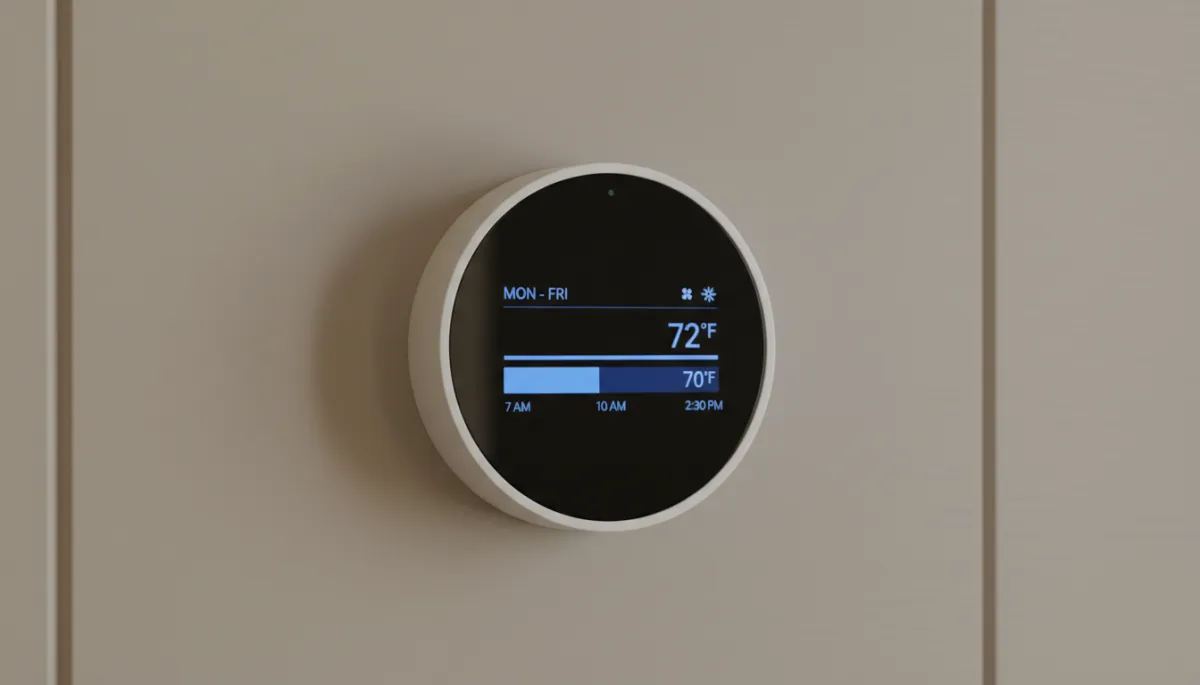
Smart thermostats trim cooling costs by matching runtime to your routine.
Quick Wins You Can Do This Week to Lower Your Bill
You don’t have to replace your whole system to start saving. Here are practical steps you can take in Tupelo or anywhere in North Mississippi over the next few days:
- Change the air filter. If you can’t remember the last time you replaced it, it’s overdue. Start here every time your bill jumps.
- Clear the outdoor unit. Trim weeds and bushes at least 2–3 feet away. Gently hose off grass clippings and loose dirt from the condenser fins (turn power off first).
- Raise your thermostat 1–2 degrees. Many homes can move from 72°F to 74°F and still feel comfortable with fans running. That small change can shave noticeable dollars off AC energy costs Tupelo MS homeowners see each month.
- Use ceiling fans correctly. In summer, make sure they’re spinning counterclockwise to create a cooling breeze. Fans don’t cool the air, but they make you feel cooler, so you can set the thermostat a bit higher.
- Close blinds and curtains on sunny sides. Especially on west-facing windows in the afternoon. Less sun in = less heat for the AC to fight.
- Seal obvious air leaks. Use simple weatherstripping or caulk around drafty doors and windows. It’s not glamorous, but it works.
When You Really Need a Professional
Some issues are DIY-friendly. Others are not. Here’s where you should bring in a licensed tech like our team at S.I. Service Group:
- Refrigerant problems. If your system is low on refrigerant, there’s a leak somewhere. Handling refrigerant is not a homeowner job—it’s regulated, and we need proper tools to find and fix leaks safely and legally.
- Deep coil cleaning. Light rinsing is fine, but heavy buildup often needs professional coil cleaner and the right technique so you don’t bend fins or flood components.
- Duct sealing and repairs. We use mastic, proper tapes, and sometimes specialized sealants to stop leaks without creating new problems. This is especially important in older Tupelo, Amory, and Corinth homes with flex duct that’s been patched a dozen times.
- System sizing and replacement decisions. If your system runs constantly, can’t keep up, or is 12–15+ years old, it’s time for a professional load calculation and honest conversation about repair vs. replace.
SEER Ratings Explained: How a New System Can Cut Your Bills
SEER stands for Seasonal Energy Efficiency Ratio. In simple terms, it’s how much cooling you get per unit of electricity over a typical season. Higher SEER = more cooling for each kWh you pay for.
Let’s walk through a simple example like I would with a homeowner in Oxford. Say your current system is an old 10 SEER unit, and we’re looking at upgrading you to a 16 SEER system. To get a feel for savings, you can think of it almost like a code calculation:
# Rough savings estimate for upgrading SEER in North Mississippi

old_seer = 10
new_seer = 16

# Assume cooling cost portion of bill (per month in summer)
old_monthly_cooling_cost = 220  # dollars, example Tupelo bill

efficiency_gain = new_seer / old_seer
estimated_new_cooling_cost = old_monthly_cooling_cost / efficiency_gain

monthly_savings = old_monthly_cooling_cost - estimated_new_cooling_cost
season_length_months = 5  # May–September

season_savings = monthly_savings * season_length_months

print(f"Estimated new monthly cooling cost: ${estimated_new_cooling_cost:.2f}")
print(f"Estimated monthly savings: ${monthly_savings:.2f}")
print(f"Estimated savings per season: ${season_savings:.2f}")
You don’t need to run the code to see the idea: moving from 10 SEER to 16 SEER can realistically cut 30–40% off your cooling costs, depending on your home and usage. Over several North Mississippi summers, that adds up to thousands of dollars.
To learn more about your options, see our pages on air conditioning and heat pumps for Tupelo and the surrounding areas.
Mississippi Utility Rate Context: Why Bills Feel So High Here
On paper, Mississippi’s electric rates—around 13.5–15¢ per kWh for many homeowners—are a bit below the national average. But here’s why it doesn’t feel that way in Tupelo, Amory, or Mantachie in July:
- Long, hot, humid cooling season. We’re running AC hard from late spring into early fall. That’s 5+ months of heavy usage, not a few random heat waves.
- Rising rates over time. Data from multiple sources shows rates creeping up over the last couple of years. So an inefficient system that was “tolerable” in 2020 can feel unaffordable in 2026.
- Older housing stock. Many North Mississippi homes were built when energy was cheaper, with less insulation and older ductwork. That makes every kWh work harder.
Put that together, and a “typical” bill around $165 on paper can easily turn into $250–$350 for a family in Tupelo running an older system hard in July and August.
When an Upgrade Costs Less Than Limping Along
I talk to a lot of homeowners who feel stuck: the old unit is eating them alive on the power bill, but a new system feels out of reach. The truth is, once we look at the numbers, a financed upgrade often makes more financial sense than keeping an inefficient system limping along.
Here’s a simple way to think about it, using a “developer-style” breakdown. Imagine your old system is costing you an extra $90/month in electricity compared to a new, efficient system. A typical financed payment on a new unit might be, say, $120/month. Your net cost difference is only about $30/month—but now you’ve got:
- A brand-new, warranty-backed system
- Better comfort and humidity control
- Far fewer surprise breakdowns in August
We walk through these numbers with you in plain English, so you can see whether your current system is actually costing more per month than a replacement. To explore options, visit our financing page or reach out directly.
FAQ: High Summer Electric Bills and Your HVAC in North Mississippi
1. What SEER rating do I need in Mississippi?
For most homes in Tupelo, Oxford, Corinth, and the surrounding areas, I usually recommend 15–18 SEER as the sweet spot. It gives a strong efficiency boost over older 10–13 SEER units without jumping into ultra-premium territory that takes longer to pay back. The “right” number depends on how long you’ll stay in the home, your usage, and your budget—we talk through all of that during an estimate.
2. How much can a new AC actually save me?
It’s common for North Mississippi homeowners to save 20–40% on cooling costs when replacing a very old, undersized, or failing system with a properly sized, higher-SEER unit. On a $250 summer bill where $200 is cooling, that could be $40–$80 per month in savings during peak season. Over 10 years, that’s several thousand dollars, plus the comfort and reliability benefits.
3. Is duct leakage common in older North Mississippi homes?
Yes—very common. In older Tupelo, Amory, and Mantachie homes, I regularly find disconnected boots, unsealed joints, and old tape that’s dried up and fallen off. It’s not unusual to see 15–30% leakage, especially when ducts run through hot attics. Sealing those leaks can be one of the best returns on investment you can make for comfort and lower bills.
4. Can I check refrigerant levels myself?
No, and you shouldn’t try. Properly checking refrigerant involves specialized gauges, temperature measurements, and knowledge of the system design. More importantly, refrigerant handling is regulated for safety and environmental reasons. If you suspect a refrigerant issue—like long run times, poor cooling, or ice on the lines—call a licensed HVAC pro. We diagnose the problem, find leaks, and charge the system correctly.
5. My AC is running but not cooling the house—what should I do?
First, check the basics: filter, thermostat settings, and breaker. Make sure the outdoor unit is running and not buried in grass or debris. If it’s still not cooling, shut it off to prevent damage and call a pro. We’ve got a full breakdown of this situation in our post “Why Is My AC Running but Not Cooling the House? A Tupelo Technician Explains.”
6. How often should I have HVAC maintenance done in Mississippi?
At least once a year, and in our climate I strongly recommend twice: a spring check before the heavy cooling season, and a fall check before heating season if you use a heat pump. Regular maintenance keeps efficiency up, catches small problems early, and can extend the life of your system. We cover this in more detail here: “How Often Should HVAC Maintenance Be Done in Mississippi?”
7. Is a heat pump a good option for North Mississippi?
Absolutely. Modern heat pumps are very efficient in our climate and can handle both cooling and heating. Many homeowners in Tupelo, Saltillo, and Oxford are switching to high-efficiency heat pumps for better year-round comfort and lower overall energy use. Learn more on our heat pumps page.
8. What’s one thing I can do today if my bill is out of control?
Change your filter, raise the thermostat 1–2 degrees, and set up a consistent schedule on your thermostat. Those three steps alone can start chipping away at the high electric bill summer Mississippi homeowners are fighting—then schedule a professional inspection to look for the bigger issues like duct leaks, coil problems, or an aging system.

A short on-site visit can reveal why your specific bills are so high.
Ready to Tackle Your Summer Power Bill? Call S.I. Service Group
If your July or August bill has you frustrated or worried, you’re not alone—and you’re not stuck. Whether it’s a simple fix like a bad capacitor or a bigger decision like replacing an old 10 SEER system, we walk you through it step by step, with straight answers and practical options that fit real North Mississippi households.
Call 662-523-5514 today or reach out through our contact page to schedule service, a maintenance visit, or a no-pressure estimate for a new system. We proudly serve Tupelo, Amory, Corinth, Saltillo, Oxford, Fulton, Mantachie, and the surrounding North Mississippi communities.
About the Author: Dan Southwick, S.I. Service Group
Dan Southwick is the founder and owner of S.I. Service Group, a veteran-owned HVAC, electrical, and commercial refrigeration company serving Tupelo and North Mississippi. With over a decade of hands-on experience in the field, Dan has worked on everything from small starter homes in Mantachie to large commercial systems in Oxford. He and his team are licensed, bonded, and insured, and they proudly serve homeowners and businesses in Tupelo, Amory, Corinth, Saltillo, Oxford, Fulton, Mantachie, and across North Mississippi with honest, practical solutions to high electric bills, comfort problems, and system reliability issues.