Prepare Your Electrical Panel for Winter
Electrical, Home Safety, Winter Prep, North Mississippi
Is Your Home's Electrical Panel Ready for Winter? What Tupelo Homeowners Need to Check Before Heating Season
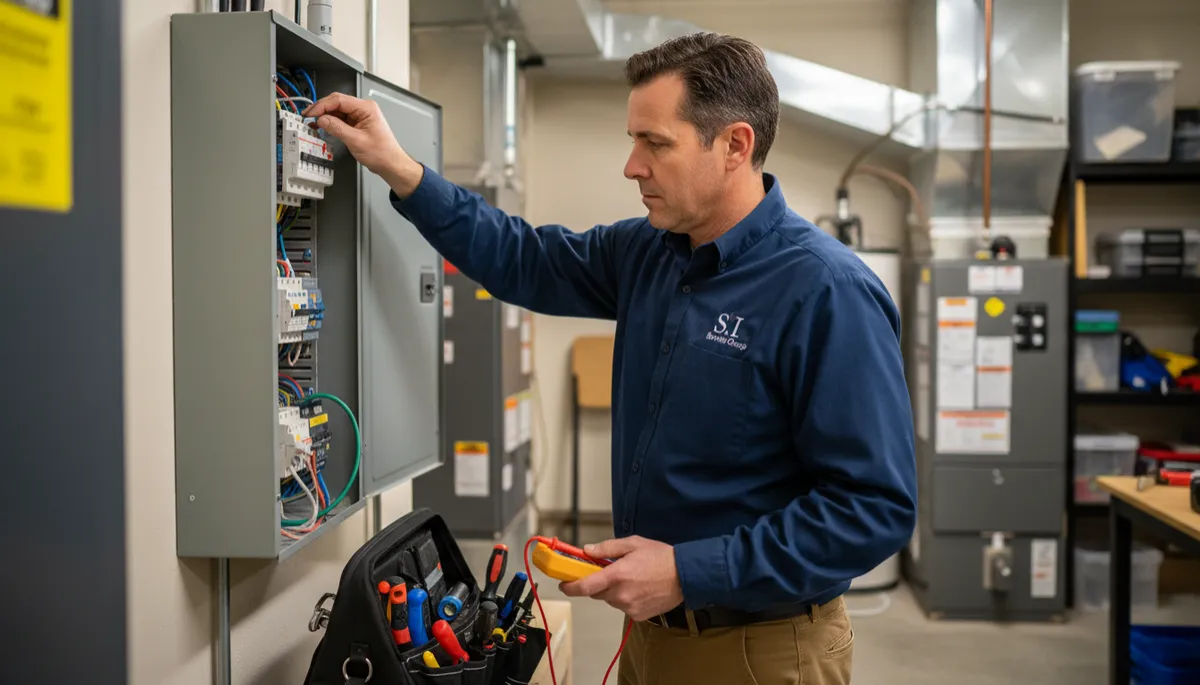
I’m Dan Southwick, owner and licensed electrician at S.I. Service Group here in Tupelo. Every winter, I see the same electrical problems pop up from Saltillo to Amory — and a lot of them start in one place: the main panel on the wall that most folks barely think about until breakers start tripping on the coldest night of the year.
A January Call in Saltillo: When the Heat Keeps Tripping the Breaker
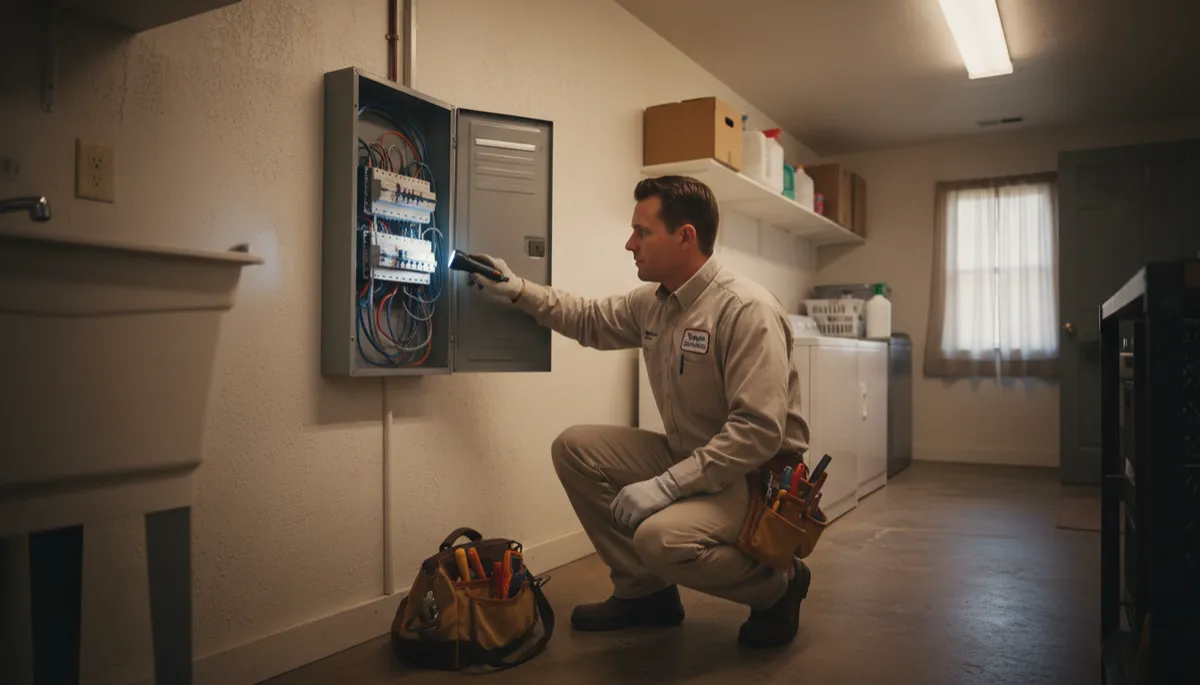
I pulled into a Saltillo home last January and the homeowner met me in the driveway, jacket half-zipped, clearly frustrated. “Every time the heat kicks on, half the lights go out and the breaker trips,” he said. I hadn’t even stepped inside yet, but I already had a good idea what I was going to find: an older 100‑amp panel, crowded breakers, and more electric heat and space heaters than that system was ever designed to handle.
Sure enough, when I opened the panel I saw warm breakers, double‑tapped wires under lugs that were never meant to hold two conductors, and a service that was maxed out every time the heat, dryer, and kitchen were all running. That house wasn’t “unlucky.” It was just typical of what I see all over Tupelo, Verona, and Plantersville once the first real cold snap hits.
Why Winter Puts Extra Stress on Your Electrical Panel in Tupelo
Around North Mississippi, winter isn’t months of snow, but we do get sharp cold snaps and the occasional ice storm. When that first 20‑degree morning hits in Tupelo or New Albany, everybody’s doing the same thing at once: turning on central heat, plugging in space heaters, running electric blankets, and cranking up dryers for all those wet coats and towels. All of that power has to come through your main electrical panel first, and that’s where problems show up when a system is already marginal. Local inspectors and electricians see a big spike in winter electrical issues — overloaded circuits, overheated wiring, and nuisance trips — once heating load piles onto everything else your house already runs every day.
Older homes in Mooreville, Mantachie, and Fulton that were built when 100‑amp service was standard often weren’t designed for today’s loads: big heat pumps, electric water heaters, EV chargers, multiple refrigerators, and a house full of electronics. When you add portable space heaters on top of that, you’re asking a lot of a panel that may already have loose connections, aging breakers, or outdated wiring methods. That’s when you start to see the classic “breaker tripping in winter” pattern — everything seems fine most of the year, then once the heating season starts, the weak spots show themselves fast.
Signs Your Electrical Panel Is Struggling Before Heating Season
You don’t have to be an electrician to notice when your panel is trying to tell you something. Here are warning signs I see all the time in Tupelo and the surrounding towns that tell me a system isn’t handling winter load well — and that it might not be electrical panel ready for winter Tupelo level safe just yet.
- Warm or hot breakers. If you rest the back of your fingers lightly on the front of the breakers and one feels noticeably warmer than the others, that’s not something to ignore. Slight warmth under heavy use can be normal, but a hot breaker can mean overload, a failing breaker, or a loose connection. Any plastic that’s discolored or smells “hot” is a red flag.
- Frequent tripping when the heat kicks on. If certain breakers only trip when your heat pump or electric furnace starts, that’s often a sign that the circuit is at or beyond its designed capacity. I see this a lot in older homes in Verona and Amory where additional loads were added over the years without re‑balancing the panel.
- Flickering or dimming lights. If lights dim every time the heat, dryer, or microwave starts, your system may have voltage drop from long runs, loose connections, or an undersized service. If the flicker is random or accompanied by buzzing, that’s even more concerning and needs a licensed electrician to investigate.
- Buzzing, crackling, or a faint burning smell near the panel. I never like to scare people, but I won’t sugarcoat this: if you hear or smell anything odd from your panel, shut off what you safely can and call someone right away. That’s not a “wait for a warm day” situation.
A lot of folks in Plantersville and Mooreville tell me, “The breaker is just annoying, but if it keeps resetting, it must be fine.” A breaker that keeps tripping is doing its job — protecting your wiring from overheating. The problem is whatever is causing it to trip. Resetting it over and over without fixing the underlying issue is like putting tape over the check‑engine light in your truck.
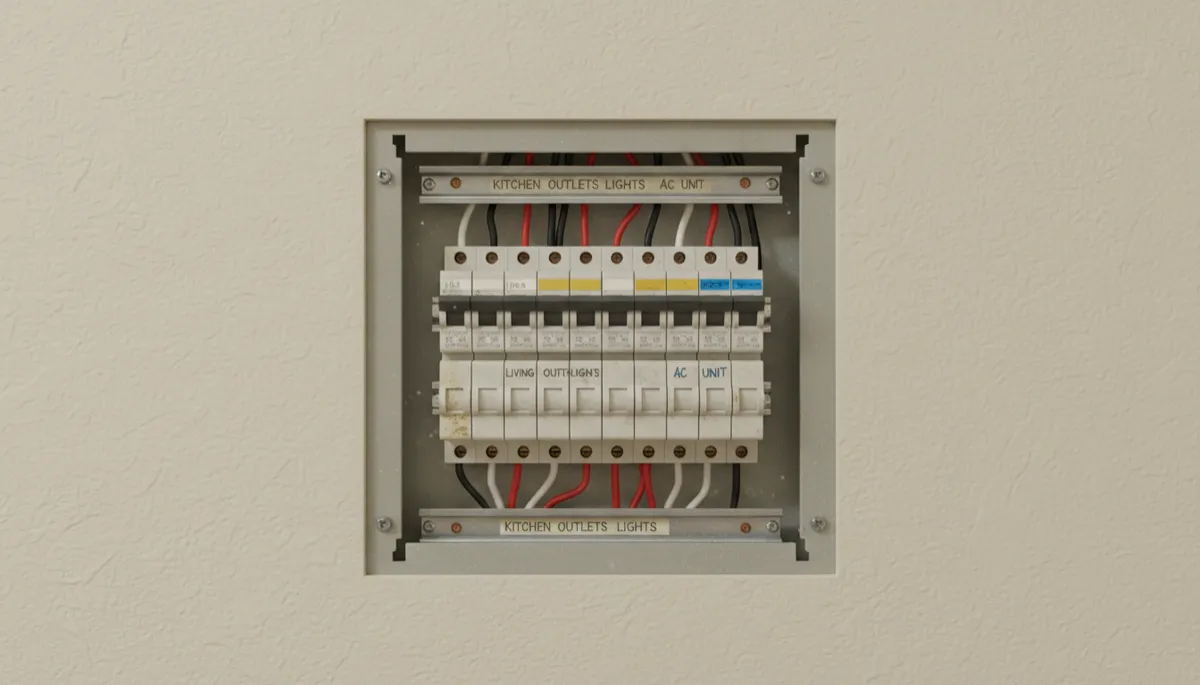
Aging breakers and crowded panels are common in North Mississippi homes built before modern heating loads.
Double-Tapped Breakers: Common, Convenient… and Often Unsafe
One thing I see over and over in older houses from Tupelo to New Albany is the “quick fix” that turns into a long‑term hazard: double‑tapped breakers. That’s when two wires are landed under a screw or clamp that was only designed for one conductor. It’s technically simple to do, which is why a lot of handymen and DIYers try it when they run out of breaker spaces — but that doesn’t make it right or safe in most cases.
When you double‑tap a breaker that isn’t specifically listed for it, those two wires don’t always sit evenly under the lug. Over time, heating and cooling cycles — especially with heavy winter loads — can cause one of those connections to loosen. Loose connections mean higher resistance, which means heat. I’ve opened panels in Mantachie and Fulton where a double‑tapped breaker had cooked the insulation off one of the wires to the point it was brittle and dark brown. That’s a fire risk, plain and simple.
Are there breakers designed to accept two conductors? Yes — a few specific models are. But most of what I see in older North Mississippi homes are standard breakers that were never meant to share. If I spot double‑taps during a winter readiness inspection, we talk about options: adding a subpanel, using properly sized tandem breakers where code allows, or planning a full panel upgrade North Mississippi homeowners can rely on for the next few decades instead of patching things year after year.
100-Amp vs. 200-Amp Service: When Undersized Panels Become a Winter Problem
A lot of houses in our area — especially older ones in Verona, Plantersville, and parts of Tupelo — still have 100‑amp service. When those homes were built, that was more than enough for a small HVAC unit, a few kitchen appliances, and some lights. Fast‑forward to 2026: now you’ve got a big electric heat pump, electric water heater, double ovens, maybe a hot tub, plus TVs and chargers in every room. That 100‑amp panel is suddenly the smallest guy on the jobsite trying to do everybody’s work.
Is a 100‑amp panel automatically unsafe? No. If the loads are modest and the wiring is in good shape, it can be perfectly fine. But once you start adding multiple electric space heaters, window units, or an all‑electric heating system, you’re pushing that service close to its limits during peak winter use. That’s when you see main breakers running hot, nuisance trips when several big loads run at once, and voltage drop that shows up as dimming lights and sluggish appliances. In some cases, the safest and most cost‑effective answer is a properly planned 200‑amp panel upgrade North Mississippi homeowners can grow into, instead of constantly juggling what can be on at the same time.
If you’re not sure what size service you have, or whether it’s enough for your winter heating setup, that’s something I check on every panel inspection. We also look at what your local jurisdiction is enforcing — most areas around here follow a version of the National Electrical Code (often NEC 2023 with local amendments), and we make sure any upgrade meets those standards as well as the utility’s requirements. If you want more detail on how we handle that work, you can read more about our electrical services at S.I. Service Group Electrical Services.
How to Do a Basic, Safe Visual Inspection of Your Panel Before Winter
There are things I’m comfortable with homeowners in Tupelo, Saltillo, or Amory looking at themselves — and things I’d rather you leave to someone with the right tools and training. Here’s how to do a basic, non‑invasive check to see if your electrical panel is ready for winter Tupelo weather, without putting yourself at risk.
- Clear the area. Make sure you’ve got good lighting and the area around the panel is clear. Code requires working space in front of panels for a reason — if your panel is buried behind boxes in a Mooreville garage, start by clearing that out so you or an electrician can safely access it in an emergency.
- Look, don’t touch (inside). It’s generally safe to open the panel door and look at the breakers themselves. Do not remove the metal deadfront cover or any screws — that’s where live parts become exposed, and that’s electrician territory only.
- Check for obvious damage. With the door open, look for burnt or discolored breaker handles, labels that look charred, rust or corrosion, or any signs of moisture. In some North Mississippi basements and utility rooms, I see panels that have taken on humidity or minor water leaks — not something you want near live electrical parts.
- Lightly feel for warmth. Using the back of your fingers, gently touch the front of the breakers and the panel cover. They may be slightly warm under heavy load, but anything that’s noticeably hotter than the surrounding metal — or too hot to keep your hand on — deserves a call to a licensed electrician Tupelo MS homeowners can trust.
- Listen and smell. Stand quietly by the panel. Do you hear buzzing, sizzling, or crackling? Do you smell anything like hot plastic or a faint burning odor? Those are “don’t wait” signs.
When I do a professional winter inspection, I go beyond what you can safely see — checking torque on connections, using thermal imaging to find hot spots, and testing breakers under load. But your own simple check before heating season can catch issues early and tell you it’s time to bring someone in before the first real freeze hits.
Whole-Home Surge Protection: Winter Storm Insurance for Your Electrical System
Around Tupelo and the rest of North Mississippi, we don’t just deal with cold — we deal with wild weather. Thunderstorms, ice storms, and quick power outages followed by sudden re‑energizing of the grid can all send surges through your electrical system. A lot of homeowners think of surge strips under the TV, but those are the last line of defense, not the first. Whole‑home surge protection at the panel is where the real protection starts.
When the power flickers during a winter storm in Amory or Fulton, the “off‑on‑off‑on” cycling can be hard on your furnace control boards, heat pumps, refrigerators, and electronics. A properly installed surge protective device (SPD) at your main panel clamps down those spikes before they travel to every outlet in the house. It’s not just about saving TVs — it’s about protecting the lifespan of your HVAC equipment and your panel itself. I’ve seen main breakers and neutral bars damaged by repeated surges over the years, especially in older panels that were never designed with modern surge protection in mind.
Outdoor Outlets, GFCI Protection, and Weatherproofing Before the Cold Hits
Winter panel problems don’t always start at the panel. Sometimes they start outside. I see a lot of homes in Mantachie, Mooreville, and New Albany with old outdoor outlets that were never upgraded to GFCI, or that have cracked covers letting water in. Mix moisture, freezing temperatures, and electricity, and you’ve got a recipe for nuisance trips at best and serious shock hazards at worst — especially if you’re plugging in holiday lights or outdoor space heaters.
- Check for GFCI protection. Any outdoor receptacle should be GFCI‑protected. Look for the “test” and “reset” buttons on the outlet itself, or ask your electrician if it’s protected upstream. If you’ve got older, standard outlets outside, it’s time to talk about a GFCI outlet winter upgrade before you start plugging in anything for long periods.
- Inspect covers and boxes. Outdoor outlets should have weather‑resistant “in‑use” covers that keep moisture out even when something is plugged in. Brittle plastic, missing screws, or loose boxes need to be fixed. Water that finds its way into an exterior box can track back toward the panel and cause corrosion over time.
- Use the right cords and loads. Heavy‑duty, outdoor‑rated extension cords and devices only. No lightweight orange cords running space heaters all night from a porch outlet. That’s how you overload circuits and end up with that “breaker tripping in winter” call I get every year.
A good winter safety check includes tracing which breakers feed your outdoor outlets, confirming GFCI protection, and making sure those circuits are sized appropriately for what you plan to run. That’s the kind of detail work we build into our electrical inspections and upgrades — you can see more about that on our main site at S.I. Service Group.
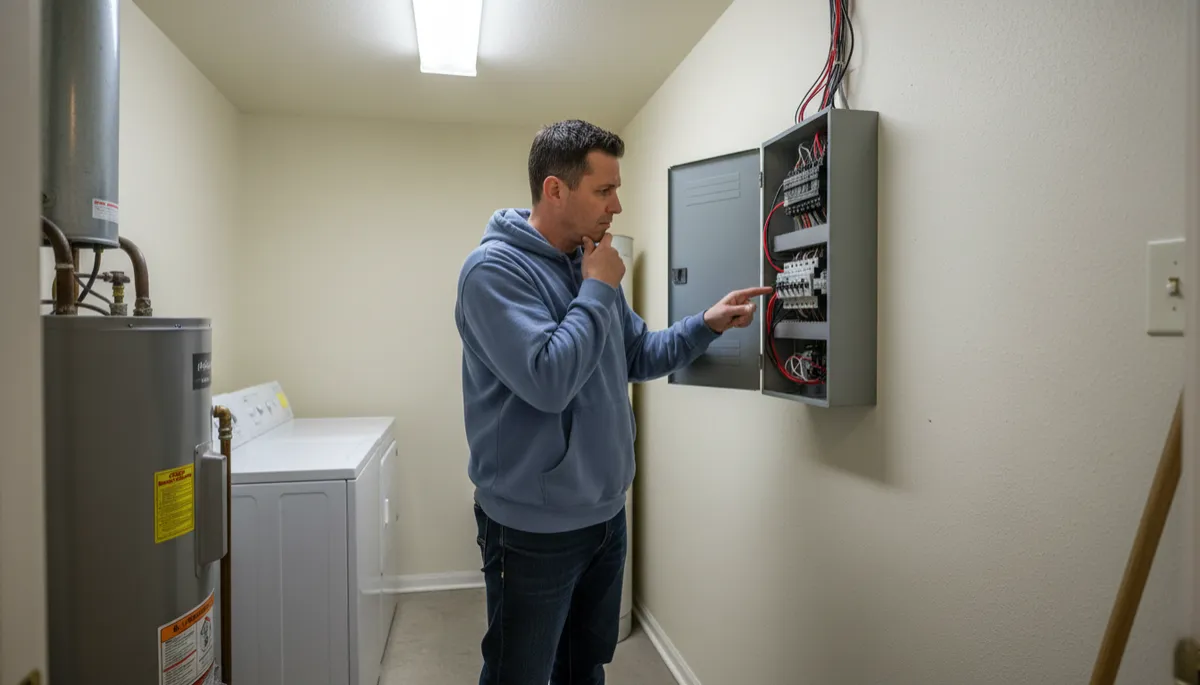
If your lights dim or breakers trip when heat comes on, your panel needs attention before deep winter.
When to Call a Licensed Electrician vs. When It’s a Minor Fix
I’m a big believer in homeowners understanding their own homes. There are things you can absolutely handle yourself, and others where you really do want a licensed electrician Tupelo MS homeowners can rely on. Here’s how I usually break it down when folks in Tupelo, Saltillo, or Verona ask me what they can safely tackle before heating season.
- Usually safe for homeowners: Clearing clutter from around the panel; labeling breakers based on what you turn off and on; replacing worn extension cords with properly sized ones; checking and replacing damaged outlet covers (not the wiring itself); testing GFCI outlets using the built‑in “test” and “reset” buttons.
- Call a licensed electrician for: Any work inside the panel; adding or moving circuits; dealing with double‑tapped breakers; upgrading from 100‑amp to 200‑amp service; repeated tripping breakers; warm or buzzing breakers; flickering lights that don’t track to a single lamp or fixture; installing whole‑home surge protection; upgrading outdoor outlets to GFCI if you’re not comfortable with wiring.
Frequently Asked Questions
How do I know if my electrical panel needs to be upgraded?
I look at a few things: the age and brand of the panel, the size of the service (100‑amp vs. 200‑amp), how many spaces are left, and what your actual loads are — especially electric heat, water heating, and large appliances. If you’re constantly juggling what can be on at once, see frequent trips when the heat runs, or have a panel that’s rusted, obsolete, or recalled, it’s time to seriously consider an upgrade. A proper load calculation and inspection from a pro is the only way to know for sure, but those symptoms are strong clues that your home would benefit from a modern panel upgrade North Mississippi code officials will sign off on and you can feel good about for the long haul.
Is a warm breaker dangerous?
Slight warmth under a heavy load can be normal. But a breaker that’s noticeably hotter than the others, too hot to comfortably touch, or warm even when you don’t have much running is a concern. It can indicate an overloaded circuit, a loose connection, or a failing breaker. In winter, when circuits are under their heaviest use, I take warm breakers very seriously. If you notice one, especially during heating season, have a licensed electrician Tupelo MS based — like our team at S.I. Service Group — take a look before you keep pushing it.
Can I run electric space heaters on a 100-amp panel?
You can, but the real question is how many, on which circuits, and what else is running. A typical portable space heater pulls 12–15 amps all by itself. Put two of those on one 15‑amp circuit with a TV and some lights, and you’re asking for trips. On a 100‑amp panel that’s already feeding an electric furnace, water heater, and kitchen appliances, adding multiple space heaters can push the whole system close to its limits during cold snaps. Used sparingly and on dedicated or lightly loaded circuits, they can be fine. But if you rely on several space heaters to keep the house warm, that’s a sign your heating system or electrical service may need attention or a panel upgrade North Mississippi style — designed for today’s loads, not yesterday’s.
What is a double-tapped breaker and is it a fire hazard?
A double‑tapped breaker is when two wires are landed under a single screw or clamp on a breaker that was only designed for one. Most breakers in older Tupelo and Saltillo homes fall into that “one wire only” category. When you cram two conductors under there, they don’t always make solid, even contact, and over time that can loosen. A loose connection creates heat, and heat inside a panel is exactly what we’re trying to avoid. Is every double‑tap an immediate fire? No. But is it a code violation in most cases and a known risk, especially under winter loads? Yes. When I find them, I recommend correcting them — either by adding breaker spaces, installing a subpanel, or reworking circuits properly.
How much does an electrical panel upgrade cost in Mississippi?
Costs vary based on the home, the existing service, and local utility requirements, but for most North Mississippi homes moving from an older 100‑amp to a modern 200‑amp panel, you’re typically looking at somewhere in the low to mid thousands of dollars. Factors include whether we need to upgrade the meter base, move the panel, coordinate with the utility for new service conductors, or correct other issues we find (like bad grounding or damaged feeders). I don’t like to throw out one “average” number because it can be misleading, but I will say this: a properly done panel upgrade is an investment in safety and reliability that should last you decades. If you’re curious what it would look like for your specific home in Tupelo, Verona, or Amory, we’re happy to walk you through it and give a straight answer — you can reach us through our electrical services page.
Bottom Line
Your electrical panel is the heart of your home’s electrical system. Winter in North Mississippi — from Tupelo and Saltillo to Mantachie and New Albany — doesn’t just test your heating system; it tests that panel every time the temperature drops and everything kicks on at once. Warm breakers, flickering lights, double‑tapped circuits, and undersized 100‑amp services are all things I see every week once the cold sets in. Some of those issues are annoyances. Some are early warning signs. A few are serious hazards that need attention now, not “when it warms up.”
If you’re not sure whether your electrical panel is ready for winter Tupelo weather can throw at it, you don’t have to guess. A straightforward inspection and, if needed, a properly planned panel upgrade North Mississippi code officials will approve can give you peace of mind for many winters to come. My approach is simple: explain what I find in plain language, show you the options, and do the work the right way or not at all.
If you're in Tupelo, Saltillo, Verona, Plantersville, Mooreville, Mantachie, Fulton, Amory, or New Albany and you want a licensed electrician to check your panel before heating season, call us at 662-523-5514. We'll tell you exactly what we find — no upsell, no runaround.