Mini-Split AC Not Cooling in North Mississippi — What We Find on Most Service Calls
Mini-Split AC Not Cooling in North Mississippi — What We Find on Most Service Calls
Mini-splits have taken off all over North Mississippi over the last several years. Sunrooms, converted spaces, older homes where running new ductwork isn't realistic, small commercial offices in Tupelo, Iuka, Booneville — we see them everywhere. And when they stop cooling in July, it gets uncomfortable fast.
The good news is that most mini-split cooling problems come down to a short list of causes. Here's what our techs are usually looking at when we pull up on a no-cool mini-split call.
Dirty Filter or Blocked Indoor Unit — Check This First
Before you call anyone, pull the filter out of the indoor wall-mount unit and look at it. The air handler catches dust, hair, pet dander, and general North Mississippi indoor debris. When that filter clogs up, airflow drops across the evaporator coil — and without enough airflow, the coil ices over or the unit simply can't transfer heat the way it's supposed to. You'll get air blowing, maybe even cool air, but the room won't come down the way it should.
Clean the filter by pulling it out and rinsing it under warm water. Let it fully dry before reinstalling. Do this every 30–60 days during heavy use. If you've never cleaned it and the unit is 2–3 years old, there's a real chance this is your entire problem.
Low Refrigerant — There's a Leak Somewhere
Mini-splits leave the factory with a precise refrigerant charge. The line set is evacuated and charged at installation. If refrigerant is low, that means something has leaked — the flare connections at the wall penetration, the line set itself, or something inside the unit. This isn't like a car AC that slowly loses refrigerant over years. If a mini-split is low on charge, you have an actual leak that needs to be found and fixed.
We see low-charge issues most on mini-splits installed a few years back, especially if the flare connections weren't torqued correctly at install, or if a critter has worked through the insulation on the line set — both are common on North Mississippi properties. Low refrigerant feels like this: the unit is running, it's blowing air, but the air coming out isn't as cold as it should be. Ice forming on the line set near the indoor unit is another tell.
We locate the leak, repair it, pressure test the circuit, and recharge to manufacturer spec. Refrigerant work requires EPA 608 certification — this is not a DIY fix.
Outdoor Condenser Coil Packed With Debris
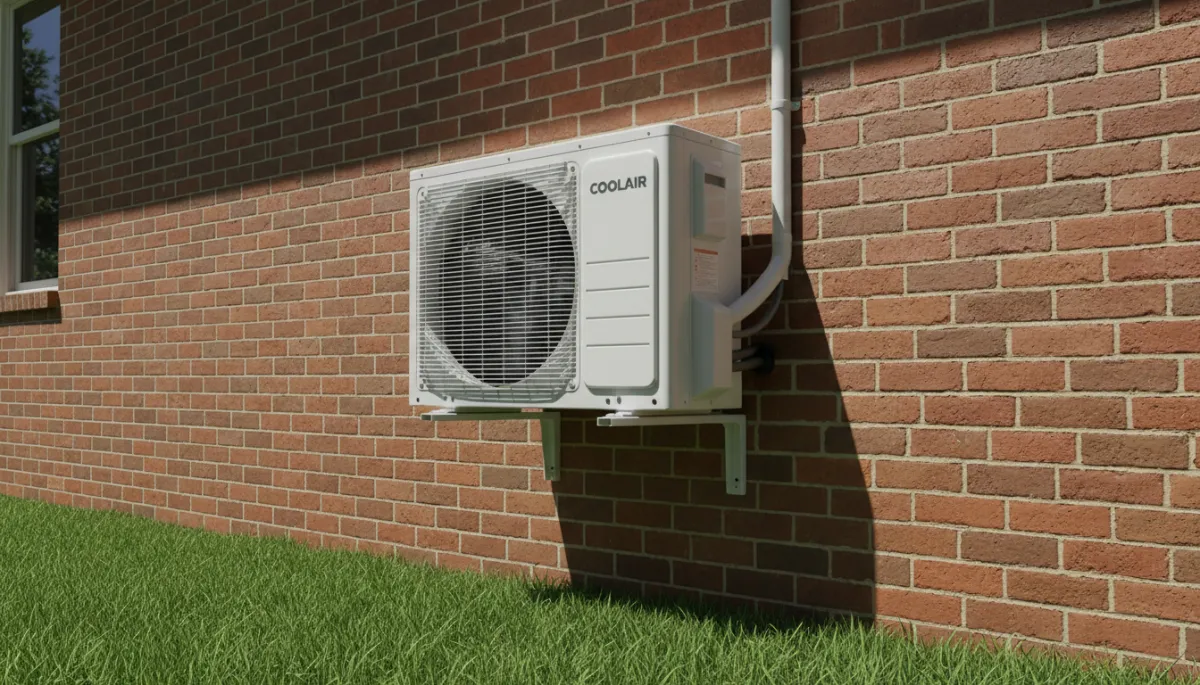
North Mississippi spring and summer are brutal on outdoor units. Cottonwood, pollen, grass clippings, and general debris pack into the outdoor condenser coil fins. When that coil is restricted, the unit can't reject heat properly. The compressor works harder, head pressure climbs, efficiency drops significantly, and in severe cases the unit will shut itself down on a high-pressure lockout fault.
We clean the coil with a good coil cleaner and flush the fins out. It's one of those things where 30 minutes of maintenance makes a night-and-day difference in how the system performs. If your outdoor unit is located where cottonwood or leaves pack against it, plan on cleaning it at least once a season — or you'll be calling for service in August wondering why the unit stopped working.
Inverter Board or PCB Failure
Mini-splits run on inverter technology. Instead of cycling on and off like a traditional unit, the compressor speed is controlled by a circuit board (PCB) that varies output to match the load. That board takes a beating over the years: power surges, lightning, voltage fluctuations from the grid. North Mississippi has its share of summer thunderstorm activity, and that takes a toll on sensitive electronics.
A failed inverter board usually shows up one of a few ways: the unit powers on but the compressor never starts, it runs for a few minutes then faults out, or it shows an error code on the display. Most brands — Mitsubishi, Daikin, LG, Gree — use error code systems that point you toward the failed component. We read the fault code, confirm the diagnosis with electrical testing, and source the replacement board.
Board failures are one of the more expensive mini-split repairs. On older units — 10+ years, discontinued parts — the cost sometimes pushes you toward replacement rather than repair. We'll give you an honest assessment of where that line is for your specific unit.
Thermistor or Temperature Sensor Issue
Mini-splits use multiple temperature sensors — one reading the return air temperature, one on the evaporator coil, sometimes additional sensors on the refrigerant circuit. If a thermistor fails or gives a skewed reading, the control logic gets confused. You might see the unit cycle off before the room is cooled down, or run continuously without modulating down the way it should, costing you on your electric bill.
Most sensor failures throw a fault code on the display. The sensors themselves are usually inexpensive parts — the work is in properly diagnosing which sensor is bad and confirming the reading is out of spec before pulling the trigger on a part order.
The Unit Is Right-Sized — But Your Conditions Have Changed
Sometimes the mini-split is working exactly as it should — it's just not sized for what you're asking it to do now. We run into this on sunrooms and additions all the time. People add windows, change how the space is used, or the original installer undersized the unit to hit a lower equipment cost. A 9,000 BTU mini-split in a 250-square-foot sunroom works great in April. In July, when it's 97°F and full afternoon sun is blasting through glass, that same unit may not be able to pull the room below 80°F no matter how hard it runs.
If your unit is maintained correctly and still won't reach setpoint during peak summer heat, we can assess the space and give you an honest answer on whether you need a second head, a larger unit, or some shading on that south-facing glass.
Mini-Split Service Across North Mississippi — Call S.I. Service Group
We service mini-split systems throughout the 10-county North Mississippi area — Tupelo, Saltillo, Corinth, Booneville, New Albany, Iuka, Pontotoc, and the surrounding communities. Whether you've got a Mitsubishi, Daikin, LG, Gree, or another brand, we'll diagnose it correctly and get you back to cooling fast.
Call us at (662) 594-7734 or visit siservicegroup.com to schedule a service call.