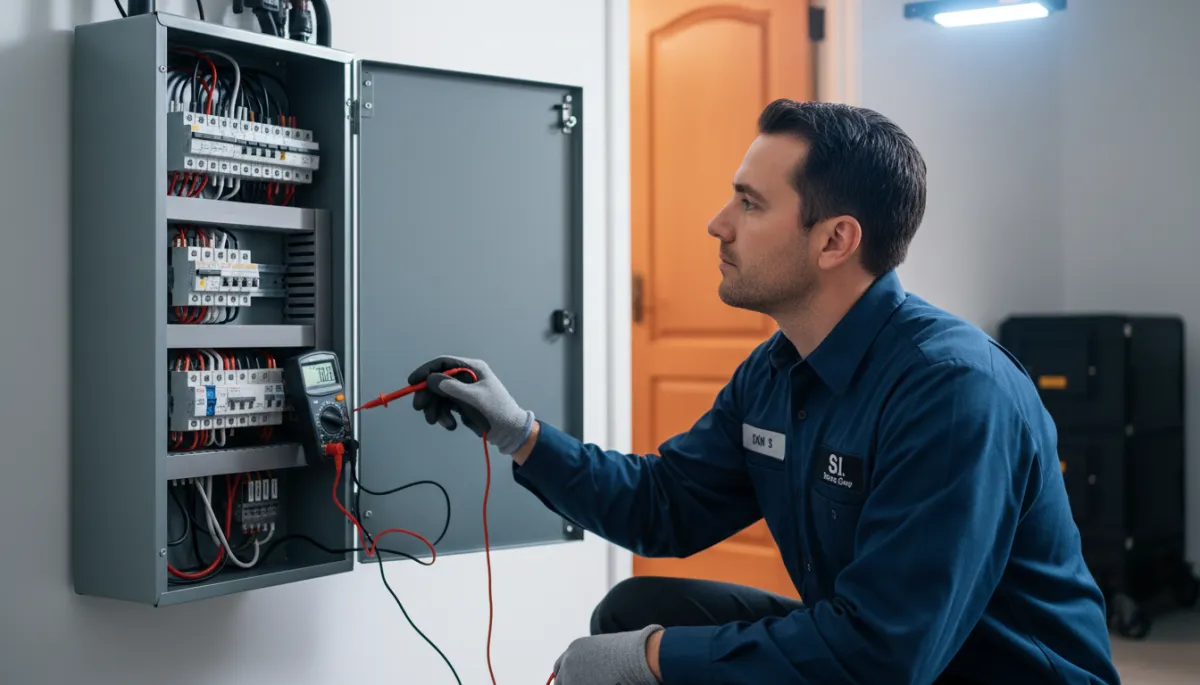
Why Do My Lights Flicker When the Heater Turns On? A Tupelo Electrician Explains
Electrical, Residential Electric, Tupelo MS
Why Do My Lights Flicker When the Heater Turns On? A Tupelo Electrician Explains
If your lights dip or flicker every time the heat kicks on this fall, you’re not alone. I’m Dan Southwick with S.I. Service Group, and I’ve helped a lot of North Mississippi homeowners track down this exact problem before it turns into something serious.

That First Cool Night in Tupelo: The Lights Dip, and You Notice
Every year, right around early October, my phone starts ringing in Tupelo, Saltillo, and all over Lee County with the same question: “Why do my lights flicker when the heater turns on?” Folks haven’t touched their heat since March, then that first cool front comes through, they flip the thermostat over to “Heat,” and suddenly the kitchen lights dip every time the furnace or heat pump starts up.
I was at a house in Mooreville last fall where the homeowner told me, “Dan, the lights in my dining room go brown for a second every time the unit comes on. It never did this before.” A couple of days later, I was in Verona for almost the same complaint. Different houses, different equipment, same basic issue: voltage drop when the HVAC starts up.
Let me walk you through what’s actually happening, what’s normal, what’s not, and when you should bring in a residential electrician in Tupelo like me versus calling an HVAC tech. I’ll also tell you exactly what my guys and I do on a service call when your lights dim when the HVAC kicks on so you know what to expect.
Why Your Lights Flicker When the Heater Turns On: Plain-English Explanation
The Big Power Surge at HVAC Startup (Voltage Drop 101)
When your furnace blower or heat pump kicks on, the motor doesn’t ease into it. It grabs a big gulp of power all at once. We call that inrush current. For a split second, that motor can pull three to five times its normal running amps. That sudden draw causes a voltage drop during HVAC startup.
Your lights run on that same voltage. When the voltage dips, even for a moment, the bulbs put out less light, and you see a quick dim or flicker. So if you’ve been wondering, “Why do my lights flicker when the heater turns on?” that’s the basic physics behind it: the HVAC is taking a big bite out of the electrical pie for a second, and everything else feels it.
Normal vs. Abnormal Light Flickering When Heat Kicks On
In my experience, here’s how I explain it to homeowners from Mantachie to Amory:
- Normal: A very brief, slight dimming right when the furnace or heat pump starts, then everything is steady. It’s over in less than a second, and it doesn’t make you feel uneasy. That’s usually just the inrush current doing its thing on an otherwise healthy system.
- Abnormal: The lights drop noticeably every single time the heater starts and stay dim for a second or two, or they flicker repeatedly while the unit is running. If multiple rooms on different circuits are affected, or if you see lights pulsing, that’s a red flag that the electrical system or the HVAC unit needs attention.
I was at a home in New Albany where the homeowner said, “Dan, the lights don’t just blink. They kind of breathe every time the heat runs.” That slow pulsing told me we were dealing with more than just a tiny startup dip. And sure enough, we found issues both in the panel and in the HVAC system.
Shared Circuits and Undersized Wiring: When the Circuit Is Overloaded
One of the most common reasons lights dim when the HVAC kicks on is that the heater or air handler is sharing a circuit it should never have been on in the first place. I see this a lot in older homes in Verona and Fulton that have been “added onto” over the years without permits or planning.
Maybe somebody in the past tied a new light circuit into the same line as the air handler in the attic, or the wiring is undersized for the load. When that motor hits, it drags the whole circuit down. The result is a more dramatic voltage drop and more noticeable flickering or dimming, especially on those shared lights or outlets.
Aging Electrical Panels: Federal Pacific, Zinsco, and Tired Old Boxes
Another big piece of this puzzle is the electrical panel itself. A lot of homes around Tupelo, Saltillo, and Plantersville still have older panels that were never designed for today’s loads. I’m talking about:
- Federal Pacific (FPE) panels
- Zinsco panels
- Older Square D and other brands that are corroded, overloaded, or just plain worn out
These older panels can have weak bus bars, loose breaker connections, and poor grounding. When your HVAC pulls that inrush current, the panel doesn’t handle the voltage drop well, and you see more intense flickering throughout the house. If you’ve got an old FPE or Zinsco electrical panel in Tupelo, MS, you’re not just dealing with flickering lights — you’re dealing with documented safety concerns that make a panel upgrade in North Mississippi a smart move.
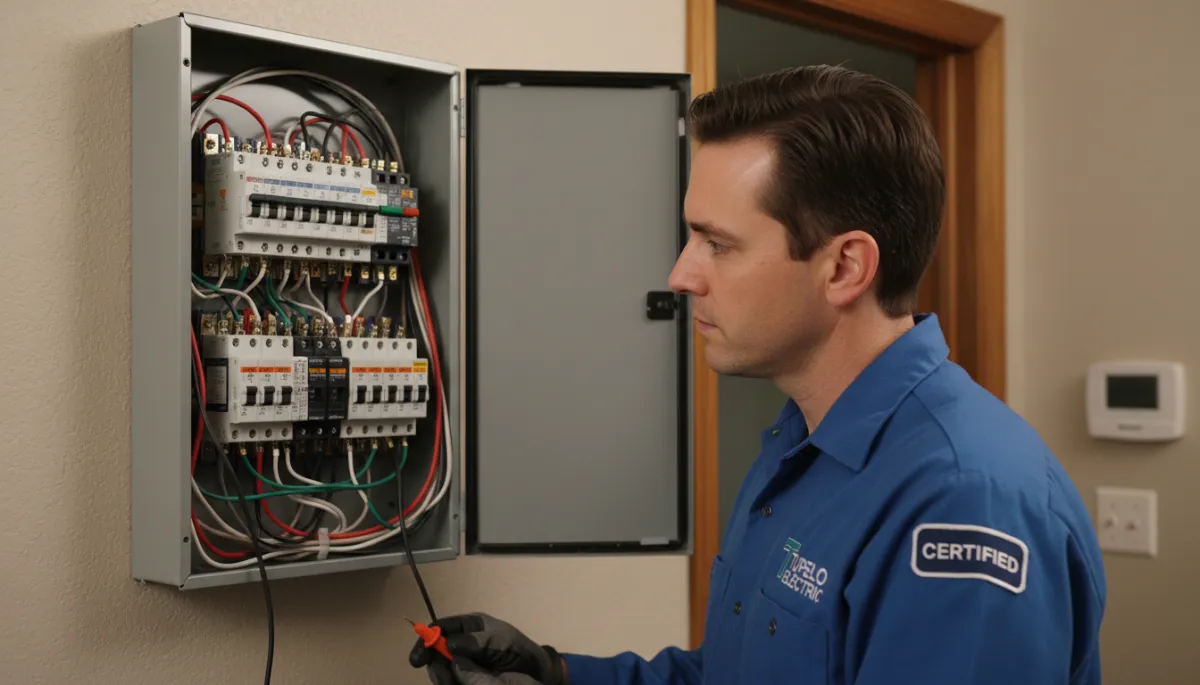
Aging or overloaded panels often turn minor flickers into serious electrical problems.
Loose Connections at the Panel or Breaker: Hidden Heat and Risk
Loose connections are another thing my guys and I find all the time, especially in older homes around Fulton and Amory. Over years of heating and cooling, screws loosen, metal expands and contracts, and suddenly that once-solid connection at the breaker or neutral bar isn’t so solid anymore.
When a big load like a heater or heat pump starts, that loose spot can act like a bottleneck. It resists the flow of current, creates heat, and exaggerates the voltage drop. That’s when you get more dramatic flickering, lights that brighten and dim, and sometimes even a faint buzzing or crackling sound at the panel or outlet. That’s not something to ignore.
When the HVAC Unit Itself Is the Problem
Sometimes the wiring and panel are fine, but the HVAC equipment is pulling more power than it should. I’ve seen this in Mantachie, Tupelo, and New Albany homes where the electrical side checked out, but the unit was struggling. Common HVAC problems that can make lights flicker when the heater turns on include:
- Failing start or run capacitor on the compressor or blower motor, making it harder for the motor to start and increasing inrush current
- Dirty filters or coils that make the blower work harder than it should
- Low refrigerant causing the compressor to struggle and draw more amps
So yes, a failing HVAC unit can cause lights to flicker even if your electrical panel and wiring are in good shape. That’s why, at S.I. Service Group, we handle both sides – electrical and HVAC – so you’re not stuck guessing who to call first.
Electrician or HVAC Tech: Who Do You Call First?
I get this question a lot from homeowners in Tupelo and Saltillo: “Should I call you or my HVAC guy?” Here’s how I break it down, based on what I see in the field.
When to Call an Electrician First
- Multiple rooms flicker or dim across different circuits when the heater turns on
- You’ve got an older electrical panel in Tupelo, MS (especially Federal Pacific or Zinsco) and other weird symptoms like tripping breakers or warm breakers
- You hear buzzing at the panel, outlets, or switches when the HVAC kicks on
- Other big loads (dryer, range) also cause noticeable flicker or dimming
In those cases, you likely need an electrician to check for loose connections, undersized wiring, overloaded circuits, or an undersized panel. That’s squarely in our lane. Our residential electrical services team deals with this kind of thing every day.
When to Call an HVAC Tech (or Our HVAC Team)
- The lights just started flickering this season, and your panel is fairly new and properly sized
- The HVAC unit is making new noises, struggling to start, or short-cycling along with the flicker
- You’ve had recent HVAC issues like capacitor replacements or refrigerant leaks
In that case, the unit itself may be drawing too much current. Our HVAC crew can schedule an HVAC inspection and check capacitors, motors, filters, and refrigerant levels to see why the startup draw is so heavy.
The nice thing with S.I. Service Group is you don’t have to guess. Whether you call us as your residential electrician in Tupelo or for HVAC repair , we’ve got both skill sets under one roof, and we’ll coordinate between the teams if we need to.
What We Actually Do on a Service Call for Flickering Lights
Let me pull back the curtain a little. When my guys and I roll up to a home in Tupelo, Verona, or Mooreville because the lights flicker when the heater turns on, here’s the basic step-by-step process we follow from the electrical side.
1. Listen to Your Story and Recreate the Problem
First thing, I want to hear exactly what you’re seeing and when it started. Is it only when the heat comes on? Did it happen with the AC this summer too? Is it just the kitchen and living room, or the whole house? Then we’ll usually stand there with you, thermostat in hand, and watch what the lights do when the unit starts up so we’re seeing the same thing you are.
2. Check Voltage at the Panel During HVAC Startup
Next, we head to the panel with a meter. We’ll watch the voltage on each leg while the HVAC starts. If we see a big swing – say dropping well below what we expect – that tells us the voltage drop on HVAC startup is excessive. That could be a supply issue, a panel issue, or a unit issue, and this step helps us narrow it down.
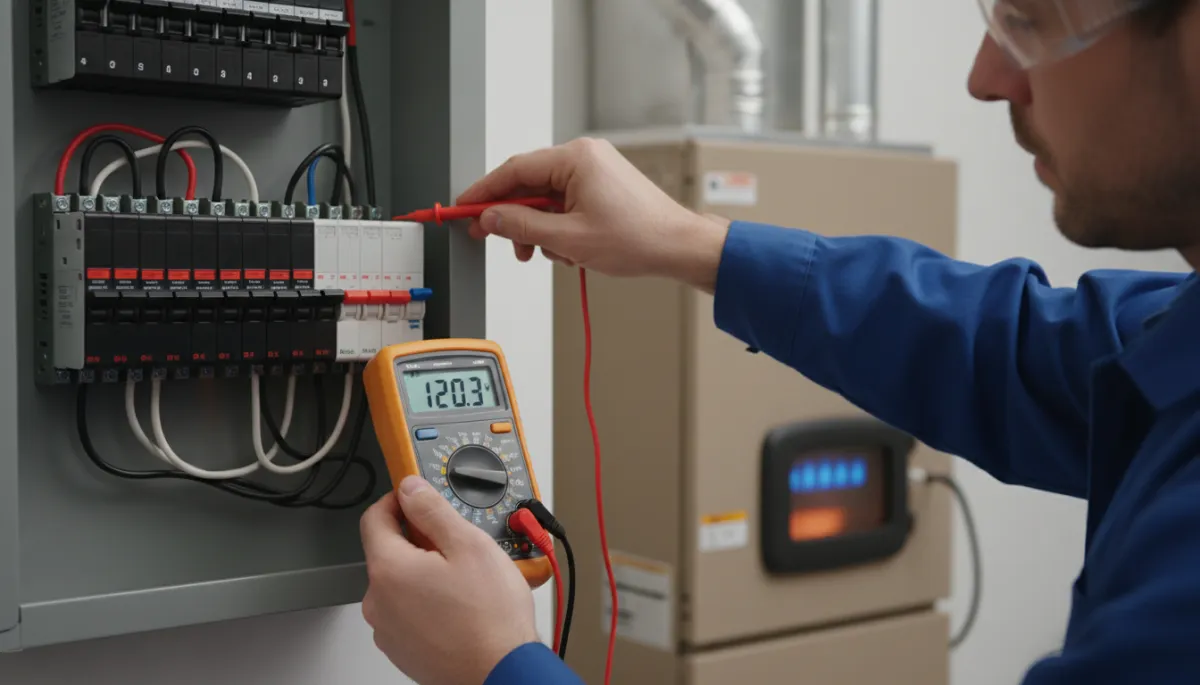
Measuring voltage during HVAC startup shows how severe the drop really is.
3. Inspect Breakers, Wires, and Connections for Heat or Looseness
Then we’ll visually inspect the electrical panel – especially the breaker feeding the HVAC equipment and nearby breakers. We’re looking for:
- Discoloration or melted plastic on breakers or insulation
- Loose lugs, loose neutrals, or obviously undersized wires on large breakers
- Signs of corrosion or arcing on the bus bars (very common in older panels)
On some calls in Amory and Saltillo, we’ll also use thermal imaging to look for hot spots – connections that are heating up more than they should under load. That’s a clear sign of resistance and a problem connection that needs to be addressed before it becomes a fire risk.
4. Verify Wire Gauge, Breaker Size, and Circuit Layout
We’ll confirm that the wire gauge matches the breaker size and the HVAC nameplate data. If we find a 14-gauge wire on a breaker that should only ever see 12-gauge or 10-gauge, that’s a problem. We’ll also trace out whether any lighting or outlet circuits are improperly sharing with the HVAC equipment. If they are, we’ll talk with you about separating those circuits.
5. Coordinate With HVAC if Needed
If everything on the electrical side looks solid but the unit is still pulling too much power, we’ll loop in our HVAC team. They can test capacitors, motors, and refrigerant charge. Because we do both, you’re not stuck playing middleman between an electrician and a separate HVAC company. We just handle it.
Upgrades and Fixes That Stop the Flickering
Once we’ve figured out what’s causing your lights to flicker when the heater turns on, the next step is fixing it. Depending on what we find, that might be a quick repair or a bigger upgrade. Here are the most common solutions we install around Tupelo and the surrounding towns.
Panel Upgrades and Service Upgrades
If your home is running on an old or undersized panel, a panel upgrade in North Mississippi can make a huge difference – not just for flickering lights, but for overall safety and future capacity. We replace outdated FPE, Zinsco, and worn-out boxes with modern panels that can handle today’s loads safely and reliably.
Our panel upgrade service includes evaluating your existing service size (like 100-amp vs 200-amp), your current and future loads, and making sure you’re set up for things like EV chargers, hot tubs, or additional HVAC equipment down the road. For a lot of older homes in Tupelo and New Albany, this is the long-term fix that solves multiple nagging issues at once.
Dedicated Circuits for HVAC Equipment
If we find your furnace, air handler, or heat pump sharing a circuit with lights or outlets, we almost always recommend installing a dedicated circuit. That means the HVAC equipment gets its own properly sized breaker and wire run, and your lights are moved to a different circuit. This alone can dramatically reduce how much your lights react when the unit starts up.
Tightening and Repairing Loose Connections
Sometimes the fix is as straightforward as cleaning up and tightening connections in the panel, junction boxes, or at the HVAC disconnect. But don’t let “simple” fool you – this is not a DIY job. My guys are trained to work safely in live panels, check torque specs, and identify connections that need more than just a twist of a screwdriver.
Whole-Home Surge Protection and Proper Breaker Sizing
While we’re in the panel, we often recommend whole-home surge protection, especially in areas like Mantachie and Fulton where storms roll through often. Surge protection doesn’t stop flickering caused by voltage drop, but it does protect your sensitive electronics and HVAC controls from spikes and surges that can ride along with those fluctuations. We also verify that your breakers are properly sized for the loads they’re feeding – no oversized breakers hiding undersized wire.
FAQ: Common Questions About Flickering Lights and HVAC
1. Is it normal for lights to dim when the AC or heat turns on?
A very slight, split-second dim when a big motor starts – like your AC, heat pump, or furnace blower – can be normal. That’s just the inrush current causing a tiny voltage drop. If you barely notice it and it doesn’t bother you, it’s probably not an emergency. But if the lights dip hard, stay dim for a second or two, or flicker repeatedly, that’s not something to ignore. That’s when it’s time to have a residential electrician in Tupelo take a look.
2. How much should lights dim when the HVAC kicks on?
In a healthy system, you might see a very slight dip – maybe the lights go from 100% to 90–95% brightness for a fraction of a second. You shouldn’t see them drop to where the room feels “dark” or to the point that it catches your eye every time. If the whole room noticeably changes brightness whenever the unit starts, that’s too much. That kind of voltage drop on HVAC startup is worth checking out before it gets worse.
3. Can flickering lights cause a fire?
The flickering itself isn’t what causes a fire – it’s what might be behind the flickering. Loose connections, overloaded circuits, undersized wiring, and failing panels can all create heat. Over time, that heat can damage insulation and components. So while the symptom is “my lights flicker when the heater turns on,” the underlying issue can absolutely be a fire risk if it’s not addressed. That’s why I tell homeowners in Tupelo, Verona, and beyond: if the flicker is getting worse, don’t wait. Get it checked.
4. Should I be worried about a buzzing sound with the flickering?
Yes, a buzzing or crackling sound combined with flickering is a big red flag. Buzzing at the panel, outlets, or switches when the heater or AC starts can mean loose connections, arcing, or overloaded components. That’s not something to watch and wait on. Turn off what you can, and call a licensed electrician right away. In my experience, every time I’ve heard that sound in a home around Plantersville or Mooreville, we’ve found something that needed immediate attention.
New or worsening flicker, especially with buzzing, deserves a professional inspection.
5. Will a new panel fix light flickering?
If the root cause is an overloaded, outdated, or failing panel, then yes – a new panel can make a night-and-day difference. We’ve done electrical panel upgrades in Tupelo, MS where the homeowner told me afterward, “Dan, I didn’t realize how bad it was until you fixed it. The whole house just feels more solid now.” But if the problem is inside the HVAC unit or in a specific circuit, a panel alone won’t solve it. That’s why we always diagnose first, then recommend whether a panel upgrade in North Mississippi makes sense for your situation.
6. Can a failing HVAC unit cause lights to flicker?
Absolutely. A weak capacitor, failing motor, or low refrigerant can all make the unit draw more current than it should when it starts. That extra draw translates to a bigger voltage drop and more noticeable flicker. If the electrician checks things out and gives your wiring and panel a clean bill of health, the next step is to schedule an HVAC inspection so we can see what’s going on inside the unit itself.
7. What does it mean if only one room’s lights flicker?
If just one room or one small area is flickering when the heat turns on, that often points to a problem in that specific branch circuit – like a loose neutral, a bad connection in a junction box, or that room’s lights being tied into the HVAC circuit. I had a call in Saltillo where only the dining room chandelier flickered. We opened a junction box in the attic and found a loose wirenut that was barely hanging on. Tightened and properly reconnected, and the problem disappeared. So localized flicker is usually a circuit-level issue, not the whole panel.
A Personal Note from Dan: This Is a Solvable Problem
I know how unsettling it can be when the lights flicker when the heater turns on. You start wondering if your house is safe, if you’re about to lose power, or if you’re sitting on a fire hazard. I’ve walked into homes in Tupelo, Mooreville, and Amory where folks were genuinely nervous to turn their heat back on because of what they were seeing in the lights.
The good news is, this is almost always a solvable problem. Sometimes it’s a simple fix – a loose connection, a bad breaker, or a weak capacitor. Sometimes it’s a bigger project, like upgrading an old panel or separating circuits. Either way, a licensed tech who does this every day can usually track down the cause pretty quickly and give you clear options.
My goal – and my guys will tell you this – is to leave you feeling safer and more confident in your home’s electrical system than when we showed up. If you’re in Tupelo, Saltillo, Verona, Plantersville, Mooreville, Mantachie, Fulton, Amory, or New Albany and you’re asking yourself, “Why do my lights flicker?” every time the heat kicks on, we’re right here in your backyard and we deal with this all the time.
Ready to Get It Checked Out? Here’s Your Next Step
If your lights are dimming or flickering when the heater turns on, don’t wait for it to get worse or for something to fail in the middle of a cold snap. Let my team at S.I. Service Group take a look, figure out what’s going on, and give you honest recommendations – whether that’s a simple repair, a panel upgrade, or an HVAC repair.
Call us at 662-523-5514 or book online at siservicegroup.com. You’ll talk to a real local team, not a call center, and we’ll treat your home like it was our own. – Dan Southwick, S.I. Service Group