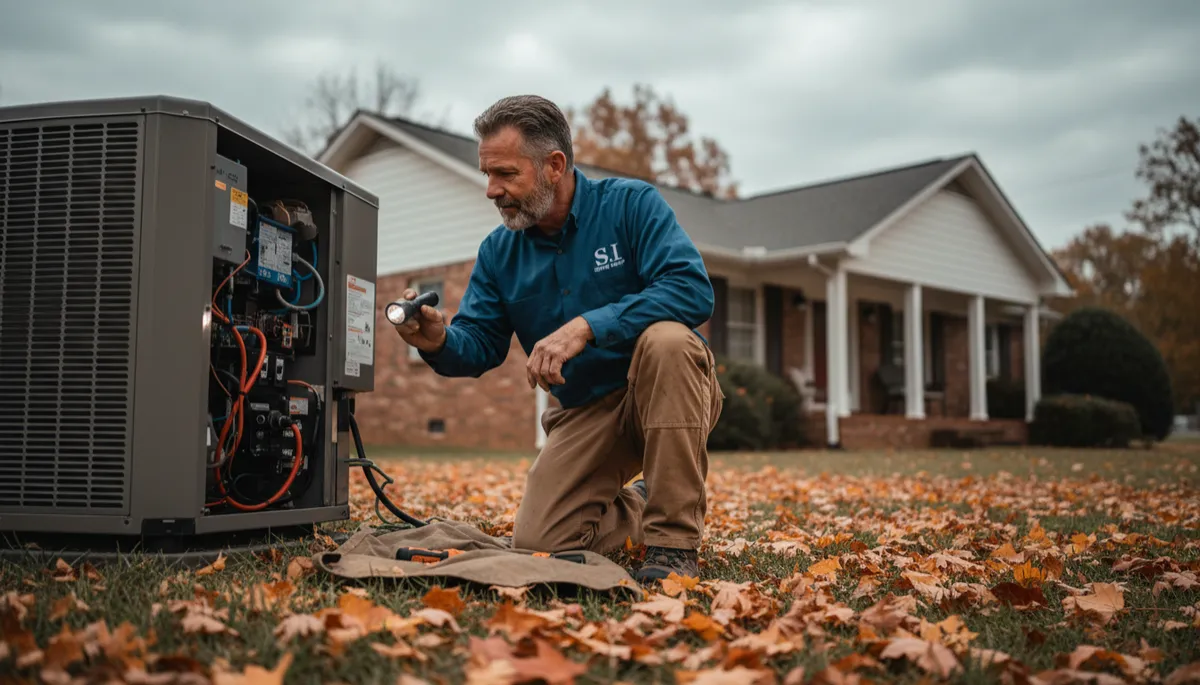
Heat Pump Not Keeping Up When It Gets Cold? A Tupelo HVAC Tech Explains What to Check This Fall
HVAC, Heat Pumps, Tupelo MS
Heat Pump Not Keeping Up When It Gets Cold? A Tupelo HVAC Tech Explains What to Check This Fall
I’m Dan with S.I. Service Group here in Tupelo, and every fall I start getting the same panicked calls: “My heat pump’s not heating like it should,” or “The heat pump is blowing cold air—did it just die on me?” If you live anywhere in Northeast Mississippi—Tupelo, Saltillo, Verona, Plantersville, Mooreville, Mantachie, Fulton, Amory, New Albany—you’re right in the zone where heat pumps can work great most of the year… until that first real cold snap exposes every little weakness in your system.
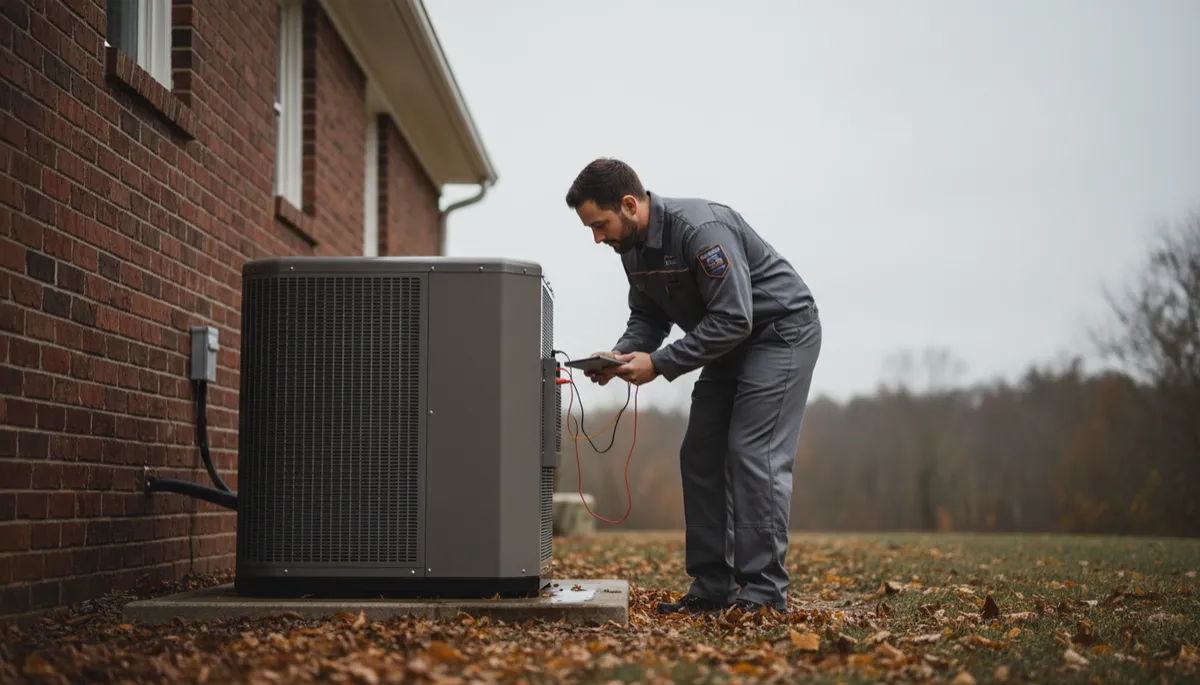
Why Heat Pumps Struggle When North Mississippi Actually Gets Cold
Let’s be honest: around Tupelo and the rest of North Mississippi, we don’t live in Minnesota. Most of our winter is 40s and 50s, with some 30s at night. That’s perfect heat pump country. But when we drop into the low 30s and below—especially on those damp, windy days—you start to see where a heat pump can struggle if it’s not in good shape or not set up right for your home.
I remember a call out in Mantachie last January. The homeowner said, “Dan, my thermostat is set to 72, but the house is stuck at 66 and the unit has been running non-stop.” I pulled up the weather on my phone—32°F, misty, light wind. That’s right around the point where a heat pump starts to lose its edge, and if anything else is wrong—low refrigerant, dirty filter, weak capacitor—it just can’t keep up with the heat loss in the house. That Mantachie system had three of those issues going on at once, so it never stood a chance until we tuned it up.
How a Heat Pump Works (And Why It’s Different from a Furnace)
Before we talk about why your heat pump not heating well in cold weather, you need to know what it’s actually trying to do. A lot of folks in Tupelo grew up with gas furnaces or wood heat, so the whole “heat pump” idea feels backwards at first. A furnace creates heat—usually by burning gas or using electric coils. A heat pump doesn’t create heat; it moves heat from one place to another using the refrigeration cycle, the same basic idea as your refrigerator, just in reverse in the wintertime.
In summer, your heat pump is an air conditioner: it pulls heat from inside your home and dumps it outside. In winter, it flips the script. The outdoor unit becomes the “evaporator,” pulling heat out of the outdoor air and sending it inside. Yes, even when it feels cold to you, there’s still heat energy in that air. The system uses refrigerant, a compressor, and a reversing valve to move that heat indoors. That’s why when everything is working right, you get efficient, steady heat with lower utility bills than straight electric heat in most of North Mississippi.
Why Heat Pumps Lose Efficiency Below About 35°F
Here’s where that refrigeration cycle runs into trouble. The colder the outside air gets, the less heat there is for the system to grab. Around 40°F, most modern heat pumps in Tupelo are still doing pretty well. Once we drop into the mid-30s and below, the system has to work a lot harder to pull the same amount of heat out of that cold, damp Mississippi air. That’s when you start noticing the “heat pump blowing cold air” complaint, or at least air that doesn’t feel very warm because it’s running constantly just to keep up.
Below about 35°F, the refrigerant in the outdoor coil is trying to absorb heat from air that’s not much warmer than the refrigerant itself. The temperature difference that makes the whole process work shrinks, and the system’s capacity drops. On top of that, our North Mississippi humidity loves to freeze on that outdoor coil, which forces the heat pump to go into defrost cycles. Every time it defrosts, it temporarily stops heating your house and uses more energy. So if your system is already a little weak—dirty, low on refrigerant, weak capacitor—it can feel like the heat pump is just not heating the house at all when that cold, wet weather hits.
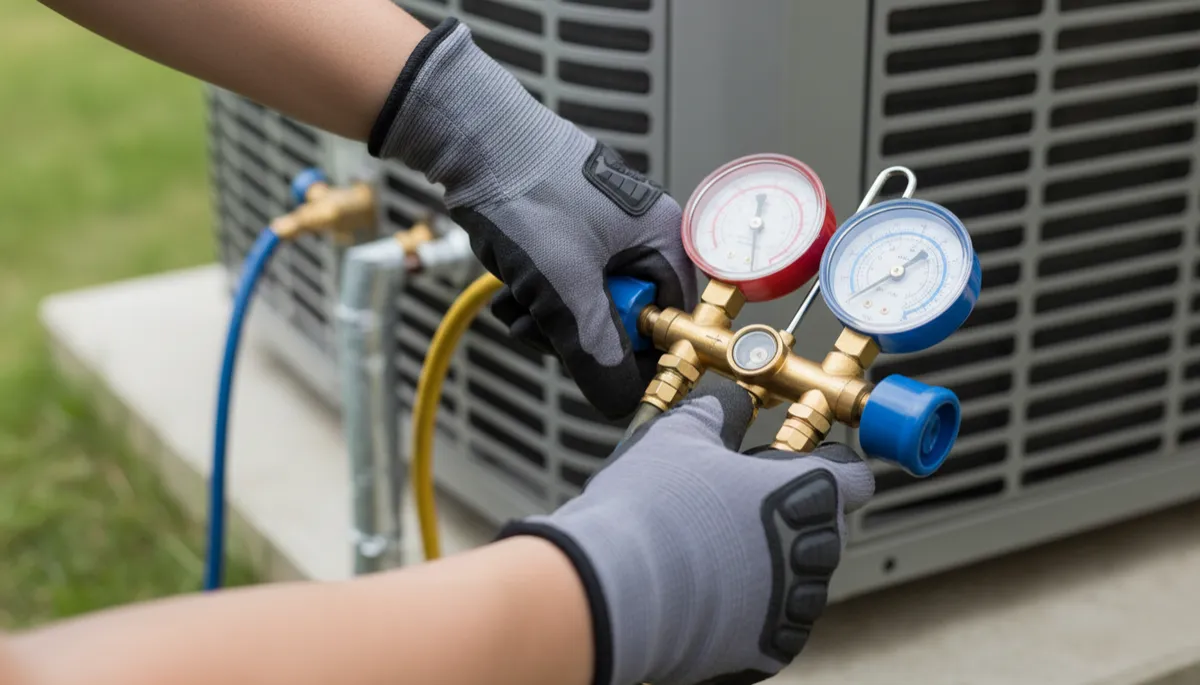
Catching refrigerant or airflow issues in fall keeps your heat pump from struggling on the first freeze.
Common Problems I See on Fall Service Calls Around Tupelo
1. Low Refrigerant: The Silent Heat Thief
A heat pump that’s low on refrigerant is like a truck trying to haul a trailer with half the engine power. It might move, but it’s going to struggle, especially uphill—our “uphill” being those 30-degree nights. Refrigerant doesn’t get “used up.” If your system is low, there’s a leak somewhere, and that leak has probably been slowly robbing you of performance for months or even years. By the time you notice the heat pump not heating well, the system is already way out of its comfort zone.
I had a call over in a Mooreville subdivision where the homeowner said, “It’s fine in the fall, but every time we get a real cold snap, it just can’t keep up.” Pressures were low, coil was frosting up more than it should, and the backup heat strips were running constantly just to keep the house at 68°F. That electric bill was ugly. We found a small leak in the outdoor coil, repaired it, weighed in the proper charge, and suddenly that same system handled a 28°F night without the strips kicking on nearly as much. That’s the difference a proper refrigerant charge can make.
2. Dirty Air Filters: The Easiest Fix Most Folks Ignore
I know, I know—you’ve heard this a thousand times. But I can’t tell you how many “heat pump blowing cold air” calls in Tupelo, Saltillo, and Verona come down to a filter that looks like it’s been in there since the Ole Miss–State game three seasons ago. When that filter clogs up, your airflow drops. Less air moving across the indoor coil means less heat getting into your home. The system runs longer, the indoor coil can get too cold, and in some cases the outdoor coil freezes up more because the whole system is out of balance.
I had a farmhouse out near Plantersville where Grandma swore the unit was “just old and tired.” Filter was so packed with dust and dog hair I could’ve rolled it up like a carpet. We put in a fresh filter, checked the rest of the system, and the difference in supply temperature was over 10 degrees. She called me a week later and said, “I thought you put in a new unit, that’s how much better it feels.” Sometimes the simplest fix really is the first thing to check.
3. Failing Capacitors: The “Weak Heartbeat” of the System
Capacitors are little electrical components that give your compressor and fan motors the boost they need to start and run properly. Over time—and with our hot summers in North Mississippi—they weaken. A weak capacitor can cause the compressor to struggle, short-cycle, or not start reliably. When that happens on a cold night in Fulton or Amory, you get poor heat output, long run times, and sometimes a tripped breaker or a unit that just hums but doesn’t run right.
On a call in New Albany last fall, the homeowner said, “The outdoor unit sounds funny, and the house just won’t warm up.” The fan was spinning, but the compressor was trying and failing to start. I checked the capacitor, and it was way below its rated value. Swapped it out, and the system came to life, pressures normalized, and the home heated up like it should. That’s the kind of thing we catch during a routine HVAC service visit long before it leaves you cold on a January morning.
4. Reversing Valve Issues: Stuck Between Heating and Cooling
The reversing valve is the traffic cop of your heat pump. It decides whether the system is in heating or cooling mode by changing the direction of the refrigerant flow. If that valve sticks, fails electrically, or gets “confused,” you can end up with a heat pump blowing cold air in the middle of December in Verona—and not because it’s just blowing cooler-feeling heat pump air. I mean actual cold air, like it’s still in AC mode or stuck in defrost logic.
I had a case in Saltillo where the customer said, “Dan, I swear this thing is trying to air condition my house in January.” Sure enough, the reversing valve wasn’t energizing properly. The thermostat was calling for heat, but the system was stuck in the wrong mode. We traced it down to a control issue and a failing valve coil. Once repaired, the system went right back to normal, and the homeowner stopped wearing a hoodie inside the house.
5. Frozen Outdoor Coil: When Defrost Can’t Keep Up
Around Tupelo, Mantachie, and Amory, we get a lot of damp, borderline-freezing weather. That’s the perfect recipe for frost buildup on your outdoor coil. A light layer of frost is normal, and your heat pump is designed to periodically go into defrost mode to melt it off. But when the whole outdoor unit looks like an ice sculpture, something’s wrong. A heavily frozen coil can’t pull heat from the air, and your indoor unit just ends up moving lukewarm or cool air around the house while the thermostat never reaches setpoint.
I saw this on a call near Fulton last winter. The homeowner said, “The heat’s been running all day, but the house is freezing.” I walked around back, and the outdoor unit was encased in ice. Turned out the defrost control board had failed, so the system never switched into defrost. On top of that, the outdoor coil was filthy, which made the freeze-up worse. We replaced the board, cleaned the coil, and got proper defrost cycles going again. The next cold snap, that same system stayed clear and kept the house comfortable.
6. Backup/Emergency Heat Strips: Your Safety Net (But Not Your First Choice)
Most heat pump systems around North Mississippi have electric backup or “emergency” heat strips in the air handler. These are basically big electric heaters that kick on when the heat pump can’t keep up or when the system is in defrost. They’re there to help you out on those really cold mornings or if the outdoor unit fails. But they’re expensive to run compared to the heat pump itself. If your strips are running all the time just to maintain temperature, something else is wrong—low refrigerant, airflow issues, undersized system, or a control problem.
On a heating system check in Tupelo last year, I saw a power bill that had doubled from one winter to the next. The homeowner’s thermostat was calling for auxiliary heat constantly because the outdoor unit was barely contributing. Turned out to be a combination of a dirty coil, weak capacitor, and low refrigerant. Once we fixed all that, the strips only came on occasionally, and their power bill dropped back to normal. That’s the kind of thing we catch on a fall heating repair and maintenance visit before winter really bites.
Interior of a cozy Mississippi living room , soft lighting, a visible digital thermostat on the...
What You Can Check Yourself This Fall (Before You Call Me)
I make my living doing HVAC repair in North Mississippi, but I’m also a homeowner, and I don’t want you paying me to do things you can easily handle yourself. Here’s what I tell folks in Tupelo, Mooreville, and the rest of the area to check every fall before we get that first hard freeze:
- Change or check your air filter. If it’s dirty, replace it. Don’t overthink it—clean filter good, dirty filter bad. This alone fixes a lot of “heat pump not heating” complaints.
- Clear around the outdoor unit. Leaves, grass, and vines can choke airflow. Give it at least 2–3 feet of clearance on all sides and a clear top.
- Set your thermostat properly. Make sure it’s in Heat or Auto, not still on Cool from summer. Check that the fan is on Auto, not On, or it may feel like it’s blowing cool air between cycles.
- Listen for odd noises. Grinding, loud humming, or banging from the outdoor unit means stop and call a pro before something more expensive breaks.
- Watch the temperature. If your system runs constantly and can’t raise the indoor temperature more than 2–3 degrees, especially when it’s in the 30s outside, it’s time for a professional check.
When It’s Time to Call a Pro for a Heat Pump Tune-Up in Tupelo, MS
There’s a line between smart homeowner maintenance and “I watched a video and now I’m an HVAC tech.” I’m all for you handling the basics, but there are times when you really do want someone like me or one of our guys at S.I. Service Group to put gauges on the system, check electrical components, and run a full diagnostic. A professional heating system check in Tupelo usually includes:
- Checking refrigerant pressures and temperatures to confirm proper charge
- Testing capacitors, contactors, and motors for proper operation
- Verifying the defrost cycle and inspecting the outdoor coil condition
- Measuring temperature rise and airflow inside the home
- Confirming backup/emergency heat strips are working but not overused
If your heat pump is more than a few years old, or you’ve noticed any of the symptoms we’ve talked about—heat pump not heating well, heat pump blowing cold air, high winter power bills—I strongly recommend scheduling a fall heat pump tune-up in Tupelo, MS or anywhere else in Northeast Mississippi. It’s a lot cheaper to adjust, clean, and replace a capacitor in October than to replace a compressor in January.
FAQ: Heat Pump Not Keeping Up in North Mississippi
1. Why does my heat pump run all the time when it’s in the 30s outside?
That’s partly normal and partly a warning sign. Heat pumps are designed to run longer cycles than furnaces, especially when it’s cold. Around 35°F and below, they lose efficiency because the refrigeration cycle struggles to pull heat from the cold outdoor air. But if it’s been running for hours and still can’t reach your thermostat setting, or if the backup heat strips are on constantly, something may be wrong—low refrigerant, dirty filter, weak capacitor, or a frozen outdoor coil. That’s when a professional heating system check in Tupelo makes sense.
2. My heat pump is blowing cool air—does that mean it’s broken?
Not always. Remember, a heat pump doesn’t blow “furnace hot” air. It often feels cooler to your hand, especially if you’re used to gas heat. But if the air coming out of the vents feels the same as room temperature or truly cold, and the house isn’t warming up, then yes, you may have an issue—reversing valve stuck, low refrigerant, or a defrost/control problem. Check your thermostat settings and filter first. If those look good and it still feels wrong, give us a call for HVAC repair in North Mississippi.
3. How often should I get a heat pump tune-up in Tupelo, MS?
I recommend at least once a year, ideally in the fall before heavy heating season. Our summers are rough on outdoor units, and catching issues like failing capacitors, dirty coils, or low refrigerant early keeps your system from struggling when the first real cold front hits. If your heat pump is older or you’ve had repeated problems, twice a year—spring and fall—is even better. That’s the kind of schedule we set up for many of our customers in Tupelo, Saltillo, and Mooreville through our regular HVAC service plans.
4. Is it okay to switch my thermostat to “Emergency Heat” when it gets really cold?
Emergency Heat is there for when the outdoor unit is not working properly or has failed. It runs your electric heat strips only, which are much more expensive to operate. If your heat pump is working, leave it in regular Heat mode and let the system bring on auxiliary heat automatically if needed. If the outdoor unit is iced over, making loud noises, or clearly not running, then yes, you can temporarily use Emergency Heat to stay warm until we get there—but call us right away so we can fix the underlying issue.
5. What temperature should I set my thermostat to in winter with a heat pump?
Most of my customers in Tupelo and the surrounding towns are comfortable between 68°F and 72°F. The key with a heat pump is to avoid big temperature swings. Set it where you’re comfortable and leave it alone as much as possible. Cranking it way up when it’s cold can force the backup heat strips to come on and drive your bill up. A steady, moderate setting lets the heat pump do what it’s designed to do—run longer, more efficient cycles.
6. How do I know if my heat pump is the right size for my home?
If your system runs constantly in both summer and winter and still can’t keep up, or if some rooms are always too hot or too cold, you might have a sizing or ductwork issue. I see this sometimes in older homes around Verona and Plantersville that had additions built without updating the HVAC properly. A proper load calculation and duct inspection from a pro is the only way to know for sure. During a visit, we can look at your system size, your home’s layout, and your comfort issues and tell you if the equipment is undersized, oversized, or just fighting other problems.
My Straight-Shooter Advice Before the Cold Really Hits
I’ve crawled under houses in Mooreville, climbed into attics in Saltillo, and thawed out frozen units behind homes in Amory and New Albany. I can tell you this: most of the “my heat pump not heating” emergencies I see in January could have been prevented with a little attention in October or November. A clean filter, a clear outdoor unit, and a professional set of eyes on the system once a year go a long way toward keeping your family warm and your power bill reasonable when North Mississippi actually remembers it’s winter.
If you’re already noticing your heat pump blowing cold air, running non-stop, or just not keeping up when it dips into the 30s, don’t wait for that first hard freeze to see if it “works itself out.” It rarely does. Whether you’re in Tupelo, Saltillo, Verona, Plantersville, Mooreville, Mantachie, Fulton, Amory, New Albany, or anywhere else in Northeast Mississippi, my team and I at S.I. Service Group are out here every day getting systems ready for the season. We’ll shoot you straight, fix what needs fixing, and help you get the most out of the equipment you already own.
Call or text us at 662-523-5514 — we serve Tupelo, Saltillo, Verona, Plantersville, Mooreville, Mantachie, Fulton, Amory, New Albany, and all of Northeast Mississippi.