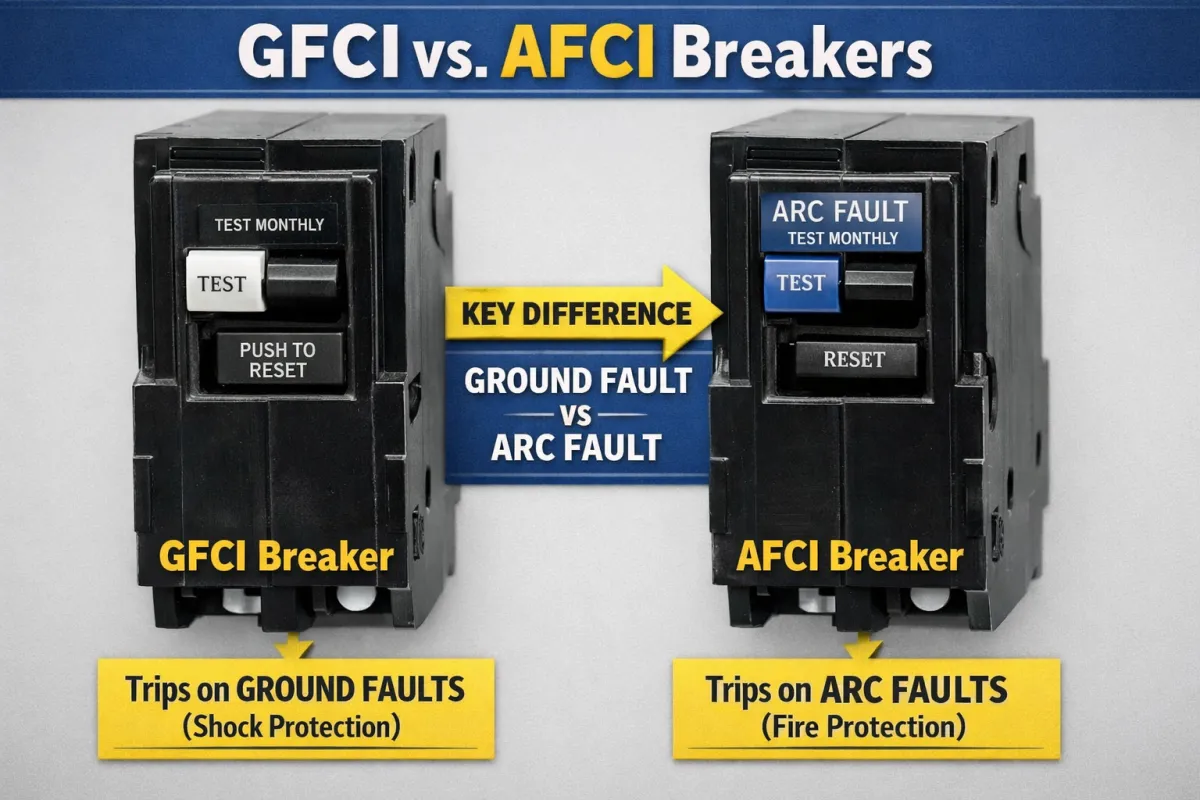
GFCI and AFCI Breakers — What Tupelo Homeowners Need to Know
You walk into your kitchen, plug in the coffee maker, and... nothing. You check the switch, try a different outlet, still nothing. Eventually you realize the outlet just stopped working — but the circuit breaker in your Square D panel is fine.
What you've run into is a tripped GFCI outlet. And if you don't know what that means or where to reset it, you're not alone.
Here's what every Tupelo homeowner should know about GFCI and AFCI protection — two of the most important safety features in your home's electrical system.
What Is a GFCI Outlet?
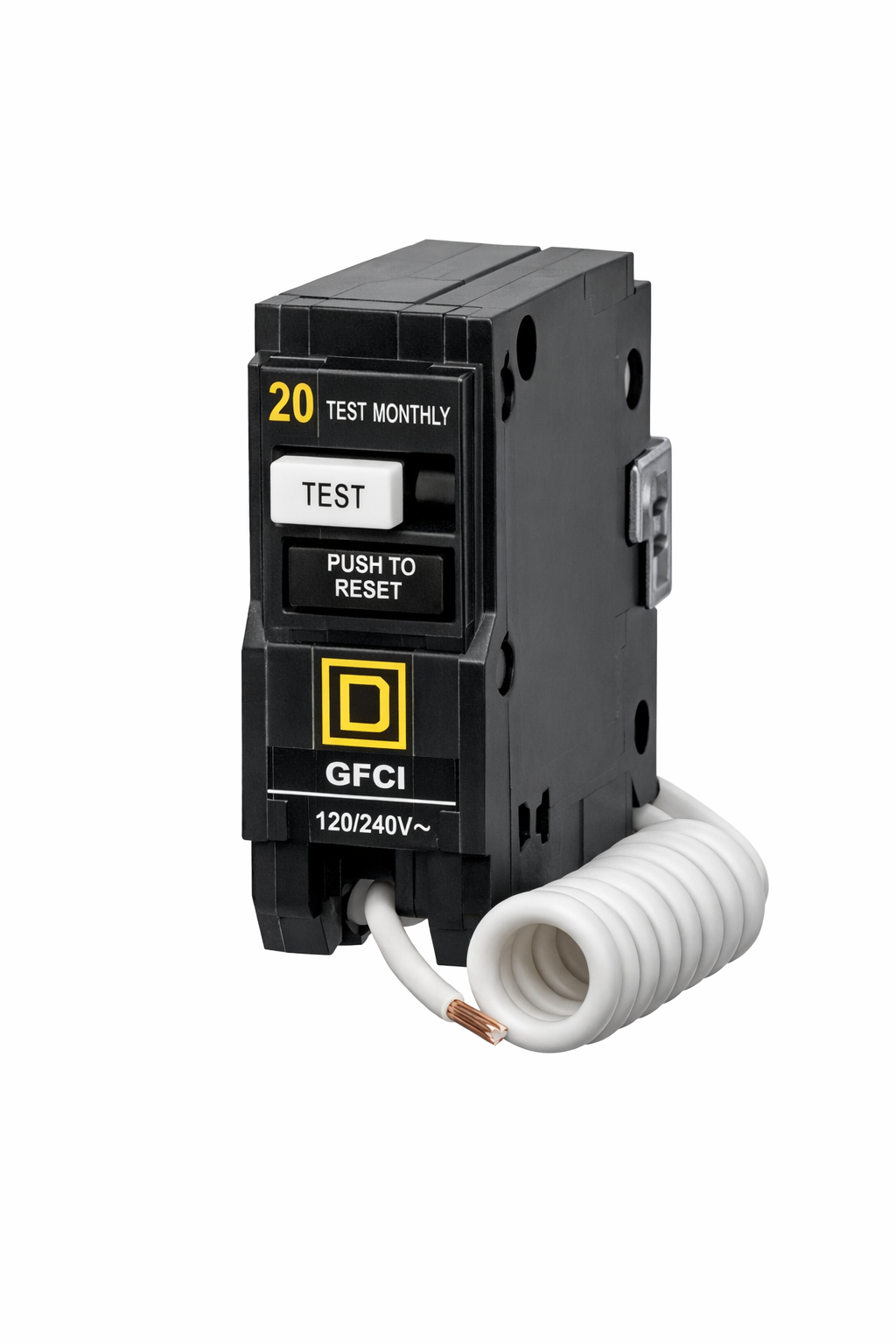
GFCI stands for Ground Fault Circuit Interrupter. It's the outlet with the little TEST and RESET buttons you see in bathrooms, kitchens, and garages.
A GFCI outlet monitors the flow of electricity. The moment it detects that current is taking an unintended path — like through water, or through a person — it shuts off in 1/40th of a second. Fast enough to prevent electrocution.
The National Electrical Code (NEC) requires GFCI protection in any area where water and electricity could come into contact:
Kitchen countertop receptacles
Bathroom outlets
Garage outlets
Outdoor receptacles
Crawl spaces and unfinished basements
Laundry areas
Near pools and hot tubs
If your home was built before 1971, there's a good chance you have no GFCI protection at all. Homes built in the 1970s and 80s may have it in bathrooms but not kitchens. Modern NEC requirements are broader — and if you're remodeling, any outlet in a wet area must be updated.
What Is an AFCI Breaker?
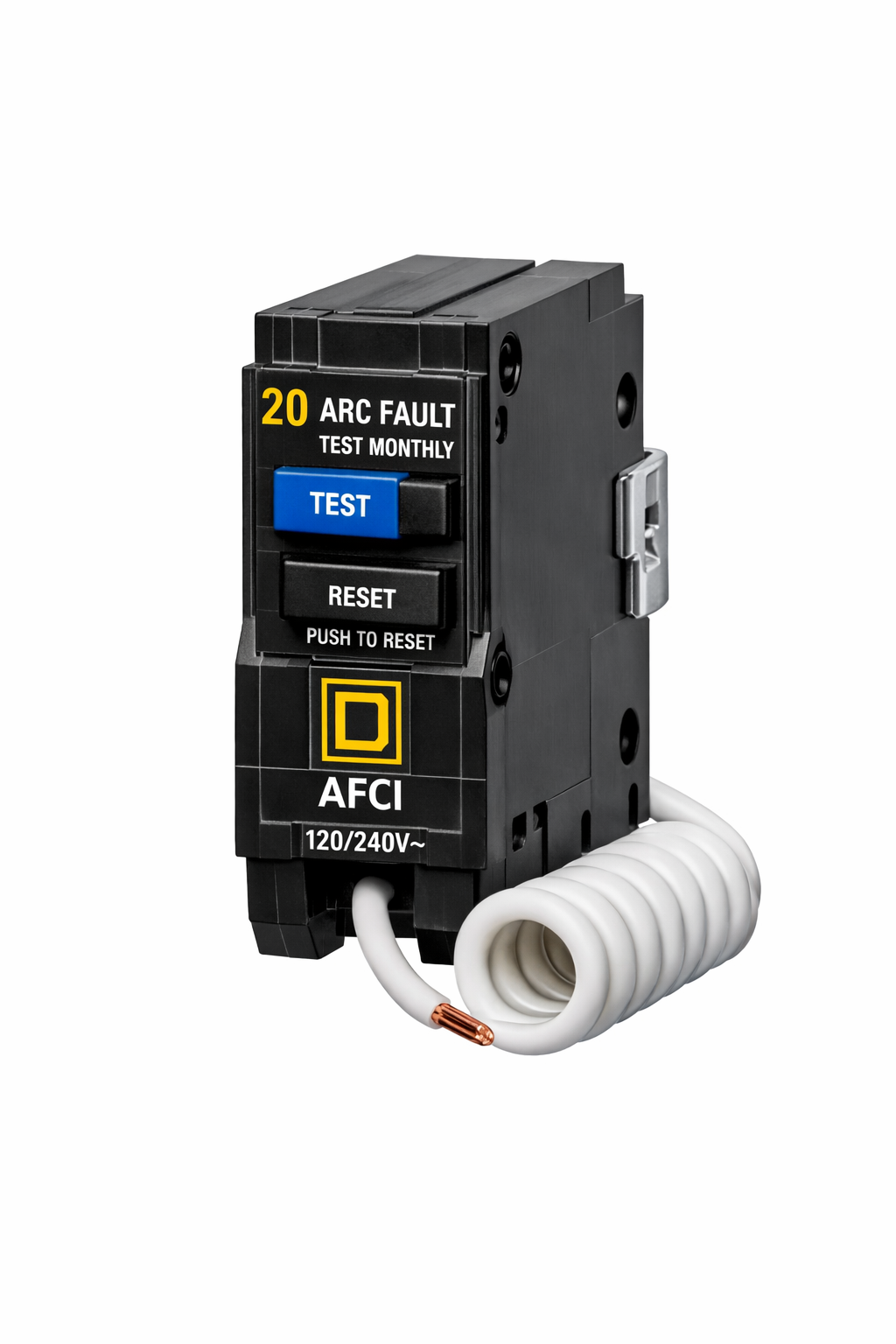
AFCI stands for Arc Fault Circuit Interrupter. Unlike a GFCI — which protects people from shock — an AFCI protects your home from fire.
Arc faults happen when electricity jumps across a gap in damaged, loose, or aging wiring. That arc generates intense heat and can ignite insulation, drywall, or wood framing — often inside a wall where you'd never see it until smoke was already billowing.
AFCI breakers are installed in your electrical panel. They continuously monitor the circuit for the signature electrical pattern of an arc fault, and trip the breaker before a fire can start.
The NEC now requires AFCI protection in bedrooms, living rooms, dining rooms, family rooms, parlors, libraries, dens, sunrooms, recreation rooms, hallways, and closets — essentially everywhere people sleep or spend time.
Homes built before 1999 almost universally lack AFCI protection. If your panel is a Square D Homeline or QO series, adding AFCI breakers is straightforward — and it's one of the most cost-effective fire prevention upgrades you can make.
GFCI vs. AFCI — What's the Difference?
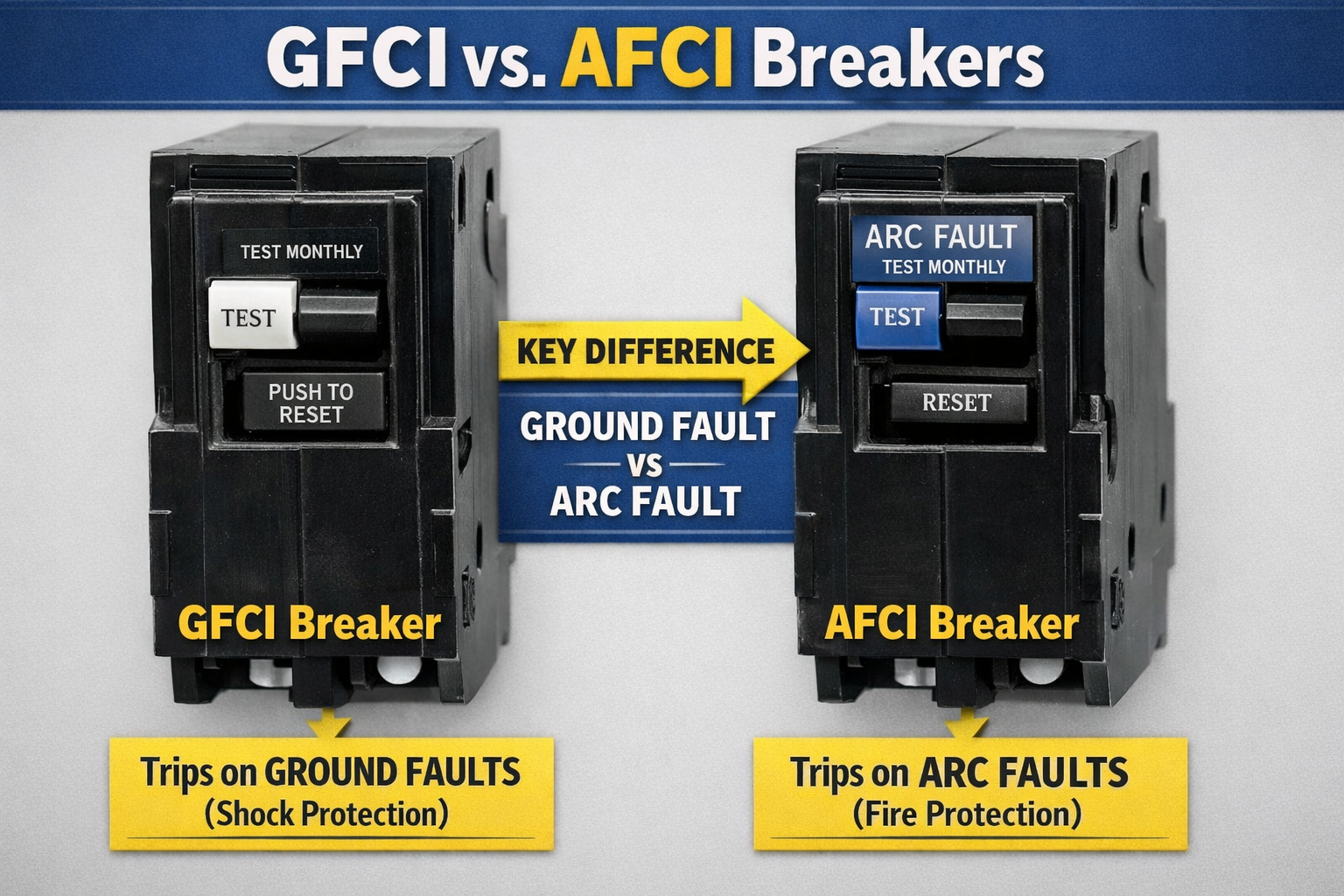
GFCI (Ground Fault Circuit Interrupter) — protects people from electric shock. Installed at outlets in wet areas. Detects ground faults and shuts off power in milliseconds. Required in kitchens, bathrooms, garages, and outdoors.
AFCI (Arc Fault Circuit Interrupter) — protects your home from electrical fires. Installed as breakers in your panel. Detects the signature pattern of arc faults in wiring. Required in bedrooms, living areas, and most occupied rooms in newer construction.
Think of GFCI as your personal protection and AFCI as your home's protection. Modern electrical codes require both — and for good reason.
Signs Your Tupelo Home Needs an Upgrade
GFCI outlets that trip frequently or won't reset
Flickering or dimming lights (possible arc fault in wiring)
Outlets or switches that feel warm to the touch
Home built before 1999 with original wiring
No GFCI outlets in bathrooms or kitchen
Square D Homeline or QO panel with standard breakers in rooms now requiring AFCI protection
The HVAC Connection — A Note from Dan
Here's something most electricians won't tell you: AFCI breakers can nuisance-trip when connected to HVAC equipment.
The startup surge from a compressor or blower motor can look like an arc fault to a sensitive breaker. If your AFCI breaker keeps tripping when your AC kicks on, it's not always a wiring problem — sometimes it's a compatibility issue between the breaker spec and the motor load.
Because I hold both HVAC and electrical licenses (License #20095), I can diagnose exactly what's happening — whether it's the wiring, the equipment, or the breaker spec itself. That's a diagnosis most single-trade contractors can't make on the spot.
Schedule a Safety Inspection
If you're not sure whether your home has proper GFCI and AFCI protection — or if outlets are tripping and you can't figure out why — give us a call.
S.I. Service Group serves Tupelo, Saltillo, Verona, Mooreville, Shannon, Guntown, Mantachie, Fulton, Pontotoc, Baldwyn, Amory, Nettleton, Booneville, Aberdeen, New Albany, Ripley, and Corinth.
Call or text: (662) 523-5514
License #20095 — Mississippi Residential and Commercial Electrical
Service-Disabled Veteran-Owned | S.I. Service Group