Gas Furnace Ignition Issues in North Mississippi
HVAC, Gas Furnace Repair, North Mississippi
Why Won't My Gas Furnace Ignite? A North Mississippi HVAC Tech Explains What We Check First
When your gas furnace won’t light on a chilly Tupelo morning, here’s exactly what a North Mississippi tech like me checks first, step by step, before we talk parts or replacement.
First Stop: The Hot Surface Igniter on a North Mississippi Gas Furnace
When I pull up on a no-heat call in the fall around Lee County or over in Corinth, and the complaint is “my gas furnace not igniting Tupelo MS,” I’m already thinking about the hot surface igniter. That’s the little piece that glows red-hot to light the gas. Most furnaces around North Mississippi use either a silicon nitride igniter or an older silicon carbide igniter.
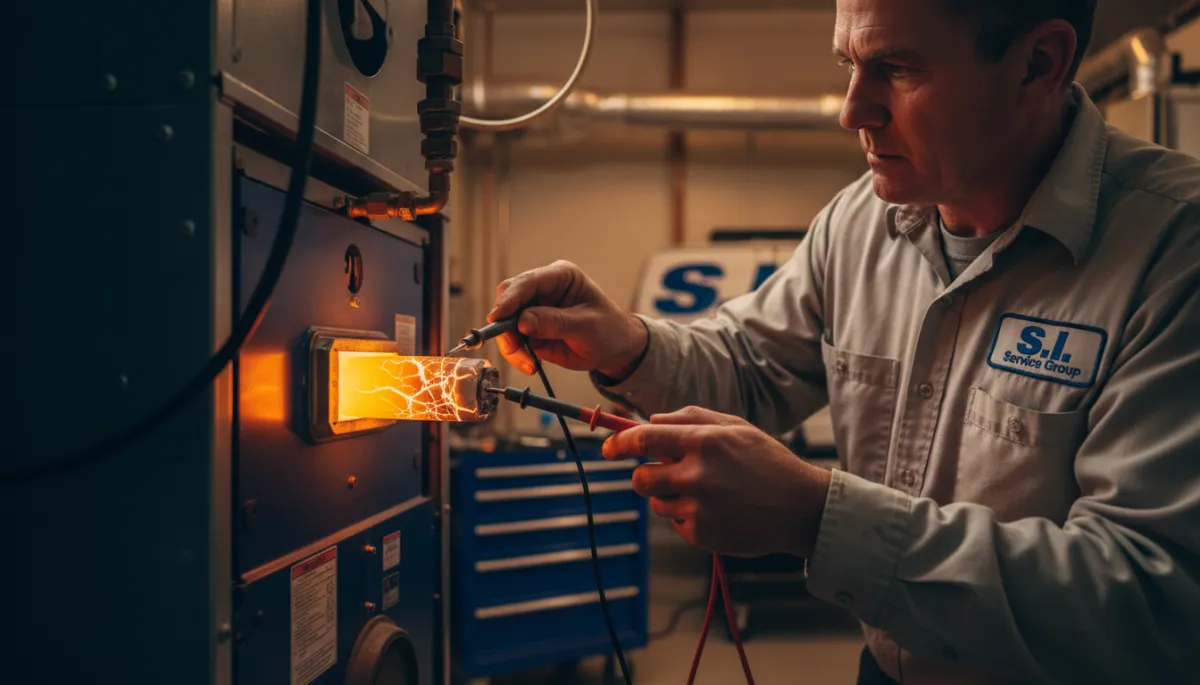
On a call, I’ll pull the burner door, kill power, and visually check that igniter. If it’s silicon carbide, I’m looking for hairline cracks along the element. Sometimes you can see a white, chalky spot or a clean break. With silicon nitride, cracks can be smaller, but you still look for any warped, burned, or broken section. If the furnace tries to start and I never see that igniter glow at all, that’s a big clue. I’ll meter it, check for 120 volts to the igniter when the board calls for heat, and that tells me if it’s the part or the control side that’s failed.
North Mississippi humidity is rough on these components. We go from long, sticky summers in Pontotoc and Monroe County to folks finally flipping the heat on in November. That furnace may have sat all summer in a damp crawlspace or attic. Moisture plus dust takes a toll on the igniter surface, especially the older silicon carbide style. That’s one reason hot surface igniter replacement North Mississippi is a pretty common ticket on my truck once the first cold front hits.
Furnace Lights, Then Shuts Off? I’m Going Straight to the Flame Sensor
The most common “furnace ignition failure North Mississippi” pattern I see is this: burners light, they run for a few seconds, then everything shuts down and tries again. That’s almost always a dirty flame sensor issue, and it’s a big one for flame sensor cleaning Tupelo HVAC calls every fall and winter across Lee, Union, and Itawamba counties.
The flame sensor is a small metal rod that sits in the burner flame. Its only job is to prove to the control board that there’s a real flame present. If that rod gets coated in carbon, rust, or oxidation, the board thinks there’s no flame and shuts the gas off for safety. Down here, our humidity speeds up that oxidation. Furnaces in New Albany or Booneville that sit all summer can build up a film on that sensor faster than in drier climates out west.
When I clean one, I pull the flame sensor out, grab a piece of fine emery cloth or a Scotch-Brite pad, and lightly clean the rod until it’s shiny again. No sandpaper that’s too aggressive, and definitely no wire brush that will gouge it. Then I wipe it off, reinstall it, and fire the furnace. Nine times out of ten, if the burners were lighting and dropping out, that simple cleaning fixes it. That’s why regular maintenance is a lot cheaper than emergency HVAC repair Tupelo calls when the temperature drops.
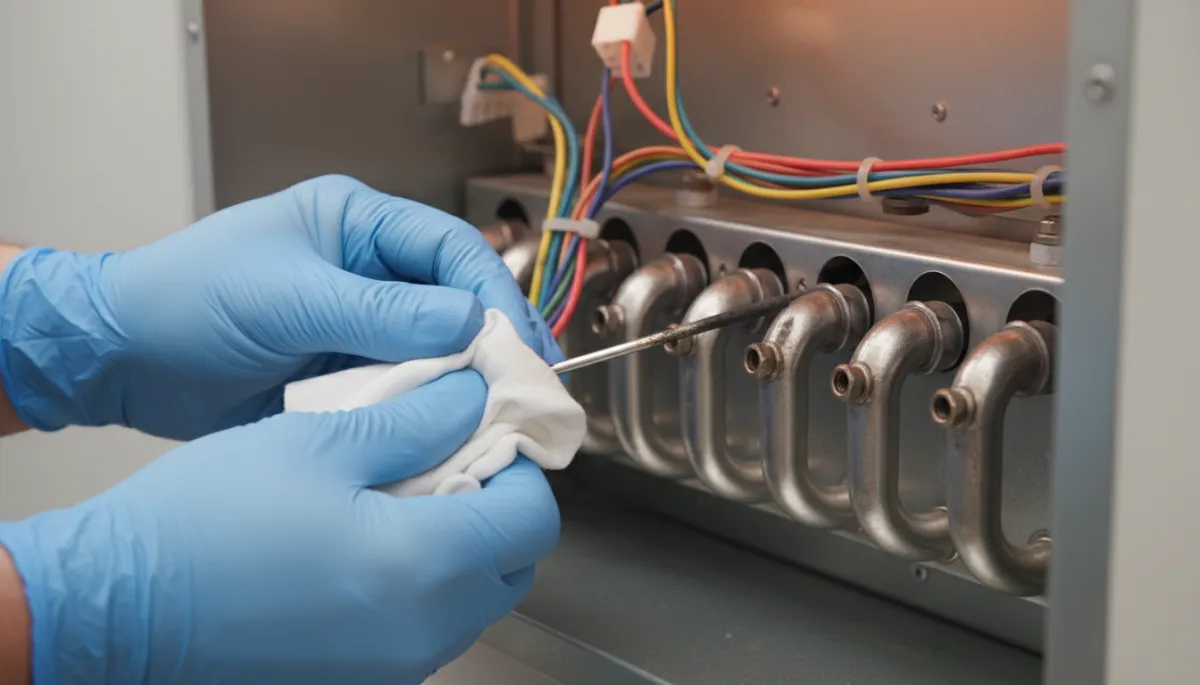
A quick flame sensor cleaning often restores safe, steady burner operation.
Draft Inducer Motor: Getting the Flue Moving Before the Gas Furnace Ignites
Before that igniter ever glows, the inducer motor (also called the draft inducer) has to come on. On a service call in Tishomingo or Chickasaw County, I’ll listen first: when the thermostat calls for heat, do I hear that small motor kick on and the fan start pulling air through the heat exchanger and flue? If not, the furnace isn’t going to let the gas valve open, and that’s by design for safety.
A failing inducer might be noisy, grinding, or just dead. Sometimes it’s seized up, sometimes the windings are gone, sometimes there’s a flue blockage. One telltale symptom is no pressure switch pull-in—the pressure switch never closes because the inducer isn’t creating the proper draft. If I don’t see that switch close when the inducer should be running, I know I’ve got to start right there before I worry about anything downstream like the igniter or gas valve.
Pressure Switch Checks: Hoses, Diaphragm, and a Trusty Multimeter
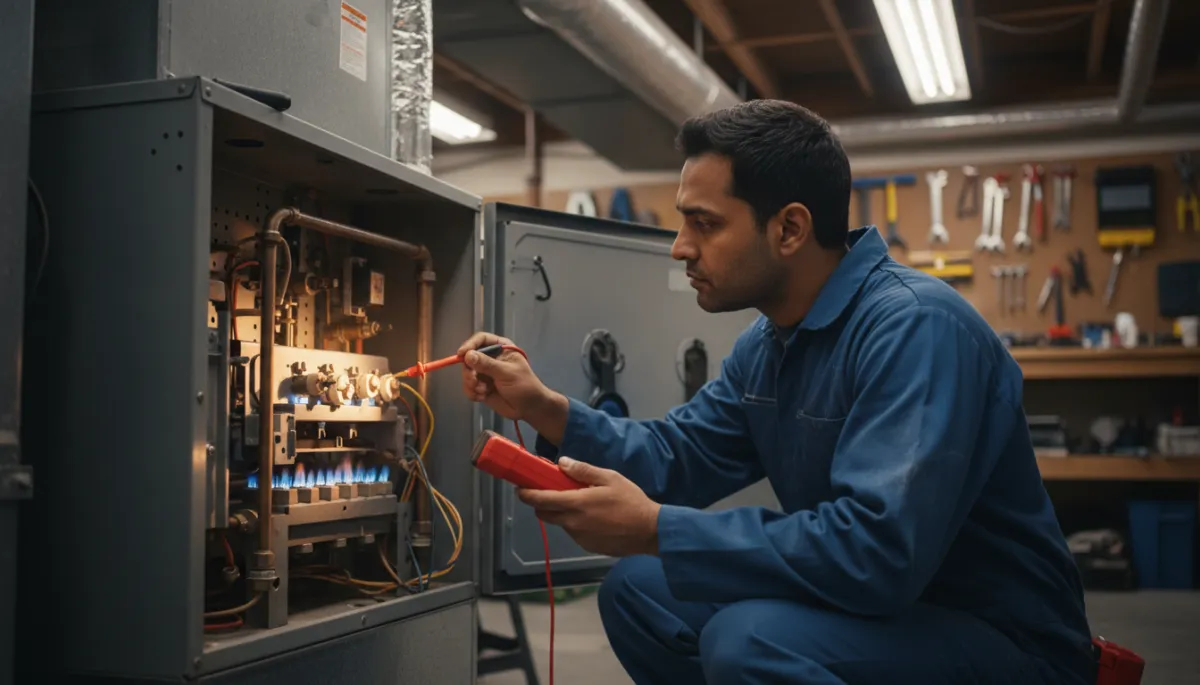
Once I know the inducer is actually running, the next thing I look at on a gas furnace not igniting Tupelo MS call is the pressure switch. That’s the little round device with one or two wires and a small rubber hose going back to the inducer housing or the flue. Its job is to prove there’s enough draft before the board allows ignition to continue.
Around North Mississippi, I see a lot of cracked or brittle rubber hoses on older equipment, especially in hot attics in Prentiss and Alcorn counties. If that hose is split, kinked, or full of water, the pressure switch may never see the proper vacuum. I’ll pull the hose, check for obstructions, and replace it if it’s questionable. Then I’ll test the pressure switch itself. A stuck diaphragm inside the switch can keep it from closing even when the draft is fine.
This is where the multimeter earns its ride. I’ll check continuity across the pressure switch terminals with the inducer off (it should be open), then again with the inducer running (it should close). If the meter tells me it never closes, but I know I’ve got good draft and a good hose, that pressure switch is suspect. The control board is waiting on that signal; without it, the furnace won’t move on to ignite.
Gas Valve: The Last Thing I Blame for Furnace Ignition Failure
A lot of homeowners figure, “If my furnace won’t light, it must be the gas valve.” In reality, that’s one of the last parts I condemn on a furnace ignition failure North Mississippi call. By the time I’m truly looking at the gas valve, I’ve already proven the inducer, pressure switch, igniter, and flame sensor are all doing what they’re supposed to do, and the control board is actually sending power to the valve when it should.
I’ll verify gas supply to the furnace, make sure the manual shutoff isn’t closed, and check for proper voltage at the gas valve when the ignition sequence calls for it. If I’ve got power to the valve, but I never get gas flow and there’s no other safety cutting it out, that valve may be stuck or failed internally. At that point, we’re talking about replacing the gas valve, and I’ll walk you through cost, parts availability, and whether it makes sense based on the age of the system in your Tupelo or Corinth home.
Control Board and Fault Codes: The Furnace’s Storyteller
Modern furnaces in places like New Albany, Booneville, and across our 10-county service area usually have a control board with a blinking LED. That little light is your furnace trying to tell us what went wrong. When I show up for HVAC repair Tupelo calls, I always look through the sight glass on the blower door and count the blinks. Two blinks might mean pressure switch, three might mean igniter, four might mean limit switch—every brand has its own chart, and I keep those handy.
The control board handles the whole ignition sequence: inducer on, pressure switch prove, igniter warm-up, gas valve open, flame prove, blower on. If any step fails, the board usually logs it. On some older units without clear codes, I’ll still test the board by verifying outputs: is it sending power to the inducer, to the igniter, to the gas valve at the right times? If not, and all the field components check out, then we may have a control board that’s failing under load or just plain aged out in our humid Mississippi environment.
When to Call S.I. Service Group for Gas Furnace Repair in North Mississippi
If your gas furnace won’t ignite in Tupelo, Corinth, Booneville, New Albany, or anywhere in Lee, Pontotoc, Union, Prentiss, Alcorn, Tishomingo, Monroe, Itawamba, Chickasaw, or Tippah counties, you don’t have to guess. We handle everything from hot surface igniter replacement North Mississippi to thorough flame sensor cleaning Tupelo HVAC maintenance and full ignition diagnostics. We’ve seen just about every way a furnace can refuse to light, from a $5 cracked hose to a control board that only fails on the coldest nights.
The sooner we look at it, the more likely it is a simple fix instead of a full breakdown. If your furnace is short-cycling, lighting then shutting off, or not lighting at all, that’s your cue to get a real tech out there before you’re relying on space heaters. At S.I. Service Group, we treat every no-heat call like it’s our own family’s house: check the basics first, prove each part, and only recommend what you actually need to get safe, reliable heat back on.