Why Does My Furnace Keep Shutting Off After a Few Minutes? A Tupelo HVAC Tech Explains
HVAC, Furnace Repair, Fall Heating Tips
Why Does My Furnace Keep Shutting Off After a Few Minutes? A Tupelo HVAC Tech Explains
I’m Dan, owner and lead technician at S.I. Service Group here in Tupelo, and this week the calls started rolling in right on schedule. We had a few frosty mornings, folks fired up the furnace for the first time since last winter, and now it runs for a couple of minutes, shuts off, and leaves the house cold. If that’s your story, take a breath. In most cases it’s something I can explain in plain English and, a lot of the time, something you can partly check yourself before anybody turns a wrench.
The First-Cold-Morning Call I Get Every Single Fall
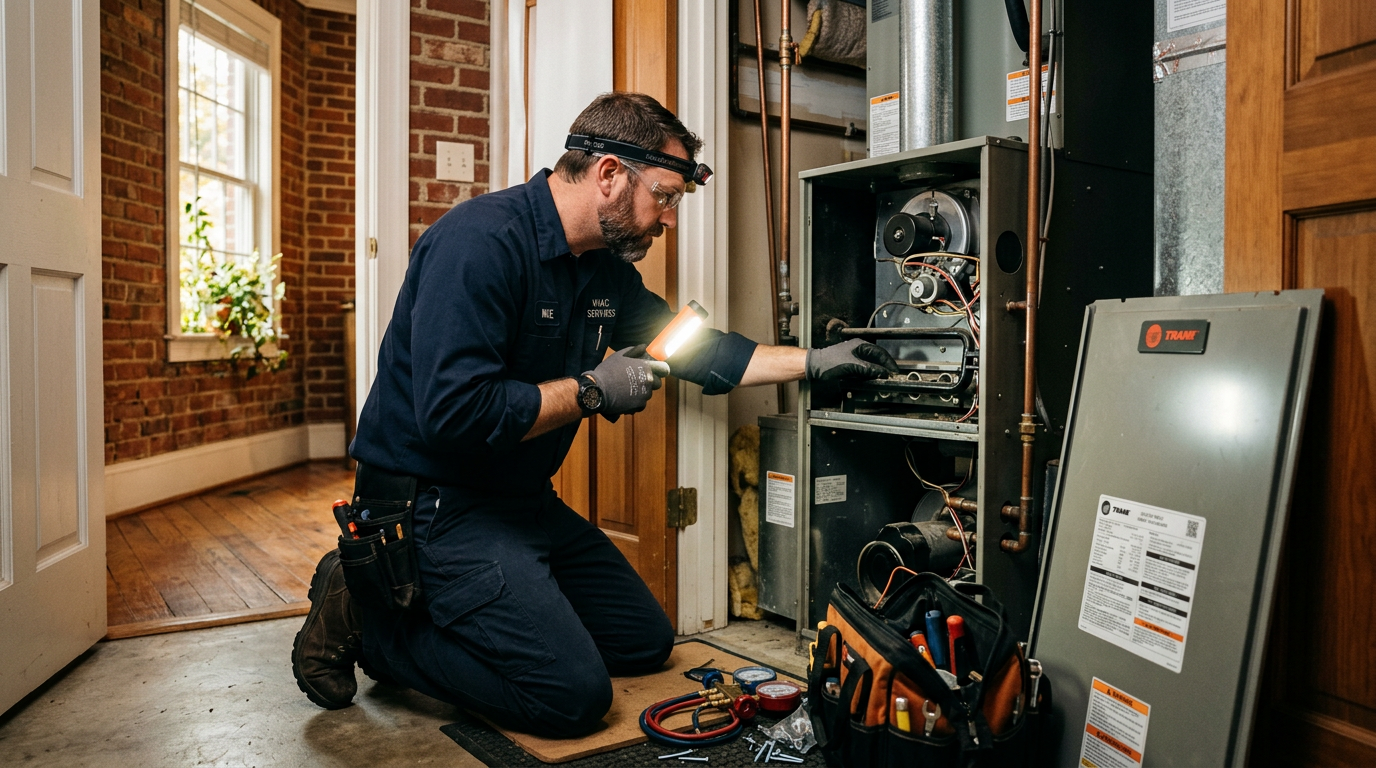
A few Octobers back I got a call from a lady in Saltillo at about 6:30 in the morning. It was 36 degrees outside. She said, “My furnace comes on, I hear it whoosh, and then it just quits. Does it for about ten minutes, then tries again.”
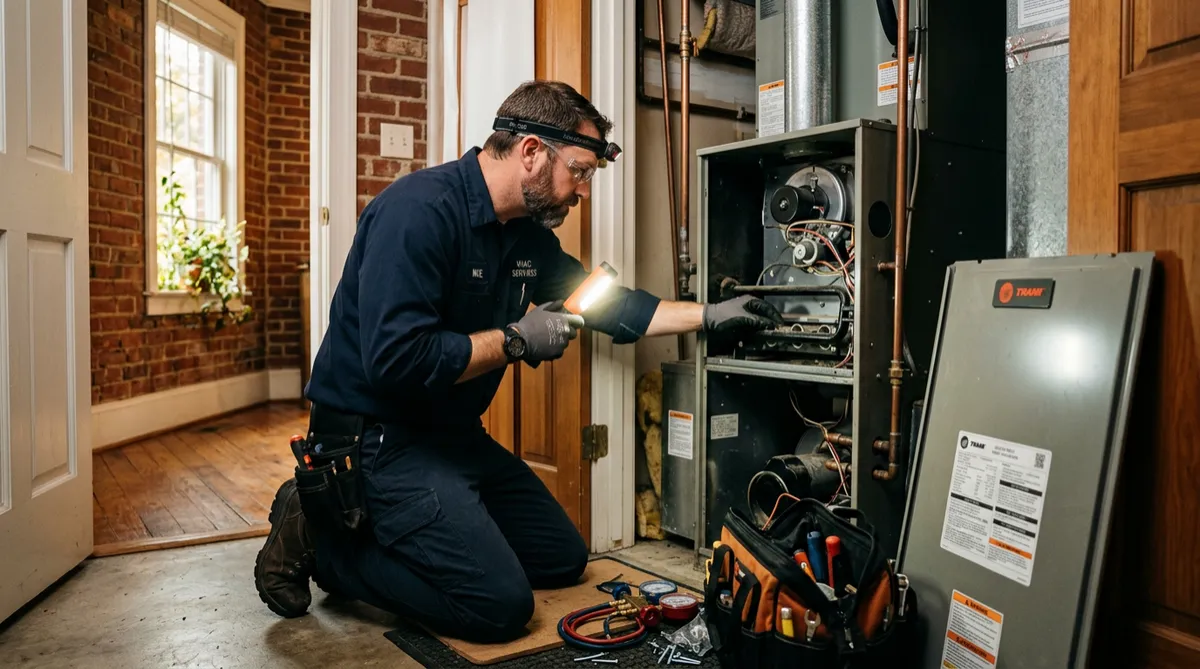
When I got there, the furnace wasn’t dead at all. It was lighting, running about ninety seconds, then shutting itself down on purpose. The flame sensor had a coat of gray crud on it, so the control board couldn’t “see” the flame and shut the gas off as a safety move. Five minutes of cleaning and she had heat again. That’s the thing about a furnace that keeps shutting off: nine times out of ten the furnace is protecting itself, and it’s telling you something. You just have to know how to read it.
What Your Furnace Is Doing When It Shuts Off Early
Modern gas furnaces run through a strict checklist every time the thermostat calls for heat. The inducer motor starts and pulls air through the system. A pressure switch confirms that air is moving. The igniter glows, the gas valve opens, the burners light, and the flame sensor has to prove there’s a real flame. Once that’s happening, the blower waits for the heat exchanger to warm up and then pushes warm air through your ducts.
If any step in that chain fails, or if the furnace gets too hot, the control board shuts everything down. That’s what homeowners call “short cycling” or a furnace that keeps turning off. It’s annoying, but those safety switches are the reason a furnace doesn’t cause a fire or fill your house with carbon monoxide. So the question isn’t “why is it shutting off?” as much as “which safety is tripping, and why?” Here are the five culprits I find most often around Tupelo, Verona, and Plantersville.
Cause #1: A Clogged Air Filter Is Making the Furnace Overheat
I’m starting with the filter because it’s the most common problem I see and the cheapest to fix. When the filter is packed with dust, pet hair, and the lint that comes with a Mississippi fall, the blower can’t move enough air across the heat exchanger. The heat has nowhere to go, the temperature inside the furnace climbs, and the high-limit switch trips to shut the burners off. The blower keeps running to cool things down, then the furnace tries again. Cycle after cycle.
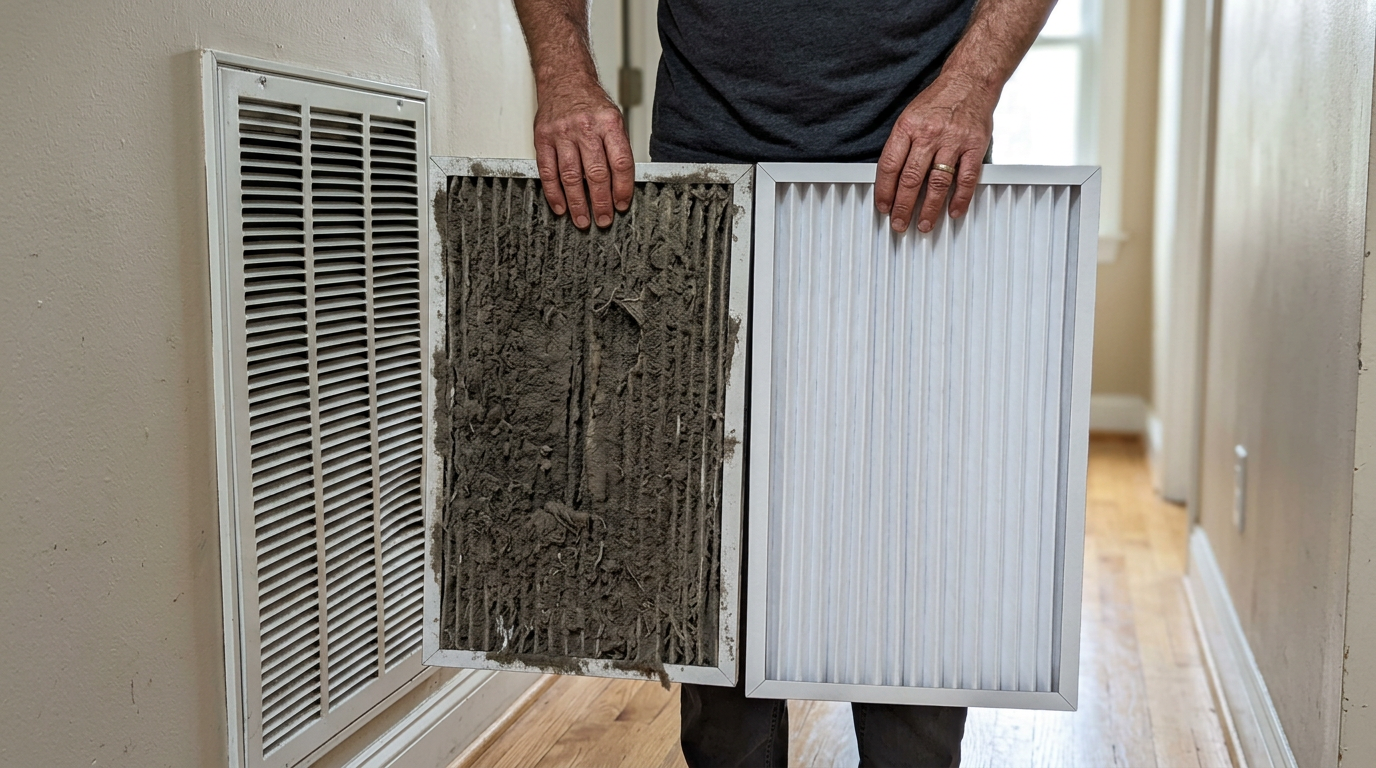
I was in Mooreville not long ago where a fella told me his furnace had been “acting up for a month.” I pulled the filter out of the slot and it looked like a gray felt blanket. He hadn’t changed it since last winter, and with two dogs and a gravel driveway, that filter was done in about five weeks. We put in a fresh one, the furnace ran a full cycle with no problem, and the whole visit took less than ten minutes.
Real talk: check your filter monthly during heating season. If you can’t see light through it, replace it. A bad filter also strains your blower motor and drives up your power bill, so it costs you twice.
Cause #2: A Dirty Flame Sensor Can’t Prove There’s a Fire
This is the Saltillo problem I told you about, and it’s the number-one reason I get called for a furnace that lights and then shuts off within a few seconds to a couple of minutes. The flame sensor is a thin metal rod that sits in the burner flame. It uses a tiny electrical signal to confirm the burner is lit. Over time it picks up a film of carbon and oxidation, and once that film is thick enough the signal gets too weak. The board thinks the flame went out and closes the gas valve to keep things safe.
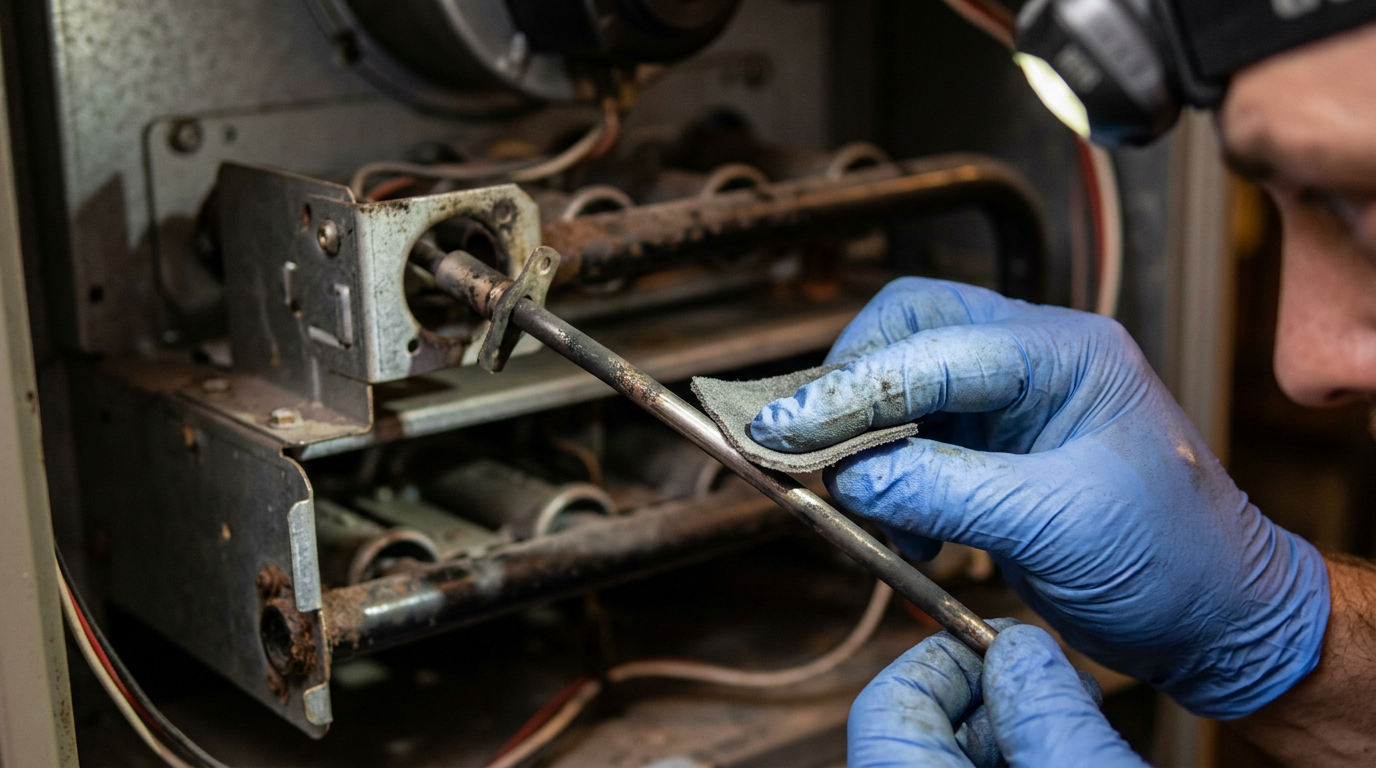
Cleaning it properly means turning off power and gas, carefully removing the sensor, and lightly polishing the rod with a fine abrasive pad. Not sandpaper, not a file, and definitely not a wire brush, because scratches make it collect buildup faster. If the rod is pitted or the sensor is cracked, we replace it, which is still a modest repair compared to a major component. If you’re not comfortable working around gas appliances, this is a good one to hand to a pro for furnace repair.
Cause #3: Blocked Flue, Failed Pressure Switch, or a Plugged Condensate Drain
If your furnace tries to start but quits before it even lights, the problem is often venting. The pressure switch is there to confirm the inducer is pulling exhaust out the flue. If the vent pipe is blocked, if a switch hose is cracked or full of water, or if the switch itself is worn out, the board won’t let the burners fire. I’ve pulled wasp nests, leaves, and even a bird’s nest out of vent terminations on homes in Mantachie and Fulton, especially after a fall of high winds.
High-efficiency furnaces, the ones with white PVC pipes, add another wrinkle: a condensate drain. These units make water as they burn, and if the drain line or trap clogs with sludge, a safety switch can shut the furnace down. That one I see a lot in homes where the furnace sits in an attic or crawlspace and nobody’s looked at it in years. Don’t reach into the vent system yourself. Exhaust gases are nothing to play with, and it’s the kind of problem where a quick inspection from a tech who does HVAC repair every day pays for itself.
Cause #4: The Thermostat Is Telling the Furnace to Quit
Sometimes the furnace is perfectly healthy and the thermostat is the troublemaker. Dead batteries, a loose wire, an old mercury unit, or a thermostat mounted over a heat source or in direct sun can make it think the house is warmer than it is. I had a call in New Albany where the thermostat sat on a wall right above a floor lamp and a TV. The tiny bit of heat from those electronics fooled it into shutting the furnace off while the rest of the house sat at 62.
- Replace the thermostat batteries if it has them. It’s a two-dollar fix that solves more calls than you’d think.
- Make sure the thermostat is set to HEAT with the target temperature a few degrees above the room temperature.
- Look for drafts, lamps, TVs, or sunlight hitting the thermostat itself.
- If the screen is blank or flickering, there may be a wiring or transformer problem, and that’s time for a technician.
Cause #5: A Cracked Heat Exchanger or an Aging Furnace
This is the one I don’t want you to ignore. If the high-limit switch keeps tripping even with a clean filter and open vents, or the furnace is 15 to 20 years old and showing multiple symptoms, the heat exchanger may be cracked or restricted. A cracked heat exchanger can leak combustion gases, including carbon monoxide, into your airflow. If you smell a sharp or unusual odor, your CO detector goes off, or anyone in the house has headaches, nausea, or dizziness while the heat is running, shut the furnace off, open some windows, get everyone outside, and call for help right away.
I’ll never forget a call outside Amory where the homeowner had been resetting the furnace for two weeks because it “kept shutting off.” The filter was fine. When I pulled the burner assembly and looked at the heat exchanger with a camera, I found a crack. We red-tagged the furnace that same afternoon. That’s the day I wished I could shake the hand of whoever convinced that family to buy a battery-backed carbon monoxide detector.
What You Can Safely Check Yourself Before You Call
I’m all for homeowners handling the easy stuff. Here’s the short list I’d walk you through over the phone.
- Check the thermostat. Fresh batteries, set to HEAT, and set several degrees above room temperature.
- Check the filter. If it’s dirty, swap it for a new one of the correct size and make sure the arrow points toward the furnace.
- Open your vents and returns. Make sure nothing is sitting on top of or in front of them.
- Look at the outdoor vent and intake pipes. On a high-efficiency furnace, confirm nothing is covering the PVC terminations on the outside wall, like leaves, snow, or a bird’s nest. Look, don’t poke.
- Check the furnace switch and breaker. The service switch near the unit can get bumped, and a tripped breaker can cause odd cycling.
- Watch the furnace and listen. Note how long it runs and whether it lights. That info helps your tech a lot.
What Not to Do When Your Furnace Keeps Shutting Off
- Don’t bypass a safety switch. I’ve seen homeowners jumper a limit or pressure switch to “make it run.” That’s how you end up with a fire or a CO problem.
- Don’t keep hitting the reset button. One reset is fine. If it trips again, something is wrong.
- Don’t ignore a gas smell. If you smell gas, leave the house and call your gas company or 911 from outside.
Repair or Replace? Here’s How I Talk It Through With Customers
Most of the time a furnace that’s shutting off needs a cleaning or a small part, and I’m not going to tell you to replace a system that has plenty of life left. A good rule of thumb I use: if the repair is minor and the furnace is under about 15 years old, fix it. If it’s older, has a cracked heat exchanger, or you’ve been putting repair money into it every winter, it’s worth running the numbers on a new one.
The best thing you can do for any furnace is get it checked before the real cold arrives. A yearly tune-up with HVAC maintenance catches dirty sensors, weak igniters, and failing switches while it’s still 60 degrees out, not at 2 a.m. on the coldest night of January. If you have a heat pump with electric backup instead of a gas furnace, the same logic applies, and our heat pump repair techs can look at that too.
Frequently Asked Questions About a Furnace That Keeps Shutting Off
1. Why does my furnace turn on and then off after a few minutes?
Most often it’s a safety shutdown. A dirty filter can make the furnace overheat and trip the high-limit switch. A dirty flame sensor can make the board think the flame went out. A blocked vent or bad pressure switch can also stop the cycle. The furnace is trying to protect your home, so it’s worth finding out which safety is triggering.
2. Is it dangerous if my furnace keeps cycling on and off?
It can be. A dirty filter is a nuisance, but a cracked heat exchanger or blocked flue can release carbon monoxide. If you notice unusual smells, soot, or CO alarm activity, turn the furnace off, get outside, and call for help immediately.
3. How often should I change my furnace filter?
For a standard one-inch filter, I tell folks to check monthly and replace about every one to three months. Homes with pets, dust, or construction nearby may need it more often.
4. How much does it cost to fix a furnace that keeps shutting off?
It depends on the cause. A filter swap costs almost nothing, a flame sensor cleaning or replacement is usually one of the more affordable service calls, and parts like pressure switches or control boards cost more. I always diagnose first and give you a clear price before I do any work, so there are no surprises.
5. Can I reset my furnace myself?
You can try one reset: turn the thermostat off, wait a minute, and turn it back on, or flip the furnace switch off and on. If it shuts down again, don’t keep cycling it. Repeated shutdowns mean something is wrong, and a technician should take a look.
Conclusion: A Furnace That Quits Early Is Trying to Tell You Something
A furnace that keeps shutting off after a few minutes is almost always protecting itself. Start with the easy stuff: thermostat batteries, a fresh filter, and open vents. If that doesn’t do it, you’re likely looking at a dirty flame sensor, a venting issue, or a switch that needs attention, and those are quick fixes for a trained tech. The thing I never want you to do is override a safety control or ignore a CO warning sign. Whether you’re in Tupelo, Saltillo, Verona, Plantersville, Mooreville, Mantachie, Fulton, Amory, or New Albany, take care of it before the real cold hits and you’ll stay warm all winter.
Furnace Not Staying On? Call S.I. Service Group Today
If your furnace is cycling off, blowing cold air, or just not keeping up, don’t wait for a cold snap to make it worse. My crew and I handle furnace repair, HVAC repair, and HVAC maintenance all over Northeast Mississippi, and we’ll tell you straight what’s wrong and what it’ll take to fix it. Give us a call at 662-523-5514 and we’ll get a technician headed your way.
Call S.I. Service Group: 662-523-5514