Is It Safe to Use an Extension Cord or Power Strip for a Space Heater or Christmas Decorations? A Tupelo Electrician Explains
Residential Electrical Safety, Winter & Holiday Season
Is It Safe to Use an Extension Cord or Power Strip for a Space Heater or Christmas Decorations? A Tupelo Electrician Explains
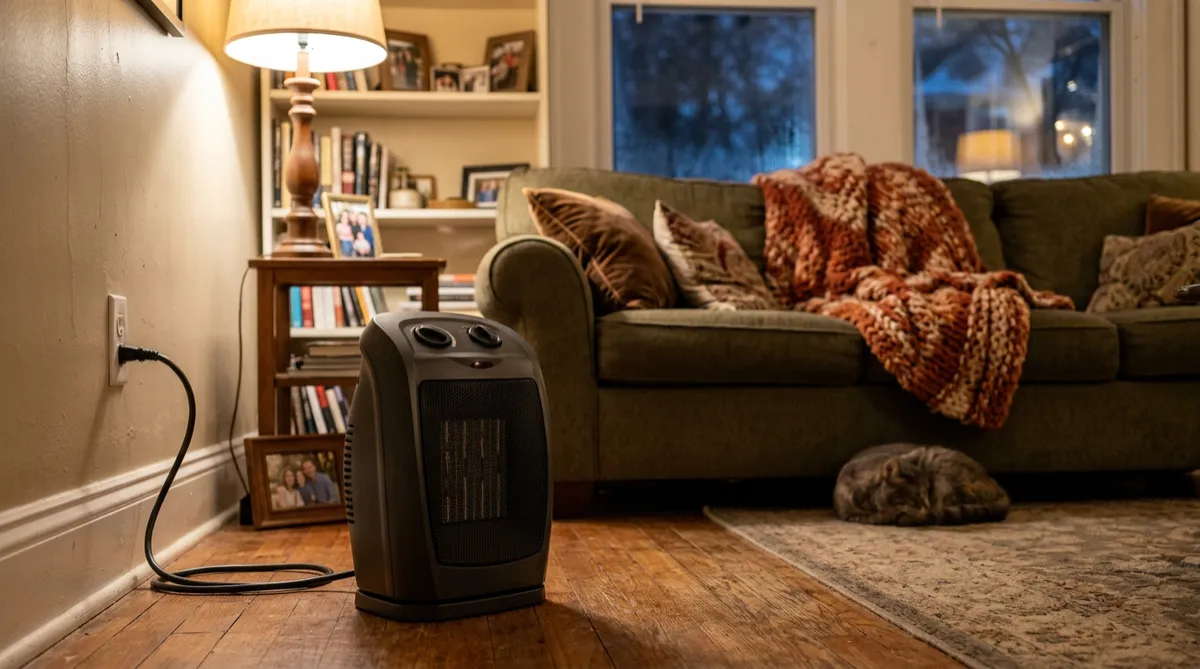
I'm Dan Southwick with S.I. Service Group in Tupelo, and the first real cold snap of the year always starts the same way: my phone lights up with people asking if they can run a space heater off an extension cord. The short answer is no. A space heater should be plugged directly into a wall outlet, never into a power strip, and almost never into an extension cord. Christmas lights are a different story, because most modern LED strands draw very little power, but even they need the right cord in the right place. Let me walk you through what's actually happening inside that cord, what I find on service calls from Tupelo to Fulton, and what to do instead.

The Short Answer: Heaters Go Straight Into the Wall
Almost every portable space heater sold today pulls about 1,500 watts on its high setting. On a 120-volt household circuit, that works out to roughly 12.5 amps. That is a huge, continuous load, more than a toaster, a hair dryer, or a vacuum cleaner, and it doesn't cycle off after a couple of minutes. It just keeps pulling that current for hours while you watch television or sleep.
Now think about what that means for the cord. The wall wiring in your home was sized, installed, and inspected to carry that kind of load. The orange cord you grabbed at the hardware store, or the one you've had in the garage since 2009, was probably not. Every extra plug connection in the path, from the wall to the strip to the cord to the heater, adds resistance. Resistance makes heat. When that heat builds up in a thin cord or a loose plug, you get a melted connection, and in the worst cases, a fire.
Why Cords Cook Themselves: The Math Behind Melted Plugs
Current flowing through a wire creates heat, and a thinner wire makes more of it. That is why cord gauge matters so much.
Wire gauge: smaller number, bigger wire
Extension cords are labeled with an AWG number, which stands for American Wire Gauge. It runs backward from what you'd expect: a 16-gauge cord is thinner than a 14-gauge cord, and a 12-gauge cord is thicker still. The cheap, thin, light-duty cords that come in bright colors at the dollar store are typically 16-gauge or even 18-gauge, and many are only rated for 10 amps or less. Pair that with a long run and a 12.5-amp heater, and the cord is being asked to do a job it was never built for.
Length makes it worse. A longer cord means more resistance, which means more heat and more voltage drop. A 50-foot, 16-gauge cord feeding a heater is about the worst combination I can think of.
| Cord Type | Typical Rating | Good For | Space Heater? |
|---|---|---|---|
| 16-gauge light-duty cord | 10 to 13 amps, often less when long | Lamps, phone chargers, fans, LED holiday lights | No |
| 14-gauge medium-duty cord | About 15 amps | Vacuum, power tools, a TV setup | Not recommended |
| 12-gauge heavy-duty cord (short) | About 20 amps | Power tools, air compressor, temporary jobs | Only as a last resort, short and fully uncoiled |
| Power strip or surge protector | Usually 15 amps total, built for electronics | Computers, TVs, chargers | Never |
| Wall outlet on its own circuit | 15 or 20 amps, built into the wall | Heaters and other heavy loads | Yes, this is the right answer |
What I've Pulled Out of Walls and Off Floors
Numbers only go so far, so here are a few stories from the field, with details changed.
The recliner in Saltillo. A homeowner called because her living room smelled like hot plastic. A small heater sat behind her recliner, fed by a thin tan cord that ran about fifteen feet across the room. The plug at the wall had gone soft and brown, and the outlet face was discolored. She'd had that setup running every evening for three weeks. The cord had been warm for days and she thought that was normal. It wasn't. Another few nights and we'd have been talking about a fire instead of a repair.
The light chain in Verona. A fellow had a gorgeous display going, with strands plugged into strands plugged into a power strip plugged into another power strip. His breaker kept tripping, and he assumed the breaker was bad. The breaker was doing its job. We pulled it all apart, put the display on a couple of properly rated outdoor cords, added a timer, and moved part of the load to another outlet. Same lights, same look, no more tripping.
The back bedroom in Mooreville. A couple used a space heater in a back bedroom because the vents in that room never put out much heat. They ran it off a power strip along with a phone charger and a lamp. The strip's switch had started to crackle. Strips like that are not built for a heater. Once we looked at the room, we found the real issue: one outlet on the whole wall, shared with the lights. We added a new outlet and looked at the ductwork problem separately.
The workshop in Mantachie. A guy with a garage workshop ran a heater, a shop light, and a bench grinder off one 100-foot extension cord from the house. His lights dimmed whenever the heater cycled, which is a sign the voltage is sagging. A dedicated circuit in that garage fixed it for good and made the shop safer to work in.

Every one of those calls started with someone saying, "It's just an extension cord." And every one ended with me saying, "The cord isn't the problem. The setup is."
Power Strip vs. Surge Protector vs. Extension Cord
These three get lumped together, but they do different jobs.
- Extension cord: Just a longer path from the outlet to the device. It adds length and nothing else. It's the simplest thing in the bunch and the one people misuse the most.
- Power strip: Gives you more places to plug in, but offers no protection. It's a splitter with a switch, and it's rated for the total of everything plugged in, usually 15 amps.
- Surge protector: A power strip with surge protection built in. It's great for TVs, computers, and game consoles, and it still isn't meant for heaters, space-heating appliances, or anything that makes heat. If a surge protector's protection is used up, it often looks perfectly normal and just stops protecting you.
The golden rule I give every customer: never plug a power strip into another power strip, and never plug a power strip into an extension cord. This is called daisy-chaining, and it's one of the most common causes of overloaded outlets I see across Tupelo, Plantersville, and Amory. If you need more outlets in a room, you need more outlets in the wall, not more layers on the floor.
Christmas Lights, Inflatables, and the Outdoor Outlet
Good news first: holiday lights are a much lighter load than a heater. A strand of LED lights uses a tiny amount of power, so you can usually connect several strands end to end, as long as you follow the manufacturer's limit on the box. Older incandescent strands draw a lot more, so be more careful with those.
Where people get into trouble is the connections. Here are the things I'd check before the decorations go up this year:
- Use outdoor-rated cords outside. Look for a "W" on the cord jacket or the words "suitable for outdoor use." Indoor cords break down in sun, rain, and cold.
- Keep connections off the ground. Plug-to-plug connections that sit in wet grass or puddles are a shock hazard. A weatherproof cord cover or a simple plastic box keeps them dry.
- Use a GFCI-protected outlet. Outdoor outlets should be GFCI protected, which cuts power in a fraction of a second if current leaks where it shouldn't. If your outdoor outlet doesn't trip when you press the test button, call us.
- Use an in-use cover. That's the bubble-shaped cover that lets you leave a cord plugged in while keeping rain out of the outlet.
- Add a timer. It saves power and keeps lights from running all night.

Warning Signs a Cord or Outlet Is Already in Trouble
Cords and outlets almost always warn you before they fail. You just have to know what to look for. Stop using the device, unplug it if it's safe to do so, and call a licensed electrician if you notice any of these:
- A plug or cord that feels warm or hot to the touch
- Brown or black discoloration on the plug, the outlet, or the faceplate
- A burning or hot-plastic smell, even a faint one
- Plugs that fit loosely or fall out of the outlet
- Crackling, buzzing, or sizzling sounds
- A breaker that trips every time the heater or lights come on
- Lights that dim or flicker when something turns on
- A cord with cracked, frayed, or flattened insulation
Why Your House Doesn't Have Enough Outlets
Here's the thing most people don't realize. The reason you're reaching for an extension cord is rarely your fault. Many homes built from the 1960s through the 1990s around Tupelo, New Albany, Fulton, and the smaller communities nearby were wired for a different lifestyle. One or two outlets per room was normal. Nobody was running a heater, a TV, a gaming system, a phone charger, and a fan in the same bedroom.
On top of that, those outlets are often on shared circuits. A bedroom, a hallway, and the lights in the next room might all be on one 15-amp breaker. Add a 12.5-amp heater and you've left almost no room for anything else, which is why breakers trip and cords overheat in the same houses over and over.
The real fix isn't a better cord. It's more capacity in the wall. Here's what we typically recommend:
- Add outlets where you actually use them, so you don't need cords crossing the room.
- Add a dedicated circuit for a spot that regularly needs a heater, a workshop, a window unit, or other heavy equipment.
- Upgrade to GFCI outlets in kitchens, baths, garages, laundry rooms, and outside.
- Check the panel to be sure it has room and is in good shape before adding load.

Is the House Cold Because the Heat Isn't Working?
Sometimes the space heater is a symptom. If you're running one because the furnace or heat pump isn't keeping up, or one room never warms up, the heater is just covering a bigger problem. We're a dual-licensed shop, so our techs can look at that side too. If your system needs attention, check out our HVAC repair service. Fixing the heat is almost always safer and cheaper than living on a space heater all winter.
When to Call a Licensed Electrician
Some of this you can handle yourself, like replacing a frayed cord or moving a heater to a wall outlet. Some of it needs a professional. Call us when:
- An outlet is discolored, hot, loose, or smells like burning
- Your breaker trips whenever you run a heater or a string of lights
- You want a new outlet or a dedicated circuit for a heater, a workshop, or a holiday display
- Your outdoor outlet has no GFCI protection or doesn't reset
- Your home has only two-prong outlets or just a couple of outlets per room
If you're in town, our Tupelo electrician team handles these calls every week. We also serve homeowners as an electrician in Fulton and as an electrician in Mantachie, and our crews regularly work in Saltillo, Verona, Plantersville, Mooreville, Amory, and New Albany. You can see the full list on our electrical services page.
Frequently Asked Questions
Can I plug a space heater into an extension cord?
The safest answer is no. A heater should go directly into a wall outlet. If you're in a true emergency, use the shortest, heaviest cord you have, a 12-gauge cord rated for at least 15 amps, keep it uncoiled, and check it often for heat. Then call an electrician about adding an outlet.
Can I plug a space heater into a power strip or surge protector?
No. Power strips and surge protectors are built for low-power electronics. A heater can overload the strip's internal wiring, switch, and plug long before the breaker trips.
What size extension cord do I need for a space heater?
A 1,500-watt heater draws about 12.5 amps, so you'd need a heavy-duty 12-gauge cord, as short as possible. Even then, a wall outlet is better. The cord should never feel warm.
How many strands of Christmas lights can I connect together?
It depends on the lights. LED strands often allow dozens of strands end to end, while older incandescent strands may allow only three or four. The limit is printed on the box or the plug tag, so follow it.
Is it safe to leave Christmas lights on all night?
LED lights generate very little heat, but it's still smarter to use a timer. Turn off lights when you leave the house or go to bed, especially on a dry tree and especially with older incandescent strands.
Conclusion
An extension cord feels like a harmless quick fix, and for a lamp or a strand of LED lights, it usually is. But a space heater is one of the most demanding things you'll plug into your home this winter, and it deserves a real outlet. If you keep reaching for cords, power strips, or adapters, your house is telling you it needs more outlets or more capacity. Listen to that. It's a lot cheaper to add an outlet than to repair a fire. From Tupelo to Saltillo, Verona, Plantersville, Mooreville, Mantachie, Fulton, Amory, and New Albany, we've helped neighbors fix this exact problem, and we'd be glad to help you before the holidays get busy.
Need an Electrician Before the Holidays? Call S.I. Service Group
If you've got a hot plug, a tripping breaker, or a room that needs more outlets, don't wait for a bigger problem. Call S.I. Service Group at 662-523-5514 and let a licensed local electrician take a look. You can also learn more about our electrical services and book a visit today.