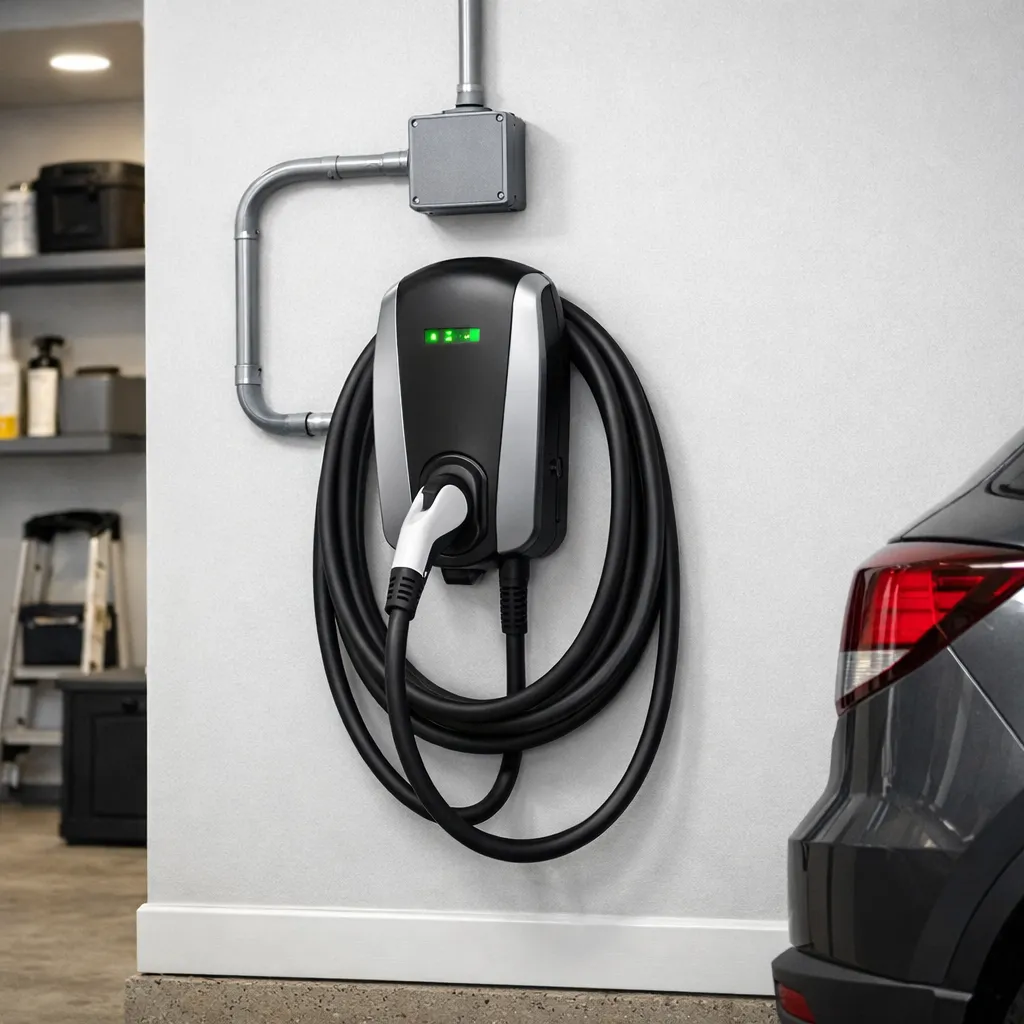
EV Charger Installation in Tupelo MS — What You Need Before You Plug In
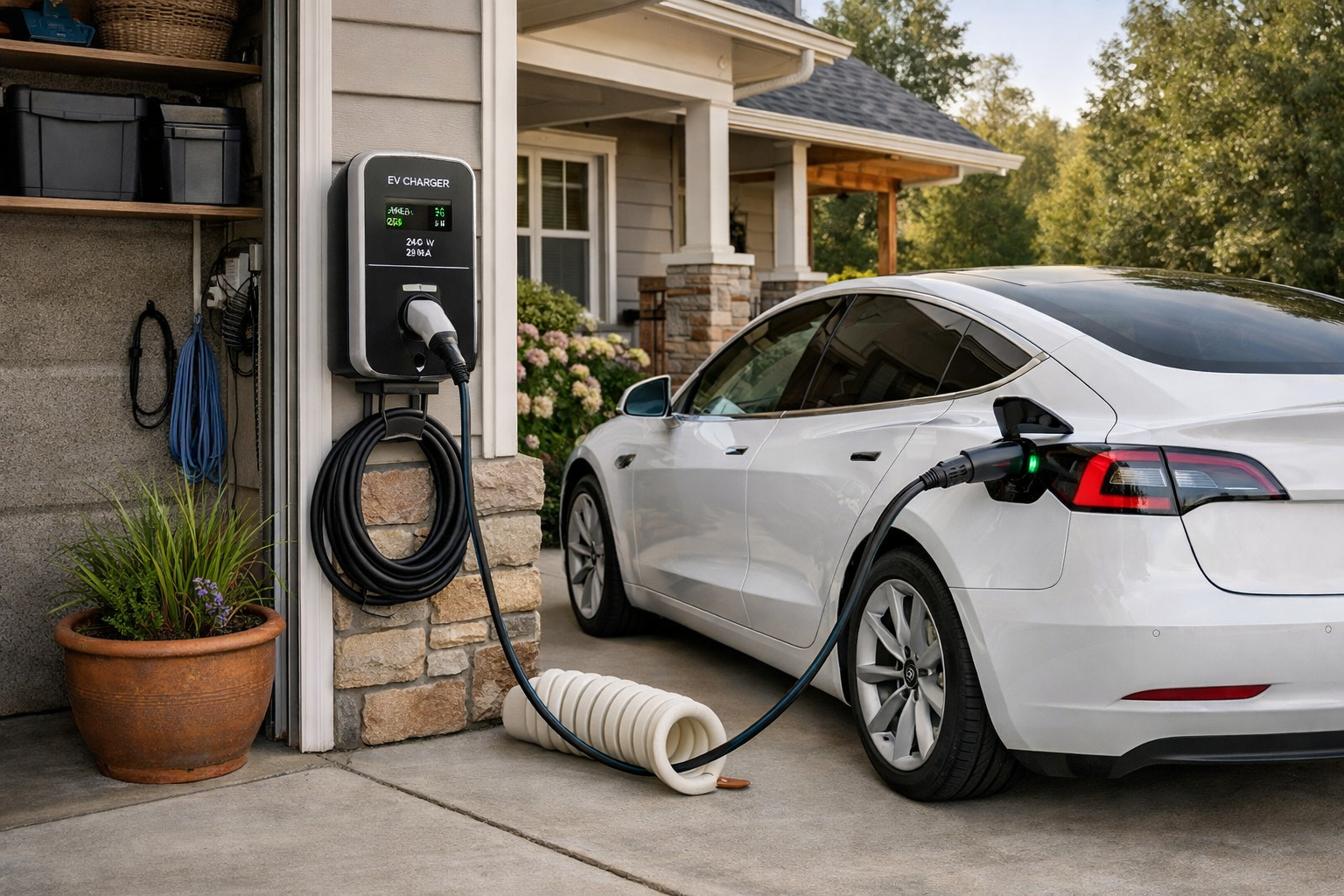
You bought an electric vehicle. Or you're thinking about it. Either way, at some point you're going to realize that charging from a standard wall outlet is going to take 40+ hours for a full charge — and that's not going to work for daily driving.
The answer is a Level 2 home charger. And getting one installed correctly in a North Mississippi home requires a licensed electrician, a panel inspection, and some planning most EV buyers haven't done yet.
Here's what you actually need to know before you call anyone.
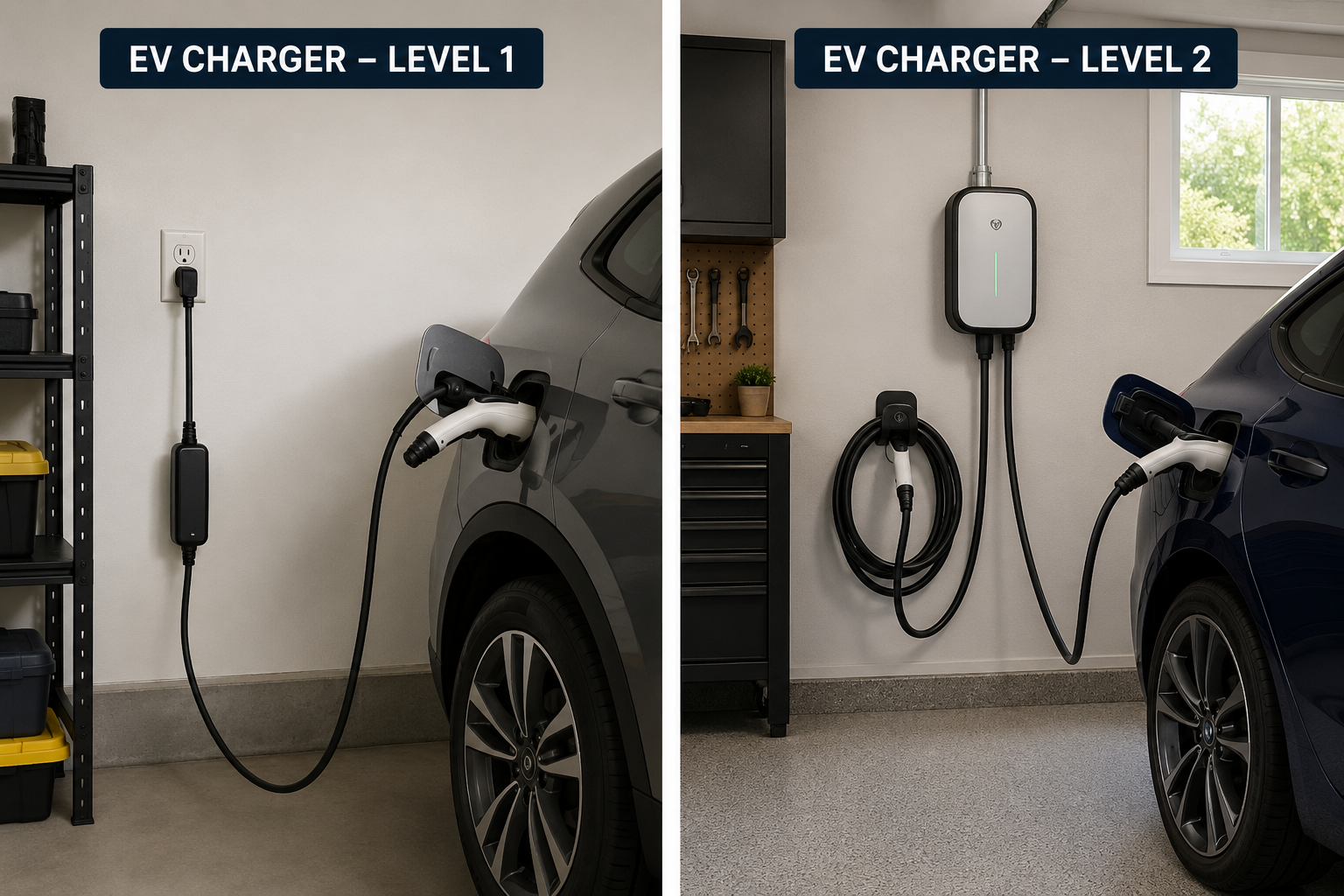
Level 1 vs. Level 2 — What's the Difference?
Level 1 charging uses a standard 120V household outlet. No installation required — you just plug in with the cord that came with your vehicle. The downside: you're adding roughly 3–5 miles of range per hour. If you drive 40 miles a day, that's 8–13 hours of overnight charging just to break even. For most EV owners, Level 1 only works as a backup or for very low daily mileage.
Level 2 charging uses a dedicated 240V circuit — the same voltage as your electric dryer or range. It delivers 20–30 miles of range per hour, which means most EVs fully charge overnight in 6–8 hours regardless of how far you drove that day.
Level 2 is what you actually want at home.
What Level 2 Installation Requires
A Level 2 home charger (also called an EVSE — Electric Vehicle Supply Equipment) typically needs:
A dedicated 240V circuit (usually 50 amps for maximum flexibility)
A proper NEMA 14-50 outlet or hardwired connection
A circuit breaker in your main panel rated for the load
Appropriate wire gauge from panel to install location (typically 6 AWG copper for 50A circuits)
NEC-compliant installation with proper conduit and weatherproofing for outdoor or garage installs
The charger unit itself runs $400–$800 for a quality residential EVSE. Installation labor varies based on panel distance, conduit routing, and complexity of the run.
Can Your Panel Handle It?
This is the part nobody talks about enough — and it's where most EV charger installs either go smoothly or get complicated.
Adding a 50A dedicated circuit isn't just about running wire. Your main electrical panel needs available capacity. A 200A service panel that's already running a heat pump, electric range, electric water heater, and a dryer has a real load — adding 50 amps for an EV charger requires a proper load calculation, not a guess.
If your panel is a Square D Homeline or QO series (two of the most common in North Mississippi homes and the panels we work with daily), adding a 50A breaker is straightforward if space and capacity are available. If your panel is maxed out, you've got two options: a panel upgrade, or a smart load management device that shares capacity between your EV charger and other high-draw appliances.
Older homes in Tupelo — particularly those with 100A service or aging panels — may need a full panel upgrade before EV charger installation is safe or even possible. We'll tell you upfront which situation you're in.
Permit and Code Requirements
EV charger installation in Mississippi requires a permit and must meet NEC standards. This isn't optional — and it matters for your homeowner's insurance and any future home sale inspection.
We pull permits and install to code. Every time. No shortcuts, no skipping permits to save money — that's not how we operate.
Indoor vs. Outdoor Installation
Most homeowners install in the garage for easy overnight charging. If you park in a carport or driveway, we can install weatherproof outdoor-rated outlets or a weatherproof EVSE mount with proper conduit. We'll route the run cleanly and make sure the install looks intentional — not like an afterthought.
For customers in newer subdivisions in Saltillo, Mooreville, or Verona, installation is usually clean and straightforward. For older homes in Booneville, Aberdeen, or Corinth with smaller panels or longer runs, we'll do a full assessment before quoting.
The Dual-License Advantage
Some EV charger installs run into HVAC-side complications — specifically when a heat pump or central AC system is on the same panel and the load calculation is tight. Because Dan holds both HVAC and electrical licenses under License #20095, he can evaluate your full electrical load — including your HVAC equipment — and give you an honest answer about what your panel can actually handle before anyone runs a single foot of wire.
That's not something a single-trade electrician can fully assess. And it's exactly the kind of problem that causes expensive surprises when you hire someone who only sees half the picture.
Ready to Install?
We serve all of North Mississippi within 50 miles of Tupelo: Saltillo, Verona, Mooreville, Shannon, Guntown, Mantachie, Fulton, Pontotoc, Baldwyn, Amory, Nettleton, Booneville, Aberdeen, New Albany, Ripley, Corinth, and surrounding areas.
Call or text: (662) 523-5514
License #20095 — Mississippi Residential and Commercial Electrical
Service-Disabled Veteran-Owned | S.I. Service Group