Is Your Electrical Panel Ready for Winter? What Tupelo Homeowners Need to Know Before the Cold Hits
Electrical Services, Residential Electrical, Winter Safety, Tupelo MS
Is Your Electrical Panel Ready for Winter? What Tupelo Homeowners Need to Know Before the Cold Hits
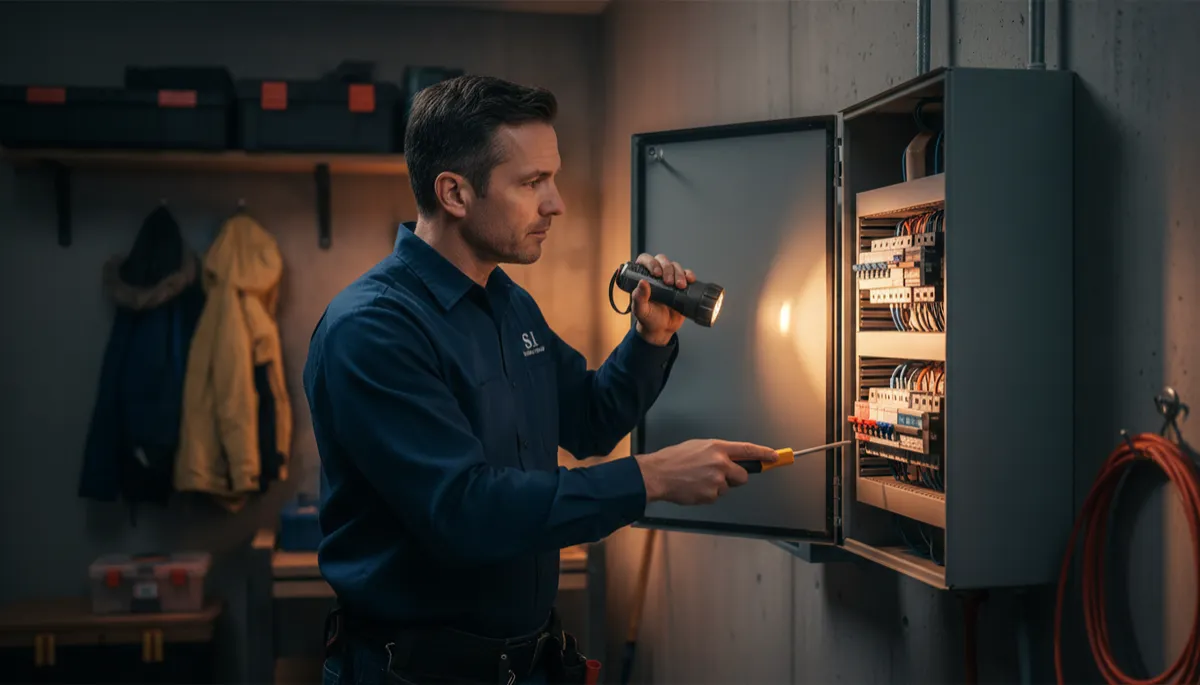
If you’re in Tupelo or anywhere in Northeast Mississippi and wondering, “Is my electrical panel safe to handle space heaters, holiday lights, and everything else this winter?”—you’re asking the right question at the right time. I’m Dan Southwick with S.I. Service Group, and I spend every fall and winter crawling around attics, basements, and closets in homes from Saltillo to Amory, making sure breaker panels are ready before the cold really sets in.
Why Winter Is the #1 Time Your Electrical Panel Gets Stressed
I tell folks in Tupelo, Verona, and Mooreville the same thing every year: winter is when weak electrical panels finally show their age. You may skate by all spring and summer, then the first cold snap in November hits and suddenly breakers start tripping, lights flicker, and something smells hot near the panel. That’s not bad luck—that’s load and age catching up with you at the same time.
Think about what you’re asking your electrical system to do when it gets cold in Northeast Mississippi:
- Heat pumps or electric furnaces running longer cycles, sometimes with electric heat strips kicking on for backup
- Space heaters plugged into bedroom and living room outlets “just to take the chill off”
- Electric blankets, heated mattress pads, and extra kitchen use around the holidays
- Holiday lights inside and outside, sometimes daisy-chained together on one or two circuits
All of that load runs through your breaker panel. If the panel is undersized, the breakers are worn, or the wiring is older and never updated, winter can push it over the edge. National safety groups like ESFI and SafeElectricity remind homeowners every year that overloaded circuits and panels are a leading cause of electrical fires in cold months (see guidance from SafeElectricity and ESFI on winter electrical safety).
Last November I got a call from a family in Saltillo. They had two space heaters running, the dryer going, and a bunch of Christmas lights on the porch. The main breaker tripped twice in one evening. When I opened the panel, it was a 100-amp box from the late 1970s with every breaker slot filled and several double-tapped connections. That panel wasn’t “just old”—it was overloaded and unsafe for how they were living in 2025. That’s exactly the kind of situation I want you to avoid this winter.
Warning Signs Your Electrical Panel Is Struggling
You don’t have to be an electrician to notice when your panel isn’t happy. Here are the signs I tell homeowners in Plantersville, Mantachie, and Fulton to watch for—especially when the heat and holiday lights come on. If you’re searching “is my electrical panel safe” or “signs electrical panel needs replacing,” this is the list you’re really looking for.
1. Breakers Tripping More Often
A breaker that trips once in a blue moon isn’t the end of the world. But if you plug in a space heater and the same breaker trips every time, or your main breaker kicks off when the heat strips and oven run together, that’s your panel telling you, “I’m maxed out.” Frequent trips are one of the most common signs of an overloaded electrical panel, as many national home safety resources point out.
2. Buzzing, Crackling, or Humming Sounds
Your breaker panel should be quiet. A faint hum from the transformer outside is normal, but buzzing or crackling at the panel is not. That can mean a loose connection, a failing breaker, or arcing. If you’re Googling, “Is a buzzing breaker box dangerous?” the answer is yes—have it checked by a licensed electrician right away. Don’t ignore it and hope it goes away when the weather warms up.
3. Burning Smell or Discoloration
If you ever smell something like burning plastic or see scorch marks around breakers or the panel cover, that’s a red flag for overheating and possible arcing. This is one of those “don’t wait until Monday” problems. Turn off the affected breaker if you can do so safely and call an electrician immediately. Research on overloaded panels highlights burning smells and scorch marks as serious danger signs, not cosmetic issues.
4. Warm or Hot Panel Cover
Your panel door should feel like the rest of the wall—room temperature. If it’s noticeably warm or hot to the touch, especially near certain breakers, that can mean too much load on that circuit or a failing breaker that’s not tripping when it should. In winter, I see this a lot when space heaters and holiday lights are stacked on the same few circuits.
5. Flickering or Dimming Lights When Heat or Appliances Turn On
If every time the heat kicks on, your lights dim for a second, that’s a sign your system is under strain. A little flicker once in a while can be normal, but consistent dimming or lights that dance every time a big load starts up is a sign we need to look at panel capacity, wiring, or both. National guides on overloaded panels list flickering lights as a classic overload symptom.
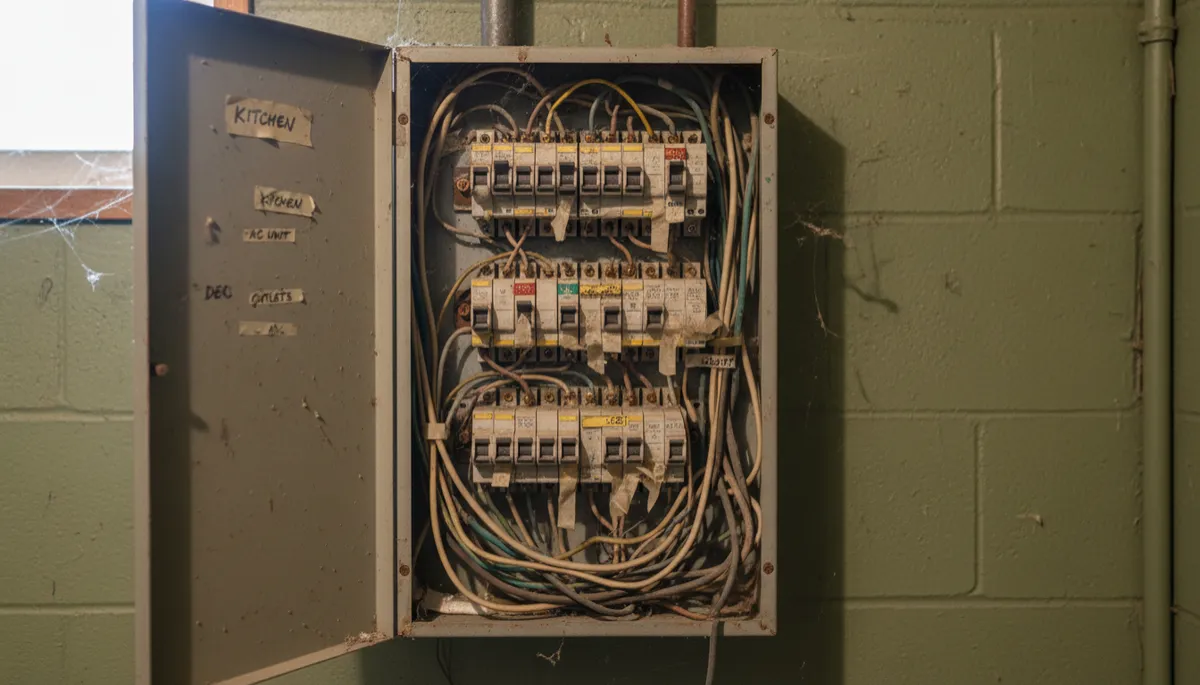
Crowded, double-tapped breakers are a common sign your home has outgrown its original panel.
Panel Age and Capacity: 100A vs 150A vs 200A in Northeast Mississippi Homes
One of the first things I look at on a breaker panel inspection in Mississippi is the panel rating and age. That tells me right away if your electrical system was sized for a 1978 lifestyle or a 2026 lifestyle. There’s a big difference between one TV and a window unit versus multiple heat pumps, EV chargers, hot tubs, and a house full of electronics.
100-Amp Panels: Common in Older Homes
In older parts of Tupelo, New Albany, and Amory, I still see a lot of 100-amp main breaker panels. Back when these homes were built, that was perfectly acceptable. But a 100-amp panel can be tight once you add modern HVAC, electric water heaters, larger kitchens, and extra plug-in loads. If you’re constantly asking, “Do I have enough power for a new heat pump or tankless water heater?” and you’ve got a 100-amp panel, it may be time to talk about an electrical panel upgrade in Tupelo MS or wherever you are in Northeast Mississippi.
150-Amp Panels: The In-Between
Some homes have 150-amp service—kind of the “middle child” of panel sizes. For many average-sized homes without big electric add-ons, 150 amps can be okay, especially if the circuits are well-distributed and the wiring is in good shape. But if you’re planning to add a workshop, EV charger, or a hot tub, we’ll run a load calculation to see if 150 amps is really enough for winter and beyond.
200-Amp Panels: The Modern Standard for Most Homes
Newer homes in places like Mooreville, Saltillo, and subdivisions around Tupelo are often built with 200-amp panels. That’s what I consider the modern baseline for most single-family homes with electric heat, standard appliances, and room to grow. A clean, well-installed 200-amp panel with space for future circuits gives you breathing room for winter loads and future projects, instead of living right on the edge every time the temperature drops.
Keep in mind: Mississippi doesn’t have one uniform statewide electrical code. Local jurisdictions and utilities expect work to follow the National Electrical Code (NEC), but the exact edition can vary by city or county. Around Northeast Mississippi, we follow NEC standards and your local requirements, plus guidance from groups like the North East Mississippi Electric Power Association that require installations to meet NEC and local inspection rules. When we talk panel upgrades, we’re not just guessing—we’re sizing and installing to current safety standards, not 30-year-old habits.
Space Heaters + Holiday Lights: Real Danger on Old Wiring and Tired Panels
I’m not anti–space heater or anti–Christmas lights. I use both at my own house. But I am strongly against plugging high-wattage heaters and strings of lights into old, overloaded circuits and thinking “it’ll probably be fine.” That’s how I end up at homes in Verona and Plantersville at 9 p.m. in December, tracing down a breaker that’s too hot to touch or an outlet that melted behind the couch.
Why Space Heaters Are Hard on Your Electrical System
Most portable space heaters pull 1,500 watts on high. On a standard 15-amp circuit, that’s already close to the safe continuous load. Add a TV, game console, some lamps, and maybe a vacuum cleaner, and you’re over the limit. Overloaded circuits are a well-documented fire risk, especially in winter when heaters run for long periods (this is highlighted in several winter safety guides from ESFI and SafeElectricity).
- Never plug a space heater into a power strip or extension cord—go straight into a wall outlet.
- Don’t run more than one space heater on the same circuit if you can help it.
- If the breaker trips when the heater runs, that’s the circuit doing its job—don’t “fix” it by using a bigger breaker.
Holiday Lights and Old Wiring: A Bad Combination
Holiday lights seem harmless—they’re just little bulbs, right? The problem is when we stack multiple strings together, plug them into a cheap extension cord, and then add inflatables or other decorations on the same circuit. Older wiring, especially in 1960s–1980s homes around Tupelo and New Albany, may have brittle insulation, loose connections, or undersized circuits that were never designed for today’s loads.
When you combine aging wiring, a tired panel, and extra winter load, the risk of overheating and fire goes up fast. That’s why part of getting your electrical panel ready for winter in Tupelo is looking not just at the breakers, but also at how those circuits are actually being used in real life.
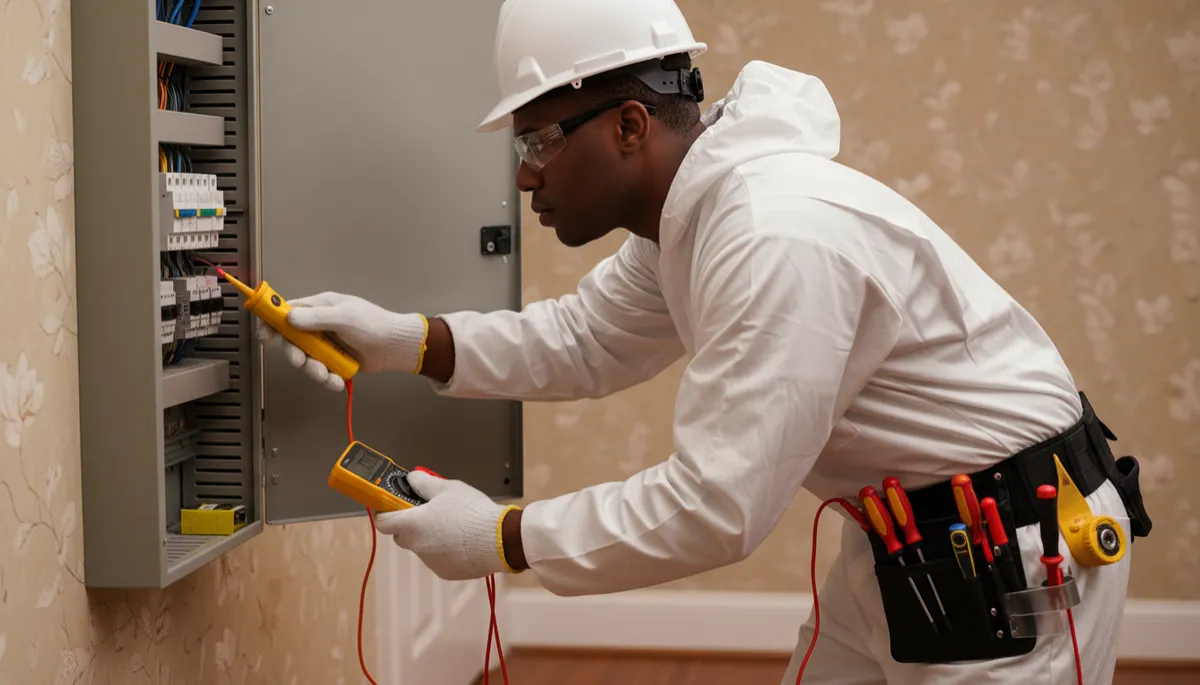
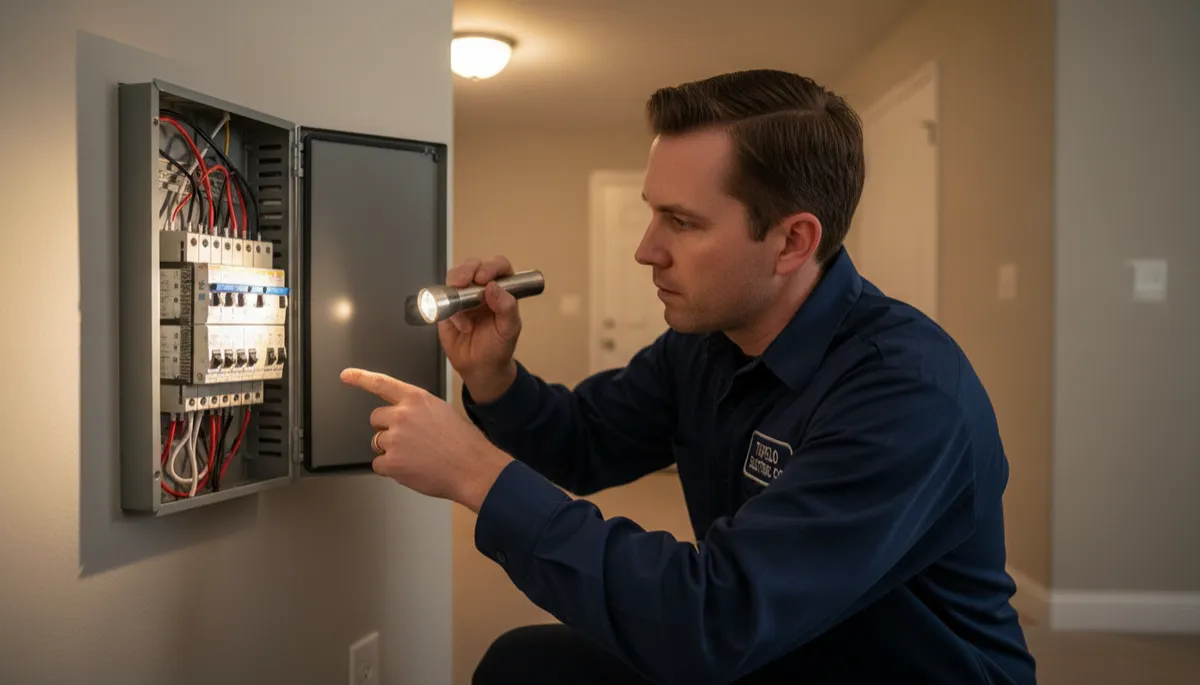
Professional testing tools help uncover hidden issues before winter loads push your system too far.
What an Electrical Panel Inspection Involves (And What I Look For)
When you call S.I. Service Group to schedule an inspection before winter, you’re not just getting a quick glance at the panel door. A proper breaker panel inspection in Mississippi is a step-by-step process. Here’s what I typically do when I show up at a home in Tupelo, Fulton, or Mantachie to check if the electrical panel is winter-ready:
- Visual inspection of the panel exterior. I look for rust, moisture, paint overspray, missing screws, or anything that tells me the panel has been exposed to water or tampered with over the years.
- Check panel labeling and organization. Clear, accurate labels are a safety issue. I also look for overcrowding, double-tapped breakers, and non-matching breakers stuck into a panel they weren’t designed for.
- Open the panel cover (dead front) and inspect inside. This is where I check breaker health, look for signs of overheating, discoloration, or melted insulation, and verify that neutrals and grounds are properly landed and not sharing where they shouldn’t.
- Evaluate wiring age and condition. I can’t see every inch of wiring in the house, but I can see the conductors entering the panel. Brittle insulation, aluminum branch circuits, or old cloth-covered wiring are clues that the system needs a closer look before you lean on it all winter.
- Check grounding and bonding. Proper grounding is a key part of electrical safety and surge protection. I verify that your panel is grounded and bonded according to current standards and local requirements.
- Assess panel capacity vs. actual load. I look at how many circuits you have, what they serve, and how that matches your lifestyle—heat type, major appliances, workshop tools, etc. If you’re already maxed out in October, winter will only make it worse.
Based on what I find, I’ll walk you through options—sometimes it’s a matter of replacing a few problem breakers and tightening connections. Other times, the safest move is a full panel upgrade. Either way, I explain it in plain language and point you to our electrical services page so you can see how panel work fits into the bigger picture of your home’s electrical system.
When to Repair vs. When to Upgrade (With Real-World Cost Context)
Homeowners often ask me, “How do I know if my panel needs upgrading, or if I can just fix a few things?” There’s no one-size-fits-all answer, but after years of working in homes around Tupelo and the surrounding towns, I use a few practical rules of thumb.
Situations Where a Repair Might Be Enough
- One or two breakers are tripping due to age or minor overloading, but the panel itself is modern and sized correctly.
- There are a few loose connections or slightly discolored wires, but no widespread overheating or damage.
- Labels are messy, but the physical panel, breakers, and wiring are in good shape.
In these cases, we might replace a handful of breakers, clean up connections, and tidy the labeling. That’s typically a smaller job compared to a full upgrade, and it can buy you more years of safe use—especially if the panel is already 150 or 200 amps and installed fairly recently.
Situations Where a Full Panel Upgrade Makes Sense
- The panel is 30–40+ years old, especially if it’s only 60 or 100 amps and your home has added loads over the years.
- You see multiple double-tapped breakers, rust, corrosion, or clear signs of overheating in several spots.
- You’re planning major upgrades—new HVAC, hot tub, EV charger, or a big workshop—and the existing panel has no room to grow.
In real-world terms, a panel upgrade is a bigger investment than replacing a couple of breakers, but it’s also something you typically do once in a few decades. When I upgraded a panel for a family in Amory last winter, we went from an overloaded 100-amp box to a clean 200-amp panel with room for future circuits. They told me later it was a relief not to worry every time they plugged in a heater or used the oven and dryer together.
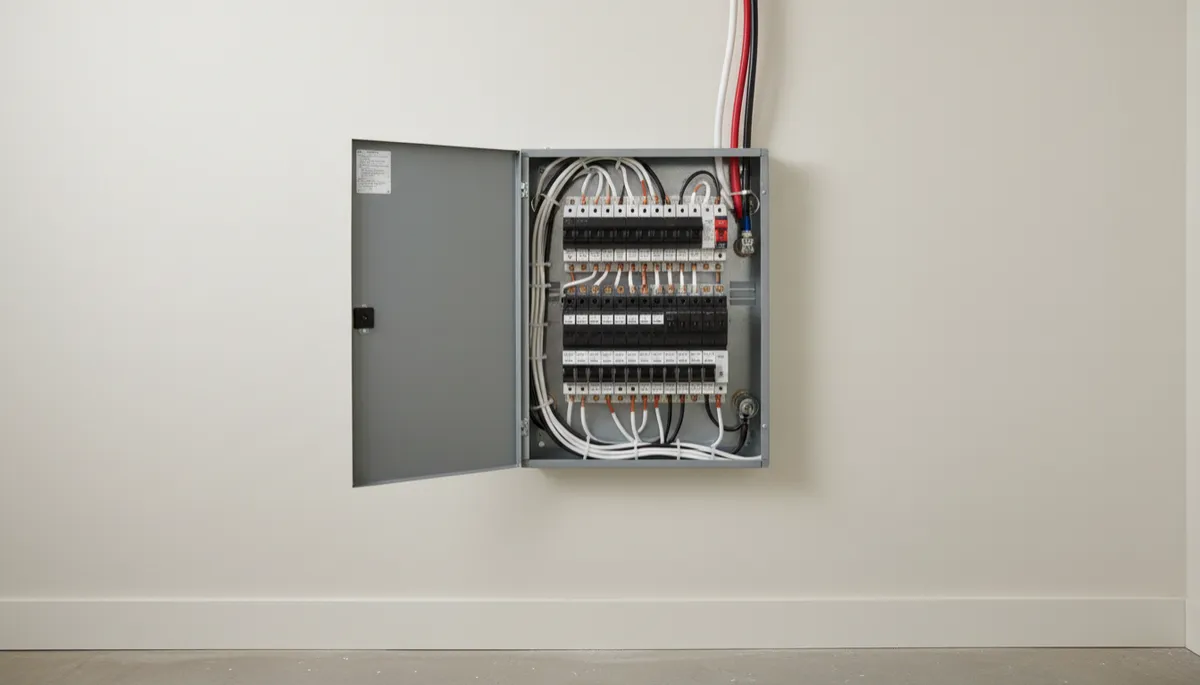
A modern 200-amp panel gives your home room to handle today’s and tomorrow’s electrical loads.
DIY Limits: What You Can Safely Check vs. What Needs a Licensed Electrician
I respect homeowners who like to be hands-on. But when it comes to your breaker panel, there’s a hard line between what’s safe for you to look at and what should only be handled by someone trained and licensed. National safety organizations are very clear: DIY work inside an energized panel is not recommended.
Safe Checks You Can Do Yourself
- Make sure the area around the panel is dry, clean, and easy to access—no storage boxes blocking it.
- Open the outer door (not the inner cover) and check for clear labeling and any obvious burning smell.
- Gently touch the panel door with the back of your hand to see if it feels unusually warm or hot.
- Pay attention to how often breakers trip and which circuits are causing problems when you run heaters or holiday lights.
What You Should Leave to a Licensed Electrician
- Removing the inner panel cover (dead front) to expose live bus bars and wiring
- Tightening connections, replacing breakers, or adding new circuits
- Upgrading the panel, meter base, or service entrance wiring
- Any work that involves your utility connection or main breaker
FAQ: Common Questions About Winter and Electrical Panels in Tupelo and Northeast Mississippi
How do I know if my panel needs upgrading?
Look at age, capacity, and behavior. If your panel is 30–40+ years old, only 60 or 100 amps, and you’re seeing frequent breaker trips, warm spots, or signs of overloading when you run heat and holiday loads, it’s time to have a licensed electrician evaluate it. A breaker panel inspection in Mississippi will tell you if a repair is enough or if an upgrade is the safer long-term move.
Is a buzzing breaker box dangerous?
Yes, it can be. A faint hum from equipment outside is one thing, but buzzing, sizzling, or crackling sounds from the panel itself can mean loose connections, arcing, or failing breakers. Those are fire risks, especially under winter load. If you hear that, call an electrician—don’t wait to see if it stops on its own.
How long do electrical panels last?
Most panels are designed to last a few decades, but real-world lifespan depends on quality, environment, and how hard the system is worked. I start looking closely at panels once they hit 25–30 years old, especially if they’re in damp areas like basements or laundry rooms. By 40+ years, many panels are candidates for replacement, particularly if they’re undersized for modern loads.
Can I run multiple space heaters safely in my house?
You can, but you need to be smart about it. Ideally each heater should be on its own dedicated circuit, or at least not sharing with other big loads. Never plug heaters into power strips or extension cords. If breakers trip when you run more than one heater, that’s your system telling you it’s overloaded. Before winter, it’s worth having us check whether your panel and wiring can safely handle the extra load.
What does “electrical panel ready for winter Tupelo” really mean?
When I say your panel is “winter-ready,” I mean it’s properly sized for your home, the breakers are in good health, the wiring connections look solid, grounding and bonding check out, and there are no signs of overheating or overload under normal use. It also means your circuits are distributed in a way that lets you run heat, appliances, and reasonable holiday loads without constantly tripping breakers or stressing the system.
Are there specific signs my electrical panel needs replacing before winter?
Yes. Frequent breaker trips when you use heat or space heaters, buzzing or crackling, a warm or hot panel door, burning smells, visible rust or corrosion, double-tapped breakers everywhere, and a panel that’s clearly too small (like an older 60- or 100-amp box in a modern home) are all signs an electrical panel needs replacing. If you’re seeing more than one of those, it’s time to have a professional look at it before the cold hits.
Wrap-Up: Don’t Wait for the First Cold Snap to Test Your Panel
Your electrical panel is the heart of your home’s electrical system. Winter in Tupelo, Saltillo, Verona, Plantersville, Mooreville, Mantachie, Fulton, Amory, and New Albany puts that heart under more strain than any other season. If your panel is undersized, your breakers are tired, or your wiring is older than you’d like to admit, the combination of heat, space heaters, and holiday loads can push things past safe limits fast.
Whether you’re worried about an older 100-amp panel, curious about a potential electrical panel upgrade in Tupelo MS, or just want an honest opinion about is my electrical panel safe, that’s what my team and I are here for. We’ll give you straight answers, show you what we see, and help you make a decision that keeps your family safe and your home powered through the cold months ahead.
If you’re even a little unsure about your panel heading into this winter, don’t wait until the first freeze to find out the hard way. Call S.I. Service Group at 662-523-5514 or visit our website to schedule an electrical panel inspection before the cold hits. Let’s make sure your home’s electrical system is ready for whatever this Northeast Mississippi winter throws at it.