Electrical Panel Upgrades in Tupelo, MS
Home Safety, Electrical Panel Upgrades, North Mississippi
Electrical Panel Upgrades in Tupelo, MS: A Practical Guide for Safer Homes
If you own a home in Tupelo, Saltillo, Corinth, Shannon, or anywhere in Lee County, your electrical panel is the quiet workhorse behind every light, outlet, and appliance. When it starts to struggle, you may see flickering lights, tripping breakers, or even smell something burning. This guide explains when it is time to consider an electrical panel upgrade in Tupelo, MS, what to expect from the process, and why working with a licensed electrician in Tupelo, Mississippi who understands both electrical and HVAC systems can protect your home and family for the long term.
Why Your Electrical Service Panel Matters in North Mississippi Homes
Most homes in North Mississippi were built long before today’s electrical loads were common. Central air, multiple refrigerators, EV chargers, and home offices all pull far more power than a small fuse box or early breaker panel was designed for. The electrical service panel (often called the breaker panel or breaker box) is the control center that distributes that power safely throughout your home. When it is too small, outdated, or damaged, it can become a real fire and shock hazard instead of a safety device.
At S.I. Service Group, we see the same patterns over and over in Tupelo, Saltillo, and surrounding communities: older panels pushed past their limits, do‑it‑yourself additions, and equipment that no longer meets current National Electrical Code (NEC) standards. The good news is that these issues are usually easy to spot once you know the warning signs.
Warning Signs of an Overloaded or Outdated Panel
An electrical panel rarely fails without giving you some clues first. If you notice any of the following in your Lee County home, it is time to schedule a professional evaluation for a possible electrical panel upgrade in Tupelo, MS or the surrounding area.
Flickering or Dimming Lights
If your lights dim when the air conditioner kicks on or flicker when you use the microwave, that is your electrical system telling you it is under stress. While a single loose neutral or bad light fixture can cause this, widespread flickering often points to an overloaded panel or undersized service. In neighborhoods around Tupelo and Corinth built in the 1970s and 1980s, we regularly see 100‑amp panels that are simply maxed out by modern loads.
Breakers That Trip Constantly
A breaker that trips once in a while is doing its job. A breaker that trips every time you run the toaster and coffee maker together is a sign that the circuit, or sometimes the entire panel, is overloaded. We often find that older homes in Shannon and rural Lee County have multiple rooms tied to a single breaker, or new appliances added without re‑balancing the panel. Resetting the breaker over and over is not a solution; it is a risk. The heat from repeated overloads can damage the breaker and the bus bar it connects to.
Burning Smell, Heat, or Discoloration Around the Panel
Any burning odor, melted plastic, browning on the cover, or a panel that feels hot to the touch is a serious warning sign. These symptoms can indicate loose connections, arcing, or damaged breakers. Left alone, they can lead to an electrical fire inside the wall. If you notice this in your breaker box, shut off power if you can do so safely and call a licensed electrician in Tupelo, Mississippi immediately. This is not something to watch and wait on.
Aluminum Branch Wiring
Many homes built in the late 1960s and early 1970s used aluminum wiring for branch circuits. Aluminum expands and contracts more than copper and is more prone to loose connections and overheating at terminals. If your panel is still feeding aluminum branch circuits, there are safe ways to mitigate the risk, but it is also a strong indicator that the panel itself is several decades old. In those cases, we often recommend upgrading the service panel and addressing the aluminum terminations at the same time for a comprehensive safety fix.
Federal Pacific and Other Problematic Panels
One specific brand you will still find in older homes in Tupelo, Corinth, and Saltillo is Federal Pacific Electric (FPE), especially the Stab‑Lok line of panels and breakers. These panels have a long history of breakers failing to trip under fault conditions, which defeats the entire purpose of having a breaker. They are not manufactured anymore, and many insurance companies flag them as a fire hazard. If you have a Federal Pacific panel, replacement is usually the safest route, even if you have not noticed obvious problems yet.
📌 Key Takeaway: Flickering lights, frequent breaker trips, burning smells, aluminum wiring, or a Federal Pacific panel are all strong reasons to have your electrical service panel evaluated by a qualified professional in North Mississippi.
When to Repair and When to Upgrade Your Breaker Panel
Not every issue means you automatically need a full breaker box replacement in Tupelo. A trustworthy technician should walk you through whether a targeted repair is enough or whether a full upgrade is the safer, more cost‑effective choice over the life of the home. Here is how we typically break it down during on‑site assessments in Lee County.
Situations Where Repair May Be Reasonable
A single weak or worn breaker that fails testing but the panel itself is modern, properly sized, and in good condition.
Minor corrosion or loose terminations that can be cleaned and tightened, with no heat damage to the bus bar or insulation.
Adding one or two circuits to a panel that still has adequate capacity and spare spaces, while remaining within the service rating.
In these cases, a repair can be safe and budget‑friendly, as long as the underlying panel is a reputable brand and meets current NEC grounding and bonding standards.
Situations Where an Upgrade Is the Safer Choice
The panel is undersized for your current and planned loads (for example, a 60‑amp or older 100‑amp panel serving a home with central HVAC, electric range, and EV charger).
The brand has a known safety history issue (Federal Pacific, certain Zinsco/Sylvania panels) or replacement breakers are no longer listed or reliably available.
Visible heat damage to the bus bars, melted insulation, or repeated nuisance tripping on multiple circuits that indicates deeper problems.
Major renovations or additions, such as finishing a basement, adding a shop in Saltillo, or building an addition in Corinth, where code now requires additional AFCI and GFCI protection.
In those situations, a full Square D panel upgrade gives you a clean slate, room for future circuits, and the ability to use modern AFCI and GFCI breakers that meet today’s NEC requirements. It also avoids sinking money into a panel that an insurance company or future buyer may ask you to replace anyway.
Why Electricians in Tupelo Prefer Square D Homeline and QO Panels
When we recommend a breaker box replacement in Tupelo or elsewhere in North Mississippi, we almost always reach for Square D by Schneider Electric, either the Homeline or QO series. Both are US‑style toggle breaker panels, not European DIN rail equipment, and both have a strong track record in the field. Here is how they compare and why they are often the preferred choice.
Square D Homeline Series: Reliable, Budget‑Friendly Workhorse
The Homeline series is designed for residential use and offers solid performance at a reasonable cost. Homeline panels and breakers use a standardized design, are widely available in North Mississippi supply houses, and support the AFCI, GFCI, and dual‑function breakers required under current NEC editions. For most single‑family homes in Tupelo, Shannon, and Saltillo, a Square D Homeline panel provides more than enough capacity and safety features at a price that makes sense for homeowners.
Square D QO Series: Premium Features and Visual Trip Indicators
The QO line is Square D’s premium residential and light commercial series. QO breakers feature a distinctive visual trip indicator window that makes it very easy to spot a tripped breaker at a glance. Many electricians appreciate the solid “snap” feel when a QO breaker is switched on or off and the robust bus bar design. QO panels also offer a wide range of breaker options, including AFCI, GFCI, and dual‑function breakers for circuits that need both types of protection. In larger homes or small commercial spaces in Lee County, QO is often our go‑to choice.
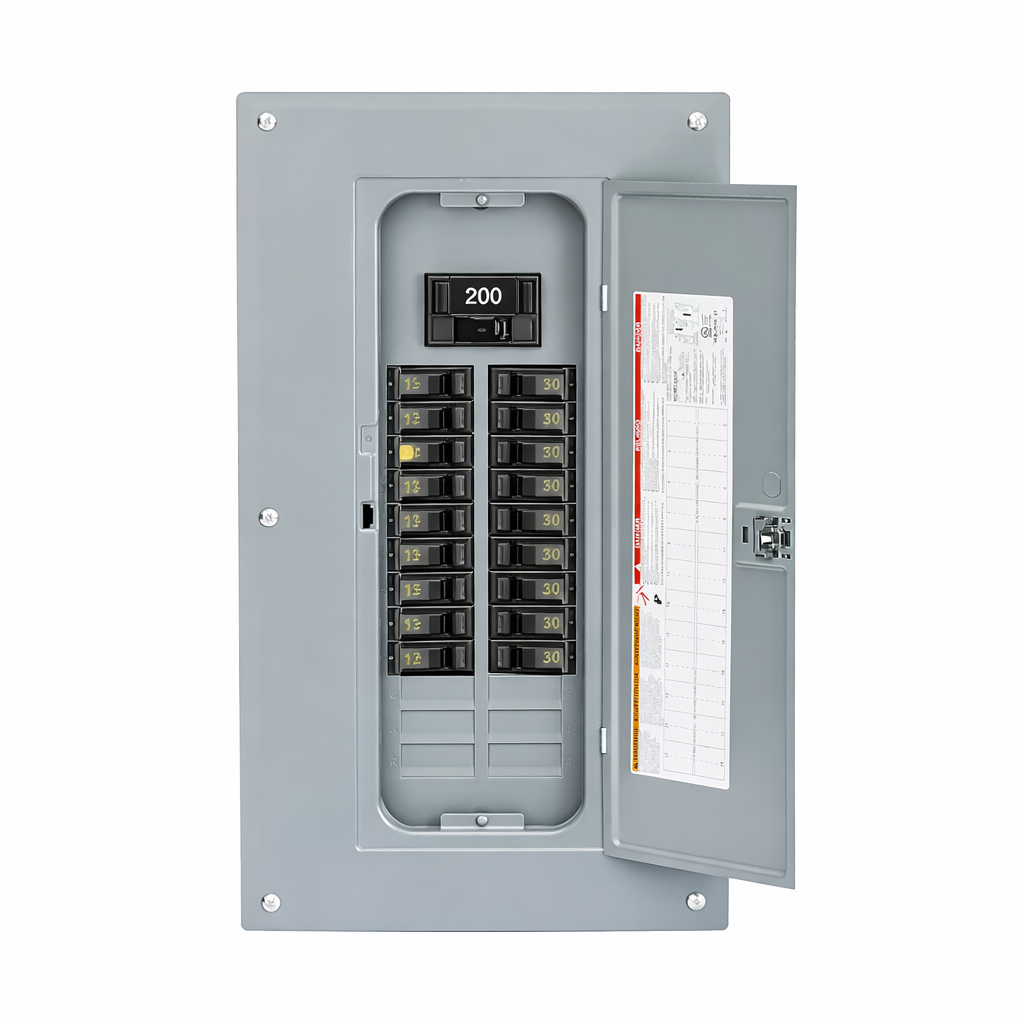
Square D Homeline and QO panels offer reliable, code-compliant protection for North Mississippi homes.
Why Square D Is Often the Preferred Brand
Proven safety record: Square D has decades of field history, and its breakers are rigorously tested to trip when they should, helping to prevent fires and shock hazards.
Wide availability: In Tupelo and across North Mississippi, Square D breakers and accessories are easy to source, which makes future service and expansion straightforward.
Support for modern protection: Both Homeline and QO lines offer AFCI, GFCI, and dual‑function breakers that align with current NEC requirements, including for kitchens, laundry areas, and living spaces.
Future‑proofing: With a Square D panel, you are less likely to run into “orphaned” equipment problems where breakers are discontinued or hard to find.
Typical Cost Range for Residential Panel Replacement in Mississippi
Homeowners understandably want a clear idea of what a Square D panel upgrade will cost. National averages for panel replacement run roughly $800 to $4,500 depending on amperage, complexity, and rewiring needs, with many projects landing between about $1,300 and $3,000 according to recent industry cost analyses. Mississippi tends to be more affordable than many states. PermitDeck’s 2026 modeling, adjusted for Mississippi’s labor and material rates, estimates a range of about $1,303 on the low end to around $2,942 on the high end, with an average near $2,034 for a typical residential panel upgrade.
In practical terms for homeowners in Tupelo, Saltillo, Corinth, and Shannon, most straightforward breaker box replacement projects fall somewhere between $1,300 and $2,900. Factors that can push costs higher include upgrading from 100 amps to 200 amps, relocating the panel, replacing an outdated meter base, correcting grounding and bonding, or addressing aluminum wiring and other code issues discovered during the job. Labor is usually the largest portion of the bill, often more than half of the total, with materials and permits making up the rest.
💡 Pro Tip: When comparing quotes, confirm whether the price includes permits, inspections, grounding upgrades, meter base work, and AFCI/GFCI breakers where required. A low quote that skips these items can cost you more later.
Understanding the Electrical Permit Process in Tupelo, MS
In the City of Tupelo, any significant electrical work, including a service change or electrical panel upgrade, requires a permit. The Department of Development Services handles permits through its Permitting Division at City Hall on East Troy Street. Applications can be submitted by email or in person, and no work should begin until the permit is approved and posted at the job site.
For homeowners, this process can feel like one more layer of red tape, but it is actually a key safety check. The permit triggers inspections by the city, typically including a service inspection and a final inspection to verify that the new panel, grounding, bonding, and breakers meet the current NEC edition adopted locally. Fees for a residential panel swap are modest compared to the overall project cost; in Tupelo, electrical permit fees start around $15 with small per‑opening charges. A licensed electrician in Tupelo, Mississippi will usually handle the paperwork, coordinate inspections, and ensure that everything is documented correctly for your records and your insurance company.
What Happens During an Electrical Panel Upgrade Appointment
Many homeowners are understandably nervous about the idea of shutting down power and opening up the breaker panel. Knowing what to expect can make the process much less stressful. Here is how a typical Square D panel upgrade unfolds in a North Mississippi home.
Pre‑job walkthrough: Your technician confirms the scope, reviews existing loads (HVAC, range, water heater, shop equipment), and discusses any special concerns. This is also when you will go over where the panel is located and how long power will be off.
Utility coordination: For a full service change, the power company may need to disconnect and reconnect service at the meter. Your contractor will coordinate this so the outage window is as short as possible, often just a few hours.
Safe shutdown and removal: Once power is safely disconnected, the old panel cover comes off, circuits are labeled, and the existing breakers and panel enclosure are removed. This is when hidden issues like overheated bus bars or ungrounded circuits often come to light.
Installation of the new Square D panel: The new Homeline or QO panel is mounted, service conductors are landed, grounding and bonding are updated to current code, and each branch circuit is re‑terminated on the appropriate breaker. AFCI, GFCI, and dual‑function breakers are installed where required by the NEC for kitchens, laundry areas, living spaces, and other key locations.
Testing and labeling: Before power is restored, the electrician will torque‑check connections, test breakers, and verify that circuits are clearly and accurately labeled. Good labeling is not just convenient; it is an important safety feature for future work or emergency shut‑offs.
Inspection and final sign‑off: The city inspector verifies that the new panel and service meet local code. After approval, you receive documentation showing that the work was permitted and inspected, which can be valuable for insurance and resale.
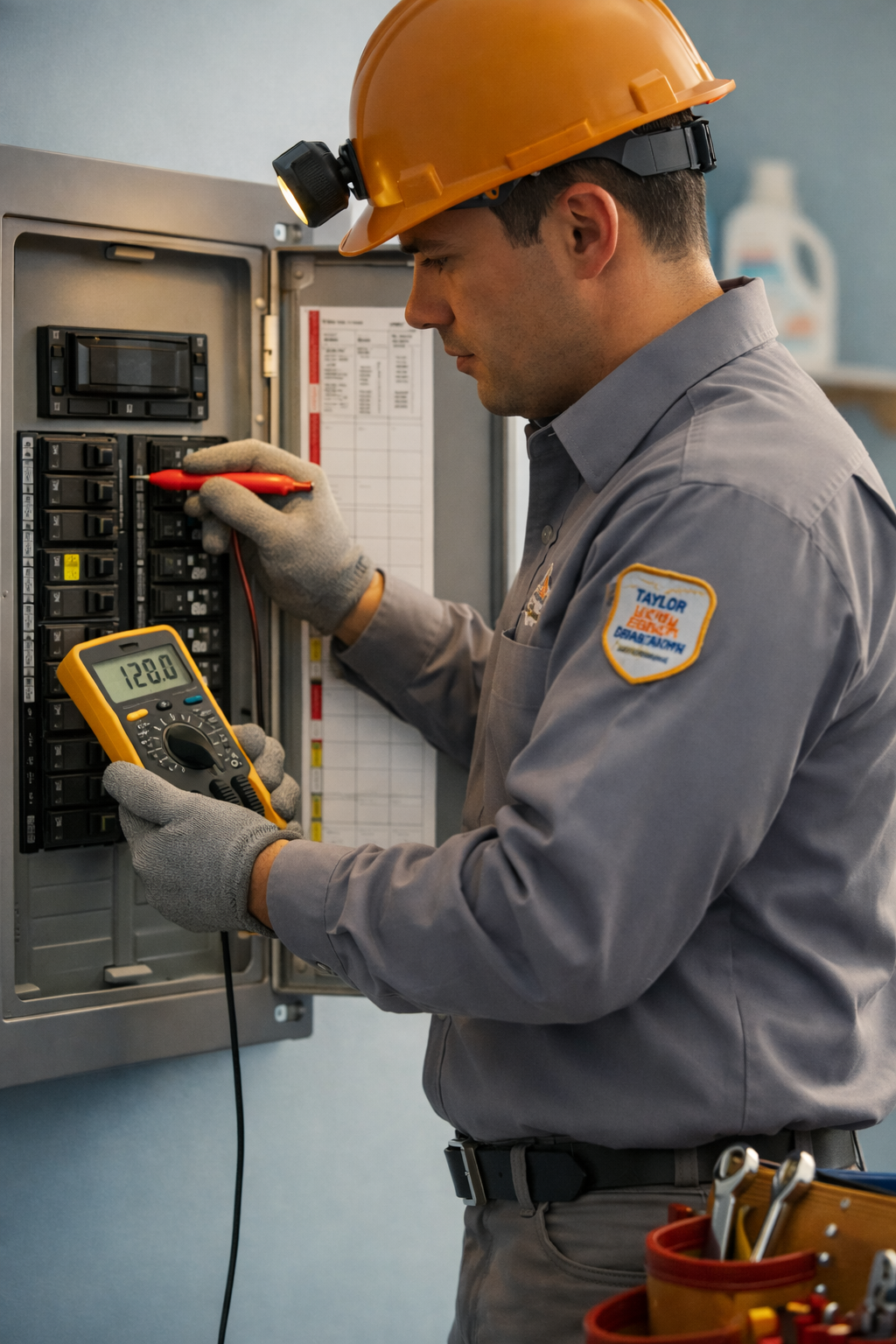
A licensed electrician follows strict safety steps during every panel upgrade.
AFCI and GFCI Breaker Requirements Under Current NEC Code
Modern electrical panels do more than just prevent overloads. The NEC now requires advanced protection in many areas of the home to help reduce both fire and shock risks. When we install a new Square D panel, we design the breaker layout to align with the edition of the NEC adopted in your jurisdiction, typically the 2020 or 2023 NEC in much of the country, with 2026 on the horizon in some areas. Here is a plain‑language overview of what that means for your home.
AFCI (Arc‑Fault Circuit Interrupter) Protection – NEC 210.12
AFCI breakers are designed to detect dangerous arcing conditions that could start a fire inside walls or at loose connections. Under recent NEC editions, most 120‑volt, 15‑ and 20‑amp branch circuits serving living areas in dwelling units must have AFCI protection. That includes bedrooms, living rooms, family rooms, dining rooms, hallways, closets, dens, and many similar spaces. In practice, that means most general‑purpose lighting and receptacle circuits in your Tupelo home will use AFCI breakers in the new panel. Garages, unfinished basements, and bathrooms are typically not required to have AFCI, but they may still need GFCI.
GFCI (Ground‑Fault Circuit Interrupter) Protection – NEC 210.8
GFCI protection is focused on preventing shock in wet or damp locations. The NEC requires GFCI protection for bathroom outlets, garage receptacles, outdoor receptacles, crawl spaces, unfinished basements, kitchen countertop outlets, receptacles near sinks, laundry areas, and certain dedicated appliance circuits. As of recent NEC cycles, more equipment—such as dishwashers and sump pumps—also falls under GFCI rules. In many cases, we now use GFCI breakers in the panel instead of relying solely on GFCI receptacles, especially when circuits serve multiple locations.
Dual‑Function Breakers: AFCI + GFCI in One Device
Some circuits, such as those serving kitchen and laundry areas, require both AFCI and GFCI protection. Rather than stacking devices, we often install dual‑function breakers that provide both types of protection in a single Square D Homeline or QO breaker. This keeps the panel organized and gives you a clear reset point if a breaker trips. During your panel upgrade, your electrician should explain which circuits will use AFCI, GFCI, or dual‑function breakers, and why, based on the spaces they serve and the NEC edition enforced locally.
Why Hiring a Dual‑Licensed Contractor Matters for Panel Upgrades
An electrical panel upgrade touches more than just wires and breakers. It directly affects your HVAC system, water heater, range, and other major loads that keep your home comfortable. That is why working with a contractor who understands both electrical and HVAC systems can add a layer of protection and foresight that many homeowners do not realize they need.
At S.I. Service Group, Dan Southwick holds Mississippi License #20095 and is dual‑licensed in both residential and commercial HVAC and Electrical. That matters when we are sizing a new panel or service for a home in Tupelo or Lee County. Instead of just counting breakers, we look at the actual loads your HVAC system will place on the service, how future upgrades—like a higher‑efficiency heat pump or an additional mini‑split—will impact the panel, and whether your existing wiring and disconnects are appropriate. This whole‑house perspective helps avoid nuisance trips, undersized equipment, and surprises down the road when you add new systems.
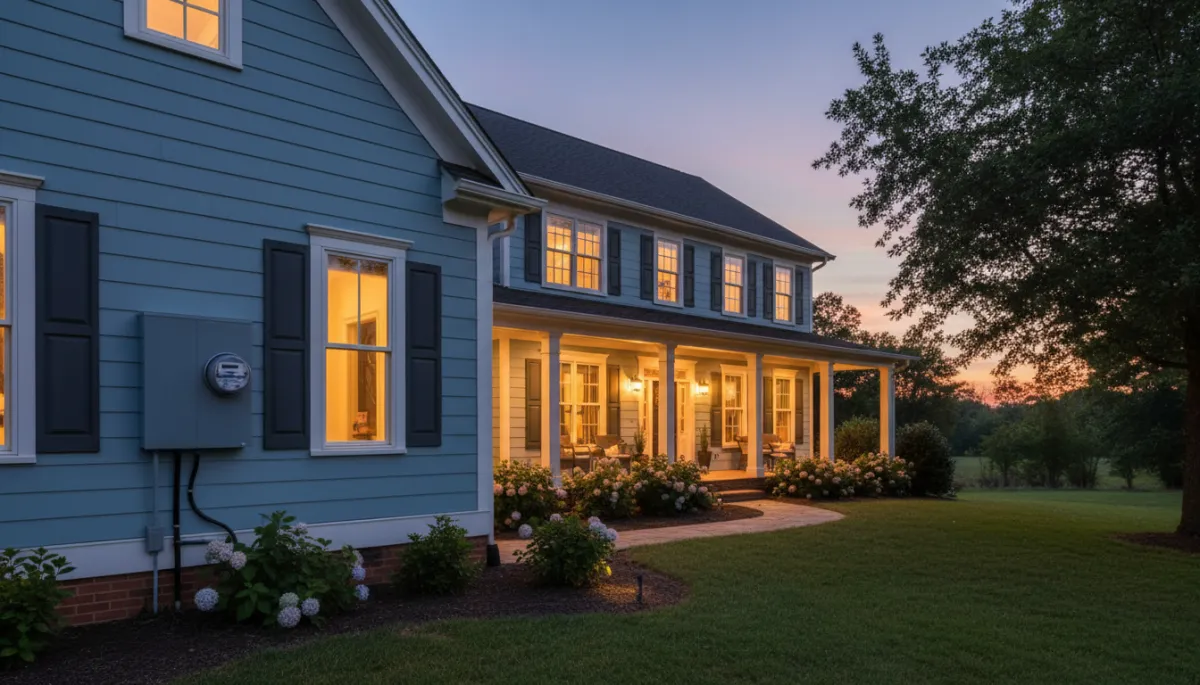
A properly sized, code-compliant service panel supports safe, comfortable living for years.
A dual‑licensed contractor is also familiar with how electrical work interacts with manufacturer requirements for HVAC equipment. Many modern systems have specific electrical specifications that must be met to keep warranties valid. When your panel upgrade and HVAC system are handled by the same knowledgeable team, you reduce the risk of finger‑pointing between trades and increase the odds that everything works together smoothly and safely.
Frequently Asked Questions About Electrical Panel Upgrades in Tupelo and North Mississippi
1. How do I know if I really need a panel upgrade or just a few new breakers?
The decision comes down to the age and condition of the panel, the brand, visible signs of damage, and whether it has enough capacity for your current and future loads. A licensed electrician will open the panel, inspect the bus bars, check for heat damage, evaluate grounding and bonding, and review your load calculations. If the panel is modern, properly sized, and in good shape, replacing a few breakers may be all you need. If it is a problematic brand, undersized, or heavily overloaded, a full electrical panel upgrade in Tupelo, MS is usually the safer long‑term solution.
2. Will my power be off all day during a breaker box replacement?
For a typical residential Square D panel upgrade in North Mississippi, the power is usually off for several hours, not the entire day. The exact duration depends on how complex the job is, whether the panel is being relocated, and how quickly the utility can disconnect and reconnect service. Your electrician should give you a realistic outage window and help you plan around critical needs like refrigeration, medical equipment, or working from home.
3. Do I have to bring the whole house up to the latest code if I just change the panel?
When you replace a service panel, the work you are doing—the new panel, service conductors, grounding, bonding, and breakers—must meet the current NEC edition adopted locally. However, that does not mean every existing outlet and light in the home must be rewired. In practice, we focus on making sure the new panel and affected circuits meet current standards, including AFCI and GFCI protection where required. If we discover serious hazards elsewhere in the system, we will explain them and give you options, but the goal is to prioritize safety while respecting your budget.
4. Will a Square D panel upgrade help with future projects like an EV charger or workshop?
Yes. One of the main reasons homeowners in Tupelo, Saltillo, and Corinth choose to upgrade to a 200‑amp Square D panel is to create room for future circuits. If you plan to add an EV charger, backyard workshop, hot tub, or additional HVAC equipment, it is far easier and more cost‑effective to plan for that capacity now rather than trying to shoehorn it into an already crowded, undersized panel later. During the upgrade, your electrician can discuss your future plans and size the panel and service accordingly.
5. How do I choose the right electrician for a panel upgrade in Lee County?
Look for a contractor who is licensed, insured, and experienced specifically with service panel upgrades—not just small repairs. Ask whether they pull permits and arrange inspections, what brand of panel they use (Square D is a strong choice), and how they handle AFCI and GFCI requirements under the NEC. In North Mississippi, it is also wise to consider a dual‑licensed contractor who understands both electrical and HVAC systems, since those two trades are closely linked in modern homes. Clear communication, detailed written estimates, and a willingness to explain options are all signs you are working with a professional who takes your safety seriously.
Bringing It All Together: Safer Power for Your North Mississippi Home
An electrical panel upgrade is not about chasing the latest gadget; it is about making sure the foundation of your home’s electrical system is strong enough to support the way you live today—and tomorrow. If you are seeing warning signs like flickering lights, tripping breakers, burning smells, aluminum wiring, or a Federal Pacific panel, it is worth having a calm, fact‑based conversation with a licensed electrician in Tupelo, Mississippi about your options. A properly sized Square D Homeline or QO panel, installed under permit and inspected to current NEC standards, gives you peace of mind every time you flip a switch or plug in a new appliance.
Whether you are in Tupelo, Saltillo, Corinth, Shannon, or elsewhere in Lee County, the right breaker box replacement in Tupelo and the broader North Mississippi area is an investment in safety, reliability, and future flexibility. With a dual‑licensed contractor who understands both electrical and HVAC systems, you can be confident that your new panel is not just up to code today, but ready for the demands of the years ahead.