Is Your Electrical Panel Safe? Warning Signs Explained
Electrical Safety, Home Maintenance, North Mississippi
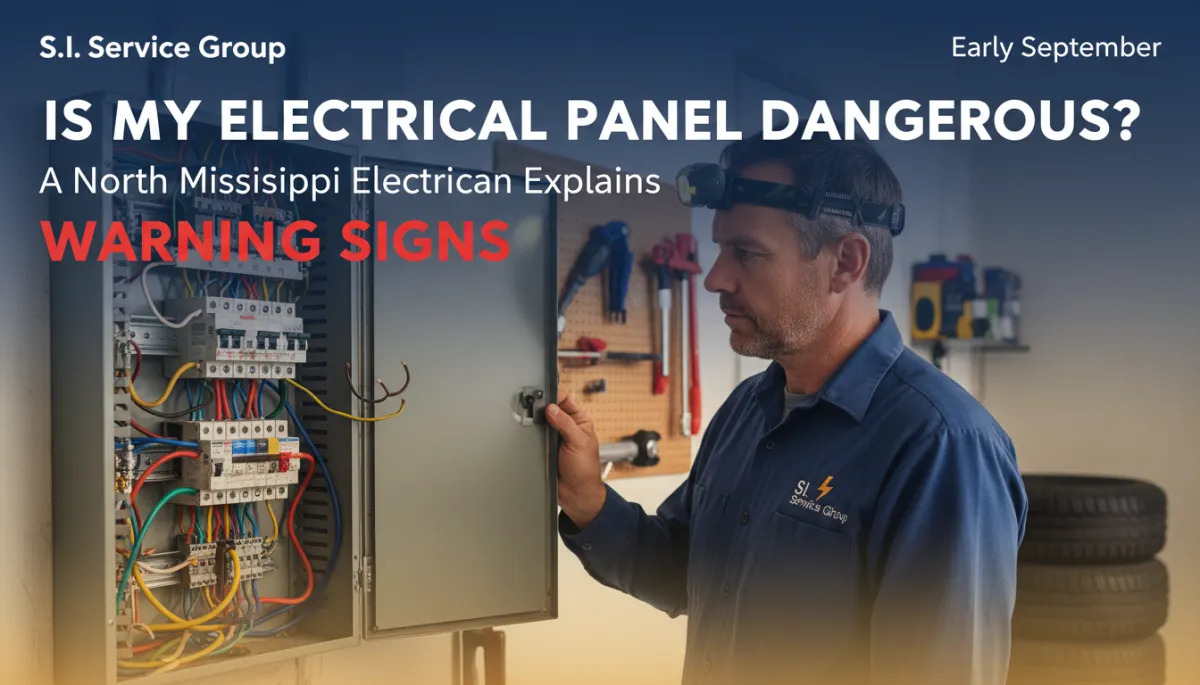
Is My Electrical Panel Dangerous? A North Mississippi Electrician Explains the Warning Signs
I’m Dan Southwick, owner of S.I. Service Group, and I spend a lot of my days standing in front of breaker panels from Tupelo to Amory asking myself one simple question: is this thing still safe, or is it a house fire waiting to happen?
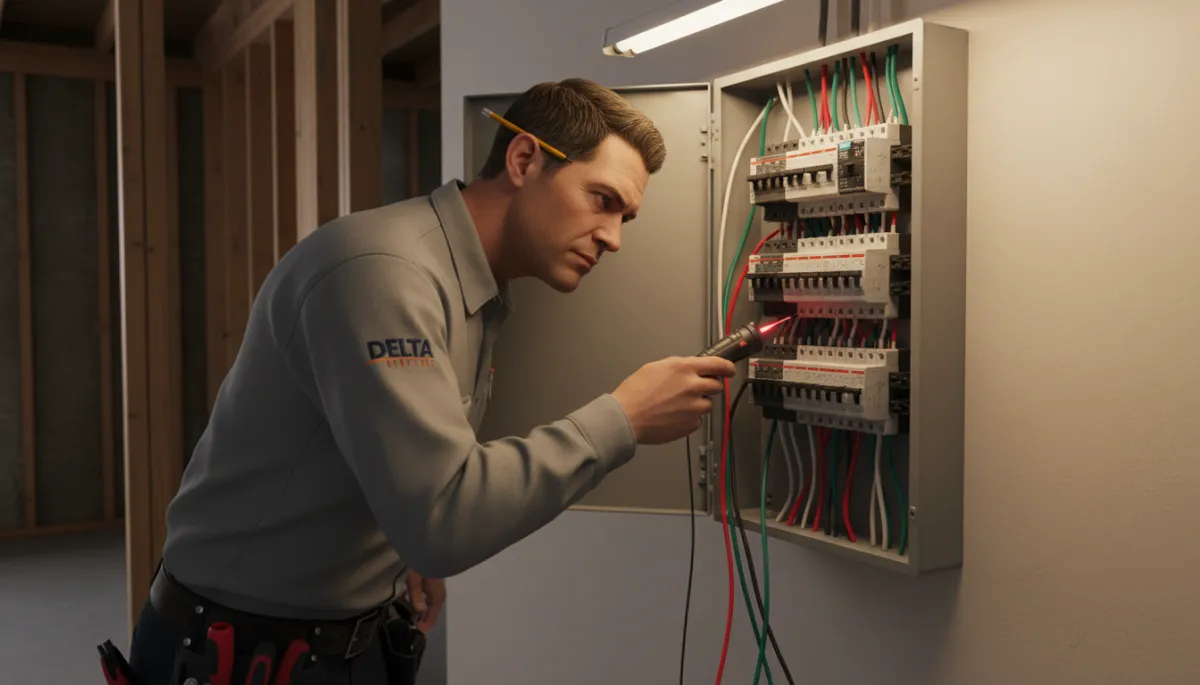
Late-Summer Reality Check: Your Panel Just Took a Beating
If you live in North Mississippi, you already know this past summer was brutal. ACs in Tupelo, Saltillo, Verona, Plantersville, Mooreville, Mantachie, Fulton, Amory, and New Albany ran sunup to sundown just to keep houses livable. All that power had to pass through one spot first: your electrical panel, or what most folks still call the breaker box. And now that we’ve finally hit early September and the temps are backing off a little, it’s the perfect time to ask, “Is my breaker box safe?”
I’m not here to scare you with corporate-sounding doom and gloom. I’m a working electrician. I pull up in a real truck, drag my tools into real houses, and see what’s actually going on behind those metal doors every single week. I’ve seen panels that look brand new and are quietly cooking themselves from the inside out, and I’ve seen old ones that are hanging on by a thread after decades of abuse. My goal with this Shop Talk post is simple: walk you through the real-world electrical panel warning signs I look for, using plain language and a few field stories from right here in North Mississippi.
1. Breakers That Keep Tripping – Especially After Heavy AC Use
Let’s start with the one everyone knows: a breaker that keeps tripping. One call I ran in Mooreville in August sticks out. Lady called and said, “Dan, every time the AC kicks on and I run the dryer, half the house goes dark.” I pulled up, walked around back, and before I even opened the panel I could tell we were dealing with an overloaded setup from the 80s that had never been updated for modern loads. The AC and several outlets were crammed on the same circuit, and that breaker had been working overtime all summer long just to protect the wiring.
A breaker is supposed to trip when there’s too much current. That’s its job. But if the same breaker trips over and over, especially:
- when the AC starts up,
- when you run the microwave and toaster together,
- or when a big appliance kicks on,
it’s not something to ignore. It could mean the circuit is overloaded, the breaker is worn out, or the panel isn’t sized right for the house anymore. Resetting it ten times a week doesn’t fix the problem; it just keeps you rolling the dice. If you’re in Lee County and wondering whether an electrical panel inspection in Lee County MS is worth it, this alone is a solid reason to have a licensed electrician look it over.
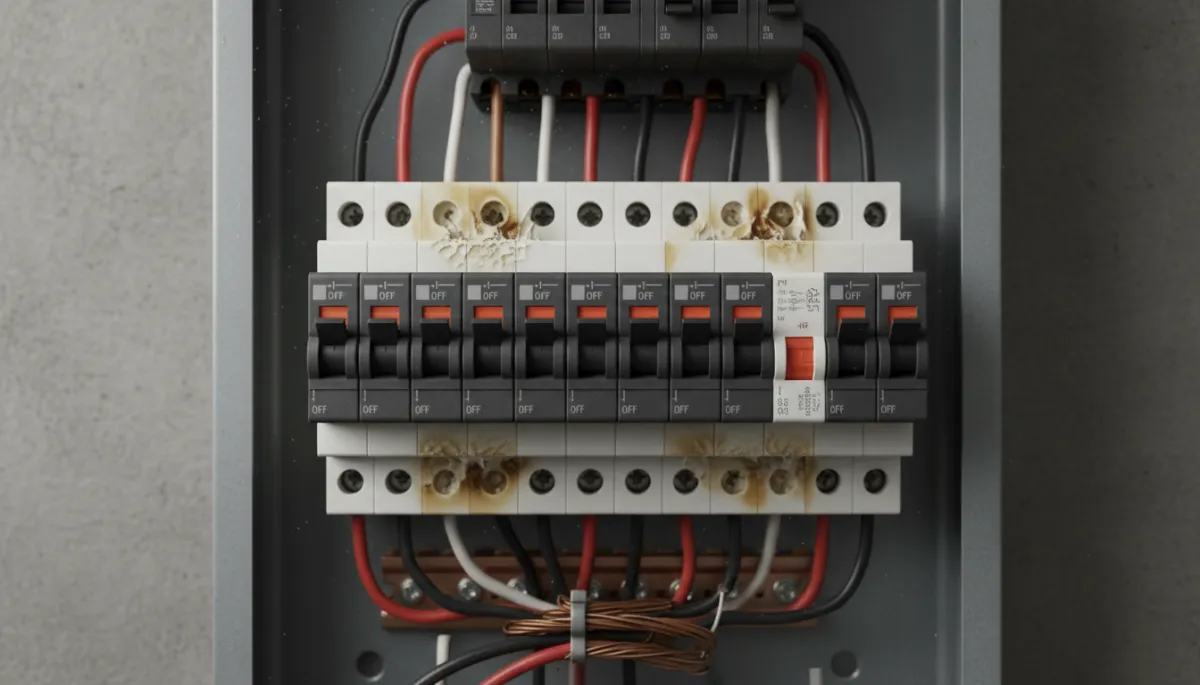
Frequent tripping is your panel’s way of yelling that something is wrong, not an inconvenience to ignore.
2. Burning Smell or Scorch Marks Around the Panel
I pulled up to a house in Saltillo last month and could smell the problem before I even opened the panel door. It was that hot, plastic, burnt-dust smell you get when something’s been cooking for a while. The homeowner said, “We noticed it a couple weeks ago, but it went away, so we didn’t worry.” That’s like saying the smoke went away so the fire must be fine now.
If you ever notice:
- a burning or melting plastic smell near your breaker box,
- scorch marks on the metal door or wall around the panel,
- dark discoloration around a specific breaker,
that is not a “wait and see” situation. Something is overheating, arcing, or both. That can be a loose connection, a failing breaker, or damaged bus bar inside the panel. Any of those can turn into an electrical fire. When folks ask me, “How do I know if my electrical panel is dangerous?” this is one of the clearest red flags I mention. Turn off what you can safely and call a licensed electrician in North Mississippi right away.
3. Panel Is Warm or Hot to the Touch
Your electrical panel is basically the traffic cop for all the power in your house. It’s normal for it to be a little warm when everything’s running, especially after a long, hot day when the AC’s been going nonstop. But if you put your hand on the panel door and it feels hot, or noticeably warmer than the wall around it, that’s a problem. I had a panel in Verona this summer that felt like the hood of a truck that’d just hauled a boat to Pickwick — not what you want on the side of your laundry room.
Heat means resistance somewhere in the system. That could be:
- a loose lug where the main wires land,
- a breaker that’s failing internally,
- or an overloaded bus bar in an undersized panel.
None of those are DIY fixes. If your panel is warm enough that you notice it, it’s time for a professional electrical panel inspection in Lee County MS or the surrounding counties we serve. The cost of having us out is nothing compared to the cost of a house fire or losing your AC in the middle of the next heat wave.
4. Flickering or Dimming Lights Throughout the House
A single light flickering might just be a bad bulb. But when multiple lights dim or flicker all over the house when the AC or another big appliance kicks on, that’s different. I saw this in a home outside Mantachie not long ago. Every time the heat pump started, the kitchen lights dipped like a scene out of a horror movie. The homeowner thought it was “just old wiring.” Turned out the panel was undersized and the main connections were loose enough that voltage was dropping under load.
House-wide flickering or dimming can point to:
- an overloaded or failing main breaker,
- loose connections at the panel or meter base,
- or even issues with the service coming from the utility.
Either way, it’s not normal, and it’s not something to ignore. It’s a sign your electrical system is straining, and that strain usually shows up first in the panel. If you’re asking yourself, “Is my electrical panel dangerous, North Mississippi style?” this is one of the most common everyday clues.
5. Rust, Moisture, or Water Damage Inside the Panel
Water and electricity don’t get along, and your panel is no exception. In Plantersville earlier this year, I opened a garage panel and saw rust rings around several breakers and a little trail of water staining down the back of the can. The homeowner said, “Yeah, the roof leaked a couple years back, but we fixed it.” Problem is, the damage was already done. Corrosion had started on the bus bar and breaker stabs, and one wrong surge could’ve caused arcing where you definitely don’t want it.
Signs of moisture trouble include:
- rust on the metal parts inside the panel,
- white or green corrosion on copper wires or lugs,
- water stains, mud, or evidence of past leaks.
Moisture can cause breakers to fail to trip, increase resistance, and lead to overheating. If your panel is on an outside wall, under a meter, or in a damp basement or laundry room, it’s worth having us check it as part of our residential electrical services.
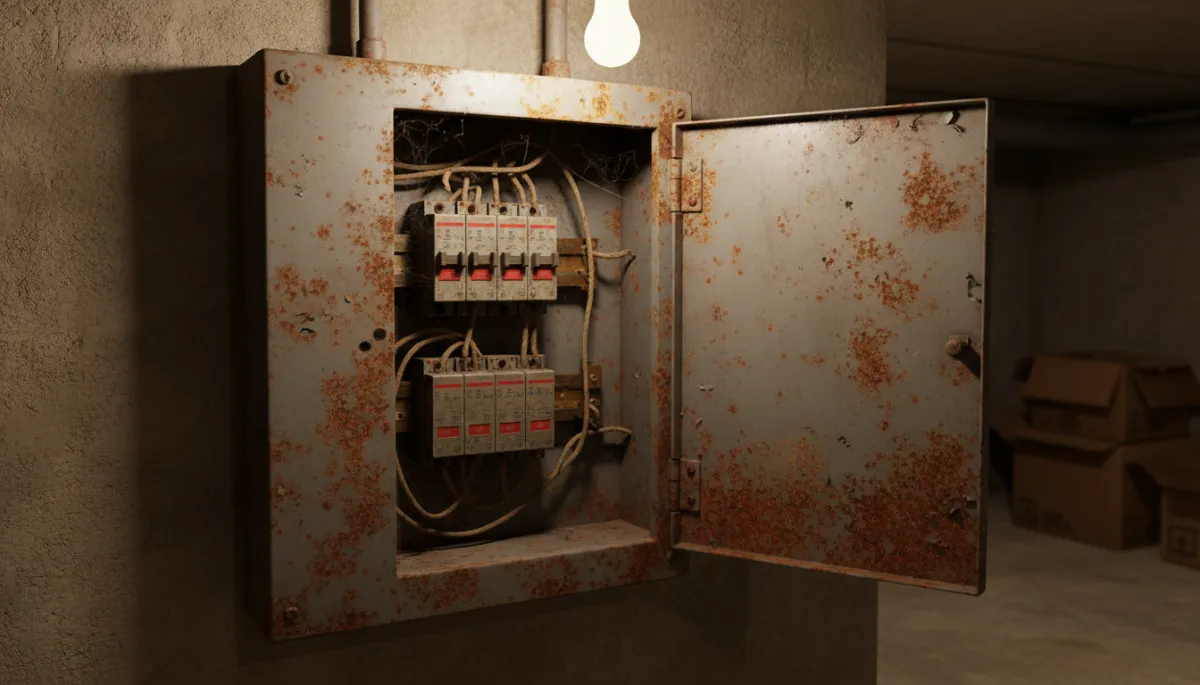
Age, rust, and outdated components often travel together in older North Mississippi homes.
6. Recalled or Known-Dangerous Panel Brands (Federal Pacific, Zinsco, Pushmatic)
Some panels are a problem before you even open the door, just based on the name on the label. Around North Mississippi, I still run into a fair number of:
- Federal Pacific Electric (FPE) Stab-Lok panels,
- Zinsco / GTE-Sylvania panels,
- and older Pushmatic panels with push-button breakers.
These brands have a long history of problems. Federal Pacific Stab-Lok breakers, for example, have been shown in testing to fail to trip at a much higher rate than modern breakers when there’s an overload or short. That means they sit there and let wires overheat instead of cutting power like they’re supposed to. If you Google “Federal Pacific panel Mississippi,” you’ll see plenty of articles and warnings from inspectors and electricians all over the country saying the same thing: these panels are a fire hazard and should be replaced, not “repaired.”
Zinsco and Pushmatic panels have their own issues — breakers that won’t trip, bus bars that melt or corrode, parts that are no longer made. I opened a Zinsco panel in Amory not long ago where the breaker handles looked fine, but the bus bar behind them was literally melted and pitted. The homeowner said, “But it’s been working for years.” That’s the problem. It “worked” right up until it almost didn’t.
If your panel says Federal Pacific, Zinsco, or Pushmatic anywhere on it, that’s a strong sign you need to talk seriously about a panel upgrade in Tupelo MS or wherever you’re located in the region. No amount of “it’s been fine so far” changes the design flaws built into these systems.
7. Still on a Fuse Box Instead of a Breaker Panel
Every once in a while, I walk into an older house in New Albany or Fulton and find a fuse box still hanging on. Back in the day, fuses were the standard, and when they’re sized correctly and not tampered with, they can be safe. The problem is, most fuse boxes I see today have been “creatively modified” over the years — bigger fuses than the wiring was designed for, pennies or foil behind fuses, add-on subpanels hanging off to the side. That’s not safe in 2026, especially with the kind of electrical loads modern families put on their systems.
If you’re still on a fuse box, you’re likely dealing with:
- older wiring that may not be grounded properly,
- limited capacity for modern appliances and HVAC,
- and a system that’s hard to insure and harder to sell to the next buyer.
From my point of view as a working electrician, a fuse box in 2026 is almost always a sign it’s time to plan a full upgrade. That doesn’t mean you have to do it tomorrow if everything’s stable, but it does mean you should be talking to a licensed electrician in Tupelo Mississippi or your local town about options and timing.
8. Double-Tapped Breakers (Two Wires on One Breaker)
This is one I see all the time in “flipped” houses and DIY additions. Somebody adds a shed, a hot tub, or a few extra outlets, opens the panel, and realizes there’s no open slots. Instead of installing the right equipment, they just jam two wires under one breaker screw and call it a day. That’s called a double-tap, and on most breakers, it’s not allowed and not safe. The connection can loosen over time, leading to arcing and heat right there at the breaker.
I opened a panel in Tupelo this summer where almost every 15-amp breaker had two wires stuffed under it. The house had been “updated” by a previous owner who was handy with a paintbrush but not so much with a torque screwdriver. That kind of work might not trip a breaker right away, but it’s not something I’d ever call safe. If you’re curious whether your panel has this issue, we can check it as part of our panel upgrade services in Tupelo or a basic inspection visit.
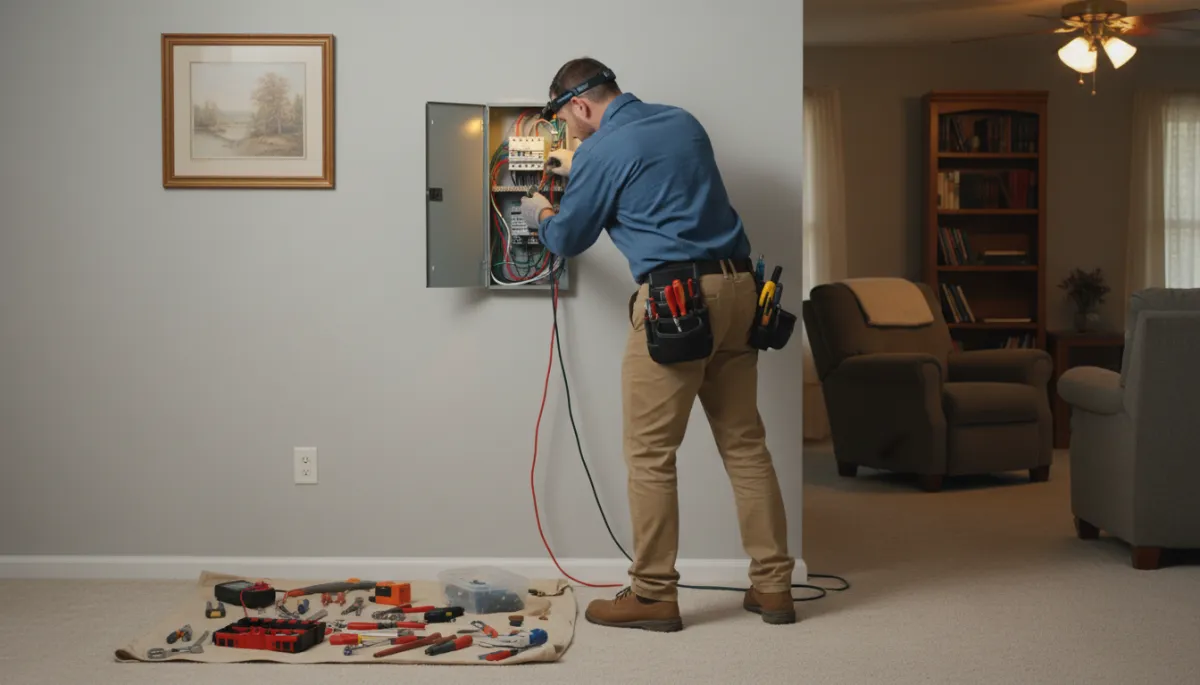
A proper panel upgrade fixes hidden DIY shortcuts and brings your system up to modern standards.
9. Panel Is Maxed Out with No Open Slots
Even if everything looks “neat,” a panel that’s completely full — or worse, stuffed with tandem breakers that were never designed for that panel — is a warning sign. A house I worked on in Verona had a 100-amp panel from the 70s with more circuits than the label allowed. Every space had a tandem breaker, and a couple of them were the wrong brand jammed into the bus. The homeowner wanted to add an EV charger and a shop out back. There was simply no safe way to do that without a larger, modern panel and service upgrade.
When your panel is maxed out:
- you have no room for future circuits or upgrades,
- you’re more likely to see unsafe add-ons like double-taps or incorrect breakers,
- and it’s a sign the panel may not match the way the house is actually used anymore.
If you’re planning a remodel, new HVAC, a hot tub, or an EV charger anywhere from Saltillo to New Albany, this is the time to talk about whether your panel is still the right size for your life — not after you’ve already overloaded it.
10. Physical Damage: Melted Plastic, Burned Wires, or Charred Spots
This one sounds obvious, but you’d be surprised how many times I hear, “Yeah, it got a little hot once, but it’s been fine since.” If you open your panel (carefully, and without touching anything) and see:
- melted breaker handles or plastic around a breaker,
- insulation burned off of wires,
- black or brown char marks inside the panel,
that’s not “cosmetic.” That’s evidence of overheating or arcing that’s already happened. I saw a panel in Amory where a loose neutral had been arcing for so long that the metal around it was eaten away. The homeowner said they’d heard a faint buzzing off and on for months. That’s the kind of thing that keeps me up at night as an electrician, because it means the warning signs were there, they just weren’t recognized.
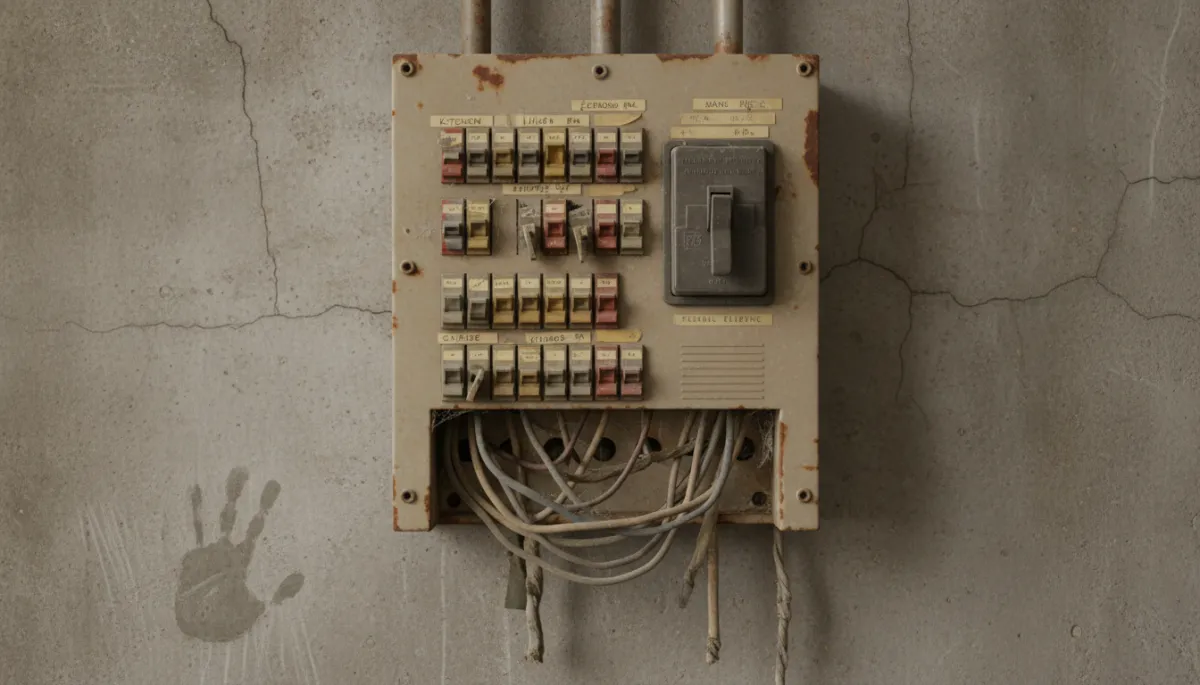
Outdated panels with visible damage are prime candidates for full replacement, not patchwork repairs.
FAQs: What Homeowners Around Tupelo Are Asking About Panel Safety
How do I know if my electrical panel is dangerous?
Start with your senses and the list we just walked through. If you have:
- breakers that trip often,
- burning smells or hot spots,
- flickering lights, rust, or visible damage,
your panel needs attention. If the label says Federal Pacific, Zinsco, or Pushmatic, or if you’re still on fuses, that’s another big clue. The only way to be 100% sure your electrical panel is dangerous in North Mississippi or not is to have a qualified pro open it up and inspect it. That’s part of what we do every week on our residential electrical services calls.
What does a burning smell from my breaker box mean?
A burning, melting, or “hot” smell from your breaker box almost always means something is overheating — a loose connection, a failing breaker, or damaged insulation. It’s one of the clearest signs your panel isn’t safe. Don’t spray anything on it, don’t keep resetting breakers, and don’t wait to see if it goes away. Turn off what you can safely and call a licensed electrician in Tupelo Mississippi or your town right away. Smells are often the first sign of a problem before you see visible damage.
How long do electrical panels last?
A good quality panel that’s installed correctly can often last 30–40 years. But that doesn’t mean it’s still the right fit for your house that whole time. Most homes in Tupelo, Saltillo, and the rest of Lee County use far more power now than they did when they were built — bigger HVAC systems, more electronics, EV chargers, you name it. Even if the panel hasn’t “failed,” it might be undersized or missing modern safety features. Once a panel gets past 25–30 years, I start having honest conversations with homeowners about planning for replacement instead of waiting for a failure.
What is a Federal Pacific panel and why is it dangerous?
Federal Pacific Electric (FPE) Stab-Lok panels were installed in a lot of homes from the 1950s through the 1980s. The short version is this: their breakers have a high failure rate when there’s an overload or short. In plain English, they sometimes don’t trip when they’re supposed to. That lets wires overheat and can lead to fires. There’s been a lot of testing and reporting on this over the years, and most electricians — myself included — recommend full replacement instead of trying to patch them. If you suspect you have a Federal Pacific panel in Mississippi, it’s worth getting a quote on replacement sooner rather than later.
Do I need a panel upgrade or just a breaker replacement?
Sometimes a single breaker goes bad and needs replacing — that happens. But if you’ve got multiple warning signs (heat, burning smell, flickering lights, double-taps, rust, or an outdated brand), swapping one breaker is like putting a new tire on a truck with a bent frame. When I come out to a home in Verona, Mooreville, or Amory, I look at the whole picture: panel age, brand, capacity, wiring condition, and how you actually use the house. Then I’ll tell you straight whether a simple repair is safe or if it’s time for a full upgrade. We do both repairs and full panel upgrades in Tupelo MS and the surrounding towns, so I don’t have a reason to push you one way or the other beyond what’s actually needed.
How much does a panel upgrade cost in Mississippi?
As of 2026, most panel upgrades in Mississippi fall somewhere between about $1,200 and $4,500, depending on what you need. A straight swap — same size panel, no major rewiring — is usually on the lower end. A full 200-amp upgrade with new meter base, grounding, and coordination with the power company can land in the middle to higher end of that range. Some city jobs, like more complex work in Jackson, can push higher. Here in North Mississippi, most of the projects we do for homeowners in Tupelo, Saltillo, and New Albany land in that typical range. The only way to get a real number for your house is to have us look at it and give you an itemized quote.
Wrapping Up: Early Fall Is the Time to Listen to Your Panel
We just made it through one of the hottest summers North Mississippi has seen in a while. Your AC, fridge, well pump, and everything else have been pulling hard on that electrical system for months. As we slide into early fall — Friday night lights, cooler evenings, and before the heaters kick on full-time — this is the perfect window to ask, “Is my breaker box safe?” and actually do something about it if the answer might be no.
If you’ve noticed any of the warning signs we talked about — tripping breakers, hot or smelly panels, flickering lights, rust, old brand names like Federal Pacific or Zinsco, fuse boxes, double-tapped breakers, or visible damage — don’t wait for the next heat wave or cold snap to push your system over the edge. A straightforward electrical panel inspection in Lee County MS or the surrounding area can tell you exactly where you stand and what your options are, from simple fixes to full upgrades.
Ready for a Straight Answer on Your Panel? Call S.I. Service Group
If you’re in Tupelo, Saltillo, Verona, Plantersville, Mooreville, Mantachie, Fulton, Amory, New Albany, or the surrounding North Mississippi area and you’re wondering whether your electrical panel is dangerous, I’d be glad to take a look and give you an honest, no-fluff opinion. My team and I at S.I. Service Group work on panels every day — from simple breaker replacements to full panel upgrades in Tupelo MS and beyond — and we treat your home like it was our own family living there.
Call S.I. Service Group at 662-523-5514 to schedule a panel inspection or talk through what you’re seeing. Whether you just want reassurance that everything’s in good shape or you’re ready to plan an upgrade, we’ll walk you through it in plain language and make sure your home’s electrical system is ready for whatever North Mississippi weather throws at it next.