Commercial Oven Repair in Tupelo & North MS
Restaurant Equipment Repair, Commercial Convection Ovens, Tupelo MS, North Mississippi
Commercial Convection Oven Not Heating Evenly? Here's What We Check First in Tupelo and North Mississippi
Commercial convection oven cooking unevenly or failing to reach temperature in Tupelo or North Mississippi? S.I. Service Group breaks down the real causes — igniter failures, bad elements, thermostat drift — and when to call a tech before your kitchen shuts down.
How a Commercial Convection Oven Actually Works (And Where It Fails)
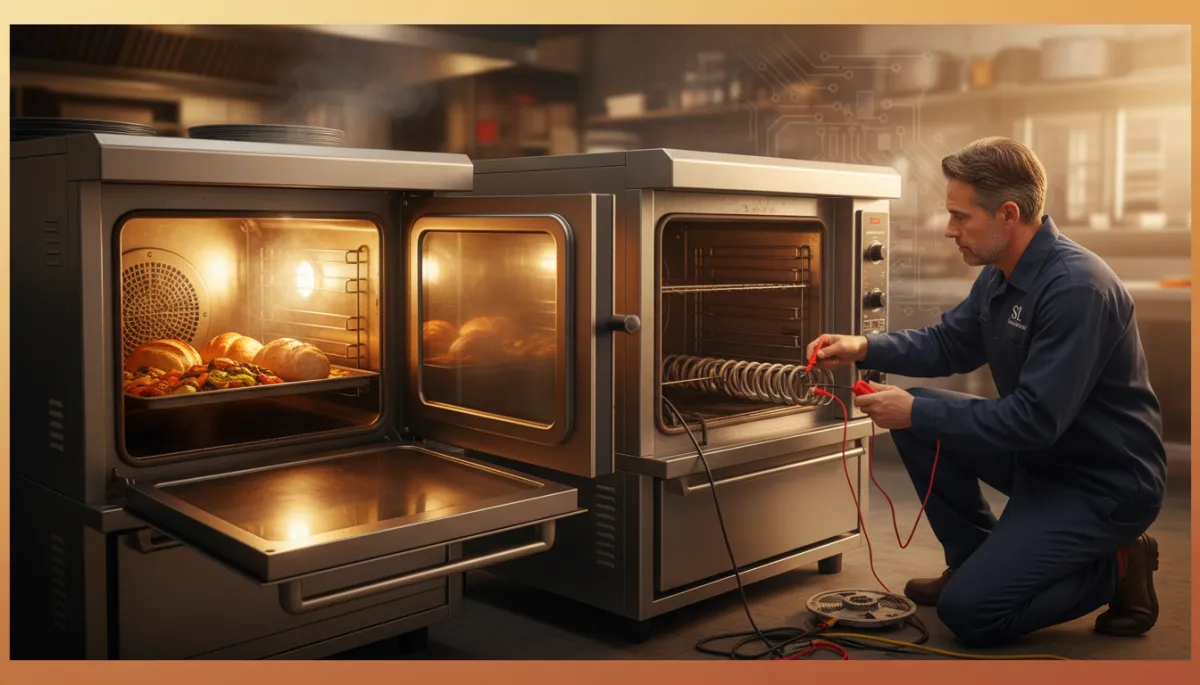
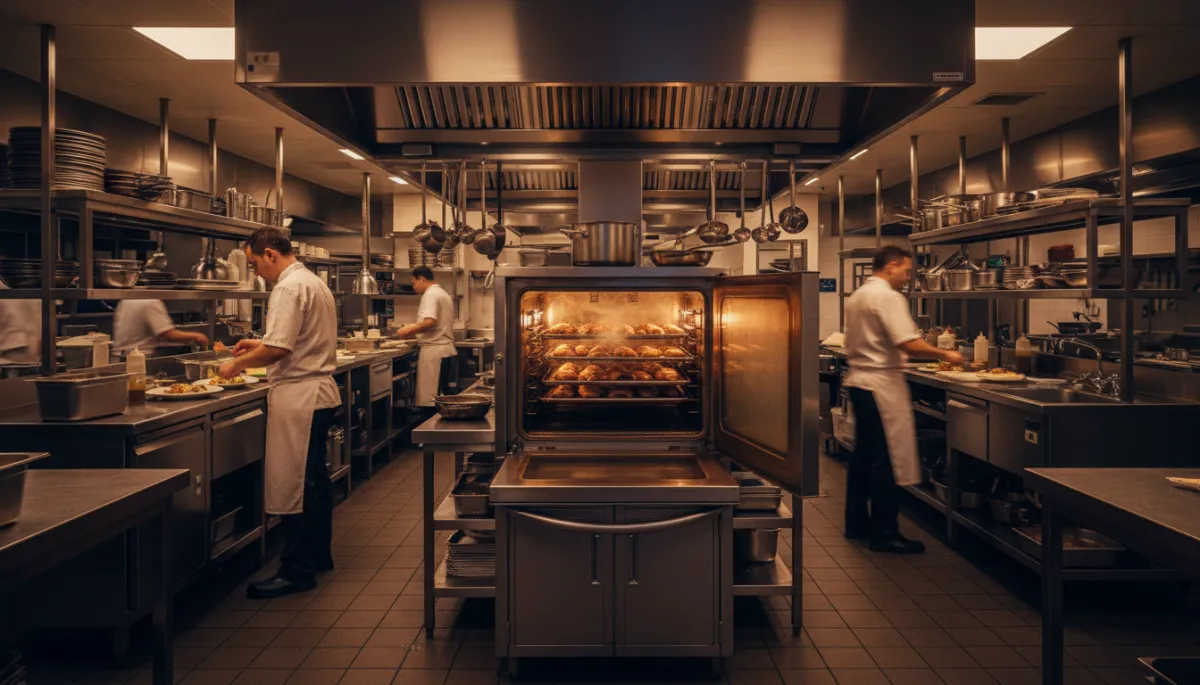
Let me put it in straight kitchen terms. A commercial convection oven is just a heated box with a blower pushing hot air around. In a pizza shop in Tupelo, a school cafeteria in Booneville, or a fast-casual line in Corinth, that blower is what’s supposed to keep you from having hot spots and pale corners on your pans. When it’s working right, you get even browning front to back and top to bottom. When it’s not, you waste product and you risk serving undercooked food — which is a health inspection problem waiting to happen in North Mississippi counties like Lee, Prentiss, Union, and Pontotoc.
On a gas convection oven, you’ve got a burner, an igniter, a gas valve, and usually a temperature control (solid-state or mechanical thermostat). On an electric unit, it’s bake and broil elements, sometimes a third element, plus a cycling thermostat or electronic control. All of that is wrapped around a blower motor and fan that move the air. Any of those pieces can fail, but uneven heating usually points us toward airflow, weak ignition, or control calibration — not just “turn it up 25 degrees” like a lot of folks try first.
Uneven Heating: The Blower Motor and Fan Blade Are Usually the First Place We Look
When you tell me your restaurant oven is not heating evenly in North Mississippi — hot on one side, pale on the other, or the back row always burns — I’m going straight to the blower section. If that blower motor isn’t moving the air right, you can have perfect gas pressure and perfect elements and still ruin pans of biscuits or sheet cakes in your Tupelo or Iuka kitchen.
Here’s what I’m checking:
- Blower motor amperage draw: I put a clamp meter on the motor leads and compare the amp draw to the nameplate. If it’s pulling high, the bearings are usually getting tight or the wheel is dragging. If it’s low, you may have a weak motor that won’t maintain speed under load, which gives you dead spots in the cavity.
- Fan blade or wheel condition: Bent blades, missing vanes, or a wheel packed with grease and flour dust (common in pizza shops and bakeries) will throw the airflow pattern off. That’s where you get one pan cooking fine and the one right beside it staying blond in the middle.
- Motor bearings: If I can grab the shaft and feel side play or hear grinding when it spins down, those bearings are on their way out. Worn bearings slow the fan, and that kills convection. Many times, just replacing a dragging blower motor in a school cafeteria oven in Monroe County has fixed “uneven baking” complaints overnight.
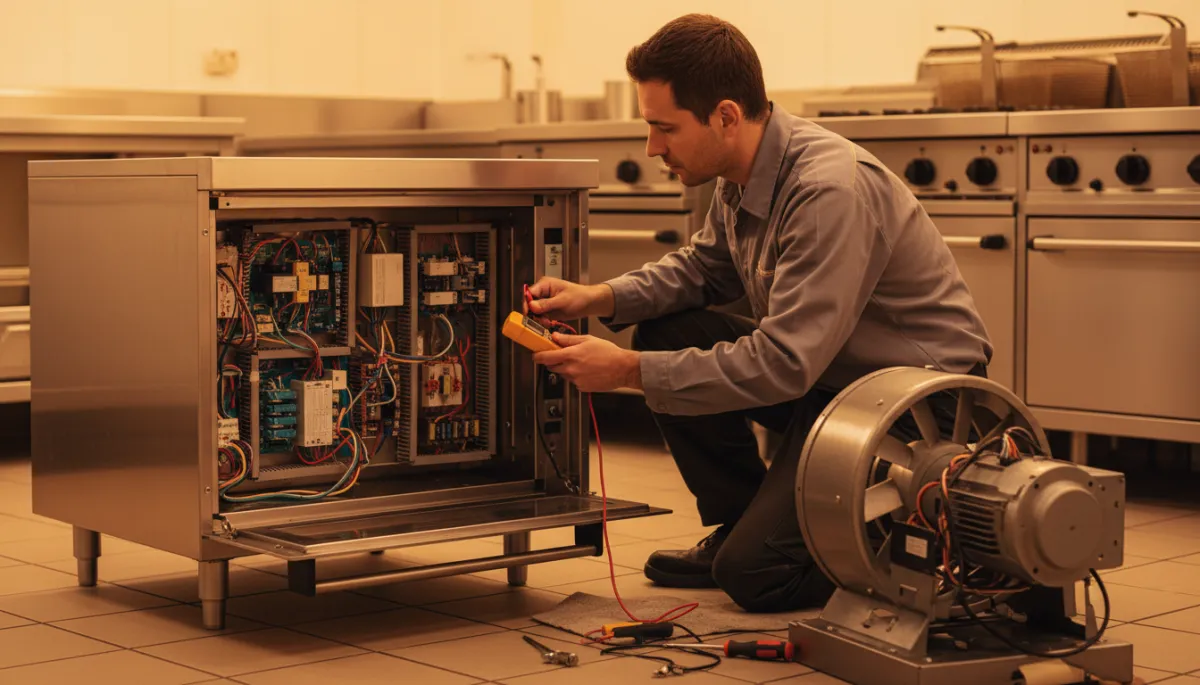
Proper testing of motors, elements, and igniters beats guesswork part swapping every time.
Igniter Failures in Gas Convection Ovens: What the Numbers Tell Us
Gas convection ovens in North Mississippi have a hard life. Our humidity — especially in places like Corinth, Iuka, and down through Tishomingo and Alcorn counties — is rough on igniters and burners. Moisture and grease build-up corrode the igniter and burner ground path, and that shows up in the microamp readings long before the oven completely quits lighting.
When I’m called for commercial convection oven repair in Tupelo MS and it’s a gas unit, I’ll put my meter in series with the flame sensor and read flame rectification microamps. Most manufacturers want to see somewhere in the 2.5–5.0 µA range, some higher. If I’m seeing 0.8–1.2 µA, that igniter or flame sensor is weak or we’ve got a grounding issue. That’s where commercial oven igniter replacement comes in — not just when it stops lighting completely, but when it’s borderline and causing nuisance shutdowns and uneven heat cycles.
I’m also checking:
- Igniter resistance cold vs. hot, to see if it’s drifting out of spec when it heats up.
- Gas valve opening smoothly, with no delayed ignition “whoomph” that can scare the line cooks and damage the burner.
- Burner ports clean and not rusted shut from years of humid air and chemical cleaners.
Weak ignition can cause the burner to drop out mid-cycle, which means the oven coasts on stored heat. That’s where you see one batch of chicken coming out fine, the next batch 20 degrees low in the center. From a health inspector’s standpoint, that’s a big problem.
Bake Element and Broil Element Testing in Electric Convection Ovens
On electric convection ovens, hot spots usually come back to an element issue or a selector/control problem. I don’t just look to see if the element is glowing; I put a meter on it. I’ll ohm out the bake element and broil element individually, comparing to the manufacturer’s resistance specs. A partially open element can still glow but not put out full wattage, so your oven takes forever to recover between loads in a busy fast-casual kitchen in Tupelo or a catering operation out in Union or Tippah County.
I’ll also test the selector switch for continuity on each function. If that selector is burned on one pole, you might only be getting one element instead of both. That’s a classic “won’t come up to temp” complaint that ends with a $30 switch instead of a $300 control board — if you test it right the first time. During restaurant equipment repair in Tupelo, I see a lot of unnecessary parts thrown at ovens just because nobody pulled out a meter and checked basic resistance and continuity.
Cycling Thermostat Calibration Drift: The Problem Nobody Talks About
A big one that sneaks up on a lot of kitchens is thermostat drift. Mechanical cycling thermostats don’t fail overnight; they slowly wander. I’ll walk into a full-service restaurant in Booneville where the chef swears 350°F is cooking like 300°F, and he’s right — but the knob still says 350°F, so nobody believes him until we put a calibrated thermocouple in the cavity and watch the cycle.
When I check a cycling thermostat, I’m watching:
- Cut-in and cut-out temperatures versus the setpoint — is it overshooting 50 degrees then dropping too low before it turns back on?
- Total swing. A tight, healthy oven might swing 15–20°F. I see some older units in Iuka and New Site swinging 60–80°F. That’s where your cookies are perfect one rack and underbaked the next.
Sometimes we can recalibrate; sometimes the bulb or capillary is just worn out and the fix is replacement. Either way, ignoring thermostat drift costs you money in wasted product and re-fires, and it can push internal temperatures into the danger zone on proteins — not something you want when the health department walks into your North Mississippi kitchen.
When an Oven "Won't Come Up to Temp" — It's Not Always What You Think
“It just won’t get hot” is what I hear on a lot of calls for commercial oven service in North Mississippi. Sometimes that’s true — bad element, bad gas valve, failed relay. But a lot of times, the oven will get there eventually; it just can’t recover between loads or it’s losing heat faster than it can make it because of a door gasket or fan issue. In busy pizza shops and cafeterias, that feels the same to the cooks: tickets backing up and food not cooking on time.
When I troubleshoot a “won’t come up to temp” complaint, I’m checking:
- Preheat time with an accurate thermometer — not just the display. If it’s slow, I look at elements, gas pressure, and burner/igniter performance first.
- Door gasket condition and hinge alignment. A sagging door in a high-volume Tupelo kitchen can bleed hundreds of BTUs constantly, making the controls look bad when the real problem is mechanical.
- Selector switch and safety circuits. A tripped high-limit or a bad contact can leave you running on half the heat you think you have.
Serving Tupelo, Corinth, Booneville, Iuka, New Site, and All of North Mississippi
At S.I. Service Group, this is what we do every day. I’m Dan Southwick, and my team and I handle commercial convection oven repair in Tupelo MS and all across North Mississippi — Lee, Prentiss, Union, Pontotoc, Itawamba, Monroe, Alcorn, Tishomingo, Tippah, and Marshall counties. We work on pizza shop ovens in Corinth, school cafeterias in Booneville, church and catering ovens out in New Site and the smaller towns, and full-service restaurant lines all over the region. If your restaurant oven is not heating evenly in North Mississippi, we’ve probably seen that exact problem this month already.
If you need a tech who actually checks igniter microamp readings, element resistance, blower motor amp draw, and thermostat calibration — instead of just guessing and ordering parts — call S.I. Service Group. We’re licensed, insured, and focused on keeping your kitchen online, not selling you equipment you don’t need.
For fast, professional restaurant equipment repair in Tupelo and reliable commercial oven service in North Mississippi, reach out to S.I. Service Group today at (662) 523‑5514 or through siservicegroup.com. We’ll get a tech on-site, find the real cause of your uneven heat, and get your convection oven back to cooking the way it should — before it costs you another pan of product or a failed health inspection.