Commercial Dishwasher Not Sanitizing Properly — This Is a Health Code Problem
Commercial Dishwashers, Restaurant Maintenance, Tupelo MS
Solving Commercial Dishwasher Sanitizing Problems for Restaurants in North Mississippi
As a seasoned commercial kitchen equipment technician working throughout Tupelo and North Mississippi, I see the same dishwasher sanitizing problems over and over. This guide walks you through the real‑world causes, fixes, and when to call a professional so your restaurant stays clean, compliant, and open for business.
Why Proper Dishwasher Sanitizing Matters in Tupelo, MS Restaurants
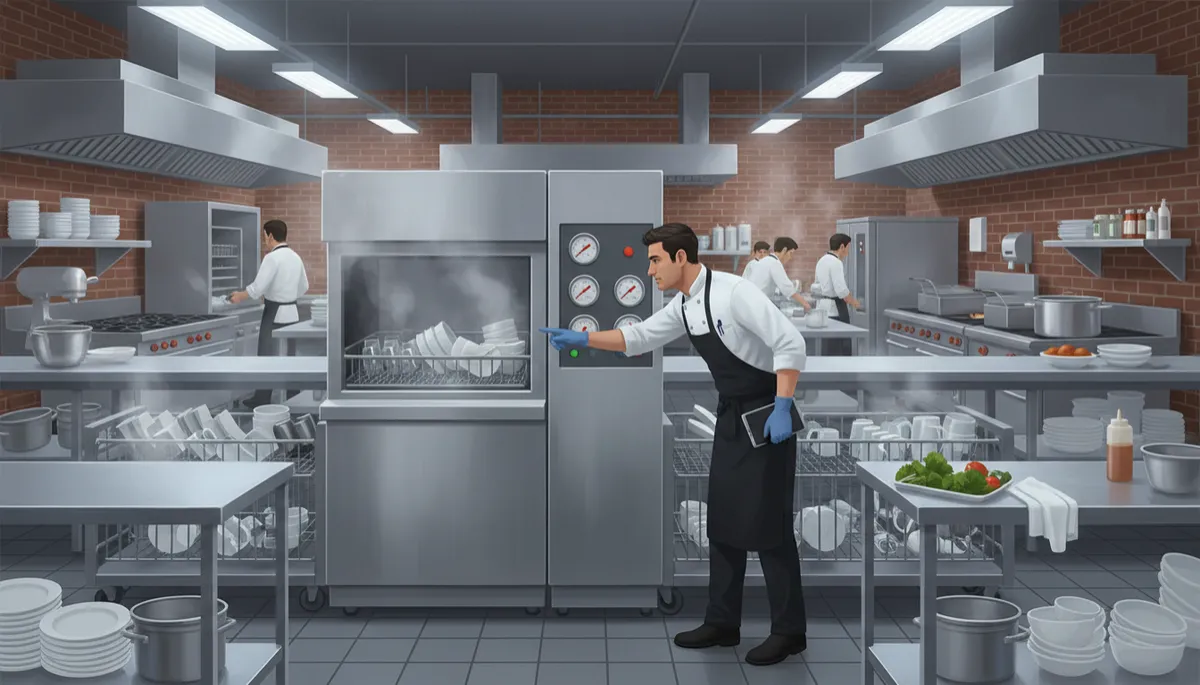
In North Mississippi, especially around Tupelo, MS, health inspectors pay close attention to one thing in your dish room: sanitizing performance. If your commercial dishwasher is not reaching proper temperatures or chemical levels, you risk:
- Health code violations and low inspection scores for your Tupelo restaurant
- Foodborne illness risks from improperly sanitized plates, glasses, and utensils
- Lost customer trust if cloudy glasses or dirty dishes reach the table
From Oxford down to Columbus and across to Tupelo, I’ve helped countless operators get their dish machines back into compliance. The good news is that most sanitizing issues can be traced to a few common causes that we can troubleshoot step by step.

Common Commercial Dishwasher Sanitizing Problems in North Mississippi
Whether you run a busy Tupelo café or a high‑volume cafeteria in North Mississippi, the same sanitizing complaints keep coming up. Here are the issues I’m called out for most often:
- Final rinse temperature too low on high‑temp dishwashers
- No or low sanitizer concentration on low‑temp chemical machines
- Cloudy glasses and residue even after a full cycle
- Spots, streaks, or film on plates and flatware
- Slow recovery time between cycles during rush periods
“Nine times out of ten, when a Tupelo restaurant calls me about sanitizing failures, it comes down to water temperature, water quality, or chemical delivery—not the machine ‘being bad’.”
— Senior Technician, SI Service Group
If you’re seeing any of these symptoms in your Tupelo or North Mississippi kitchen, it’s time to walk through a structured troubleshooting process before that next surprise inspection.
Step‑by‑Step Troubleshooting: High‑Temp vs Low‑Temp Dishwashers
First, identify which type of commercial dishwasher you have in your Tupelo restaurant:
- High‑temperature machine – Uses very hot water (usually 180°F+ final rinse) to sanitize.
- Low‑temperature machine – Uses lower water temperatures with a chemical sanitizer, often chlorine‑based.
High‑Temp Dishwasher Sanitizing Problems
For high‑temp units in Tupelo and surrounding North Mississippi areas, the most common sanitizing failure is low final rinse temperature. Health codes typically require a final rinse of around 180°F at the manifold (check your local code and manufacturer manual).
- Verify incoming hot water supply. In many Tupelo kitchens, the water heater is undersized or shared with other equipment. Have staff run the dishwasher while you check the hot water temperature at a nearby sink with a thermometer.
- Check booster heater performance. High‑temp machines often rely on an electric or gas booster. If the booster can’t keep up with rush‑hour demand, your final rinse temperature will sag below sanitizing range.
- Inspect rinse nozzles and scale buildup. In North Mississippi, hard water can clog jets and reduce flow, which affects both coverage and temperature. Descale or replace clogged rinse arms as needed.
Low‑Temp Chemical Dishwasher Sanitizing Problems
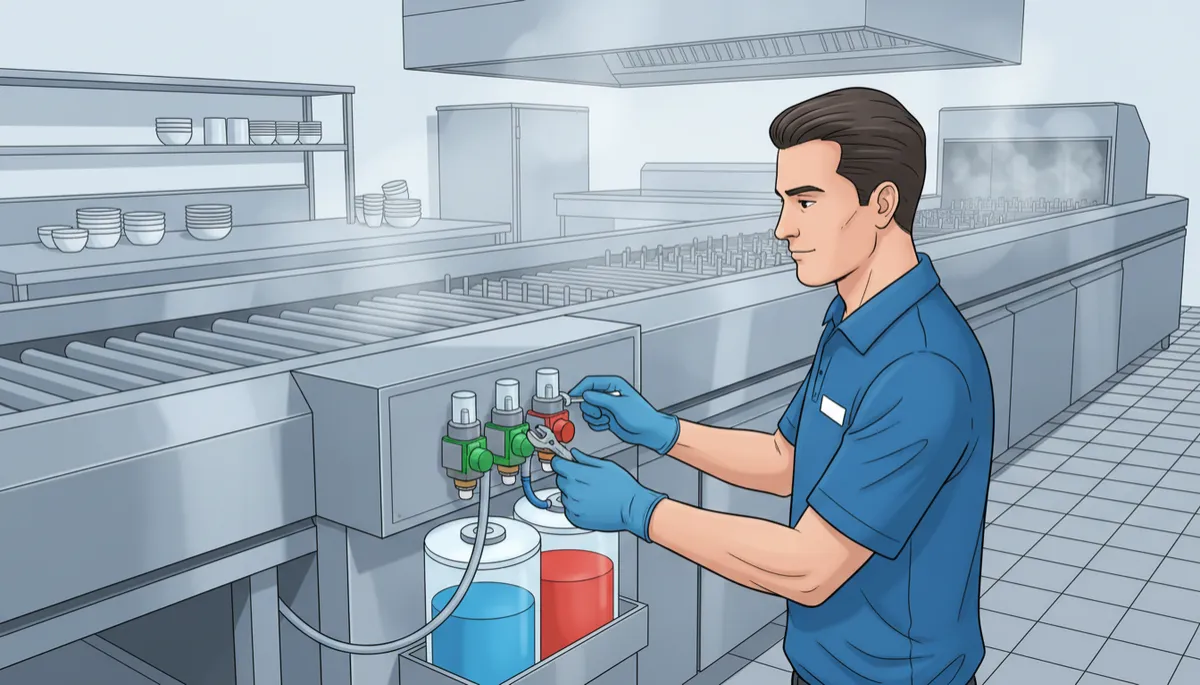
Low‑temp machines are popular in smaller Tupelo restaurants because they use less energy. But they’re also more sensitive to chemical delivery issues. If your sanitizer isn’t being dispensed correctly, your dishes are not truly sanitized.
- Check sanitizer and rinse aid levels. Make sure chemical buckets are not empty, tubes are fully submerged, and pickup lines aren’t kinked or cracked.
- Use test strips correctly. In Tupelo, health inspectors will often ask staff to demonstrate sanitizer testing. Keep manufacturer‑approved test strips on site and verify concentration daily according to your chemical provider’s specs.
- Inspect the chemical pump. Worn tubing, weak pump motors, or air leaks can reduce sanitizer delivery. If you suspect a pump issue, it’s time to schedule a professional service call.
How North Mississippi Water Quality Affects Your Dishwasher
One thing I see all over North Mississippi, including the Tupelo, MS area, is the impact of hard water on commercial dish machines. Mineral‑rich water leaves scale inside:
- Booster heaters and heat exchangers, reducing temperature performance
- Rinse arms and nozzles, causing poor coverage and inconsistent sanitizing
- Interior surfaces of the tank, creating rough surfaces that hold soil and biofilm
Over time, this buildup leads to longer cycle times, cloudy dishes, and sanitizing failures. The simplest fix for many Tupelo restaurants is to install or service a water softener or filtration system feeding the dish machine.
Daily, Weekly, and Monthly Maintenance for Tupelo Dishwashers
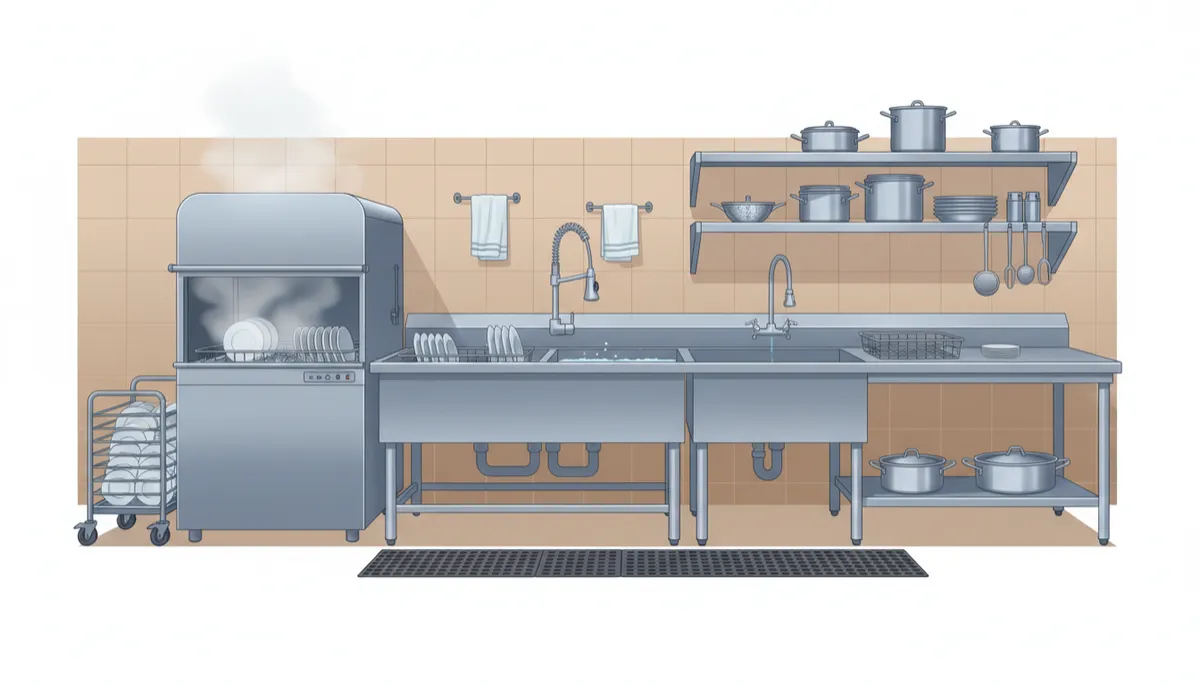
From a technician’s point of view, the restaurants in Tupelo that rarely need emergency dishwasher calls are the ones that follow a simple maintenance routine. You don’t need to be a mechanic to handle these tasks—just consistent.
Daily Tasks for Dish Staff
- Scrape and pre‑rinse dishes before loading to reduce soil load and chemical demand.
- Clean scrap screens, strainers, and wash arms at the end of each shift.
- Check sanitizer levels (for low‑temp) and log test strip results.
- Verify final rinse temperature and record it on a simple daily checklist.
Weekly and Monthly Tasks for Managers or Maintenance
- Inspect rinse nozzles for clogs and soak them in descaling solution if needed.
- Check all chemical lines, pumps, and connections for leaks or wear.
- Review logs of temperatures and sanitizer readings to spot trends before they become failures.
- Schedule a professional inspection and deep descaling as needed, especially before peak seasons in Tupelo.
When to Call a Professional Dishwasher Technician in Tupelo, MS
Not every issue can or should be handled in‑house. As an experienced technician serving Tupelo and North Mississippi, I recommend calling a pro when:
- Your final rinse temperature stays low even after verifying hot water supply and booster settings.
- Sanitizer levels are inconsistent despite full chemical buckets and new test strips.
- The machine is tripping breakers, leaking, or showing error codes you don’t recognize.
- You’ve failed or nearly failed a health inspection because of sanitizing problems.
Restaurant downtime in Tupelo is expensive. A qualified commercial kitchen technician can quickly diagnose whether your issue is with the dishwasher itself, the booster heater, the water supply, or the chemical system—and get you back in compliance fast.
If you operate a restaurant, cafeteria, church kitchen, or school in Tupelo or anywhere in North Mississippi, you can learn more about professional dishwasher service options by visiting SI Service Group .
Local SEO Considerations: Keeping Your Tupelo Restaurant Search‑Ready and Sanitary
Modern diners in Tupelo, MS often search for restaurants online and read reviews mentioning cleanliness and sanitation. If your dishwashing system isn’t performing, it can show up in customer photos and comments just as quickly as it shows up on a health inspection report.
- Keep your Tupelo restaurant compliant so health scores stay high and visible on review sites.
- Train staff to pull cloudy glasses or spotted plates before they ever reach the dining room or social media.
- Mention your commitment to sanitation and clean dishware on your website and menu materials.
Partnering with a reliable commercial kitchen service provider in North Mississippi also helps with your online presence. When your equipment is maintained by a professional team like SI Service Group , you reduce the risk of negative reviews tied to dirty dishes or glassware.
Why Work with a Local North Mississippi Dishwasher Service Team
National service companies don’t always understand the specific challenges we see in Tupelo and North Mississippi—from hard water conditions to older buildings with limited electrical capacity. A local team sees the same patterns every day and knows how to design solutions that work in this region.
- Faster response times for dish machine breakdowns during Tupelo lunch and dinner rushes
- Technicians familiar with local health department expectations and inspection patterns
- Recommendations tailored to North Mississippi water quality, utility costs, and building infrastructure
To explore ongoing preventive maintenance plans, emergency repair services, or new commercial dishwasher installations for your Tupelo restaurant, visit siservicegroup.com and connect with a technician who understands North Mississippi kitchens.
FAQ: Commercial Dishwasher Sanitizing Problems in Tupelo & North Mississippi
How hot should my commercial dishwasher get to sanitize dishes?
For most high‑temperature commercial dishwashers used in Tupelo, MS, the final rinse temperature at the manifold should be around 180°F (82°C), and the surface temperature of dishes should reach at least 160°F. Always confirm with your manufacturer’s manual and local health code requirements for North Mississippi.
Why are my glasses cloudy even though the dishwasher is working?
Cloudy glasses in Tupelo restaurants are usually caused by hard water, incorrect detergent or rinse aid settings, or over‑loading racks. Mineral deposits from North Mississippi water can etch glass over time. A technician can test your water, adjust chemical settings, and recommend softening or filtration if needed.
How often should I test sanitizer levels in my low‑temp dishwasher?
In a busy Tupelo kitchen, you should test sanitizer levels at least once per shift, and any time you change chemical buckets or notice spotting issues. Use the correct test strips recommended by your chemical supplier and log the readings. Health inspectors in North Mississippi often ask staff to demonstrate this process during inspections.
Can I run my restaurant without a working commercial dishwasher?
Technically, you may be able to use a properly set up three‑compartment sink as a backup, but it must meet all sanitizing requirements and be approved by your local health department. In practice, most Tupelo restaurants can’t keep up with volume this way. If your dishwasher is down, contact a local technician or SI Service Group immediately to minimize downtime and risk of violations.
Do I really need a preventive maintenance plan for my dishwasher?
From a technician’s perspective, a basic preventive maintenance plan is one of the best investments a Tupelo restaurant can make. Regular inspections catch worn pumps, scale buildup, and temperature issues before they cause failed inspections or weekend breakdowns. You can explore maintenance options tailored to North Mississippi operations at siservicegroup.com .
Final Thoughts: Keep Your Tupelo Dish Machine Sanitizing the Way Inspectors Expect
A commercial dishwasher is one of the hardest‑working pieces of equipment in any Tupelo, MS restaurant. When sanitizing problems show up, they affect everything—health scores, customer perception, and your ability to serve safely during busy shifts.
By understanding the common issues we see across North Mississippi—water temperature, chemical delivery, and water quality—and by following a simple maintenance routine, you can prevent most emergencies before they start. And when you do need help, working with a local, experienced technician ensures your dish machine is repaired quickly and correctly for Tupelo’s health code standards.