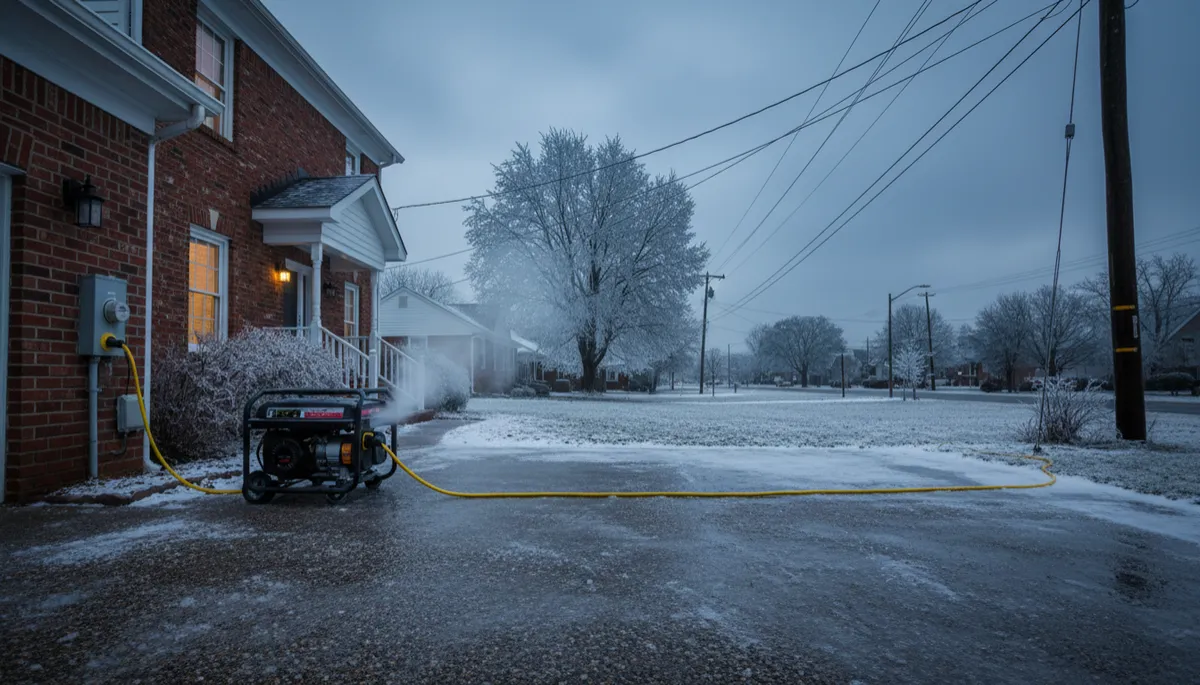
Can I Plug a Portable Generator Into My House During a Power Outage? A Tupelo Electrician Explains
Shop Talk, Portable Generators, North Mississippi Ice Storm Prep
Can I Plug a Portable Generator Into My House During a Power Outage? A Tupelo Electrician Explains
I’m Dan, owner and lead electrician at S.I. Service Group here in Tupelo, and I want your family warm, safe, and alive when the next North Mississippi ice storm knocks the power out.
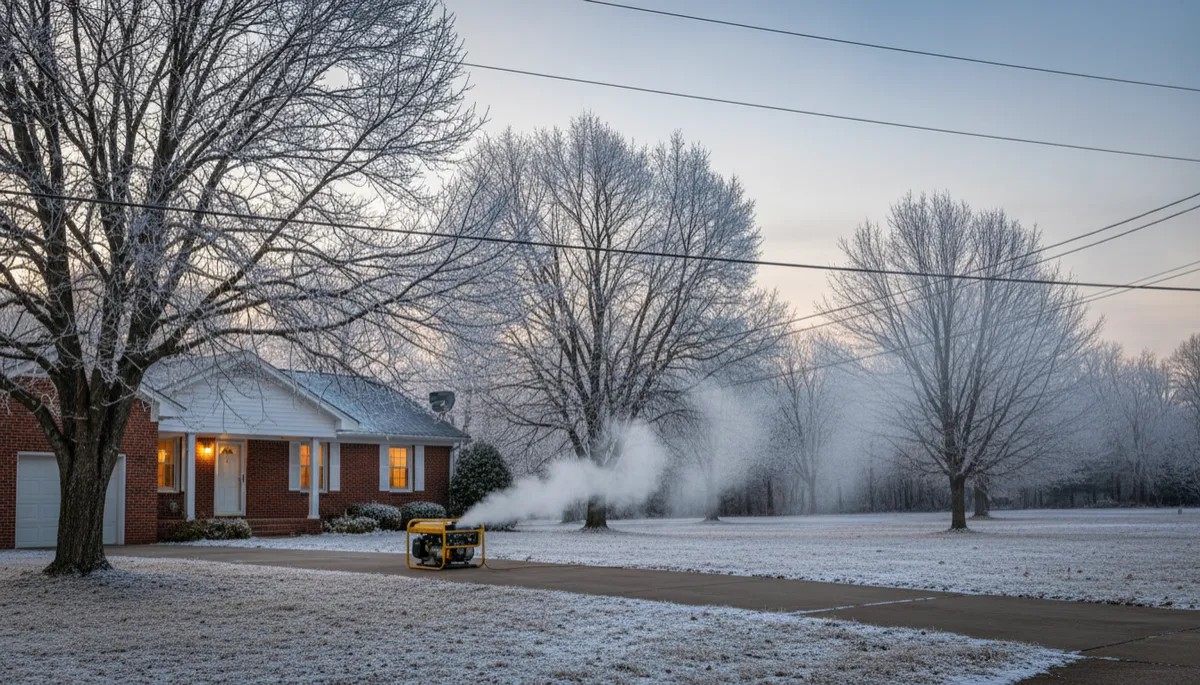
Every winter, usually between November and February, I get the same panicked call: “Dan, the power’s out, it’s 20 degrees, and I’ve got a portable generator in the garage. Can I just plug it into my house somehow?” If you’re wondering the same thing, you’re not alone – but how you hook that generator up can be the difference between staying comfortable and sending deadly power back out on the utility lines or filling your house with carbon monoxide.
I work storms all over North Mississippi – Tupelo, Saltillo, Verona, Plantersville, Mooreville, Mantachie, Fulton, Amory, New Albany – and I’ve seen about every wrong way to do this you can imagine. In this post, I’ll walk you through how to safely power parts of your home with a portable generator during an ice-storm outage, what NOT to do, and when it’s time to call a licensed electrician in Tupelo to set things up the right way before the weather turns bad.
The Short Answer: Yes, But Not the Way Most Folks Think
Can you use a portable generator to power your house during a power outage? Yes – but you cannot just stick a cord into a random outlet or your dryer plug and “backfeed” the panel. That’s illegal, it’s against electrical code, and it can kill a lineman or your neighbor in a heartbeat. The safe way is with a properly installed transfer switch or interlock kit, a power inlet box, and the right generator cord and load plan.
The Dangerous Myths: “Suicide Cords” and Dryer Outlets
The Saltillo “Suicide Cord” Call
A couple winters back, I got a call from a homeowner in Saltillo. Ice had taken half the limbs off his oak tree and the power had been out for almost a day. When I pulled up, I saw a portable generator humming in the carport and a bright orange cord snaked inside. I followed it and my stomach dropped – he had a homemade male-to-male “suicide cord” plugged into a living room outlet, trying to feed the whole house backwards.
Here’s why it’s so bad: when you plug a generator into a house circuit without a proper transfer switch or interlock kit, you’re not just powering your lights and fridge. You’re energizing the utility lines outside your house. The transformer on the pole works both ways – it can step voltage up as well as down. So your little generator can send thousands of volts back out on lines that a lineman in a bucket truck thinks are dead. That’s how people die doing storm restoration.
The Dryer Outlet Myth
Same winter, different house – this one in Mantachie. The homeowner proudly showed me how he “got around” buying a transfer switch by plugging his portable generator into the dryer outlet with a homemade cord. He thought the big 30-amp breaker for the dryer meant he was safe. He wasn’t. He had no way to positively disconnect from the utility, and his neutral and grounding were all wrong. If the utility had backfed or a lineman had been working nearby, that setup could have turned deadly fast.
The Right Hardware: Interlock Kits, Transfer Switches, and Standby Generators
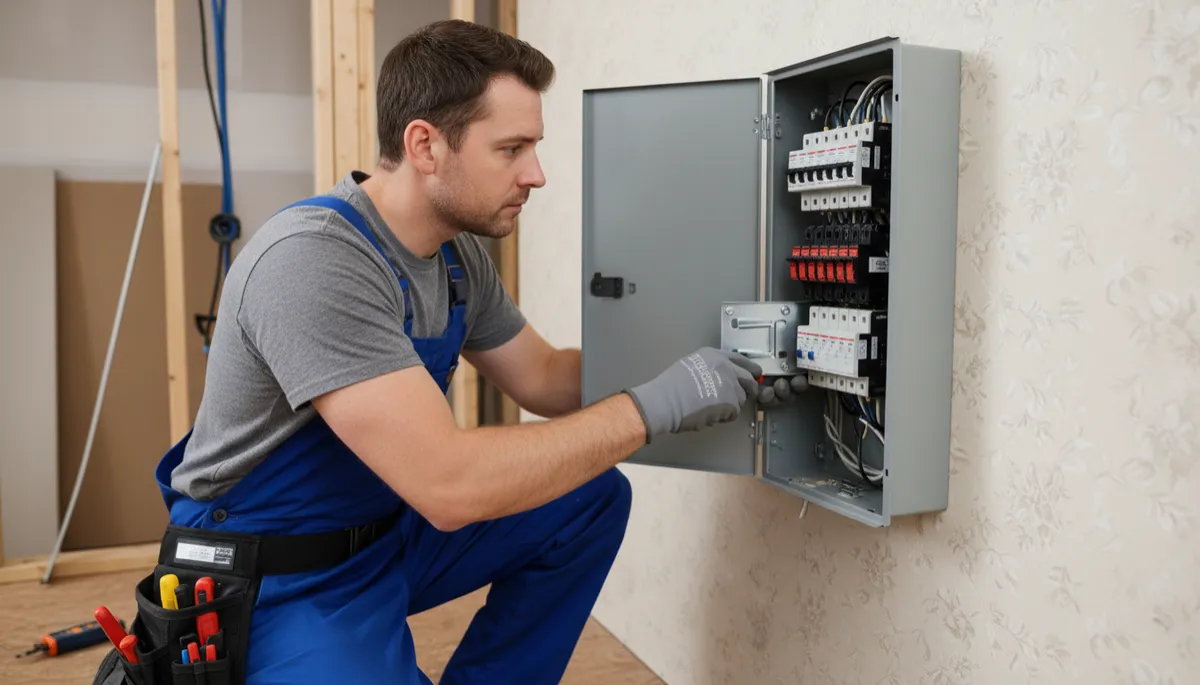
Close-up of a licensed electrician in work clothes installing an interlock kit on a residential...
Interlock Kit on Your Main Panel
For a lot of homes in Tupelo, Mooreville, and Verona, an interlock kit is a solid, cost-effective option. An interlock is a mechanical device on your main breaker panel that physically prevents your main breaker (utility power) and your generator breaker from being on at the same time. You still use your existing panel, but you can safely feed selected circuits from a portable generator through a power inlet box.
Manual Transfer Switch
A manual transfer switch is a separate, smaller panel mounted next to your main panel. We move your essential circuits – furnace blower, fridge, freezer, a couple of lighting circuits, maybe a well pump – into that switch. When the power goes out, you plug your portable generator into the inlet box, flip the transfer switch from “line” to “generator,” and those circuits are safely powered with no backfeed risk.
| Option | Pros | Cons | Best For |
|---|---|---|---|
| Interlock Kit + Inlet Box | Uses existing panel, flexible circuit choice, cost-effective, safe when installed correctly. | Requires manual breaker operation and load management. | Homeowners with a decent portable generator who want a safe, code-compliant hookup. |
| Manual Transfer Switch | Dedicated to critical circuits, easy operation, very clear separation of utility vs. generator. | Limited to selected circuits, some upfront wiring work. | Folks who just want heat, refrigeration, and a few lights during outages. |
| Whole-Home Standby Generator | Automatic operation, can run most or all of the home, no refueling during gas supply. | Higher upfront cost, more involved installation and permitting. | Homeowners wanting seamless backup power with minimal manual work. |
Inlet Boxes, Cords, and GFCI Protection: The Right Way to Connect
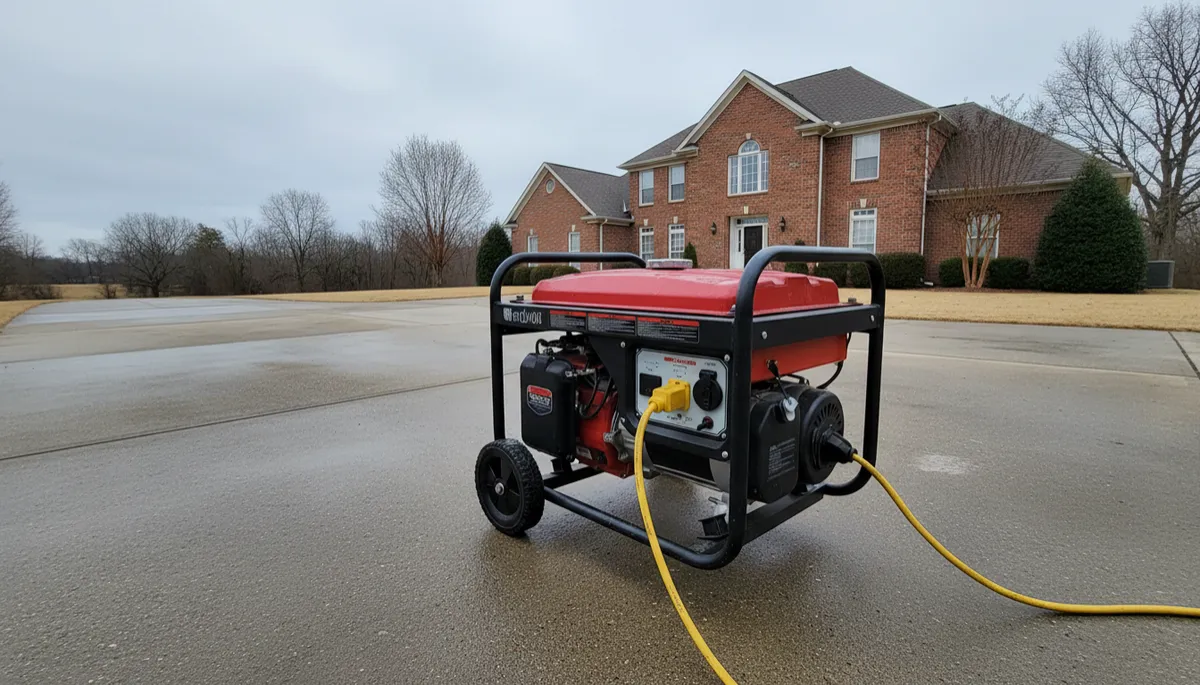
Portable generator sitting on a concrete driveway at least 20 feet from a brick North...
Power Inlet Box: Your “Plug-In” Point
Instead of shoving a cord through a window, we install a weatherproof power inlet box on the outside of your home, usually near your electrical panel. This inlet is wired directly to your transfer switch or interlock breaker. When the power goes out, you roll the generator into the driveway or yard, plug one end of the generator cord into the generator and the other into this inlet, and you’re ready to safely feed your selected circuits.
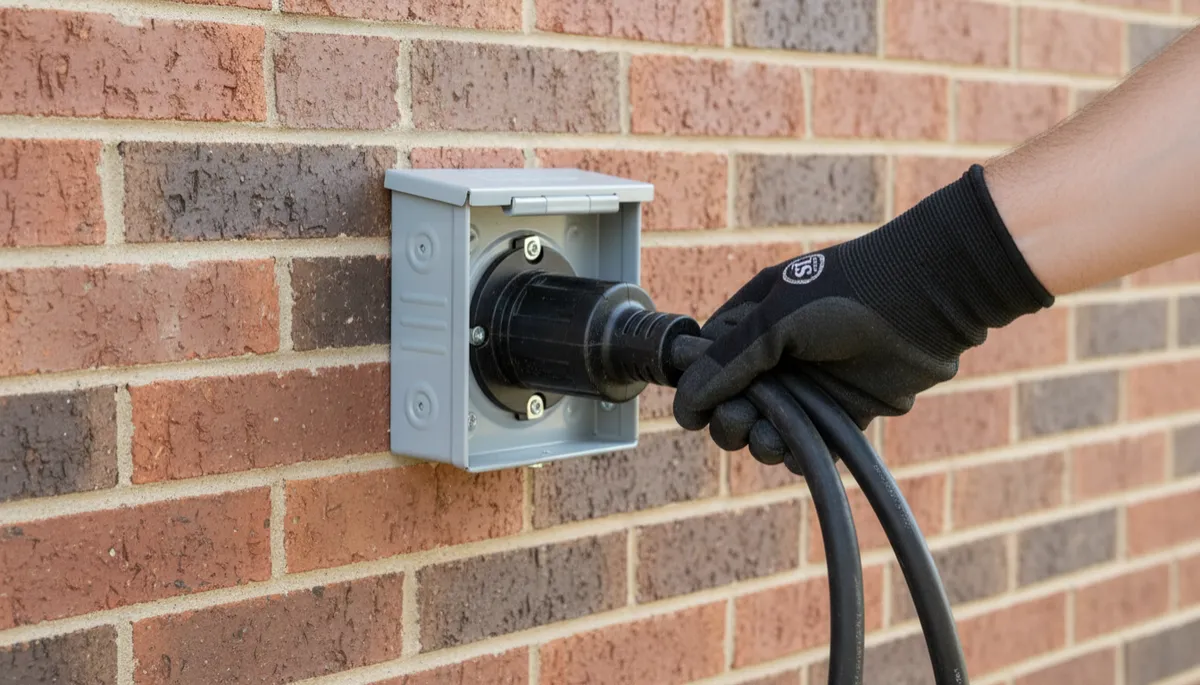
Close-up of a gray metal power inlet box and heavy-duty locking generator cord on the exterior...
Proper Cord Sizing and GFCI Protection
I see a lot of skinny orange cords from the big box stores trying to carry way more load than they’re built for. For a 30-amp generator outlet, you need a heavy-duty, outdoor-rated, locking generator cord sized appropriately – typically 10-gauge for 30 amps. For individual appliances plugged directly into the generator, use cords with:
- Three prongs (including ground)
- Outdoor rating
- GFCI protection where required, especially in damp locations or when feeding multiple devices
Carbon Monoxide: Why “Just Cracking the Garage Door” Isn’t Enough
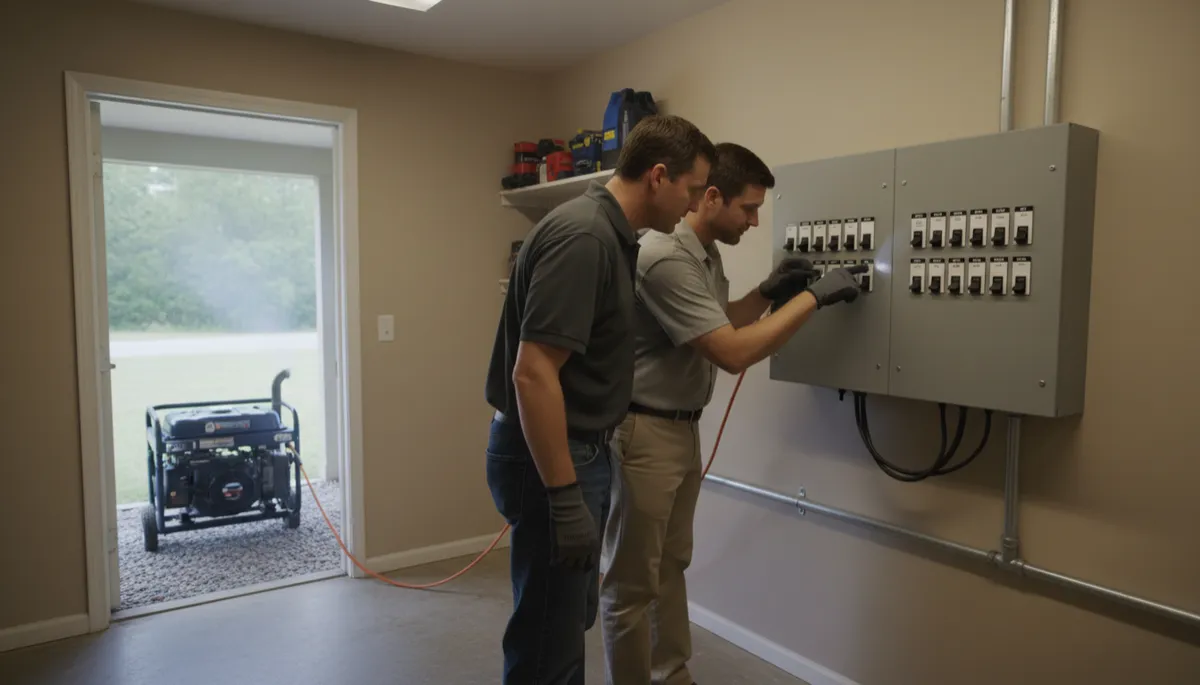
Homeowner and technician standing near a manual transfer switch panel inside a North Mississippi...
One of the scariest calls I ran was a Plantersville family during a cold snap. They had their portable generator running just inside the garage with the door cracked “a little for air.” CO alarms started chirping, and they called us because they thought it was an electrical problem. It wasn’t. It was carbon monoxide building up in the house. Another hour and that could have been a tragedy.
- Run the portable generator outdoors on a level, dry surface at least 20 feet from the house.
- Aim the exhaust away from the building and any neighbors’ homes.
- Install CO detectors in your home and keep the batteries fresh.
Grounding and Generator Safety Basics
Grounding Your Portable Generator
Whether you need a separate ground rod depends on how your generator is built – some are “separately derived systems,” some bond neutral to the frame, some rely on the house system when tied through a transfer switch. The safest bet is to follow the manufacturer’s instructions and have a licensed electrician verify your setup against the NEC. We check this anytime we install an interlock kit or transfer switch as part of our electrical services.
How Much Can a 5,000–7,500 Watt Portable Generator Really Run?
Typical Essential Loads
- Gas furnace blower (the fan and controls, not the gas itself) – often 600–900 watts running, more on startup.
- Refrigerator – 600–800 watts running, 1,200+ on startup for a second or two.
- Freezer – similar to the fridge.
- A few LED lighting circuits – very low draw compared to old incandescent bulbs.
- A TV and internet router if you want to keep up with weather updates.
What you usually can’t run at the same time on a typical 5,000–7,500 watt portable:
- Central air conditioner or large heat pump (these are heavy loads).
- Electric water heater, electric range, or electric dryer.
- Multiple big motor loads starting at the same time.
Why a Licensed Electrician and Permit Matter in North Mississippi
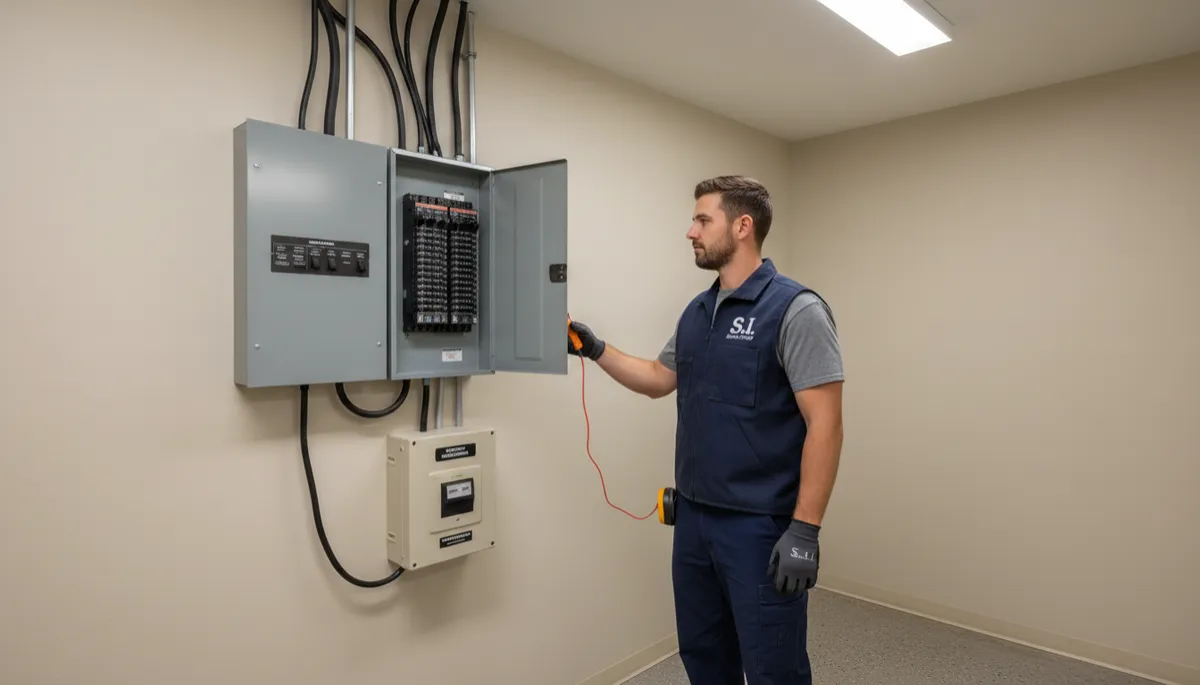
Mid-shot of a licensed electrician from S.I. Service Group standing beside a residential breaker...
When we install a portable generator hookup in Tupelo, Saltillo, or New Albany, we pull a permit and have the work inspected. That protects you three ways:
- It keeps your family and the linemen safe by meeting code and utility requirements.
- It helps prevent your insurance company from denying a claim because of unpermitted, DIY wiring.
- It gives you peace of mind that your system was checked by more than one set of trained eyes.
FAQ: Portable Generators and North Mississippi Ice Storms
Can I plug my portable generator into any outlet to power my house?
No. Plugging into a regular outlet or dryer outlet to backfeed your panel is dangerous, illegal, and against code. You need a properly installed transfer switch or interlock kit with a power inlet box so the generator and utility power can never be connected at the same time.
How far from my house should I run my portable generator?
At least 20 feet from any doors, windows, or vents, with the exhaust pointed away from the house and your neighbors. Never run it in a garage, carport, or porch – even with doors or windows cracked. Carbon monoxide can build up fast in cold, still air during an ice storm.
Will my portable generator run my gas furnace in a Tupelo winter?
In most homes, yes – if it’s wired correctly. The blower motor and controls need electricity, but the heat source is gas. With a properly sized portable (often 5,000 watts or more) and a transfer switch or interlock kit, we can usually keep your furnace blower running so you don’t freeze. If your furnace doesn’t start after power returns, our HVAC repair team can check for control board or surge issues.
Do I really need a permit for a portable generator hookup in North Mississippi?
In most jurisdictions, yes – any work that ties a generator into your home’s wiring requires a permit and inspection. It’s not just red tape; it’s how the city or county makes sure the installation meets NEC standards and doesn’t endanger the grid or your house. At S.I. Service Group, we handle the permit and inspection as part of the job.
Is an interlock kit safe, or do I need a full transfer switch?
A listed, properly installed interlock kit is safe and code-compliant when used with a dedicated generator breaker and inlet box. A manual transfer switch is a bit more “foolproof” because it isolates specific circuits, but both are acceptable solutions when installed by a licensed professional as part of our generator hookup work.
Conclusion: Plan Your Portable Generator Setup Before the Ice Hits
North Mississippi winters are funny – you’ll be in shirtsleeves one week and chipping ice off your windshield the next. When that ice takes down lines between Tupelo and Amory, everybody remembers the portable generator sitting in the corner of the garage. The time to figure out how to use it safely is not when the house is already cold and dark.
Whether you’re in Tupelo, Saltillo, Verona, Plantersville, Mooreville, Mantachie, Fulton, Amory, or New Albany, we can come out before storm season, look at your existing panel and generator, and design a safe, code-compliant way to keep the heat and lights on when the grid goes down.
Ready to Get Your Portable Generator Hooked Up Safely?
I’m Dan with S.I. Service Group. My team and I are licensed, bonded, and insured, serving Tupelo and surrounding North Mississippi towns with safe, code-compliant electrical services and generator solutions. If you’ve got a portable generator and no safe way to connect it, or if you’re not sure your current setup is legal, let’s fix that before the next ice storm hits.
Call or text us at 662-523-5514 and ask for a portable generator and transfer switch evaluation. We’ll:
- Check your panel, grounding, and existing wiring for generator compatibility.
- Recommend the right interlock kit or manual transfer switch for your home and budget.
- Pull the permit, handle the installation, and walk you through safe operation step by step.
When the next North Mississippi ice storm rolls through, you’ll be glad you took a little time now to do it right. Your family stays warm, your food stays cold, and the folks working to restore power stay safe too. That’s a win all the way around.