AC Not Cooling? HVAC Diagnosis Guide Mississippi
HVAC, AC repair Tupelo MS, HVAC repair North Mississippi
AC Not Cooling? Here's What's Actually Wrong — North Mississippi HVAC Diagnosis Guide
When your air conditioner is running but the house still feels sticky and warm, it is more than an inconvenience in Tupelo and across North Mississippi — it is a genuine comfort and productivity problem. This guide walks you through the most common reasons an air conditioner is not cooling in our heat and humidity, and when it is time to call a licensed professional like S.I. Service Group for AC repair Tupelo MS and surrounding communities.
Why AC Struggles in Mississippi Heat and Humidity
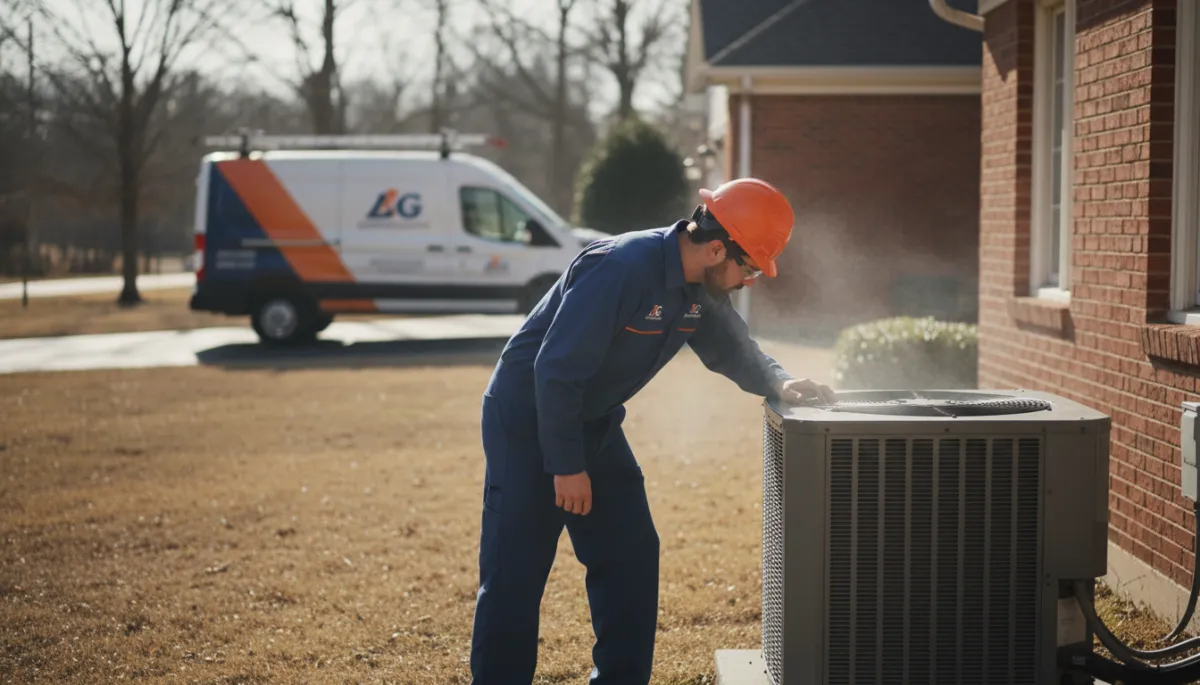
North Mississippi summers regularly combine 90°+ temperatures with high humidity. Your AC system is not just lowering the temperature; it is also removing large amounts of moisture from the air. When any part of the system is dirty, worn, or misadjusted, the unit can run for hours while the space never truly cools down or drys out. That is when homeowners and business owners start searching “AC not cooling” and “AC troubleshooting Mississippi” looking for answers.
The good news: most cooling issues follow a predictable pattern. Professional technicians in HVAC repair North Mississippi use a logical diagnostic order to pinpoint the cause. You can follow a similar sequence to understand what may be wrong and decide whether it is a safe DIY check or a clear “call a pro” situation.
Step 1: Dirty or Clogged Air Filter
The air filter is the first and simplest place to look when your air conditioner is not cooling properly. In Mississippi, where pollen, dust, and humidity are constant, filters load up quickly. A clogged filter chokes airflow, forcing your system to work harder while delivering less cool air to your rooms.
- Typical symptoms: Weak airflow from vents, some rooms warmer than others, AC running longer than usual, visible dust buildup on the filter, and sometimes a musty smell when the unit starts.
- What it means: The system cannot pull enough air across the indoor coil, so it cannot absorb and remove heat effectively. Left unchecked, this can cause the coil to get too cold and even freeze over, leading to more serious AC not keeping up issues.
- DIY or call a tech? This is a safe DIY step. Turn the system off, locate the return air filter (often in a hallway ceiling grille or at the indoor unit), and inspect it. If it is gray, dusty, or sagging, replace it with the correct size and type. In our climate, monthly checks during peak summer are wise, especially for businesses with higher foot traffic.
Step 2: Frozen Evaporator Coil
The evaporator coil is the indoor component that gets cold and absorbs heat and humidity from your air. In North Mississippi’s humidity, this coil constantly condenses water. When airflow is restricted or refrigerant levels are off, the coil can drop below freezing and ice over, turning into a block of ice instead of a cooling surface.
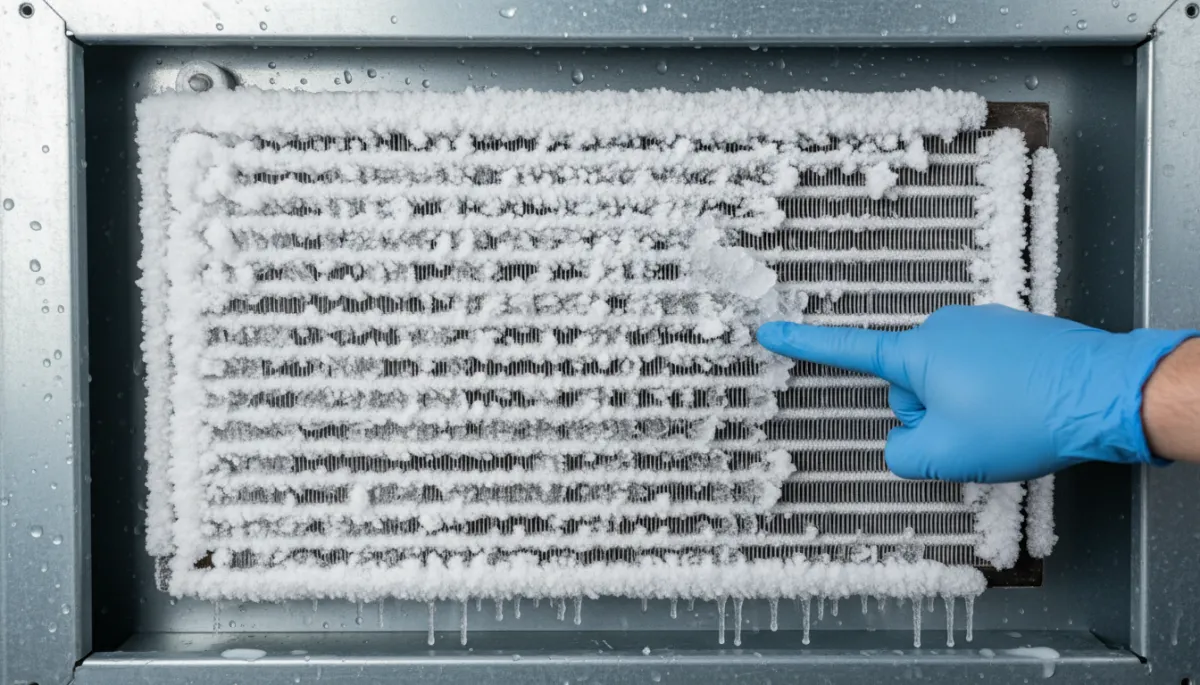
Ice on the evaporator coil stops heat transfer and quickly leads to an AC not cooling.
- Typical symptoms: Little to no airflow from vents, the system may run then suddenly shut off, water around the indoor unit as the ice melts, and sometimes visible frost on refrigerant lines near the air handler.
- What it means: A frozen coil usually points to one of three issues: very dirty filter or blower, low refrigerant, or a blower fan problem. All of these reduce the amount of warm air moving across the coil, allowing it to drop below 32°F and form ice.
- DIY or call a tech? First, turn the system off at the thermostat and switch the fan to “On” to help melt the ice. Do not try to chip the ice away. Check and replace the air filter if needed. If the coil freezes again after thawing, it is time to schedule professional AC repair Tupelo MS, because low refrigerant or blower issues require proper tools and training.
Step 3: Low Refrigerant or a Refrigerant Leak
Refrigerant is the lifeblood of your cooling system. It circulates between the indoor and outdoor units, picking up heat inside and releasing it outside. In a sealed system, refrigerant does not get “used up,” so if your system is low, it almost always means there is a leak somewhere in the line set, coil, or connections.
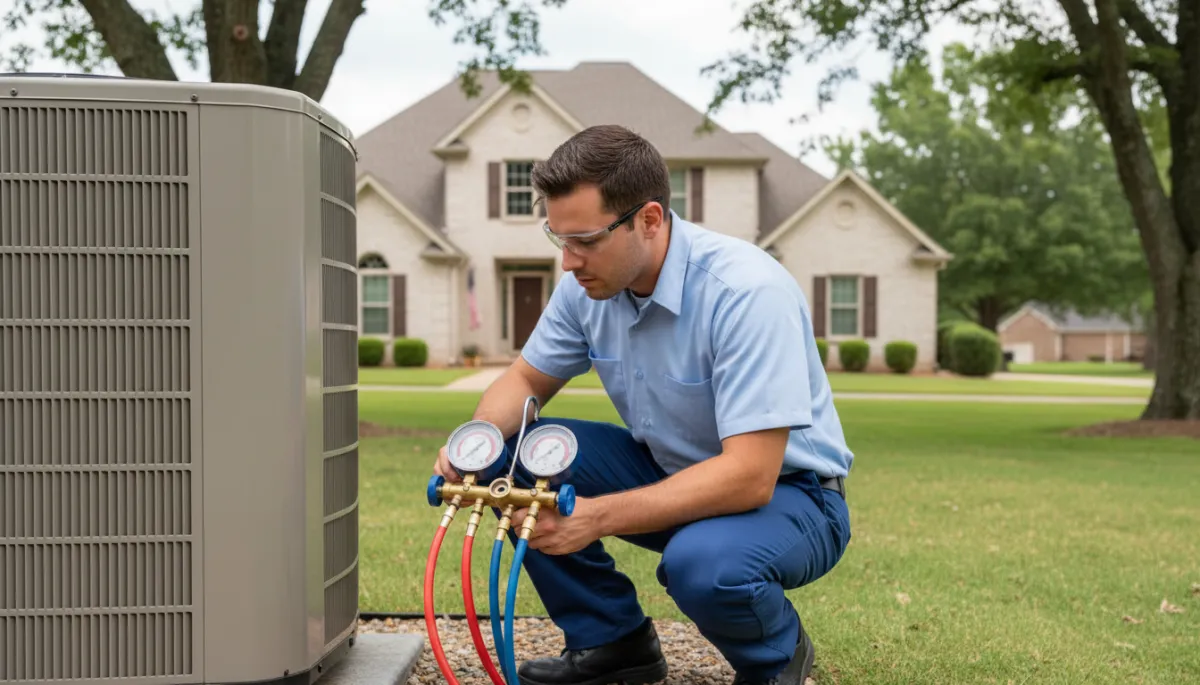
Accurate refrigerant diagnosis requires gauges, training, and knowledge of manufacturer specifications.
- Typical symptoms: AC not keeping up on the hottest afternoons, longer run times, higher electric bills, warm air from vents, hissing sounds near lines, or intermittent freezing of the evaporator coil.
- What it means: With low refrigerant, the system cannot absorb and move enough heat. Performance drops, and components like the compressor are placed under extra stress. In our climate, a system running low on refrigerant often shows up first as an air conditioner not cooling well during late afternoon peaks.
- DIY or call a tech? This is a professional-only repair. Handling refrigerant without EPA certification is not only unsafe but also illegal. A qualified technician from S.I. Service Group will locate the leak, repair it when possible, evacuate the system, and recharge to the manufacturer’s specifications for reliable HVAC repair North Mississippi homeowners and businesses can trust.
Step 4: Failed Capacitor — The “Starter” for Your Motors
Your AC system uses capacitors to give the compressor and fan motors an electrical boost at startup and help them run efficiently. In the extreme heat of a Tupelo summer, capacitors are under constant stress. As they weaken or fail, motors may struggle to start or run, leaving you with an AC not cooling even though the thermostat is calling for it.
- Typical symptoms: Outdoor unit humming but the fan not spinning, AC clicking on and off without fully starting, warm air from vents, or the system running briefly then shutting down. Sometimes a homeowner may nudge the outdoor fan with a stick and see it start — a classic sign of a bad capacitor or motor.
- What it means: When a capacitor fails, the motor does not receive the right electrical support. The compressor or fan may overheat or fail to start at all. Continuing to try to run the system this way can permanently damage expensive components like the compressor.
- DIY or call a tech? This is a call-a-tech situation. Capacitors store electrical energy and can deliver a dangerous shock even with power off. A licensed HVAC and electrical contractor has the tools and training to safely test and replace capacitors and verify that the motors they support are still healthy.
Step 5: Bad Compressor — When the Heart of the System Fails
The compressor is often called the “heart” of your AC system. It pumps refrigerant through the lines, maintaining the pressure difference that allows heat to move from inside to outside. A failing compressor is one of the most serious causes of an air conditioner not cooling and is often the result of long-term stress from other issues like low refrigerant, dirty coils, or electrical problems.
- Typical symptoms: Outdoor fan running but no cooling inside, unusual noises from the outdoor unit (clanking, grinding, or loud humming), breaker tripping repeatedly, or the system trying to start and immediately shutting off. In some cases, the unit may be completely silent despite the thermostat calling for cooling.
- What it means: A damaged or seized compressor cannot circulate refrigerant, so the system cannot move heat. Because the compressor is a high-cost component, this is often the point where a professional will discuss whether repair or system replacement makes more financial sense, especially on older units facing repeated AC not keeping up complaints each summer.
- DIY or call a tech? Compressor diagnosis and replacement are strictly professional tasks. They involve refrigerant handling, electrical testing, and careful evaluation of the entire system. A trusted local contractor like S.I. Service Group can help you weigh repair versus replacement based on age, efficiency, and your long-term comfort goals.
Step 6: Thermostat Issues and Incorrect Settings
Sometimes the problem is not with the heavy equipment at all, but with the “brain” of the system — the thermostat. In offices and homes around Tupelo, we often see AC troubleshooting Mississippi start and end at the thermostat because a simple setting or sensor issue is preventing proper cooling.
- Typical symptoms: AC runs inconsistently, short cycles on and off, temperature on the display does not match how the space feels, or cooling mode is not engaged even though the fan is running. In commercial spaces, someone may have changed settings without others realizing it.
- What it means: The thermostat may be misconfigured, poorly located (for example, in direct sunlight or near a hot window), have weak batteries, or have internal faults. Any of these can lead to an air conditioner not cooling when you need it most, or shutting off before the building is truly comfortable.
- DIY or call a tech? Start with DIY steps: verify the thermostat is set to “Cool,” the fan is on “Auto,” and the setpoint is below the current room temperature. Replace batteries if it is a battery-powered model. If problems persist, or if you are interested in upgrading to a modern programmable or smart thermostat for better control of your AC repair Tupelo MS investment, a professional can ensure correct wiring, placement, and setup.
Step 7: Ductwork Leaks and Airflow Losses
Even if your equipment is working correctly, cooled air still has to travel through ductwork to reach your rooms. In many North Mississippi homes and small businesses, ducts run through hot attics or crawlspaces. Over time, joints can separate, insulation can deteriorate, and flexible ducts can be crushed or kinked, all of which reduce how much cool air actually reaches your living or working spaces.
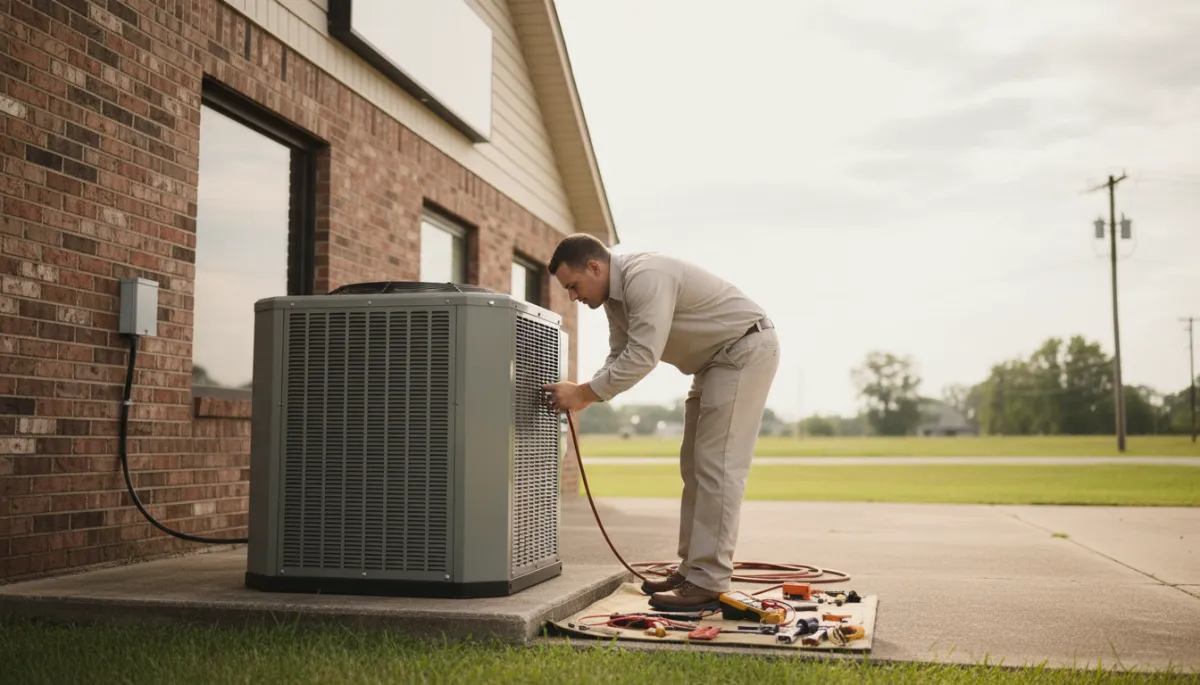
Proper system checks include equipment, refrigerant, and airflow to diagnose AC not cooling complaints.
- Typical symptoms: Some rooms much hotter than others, very weak airflow at certain vents, dusty or musty smells, and high energy bills despite the system running frequently. In businesses, employees may complain that one area never cools while others are too cold.
- What it means: Leaky or poorly designed ductwork allows cooled air to escape into unconditioned spaces, wasting energy and leaving you uncomfortable. In our climate, leaky ducts can also draw hot, humid attic or crawlspace air into the system, making your AC work even harder and contributing to that persistent AC not keeping up feeling.
- DIY or call a tech? You can visually inspect accessible ducts for obvious disconnections or crushed sections and make sure supply vents and return grilles are not blocked by furniture. However, sealing, insulating, and balancing a duct system is best handled by a professional who can test static pressure and airflows to verify improvements.
When to Stop Troubleshooting and Call a Professional
A quick filter check or thermostat setting change is reasonable for most property owners. But if your AC not cooling problem continues after these basic steps, or you notice ice buildup, unusual noises, burning smells, or tripping breakers, it is time to stop DIY air conditioner troubleshooting and bring in a licensed expert. Continuing to run a struggling system in the Mississippi heat can turn a minor issue into a major repair.
Professional AC Repair in Tupelo MS and Across North Mississippi
S.I. Service Group is a licensed HVAC and electrical contractor based in Tupelo MS, serving homeowners and business owners throughout North Mississippi. Our team is dual-degreed in HVAC and Electrical, which means we understand not only how your cooling equipment should operate, but also the electrical systems that power and control it. That combined expertise is especially valuable when diagnosing complex AC not cooling issues that may involve both mechanical and electrical components.
Whether you are dealing with a dirty coil, a refrigerant leak, a failing capacitor, or a compressor on its last legs, we follow a systematic diagnostic process similar to the steps in this guide. We confirm the true cause of your air conditioner not cooling, explain your options clearly, and provide reliable repairs designed for the demands of our North Mississippi climate.
If your AC is running but not cooling, do not wait for the next heat wave to expose a small problem as a major breakdown. Contact S.I. Service Group in Tupelo MS for prompt, professional AC repair Tupelo MS and HVAC repair North Mississippi. We are here to keep your home or business comfortable, efficient, and prepared for whatever our hot, humid weather brings.
SEO Title: AC Repair Tupelo MS – Why Your AC Is Not Cooling in North Mississippi
Meta Description: AC not cooling in Tupelo or North Mississippi? Learn the real causes — from dirty filters and frozen coils to refrigerant leaks and bad compressors — and when to call S.I. Service Group, your licensed HVAC and electrical contractor for AC repair Tupelo MS.